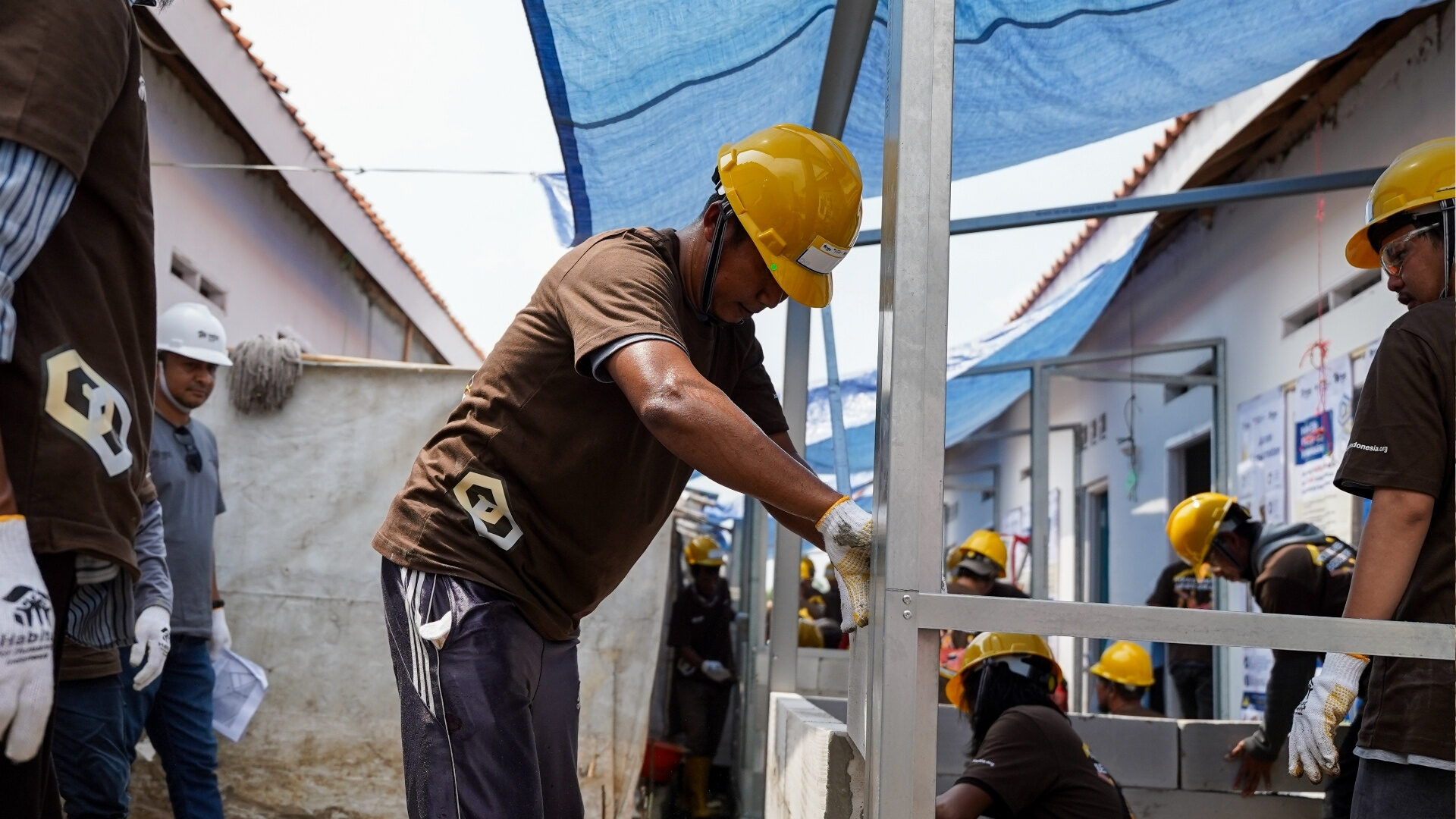
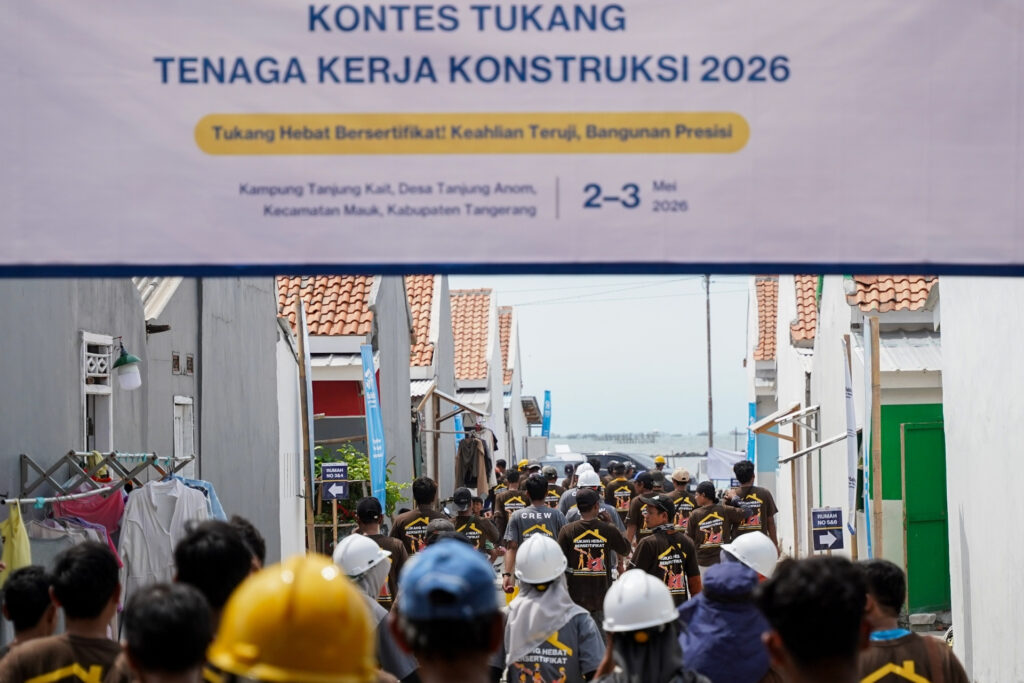
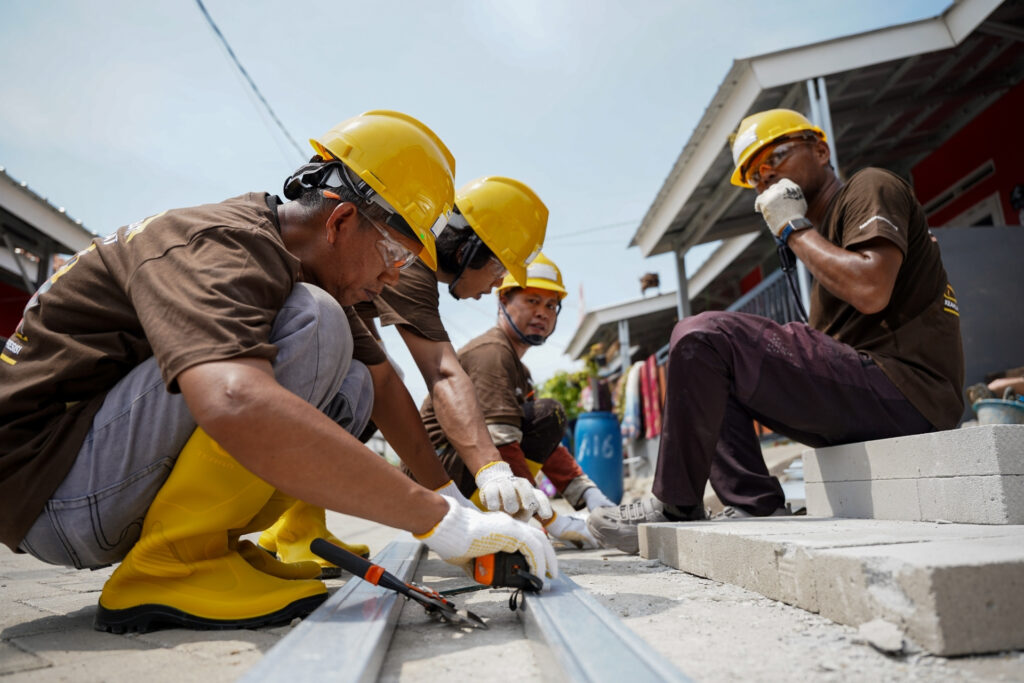
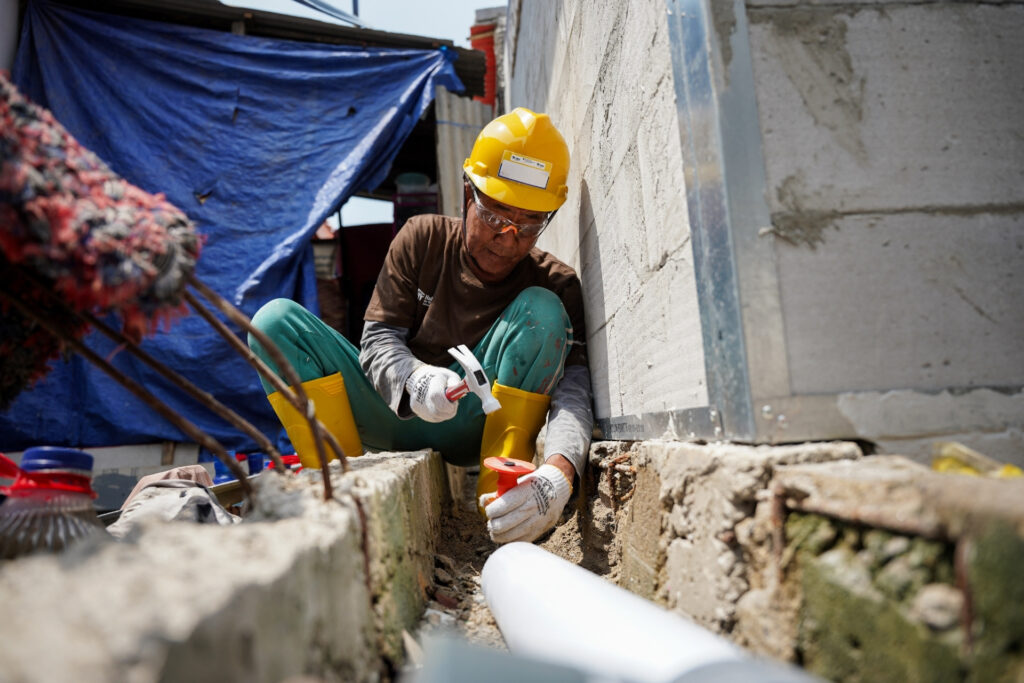
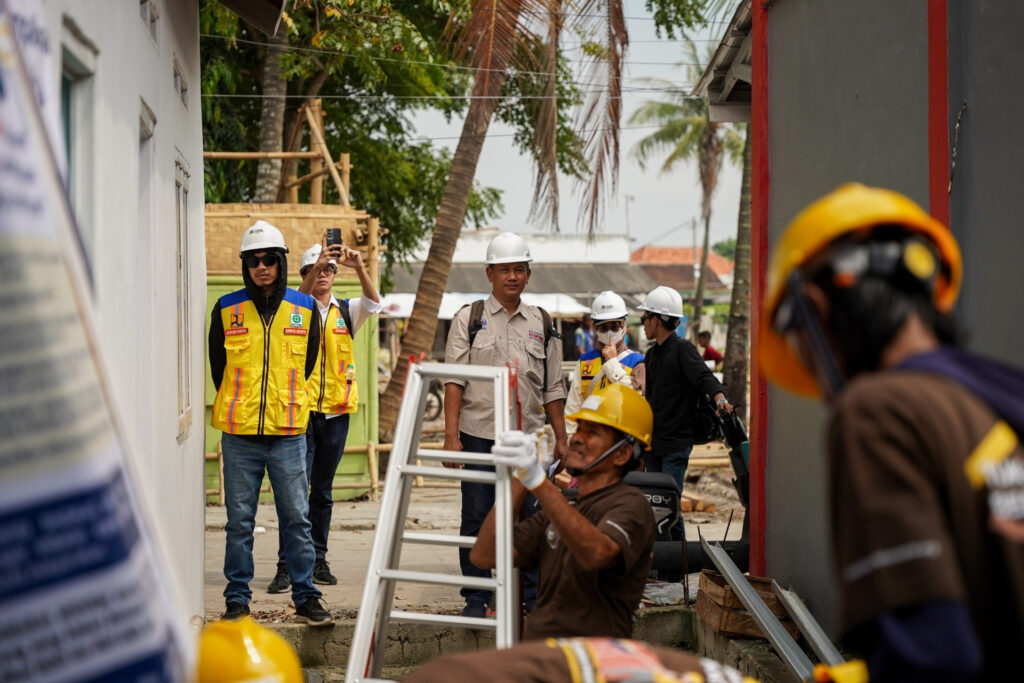
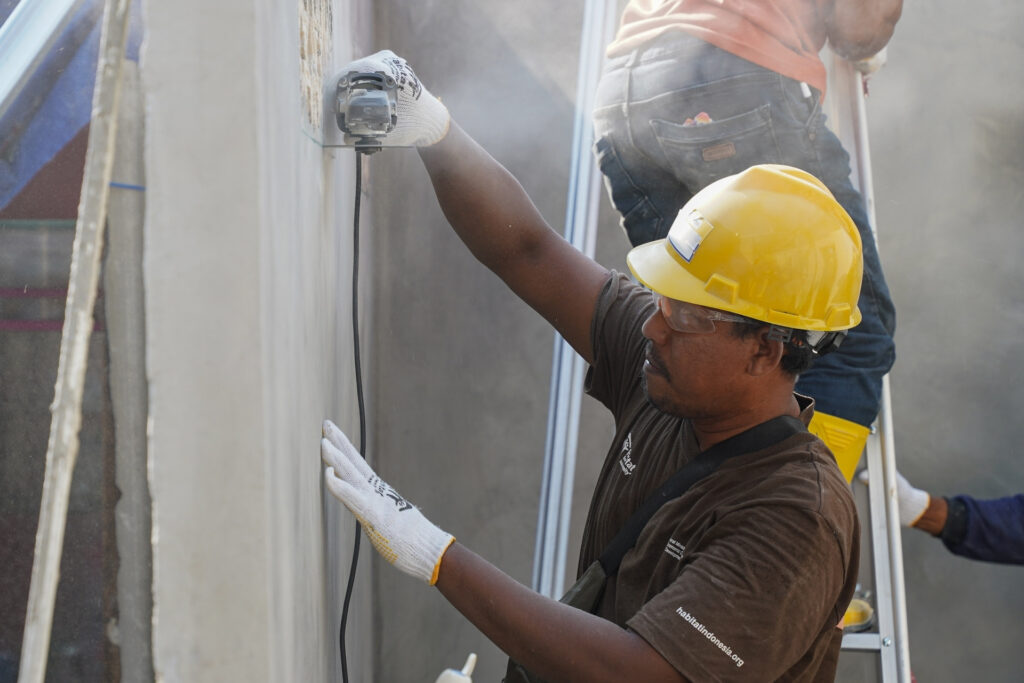
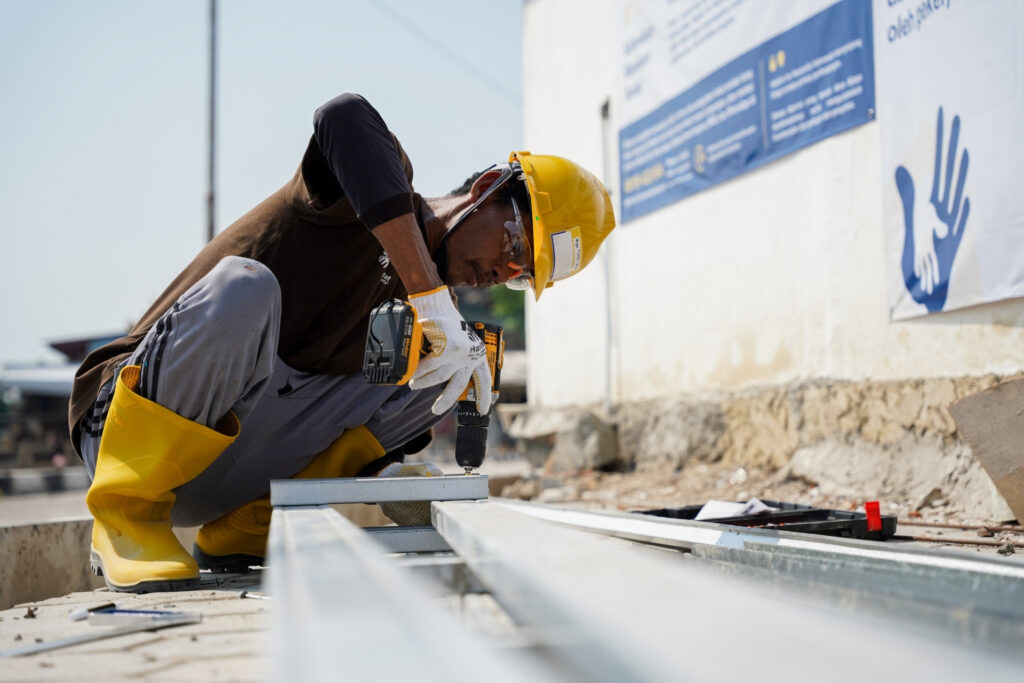
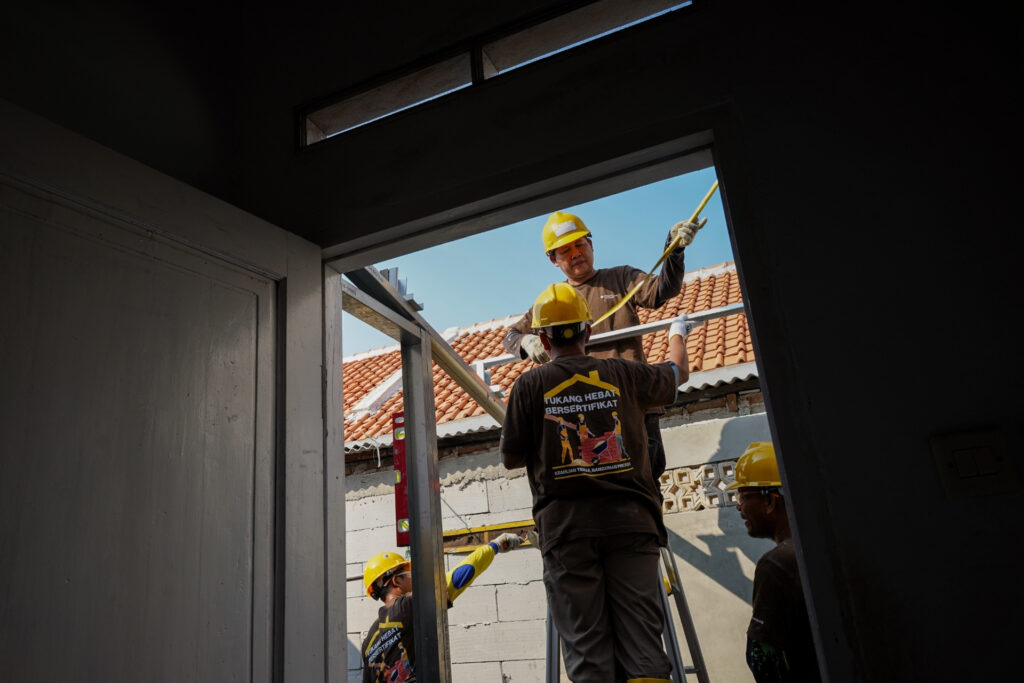
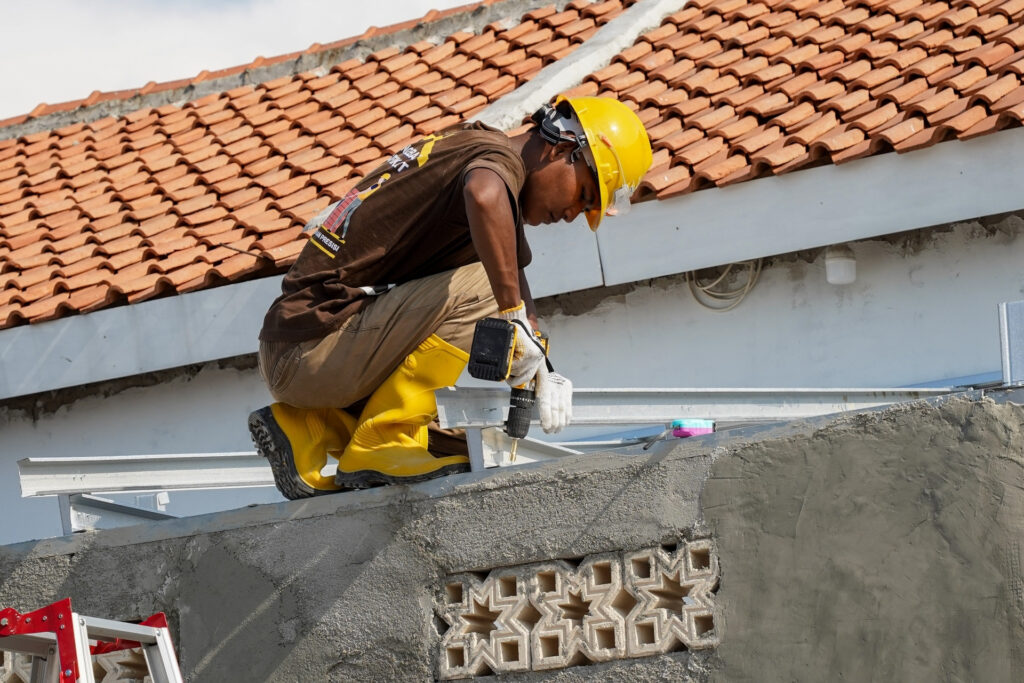
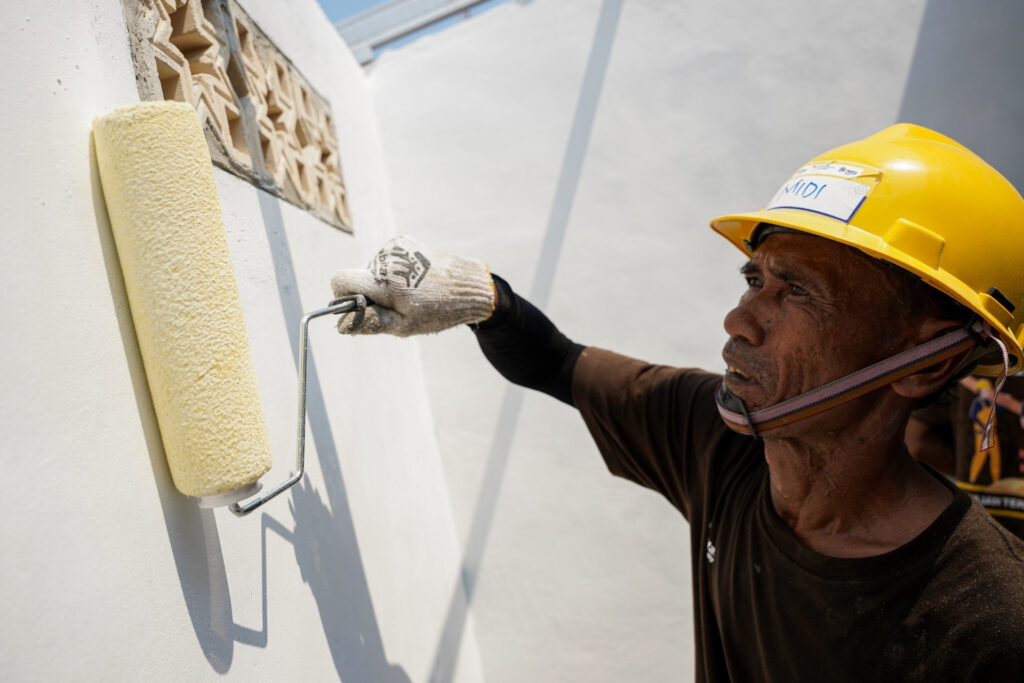
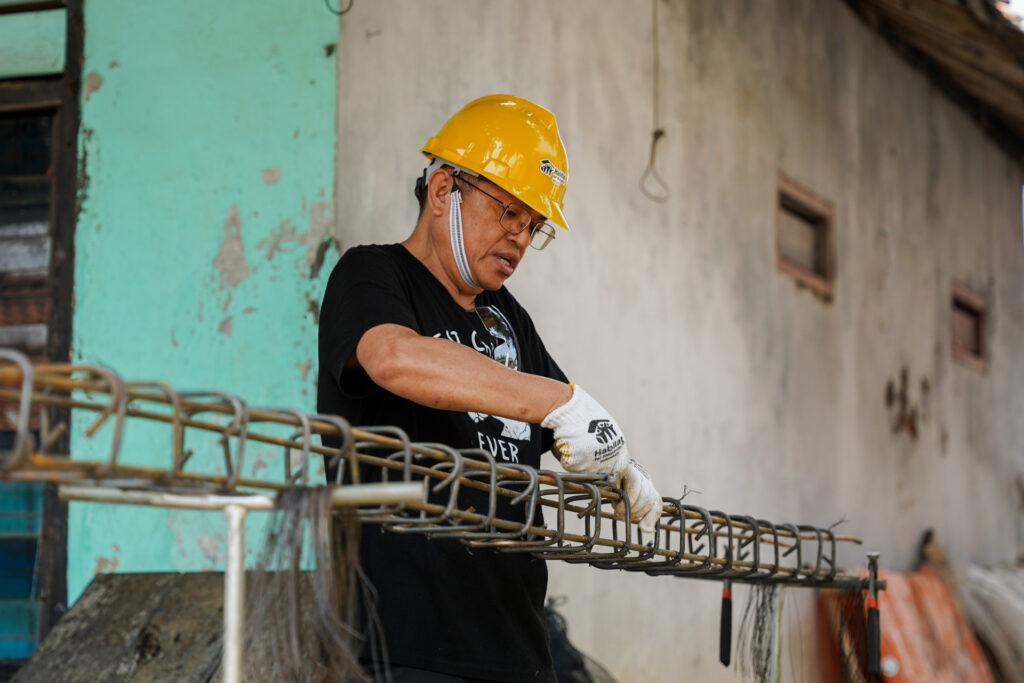
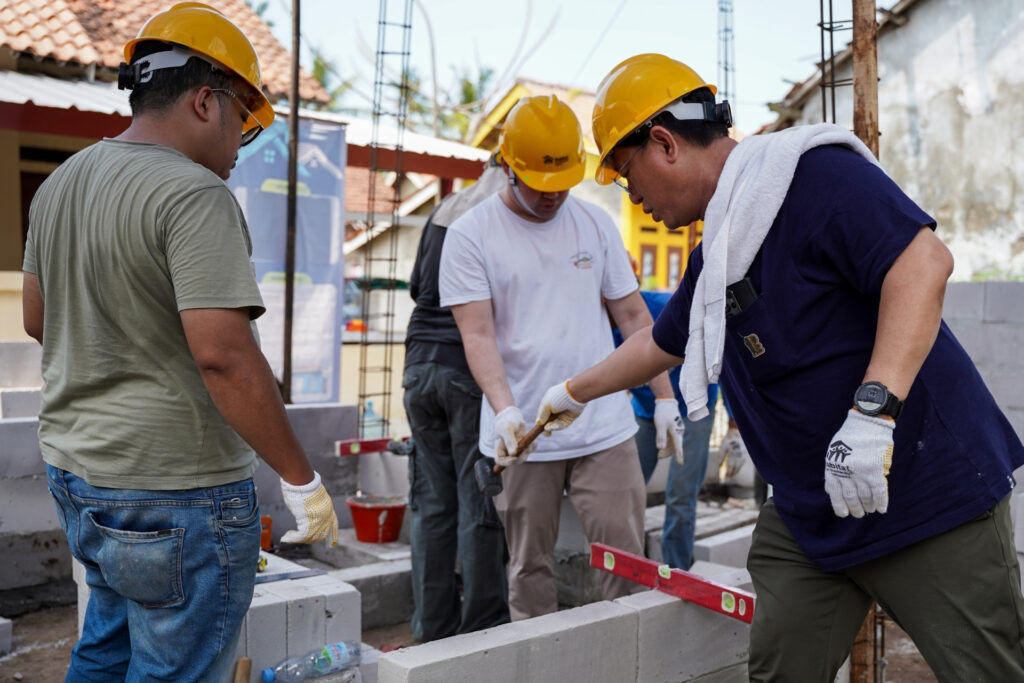
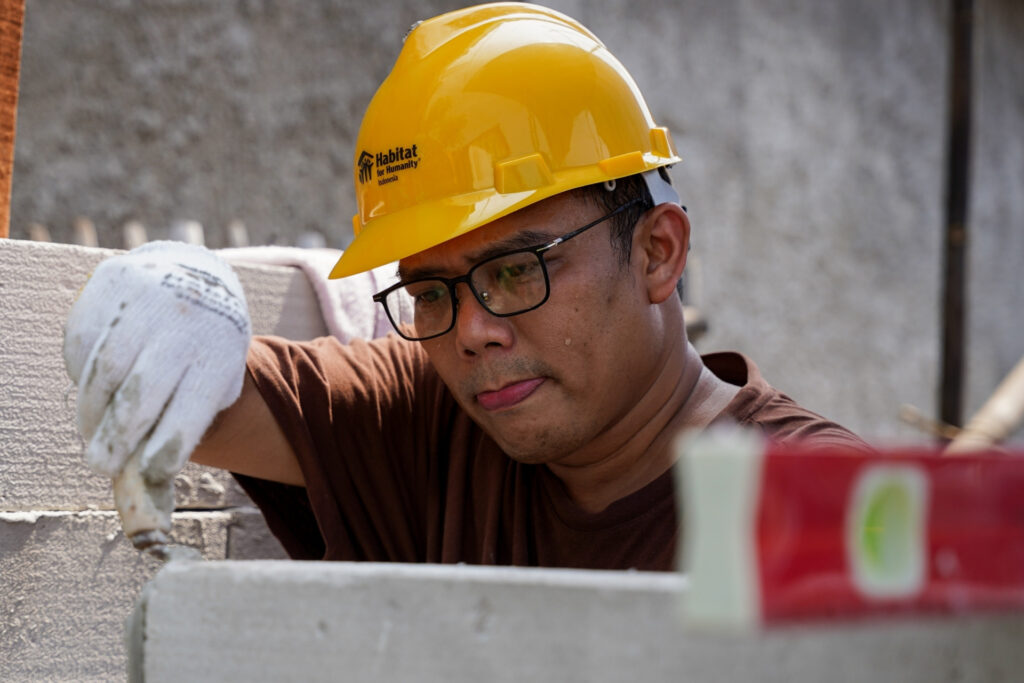
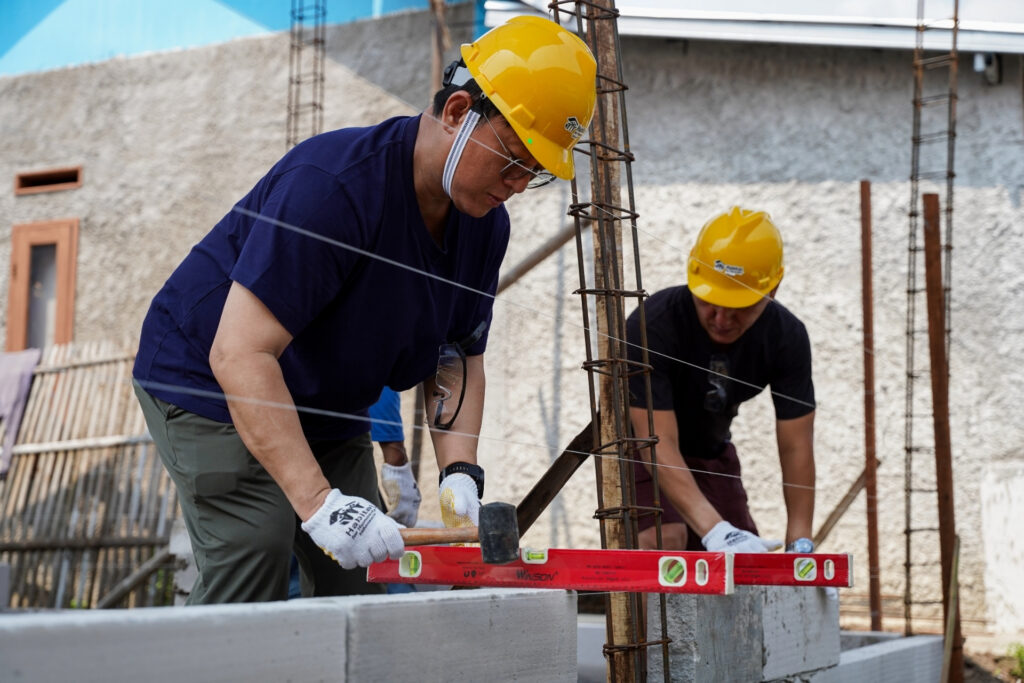
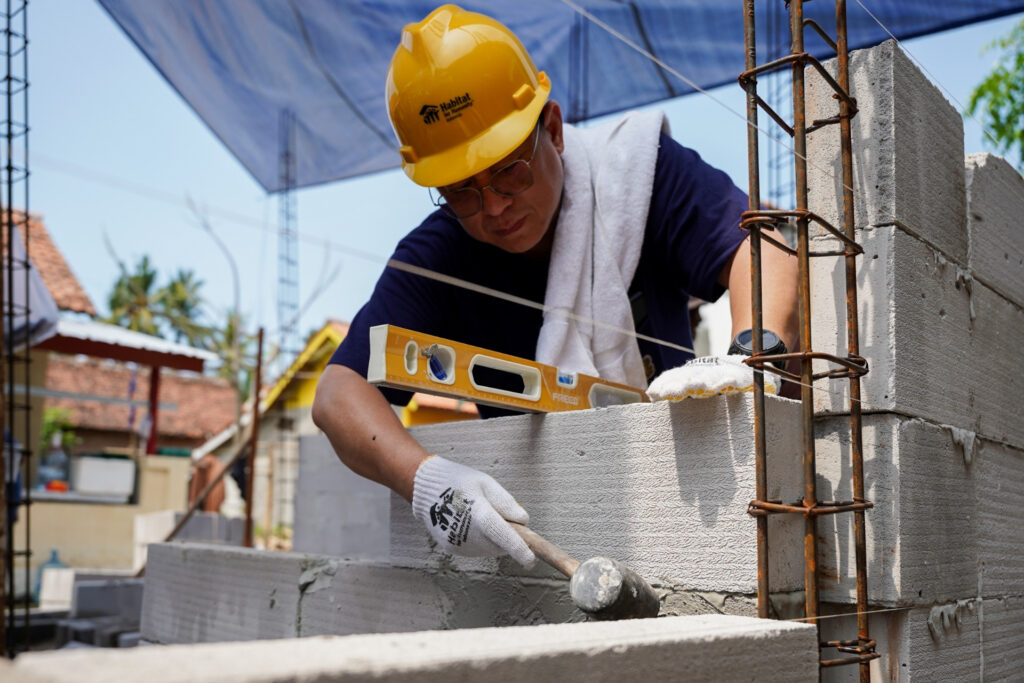
Tangerang, May 4, 2026 – As part of efforts to strengthen the capacity of Indonesia’s construction workforce, Habitat for Humanity Indonesia, through its BMZ program, organized the 2026 Construction Workers Competition, a field-based competition designed to directly assess the technical skills of construction workers. The event served as a platform for participants to build confidence, strengthen their professional portfolios, and demonstrate their competencies through tangible work that creates a real impact on communities.
The competition was held on May 2–3, 2026, in Tanjung Kait, Mauk District, Tangerang Regency, involving 180 construction workers divided into 18 teams. Each team was responsible for building one kitchen unit, resulting in a total of 18 kitchens successfully constructed for beneficiary families in the area over the course of the two-day event.
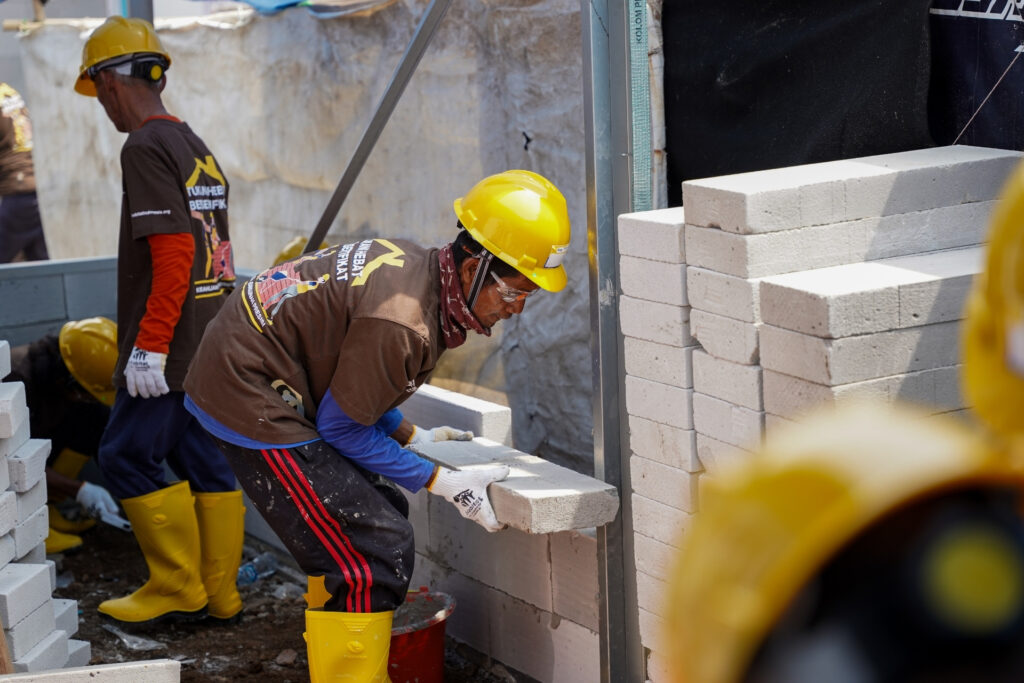
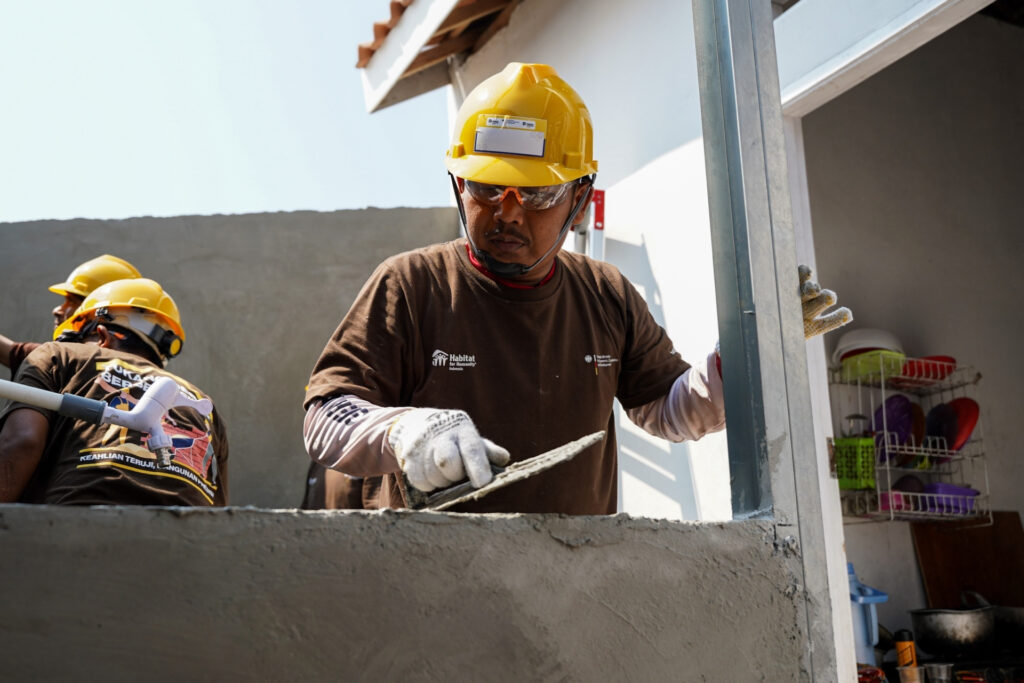
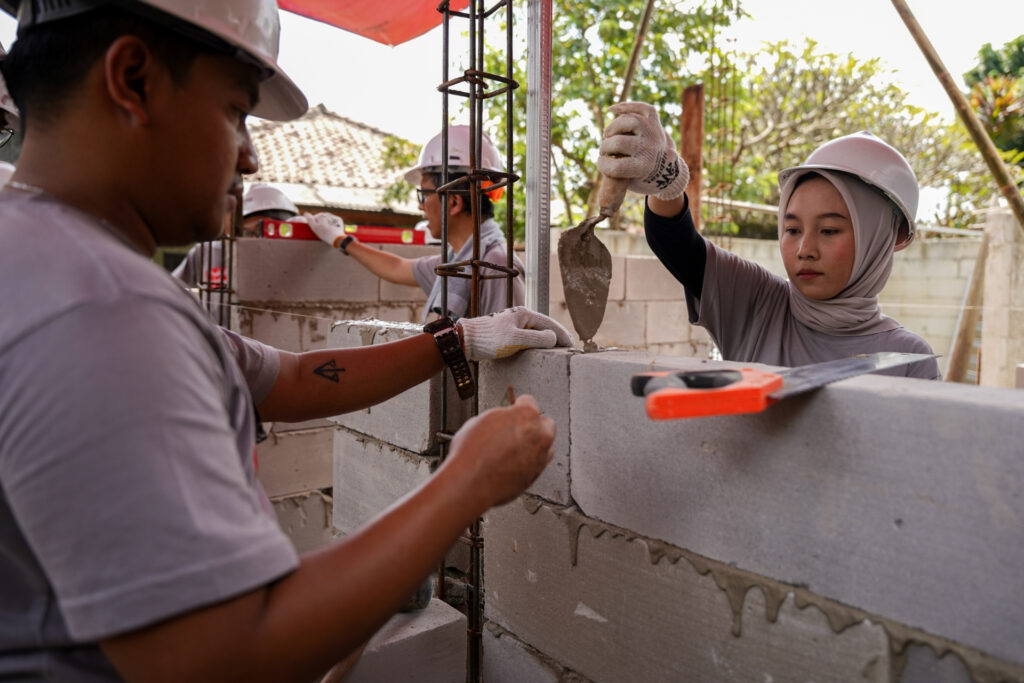
During the construction process, participants competed in five main areas of construction work: AAC block wall construction, clean and wastewater plumbing installation, lightweight steel roof frame installation, floor tiling, and wall painting. The entire process was evaluated comprehensively based on technical workmanship, implementation of occupational health and safety (OHS) standards, timely completion, and the overall finishing quality of the construction results.
Through this initiative, Habitat for Humanity Indonesia not only encouraged the improvement of construction workers’ competencies, but also reinforced the implementation of safe, healthy, and high-quality building standards. At the same time, participants gained hands-on experience that can enhance their competitiveness and open broader employment opportunities in the future.
“When construction workers are equipped with strong technical skills, understand workplace safety standards, and have confidence in their abilities, they are not only ready to enter the construction industry, but also prepared to build a better future for themselves, their families, and their communities,” said Arwin Soelaksono, Program Director of Habitat for Humanity Indonesia.
The competition also created a direct impact on the Tanjung Kait community through the construction of 18 kitchens, which are expected to improve the quality of life for beneficiary families. It stands as a tangible example that workforce skills development can go hand in hand with development initiatives that bring positive change to communities.
Morning and night no longer feel the same for Rigo Suhendra. Behind his simple daily life, one question used to constantly linger in his mind: would his house still be standing when the next rain came?
Bogor, May 5, 2026 – Rigo, 47, is a day laborer who depends on any work he can find. Some days he works as a construction worker, on others he becomes a driver, or takes on whatever jobs come his way—without any certainty. His income is just as unpredictable. On some days, he brings home IDR 100,000, on others IDR 50,000, and sometimes nothing at all. Together with his wife, Laya (46), a homemaker, they strive to meet the needs of their two school-aged children.
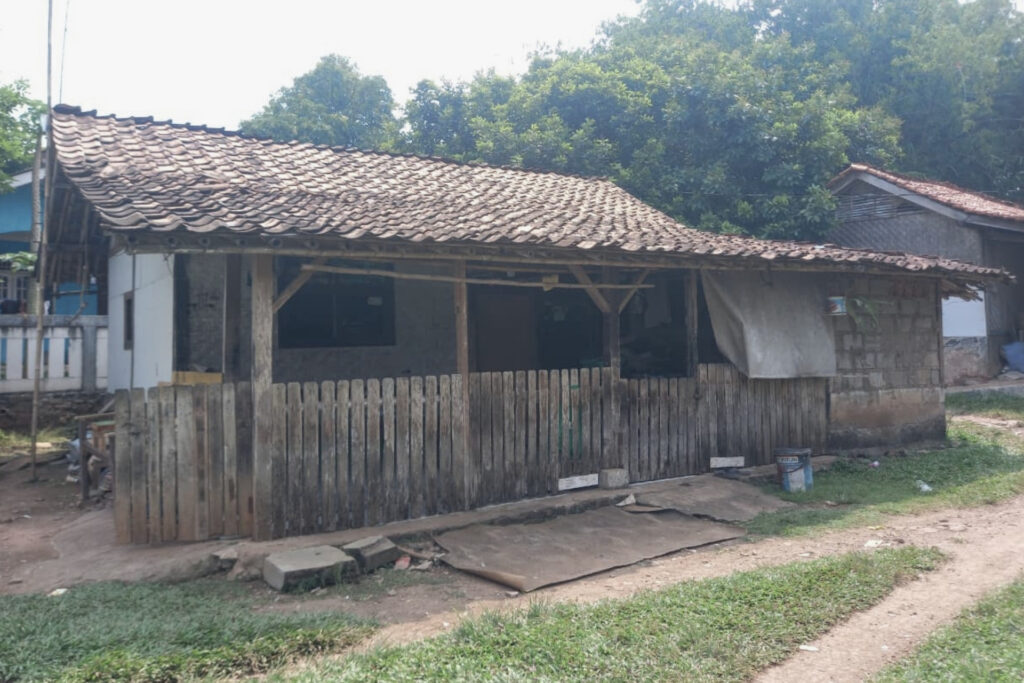
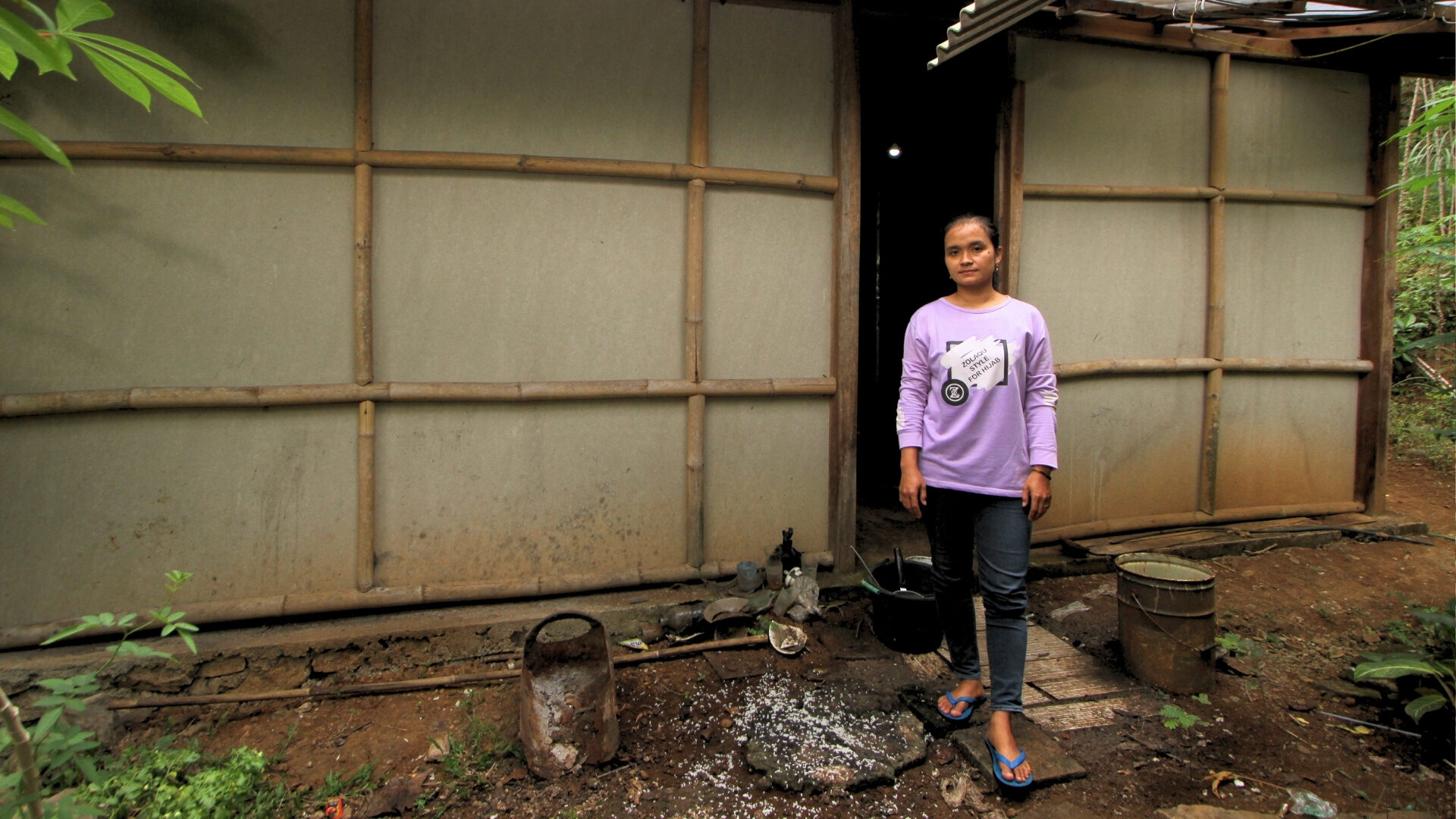
Amid these limitations, the small family had to live in a house inherited from Rigo’s parents. A house that should have been a place of shelter could not fully provide a sense of security. Its walls were made of weathered bamboo panels, patched with pieces of plywood and GRC boards. From the outside, the house looked fragile. From the inside, worry was always present.
For Rigo, comfort was no longer a matter of choice, but acceptance. He tried to make peace with his situation, convincing himself to live with what he had. Yet deep down, he held onto a simple wish that felt out of reach.
“Who wouldn’t want a good house? But this is all we can afford—what else can we do?” Rigo said.
Every time heavy rain fell, that fragile sense of calm would disappear instantly. Water seeped through the roof and cracked walls, soaking the floors and making it difficult for the family to rest properly. Many nights were spent in unease.
The condition of Rigo’s house before receiving support for the construction of a decent home from donors through Habitat for Humanity Indonesia in Bogor Regency, Indonesia. Photo: HFHI/Ari Darmawan
In moments like these, it was not just discomfort that arose, but fear. Rigo often worried that his house might collapse under strong winds. Thoughts about his family’s safety haunted him, while his ability to repair the house remained very limited. He could only set aside small portions of his daily income to patch damaged parts of the house, even though he knew it would never be enough.
Despite everything, he held onto a simple dream: to have a decent home for his family—a place that could truly protect them, not just barely shelter them. But for Rigo, that dream felt far beyond reach. With his limited financial situation, all he could do was try his best and hold on to hope.
The condition of the house also affected his children. Rigo realized that his son often felt embarrassed to invite friends over. A space that should have been a place to learn and grow together had instead become a source of insecurity.
Until one day, hope arrived in a way he had never imagined before. With support from generous donors, Habitat for Humanity Indonesia selected Rigo’s home in Wanaherang Village, Gunung Putri District, Bogor Regency, as one of the beneficiaries of a decent housing assistance program.
The news brought mixed emotions. On one hand, there was immense happiness and gratitude. On the other, a new concern arose—whether he would have to bear costs he could not afford. That concern was soon eased when he learned that the program required no financial contribution, but rather participation through sweat equity.
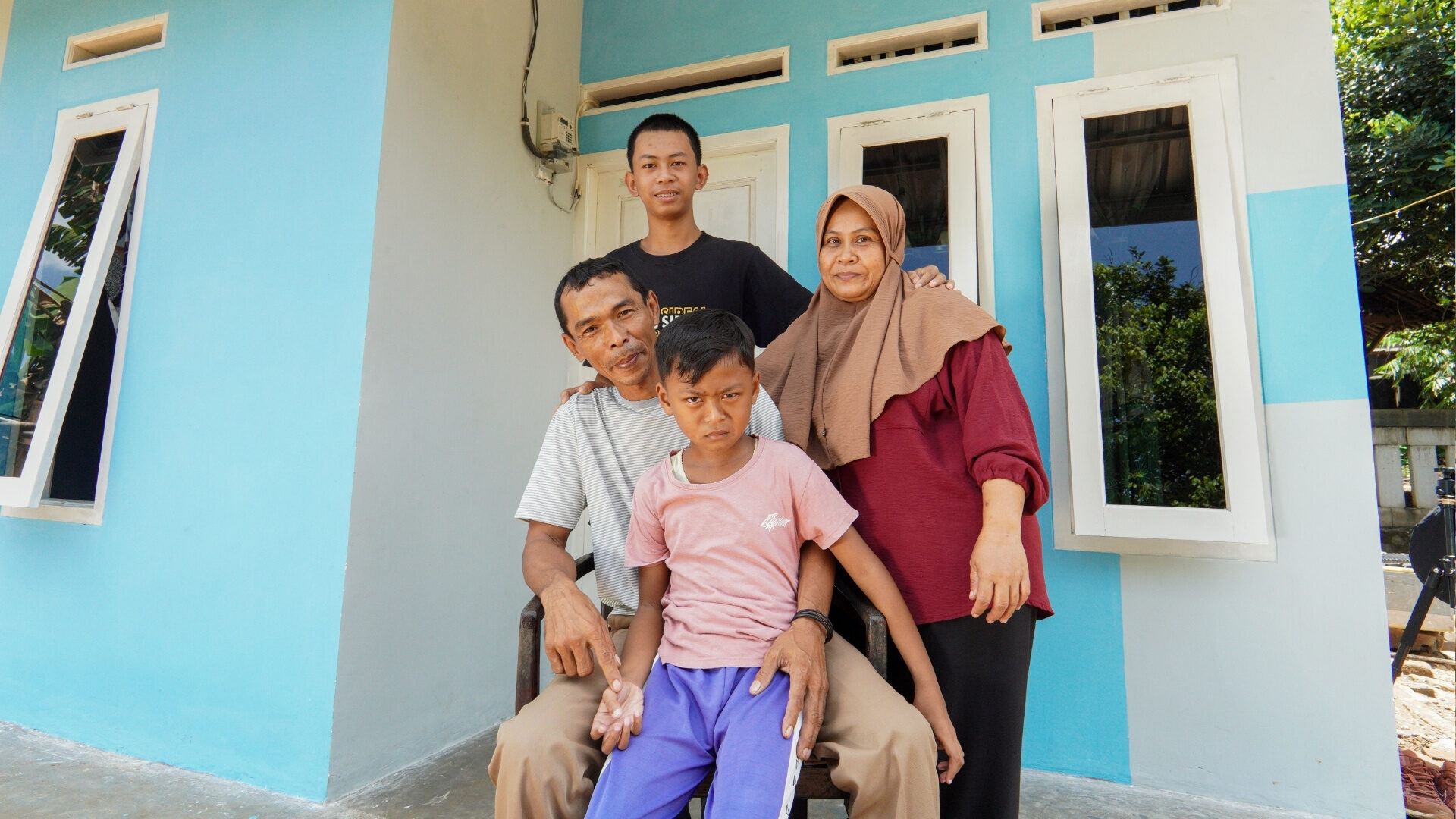
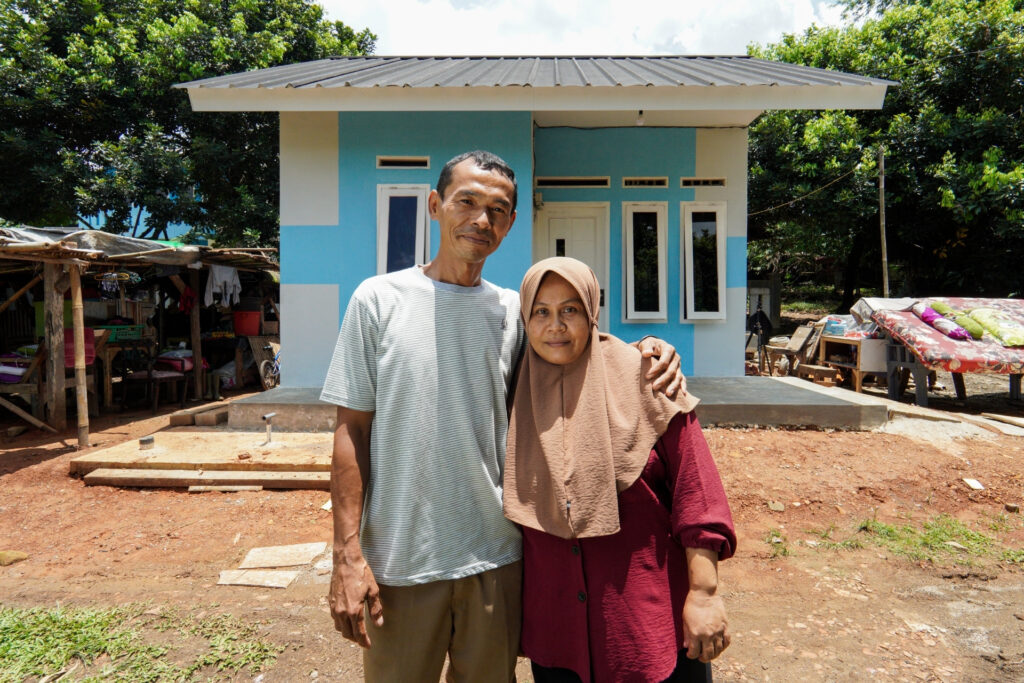
Over time, the once fragile house slowly transformed. The worn, damaged walls were replaced with a sturdy structure. In its place now stands a simple house with bright blue walls—modest, yet deeply meaningful. For Rigo, it is not just a new building, but an answer to the prayers he had long carried.
This change has brought a profound impact on Rigo’s family. A sense of security that once felt out of reach is now part of their everyday life. No more overwhelming worry when it rains, no more fear of the house collapsing.
A portrait of Rigo and his wife in front of their now decent home, made possible by the support of donors through Habitat for Humanity Indonesia in Bogor Regency, Indonesia. Photo: HFHI/Kevin Herbian
The change is also felt by his children. Where they once held back out of embarrassment, that feeling has gradually faded. They have become more confident and now even invite their friends over to study together.
Rigo himself feels a significant change within. The burden he once carried has slowly lifted. He is no longer haunted by anxiety every time he leaves home for work. Instead, he moves forward with a calmer mind and renewed spirit.
“Alhamdulillah, now my house is truly livable. I can finally provide the best shelter for my family. It feels like a huge weight has been lifted off my shoulders,” Rigo said. “It feels like a dream… suddenly having a proper home like this,” he added.
For him, this house is more than just a place to live. It is a symbol of hope fulfilled—a reminder that even in the midst of limitations, a better life is always possible.
Now, every corner of the house holds a story of struggle and gratitude. And for Rigo, that simple happiness feels complete—because at last, he can provide a safe and decent home for the family he loves.
Jakarta, May 1, 2026 – May 1, 2026 marks a special milestone for Habitat for Humanity Indonesia. At its 29th anniversary, this long journey not only signifies the passage of time but also reflects an enduring commitment to providing decent housing and improving the lives of low-income families across Indonesia—particularly those in income deciles 1 and 2, women-headed households, and families with members with disabilities.
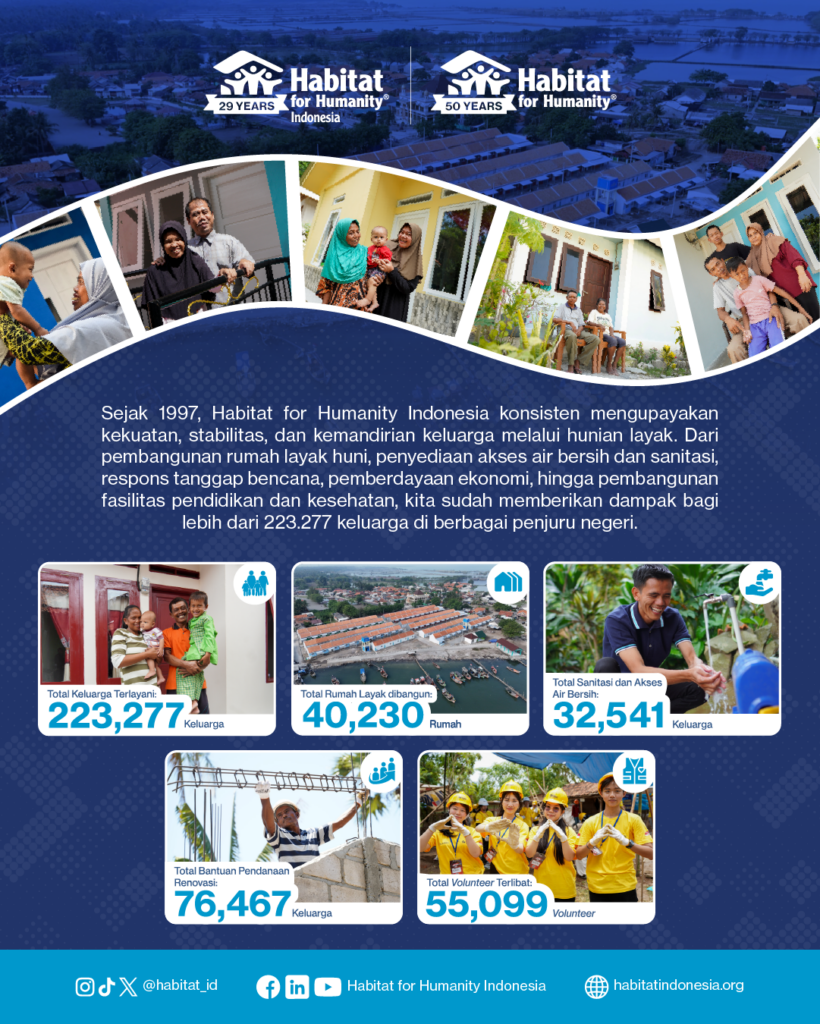
For nearly three decades, Habitat Indonesia has reached more than 223,277 families. This figure represents not just an achievement, but tangible change experienced directly by families across the country. Through various programs—including the construction of decent homes, the provision of access to clean water and sanitation, disaster response, economic empowerment, and the development of education and health facilities—Habitat Indonesia continues to address basic needs while sustainably improving quality of life.
By the end of fiscal year 2026, these contributions have continued to show positive growth. Habitat Indonesia has successfully built 40,230 decent homes, an increase from 39,478 units in the previous year. In addition, 32,541 families have now gained access to clean water and proper sanitation, up from 31,375 families in 2025. Efforts to improve housing quality are also reflected in the 76,467 families who have received home improvement financing support, reinforcing the commitment to creating safer and healthier living conditions.
Behind these figures lies the dedication of many individuals working wholeheartedly. Throughout fiscal year 2026, a total of 1,234 volunteers from diverse backgrounds took part in housing construction activities. Together with Habitat Indonesia staff, partners, and donors, they form an essential part of a collective movement that brings real change on the ground.
Collaboration remains the foundation of these achievements. Continuous support from various stakeholders enables Habitat Indonesia to consistently carry out its mission. Without strong synergy among communities, partners, and volunteers, this journey would not have reached where it is today.
Over the past year, Habitat for Humanity Indonesia has further strengthened its efforts through strategic collaboration with the Ministry of Housing and Settlement Areas (PKP) and local governments to support the national Three Million Houses Program. This collaboration goes beyond physical construction, aiming also to foster well-planned and sustainable settlements. One tangible example is the revitalization of Kampung Tanjung Kait in Tangerang Regency, where 110 fishing families now have access to land ownership and decent housing equipped with basic infrastructure—creating a safer, healthier, and more organized living environment.
Key achievements of Habitat for Humanity Indonesia’s flagship programs over 29 years. Graphic: HFHI/Tias Ester Widhari
National Director of Habitat Indonesia, Handoko Ngadiman, emphasized that these achievements are inseparable from the strength of collaboration built over time.
“We believe that everyone deserves a decent place to live. What we have achieved today is the result of trust and collective effort from many parties. We extend our deepest gratitude to all partners, donors, and volunteers who have walked alongside us in bringing real change to families across Indonesia,” said Handoko.
Looking ahead, Habitat Indonesia remains committed to expanding the impact of its programs. Beyond short-term assistance, each initiative is designed to create sustainable change, promote self-reliance, improve quality of life, and open broader opportunities for beneficiary families.
Handoko also stressed that meaningful change can only be achieved through consistent and sustained collaboration.
“We believe that when different stakeholders come together, we can not only meet basic needs but also pave the way toward a more prosperous life for more families in Indonesia,” he added.
This journey is far from over. Many families are still waiting for access to decent housing and a better life. However, with a strong spirit of collaboration, Habitat Indonesia will continue to move forward, remain present within communities, and be part of meaningful change.
Let us continue this journey together—planting more hope, creating more opportunities for decent living, and building a better future for Indonesia.
Bekasi, April 28, 2026 – Access to clean water remains a real challenge for many communities, including those in Pasirranji and Sukamahi Villages, Central Cikarang, Bekasi Regency. Uneven water distribution has made it difficult for residents to meet their daily needs, especially during the dry season.
In response to this challenge, Bosch Indonesia, in collaboration with Habitat for Humanity Indonesia, implemented the BOSCH Water Project by supporting the installation of PDAM water connections to 40 households across both villages.
A total of 30 volunteers from Bosch Indonesia were actively involved in the volunteering activity on April 22, 2026. Their participation reflected a strong spirit of collaboration, as they directly contributed to the construction process to support sustainable improvements for beneficiary families.
Fenny Sofyan, Country Head of Corporate Communications, Branding Management, and Government Relations at BOSCH Indonesia, shared:
“This initiative is something we are truly proud to be part of, as we can directly contribute to providing clean water access for families here. Through this collective effort, we hope beneficiary families can experience an improved quality of life, as water is a fundamental need, and its impact can extend to other aspects such as health and children’s education.”
Take a look at the moments captured as volunteers came together to help bring clean water access to these communities.
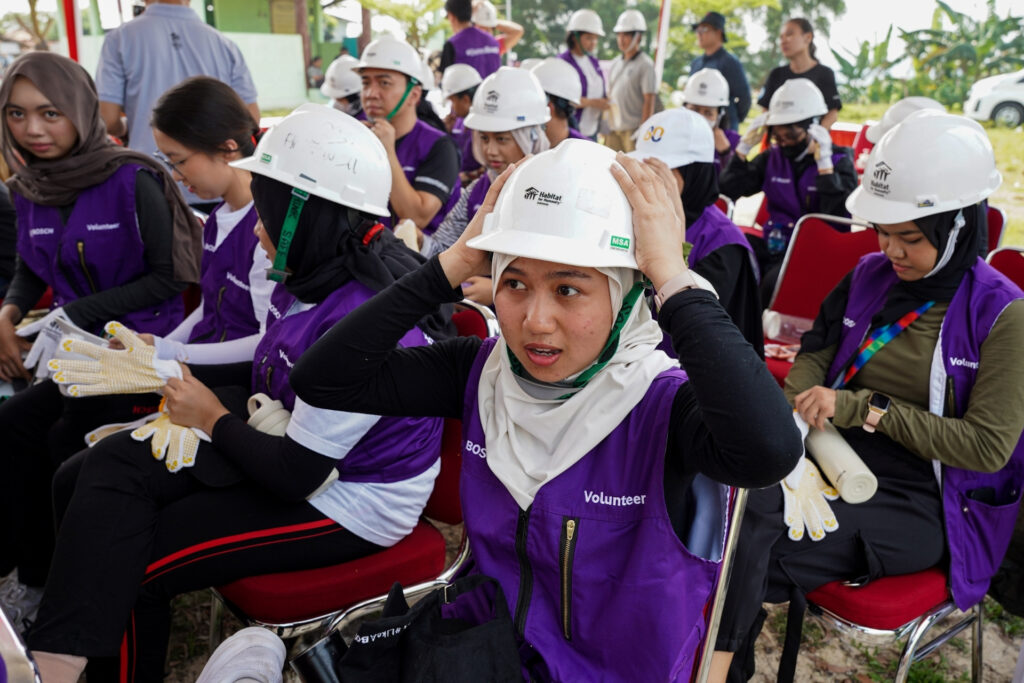
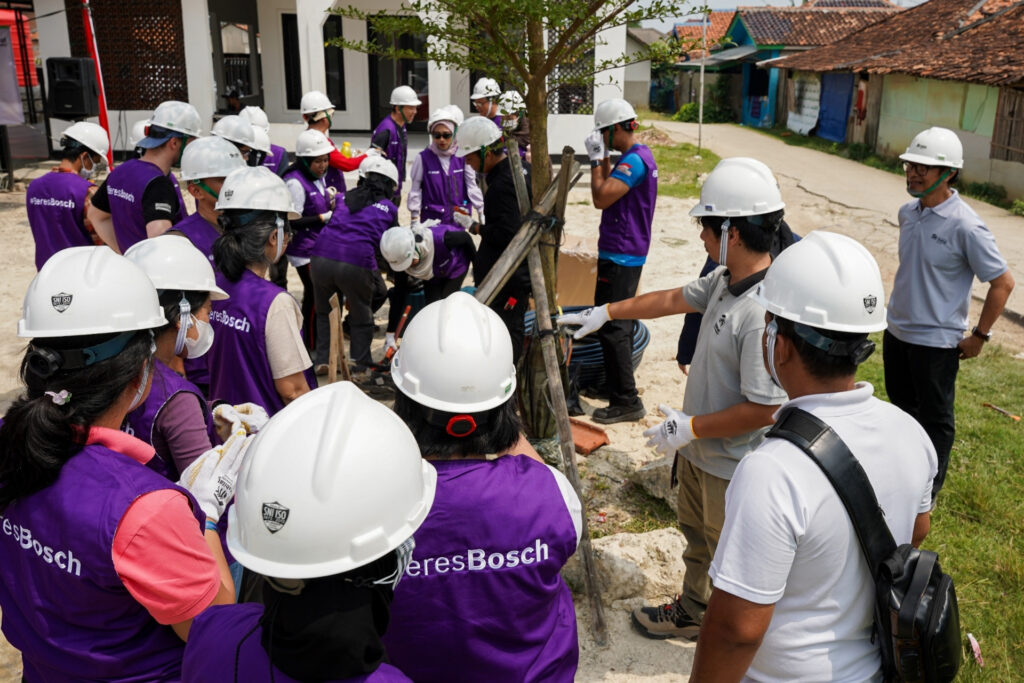
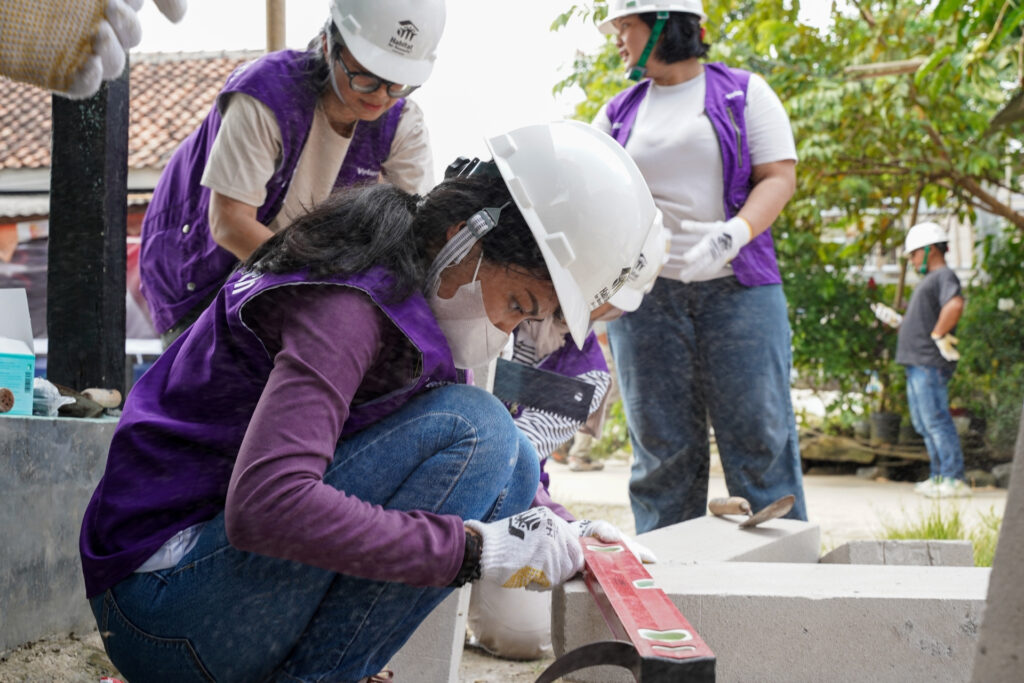
The day begins with preparation. Volunteers put on safety helmets and gloves, showing their commitment to working safely before heading into the field.
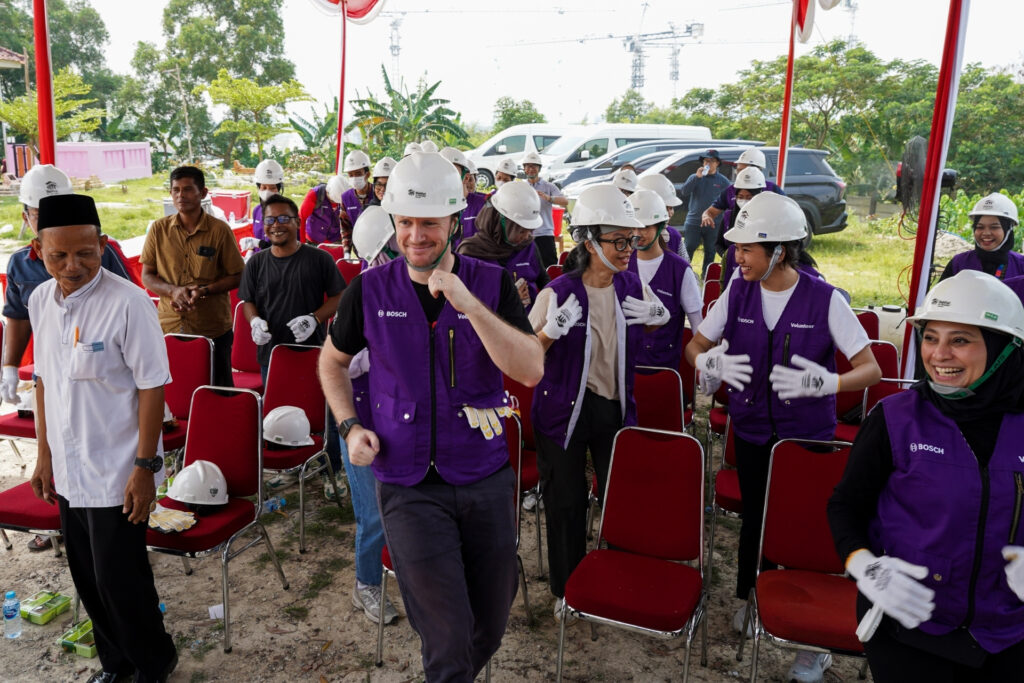
Before starting the activities, volunteers take part in a group warm-up session to ensure they are physically ready for the day ahead.
Technical guidance is delivered by Konkordius Nobel, Project Coordinator at Habitat for Humanity Indonesia. Volunteers are introduced to the tools and divided into three groups based on their roles.
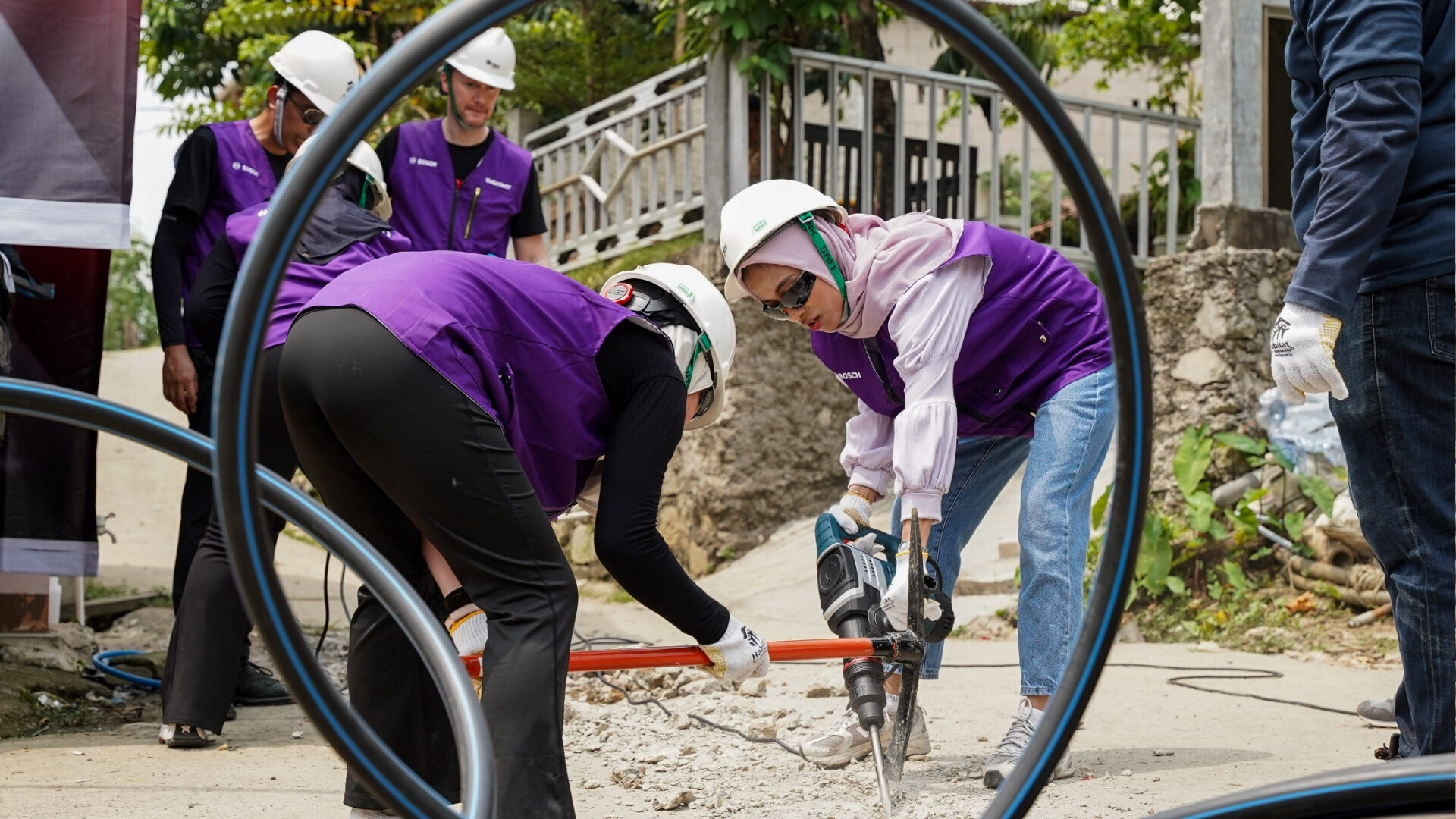
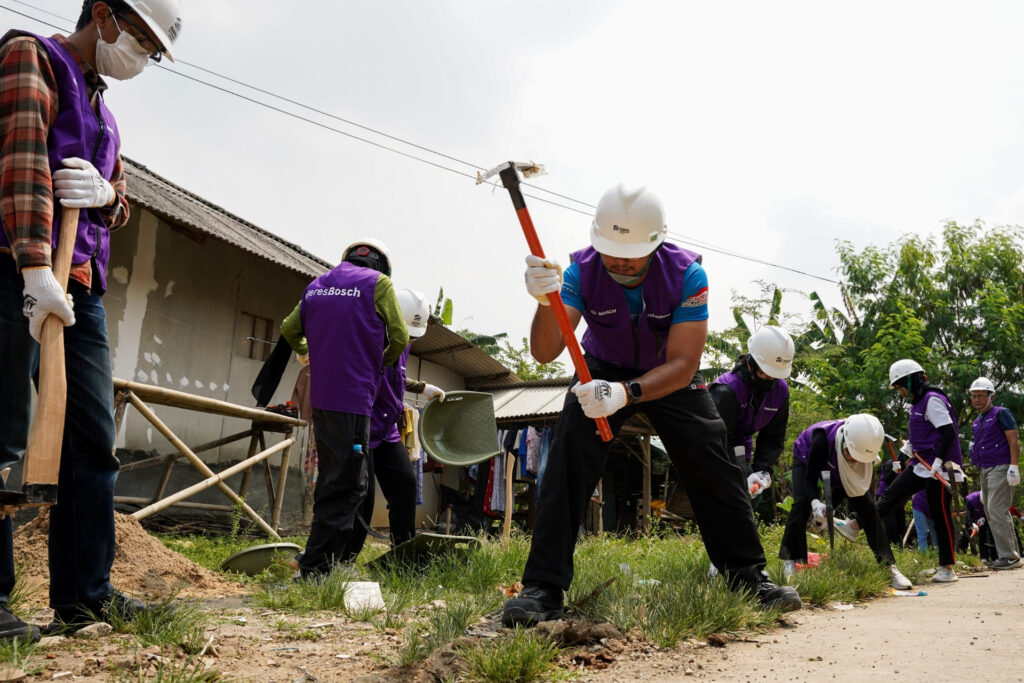
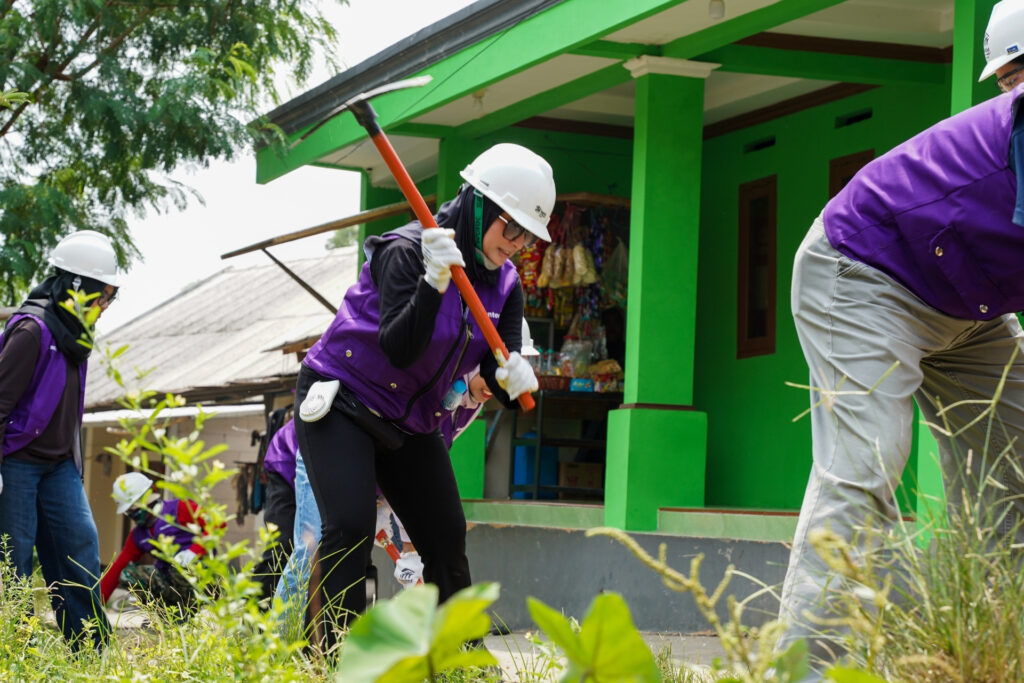
The first group begins digging trenches. Soil is carefully removed to create pathways for HDPE pipes that will carry clean water to the households.
Under the scorching sun, the volunteers’ spirit remains strong. Teamwork and camaraderie fuel every step of the work.
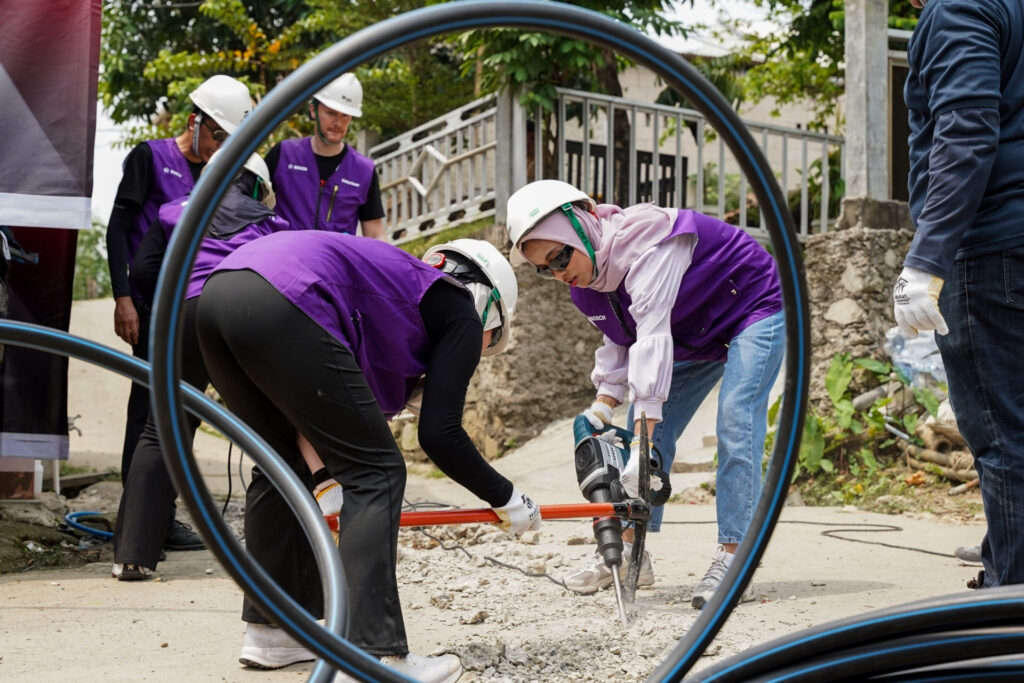
Using BOSCH drilling tools, volunteers break through concrete surfaces to create new pathways for the water pipelines.
Meanwhile, another group prepares lightweight bricks as bases for installing water meters in each beneficiary’s home.
Junianto Nugroho, Senior Project Manager at Habitat for Humanity Indonesia, provides hands-on guidance to volunteers during the water meter installation process to ensure proper standards.
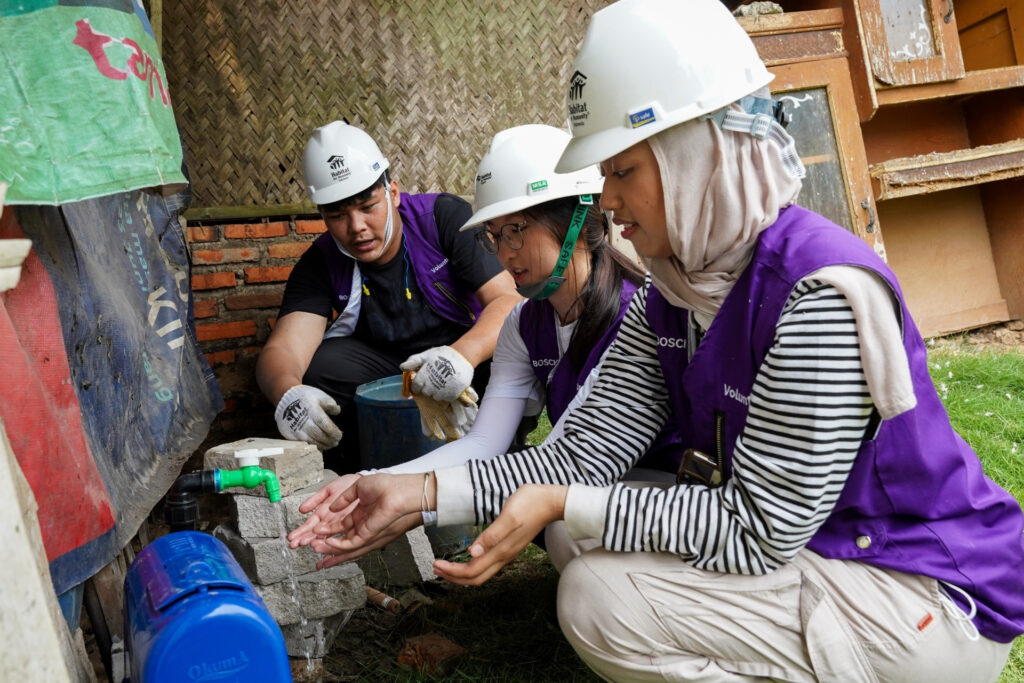
The collective effort finally pays off. Water meters are successfully installed, and clean water begins to flow into the households for the first time.
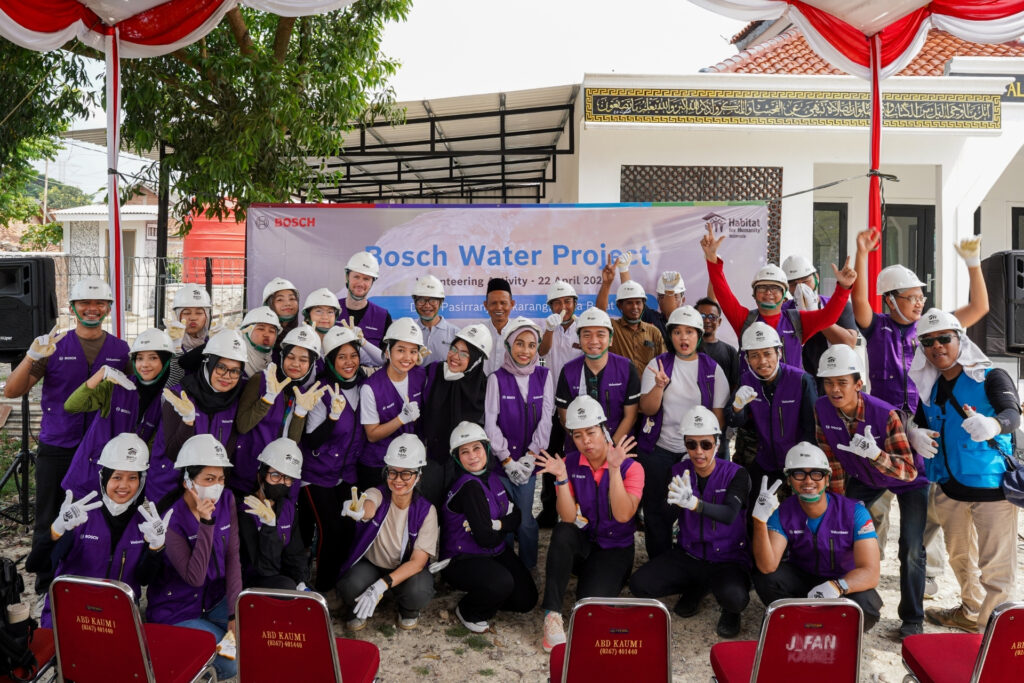
The day concludes with a group photo of BOSCH volunteers. This experience is hoped to be a starting point for lasting change in the community.
Tangerang, April 18, 2026 — That morning, sunlight slowly filtered through the gaps of a white tent set up at a decent housing construction site in Mauk, Tangerang Regency, Banten. The air felt warm—not only because of the rising sun, but also due to the energy of dozens of volunteers who were ready to begin their day in a way that was different from their usual routine.
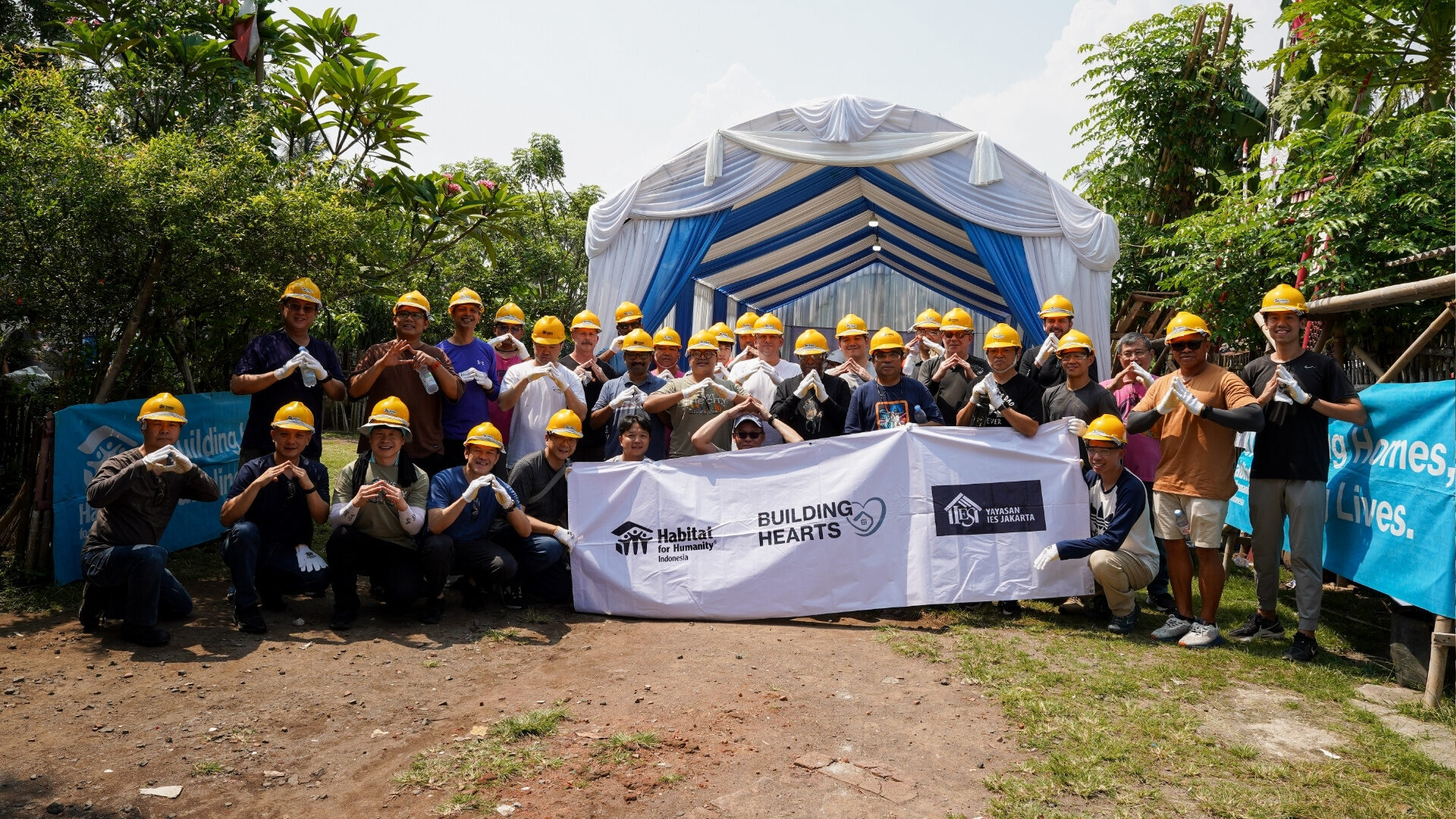
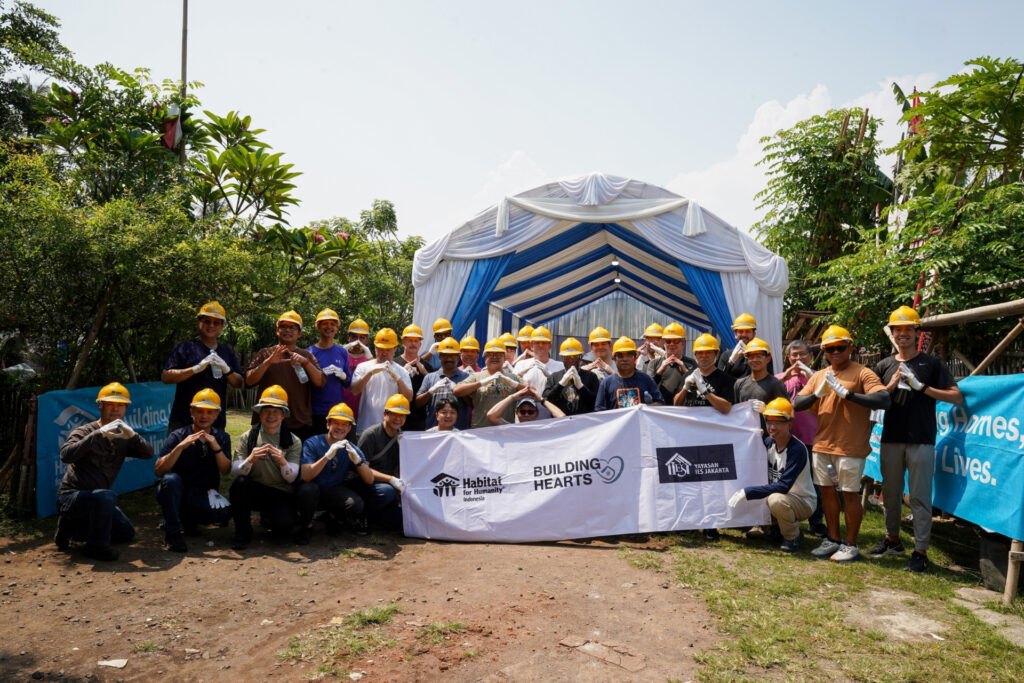
A total of 40 volunteers from Yayasan IES Jakarta came together with a shared purpose: to take part directly in building decent homes alongside Habitat for Humanity Indonesia. For many of them, it was their first time stepping onto a construction site, handling building tools, and contributing tangibly to the process of home construction.
The activity, titled “Building Hearts,” held on Saturday, April 18, 2026, became a space not only for giving but also for learning and experiencing. Before starting, all participants attended a safety briefing and a warm-up session—an important step to ensure that all activities would run safely, especially for volunteers unfamiliar with physical fieldwork.
Afterward, the volunteers were divided into four groups. Two groups were assigned to dig the foundations, while the other two began building the walls of the houses. What seemed like simple tasks became the foundation for meaningful change for four beneficiary families who had long been living in difficult conditions.
These families are part of low-income communities, working primarily as daily laborers with earnings of no more than IDR 1,500,000 per month. With such limited income, they had been forced to live in inadequate housing. However, through continued support from Yayasan IES Jakarta volunteers since 2023, they are now among 56 families given the opportunity to own safer and more decent homes.
Under the midday sun, the atmosphere at the construction site was vibrant. Volunteers worked side by side, helping one another, often accompanied by laughter and lighthearted conversations that eased the intensity of the work. Tasks such as digging soil or installing building materials—once unfamiliar—became deeply meaningful experiences.
One volunteer, Markus, who has participated in this activity for the third time, shared that being directly involved in the field gave him a new perspective on what it means to give.
“For me, this activity is a real example of how we can participate and contribute to others. Through building these homes, I hope the families who receive them can truly improve their quality of life in the future,” he said.
A similar sentiment was expressed by Rajib, another volunteer, who sees the construction of these homes as the beginning of a greater transformation for the beneficiary families.
“I believe this home can be a strong foundation for a better life. With decent housing, these families will have greater opportunities to grow, including providing a better future for their children,” Rajib added.
This activity serves as a reminder that change does not always have to begin with grand actions. In fact, simple efforts carried out together can create a far-reaching impact. Although the activity lasted only until midday, the experience gained by the volunteers extended far beyond the hours they spent on-site.
More than just building houses, the day was about building empathy, broadening perspectives, and experiencing firsthand how a decent home can transform lives.
In the coming weeks, the four beneficiary families will soon move into their new homes—homes that are not only structurally stronger but also bring a sense of safety, comfort, and renewed hope.
May these homes mark the beginning of better lives—places where each family member can rest peacefully, share warmth, and look toward the future with optimism.
Bogor, April 20, 2026 – Habitat for Humanity Indonesia, in collaboration with Prudential Indonesia, has continued the Desa Maju Prudential (DMP) Program into its second year. The continuation of this program reinforces the commitment of both parties to promote integrated improvements in housing quality, public health, and community resilience.
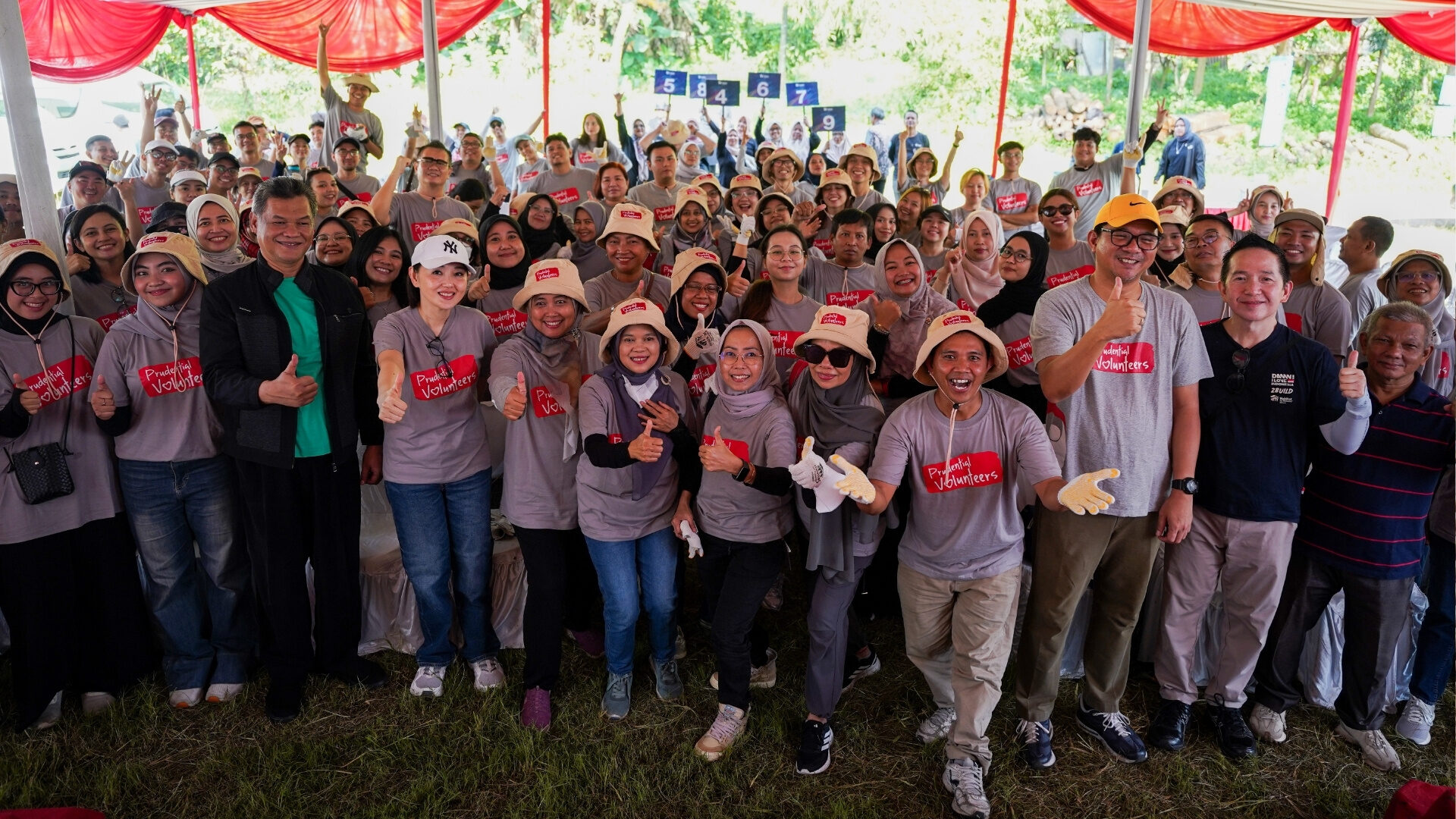
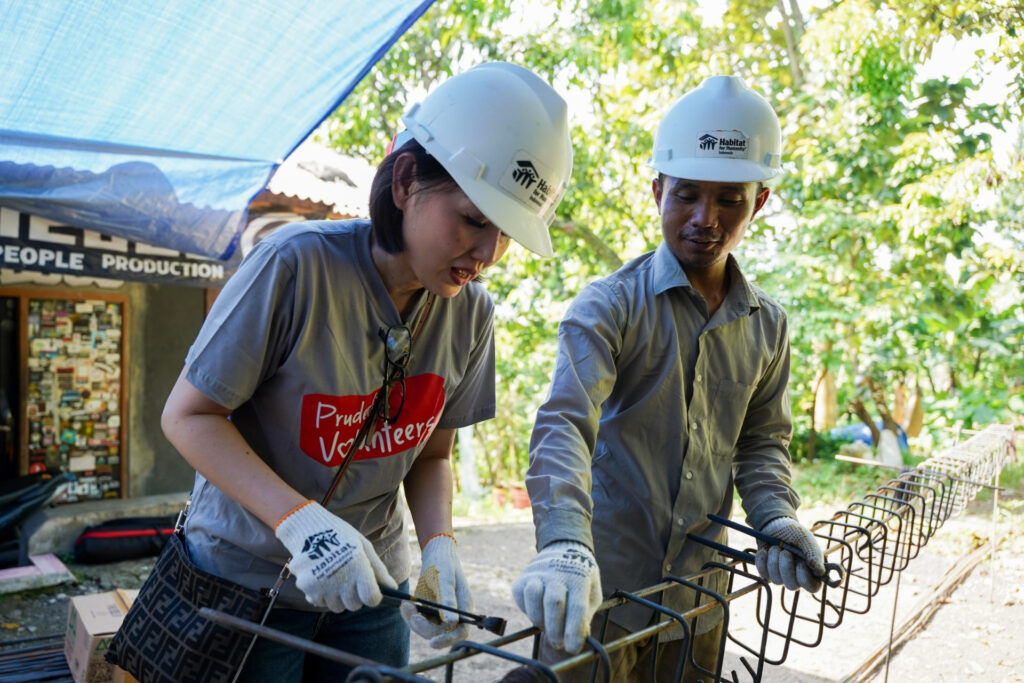
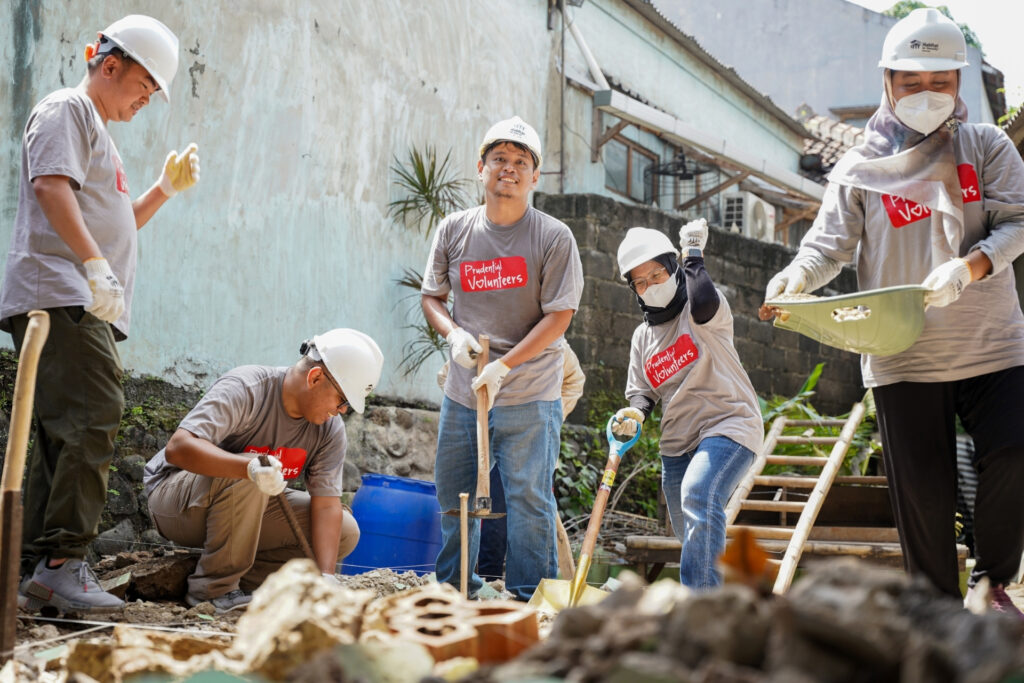
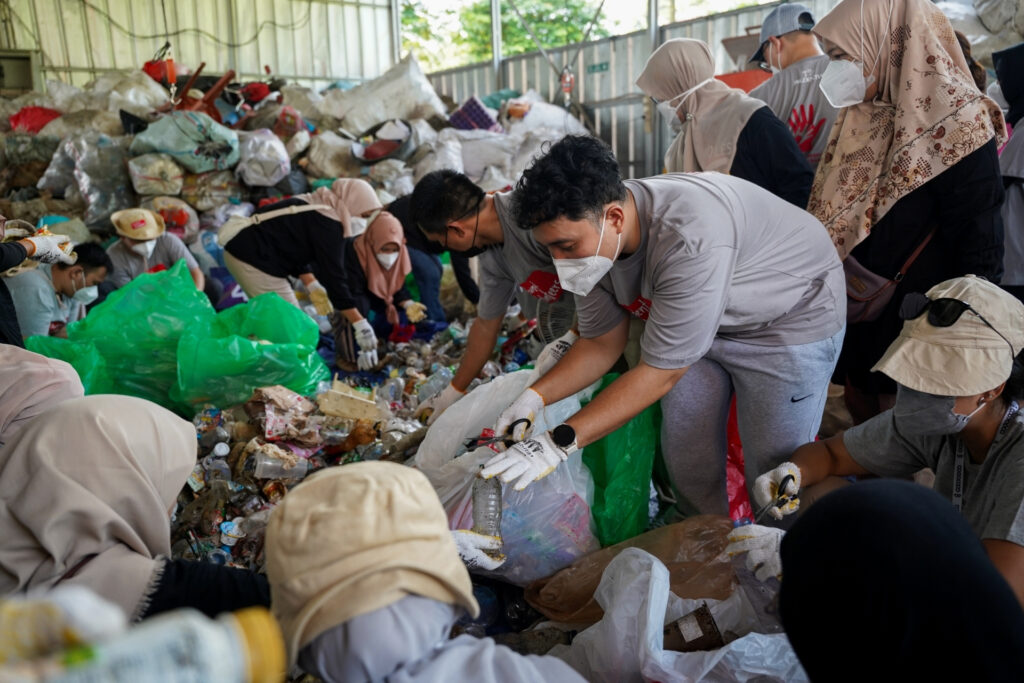
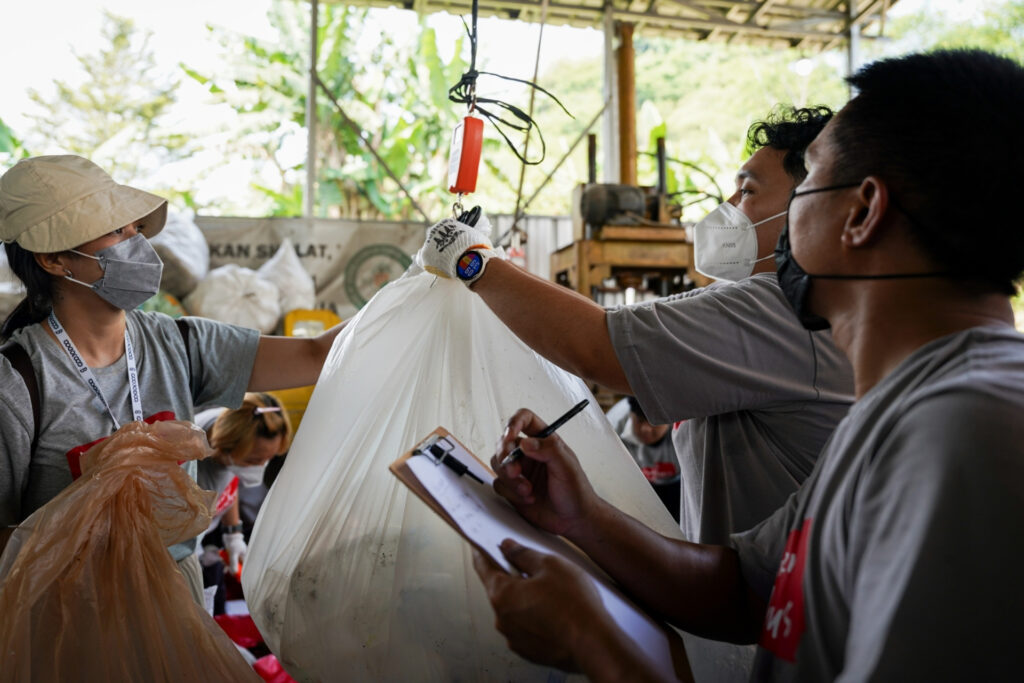
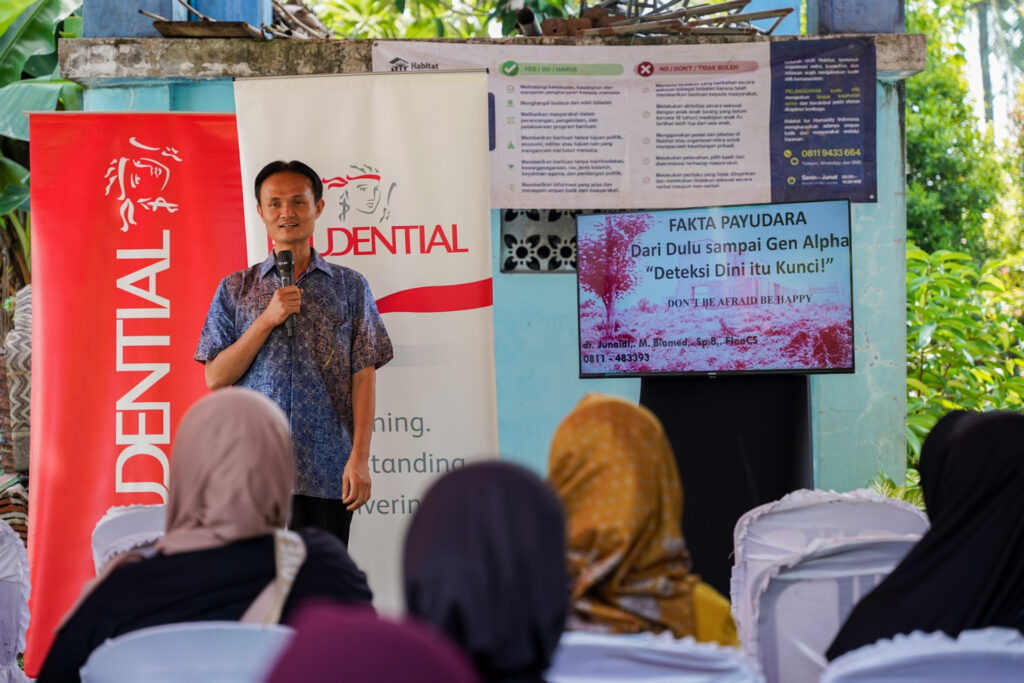
This year’s implementation was marked by the involvement of 110 volunteers from Prudential Indonesia in various construction and community empowerment activities held in Gunung Putri Village, Bogor Regency, on April 11 & 18, 2026. The volunteers were directly engaged in building the foundations and walls of adequate housing, waste management activities, the creation of biopore holes, as well as conducting health education sessions (health talks) and providing medical check-up services for the community. These activities also formed part of the commemoration of World Health Day, observed on April 7.
In its second year of implementation, the DMP program targets the construction of 15 new adequate housing units and 10 household toilets. In addition, the program includes the renovation of two schools, the planting of 60 seedlings, and various community training initiatives. A total of 110 families will receive training on basic construction and healthy housing, waste management, and clean and healthy living behavior (PHBS). The program is also expanded with participatory approach training for safe shelter awareness (PASSA) for Disaster Preparedness Team (Destana) members, as well as Community-Based Disaster Risk Management (CBDRM) training.
These achievements build upon the positive results from the previous year. In its initial phase, the DMP program successfully constructed 12 new adequate houses and 11 household toilets, and renovated two schools. The program also supported the expansion of community-based waste banks along with their supporting facilities, planted 48 seedlings, and provided basic construction and healthy housing training to 100 families. In addition, 175 waste management committee members and family representatives received waste management training, while 100 families participated in PHBS training.
Maria Rosalinda, Chief Risk & Compliance Officer of Prudential Indonesia, expressed her hope that the program would bring tangible benefits to the community. “On behalf of Prudential, we hope that the Desa Maju Prudential program can help communities improve family health, both through the construction of adequate housing and sanitation facilities, as well as through health services such as those provided today,” she stated.
Appreciation was also expressed by the Head of Gunung Putri Village, Daman Huri, who highlighted the direct benefits of the program for the local community. “This program is highly beneficial for the people of Gunung Putri, especially for the direct beneficiaries of the DMP program. I appreciate the collaboration and support between Prudential Indonesia and Habitat Indonesia over the past three years, which aligns with the government’s program of achieving Zero Substandard Housing. I am also grateful that this program not only focuses on housing development but also addresses health and education sectors,” he said.
Throughout 2025, the Desa Maju Prudential program reached a total of 18,160 beneficiaries in Gunung Putri Village, consisting of 1,861 direct beneficiaries and 16,299 indirect beneficiaries.
Moving forward, the collaboration between Habitat Indonesia and Prudential Indonesia is expected to further expand the program’s impact through an integrated approach—not only in providing adequate housing, but also in improving health, environmental conditions, and community capacity to build more sustainable livelihoods.
Tangerang, April 17, 2026 – There was a time when rain was not something to look forward to, but something to fear. For Siti, every strong wind and heavy downpour was a signal that she and her family had to prepare to leave their home—not to seek shelter, but to escape danger.
Siti, 40, is a homemaker living in Rajeg, Tangerang Regency, with her husband and three children. Her husband works as a scrap goods trader in Jakarta, with an unstable income. In a week, he can only bring home around IDR 200,000 to cover the family’s needs, from school expenses to daily meals.
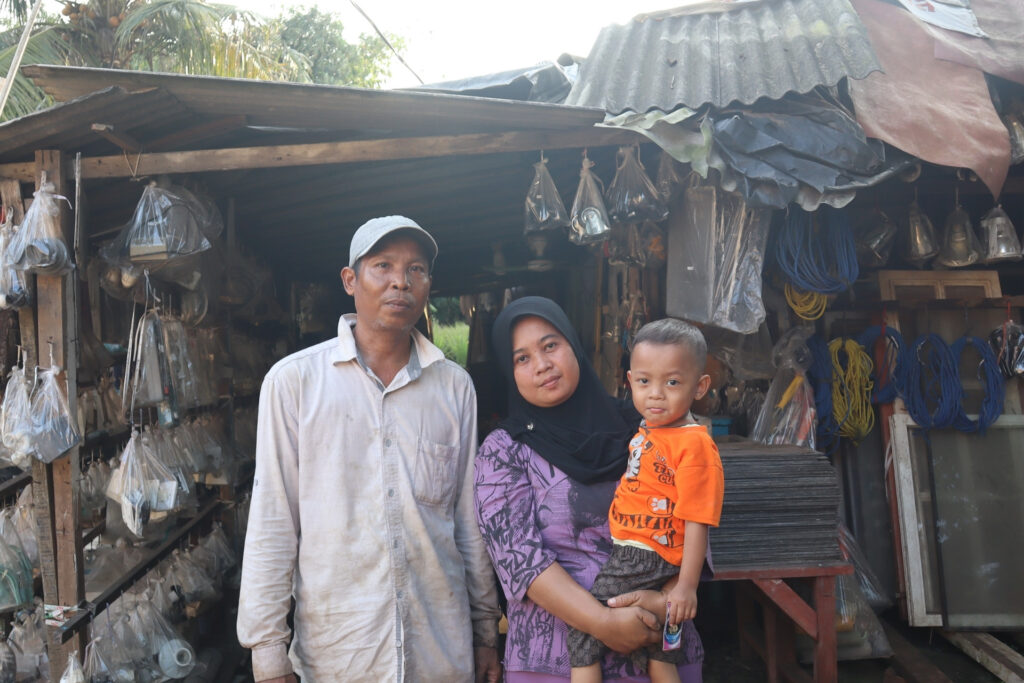
The house they live in is far from decent. Its walls are made of layers of corrugated metal sheets, plywood, and tarpaulin supported by bamboo panels. Many of the roof tiles are broken, and the floor is still made of soil. The house does not even have its own bathroom or toilet.
“Our old house, if you say it was not livable, then yes—it really wasn’t,” Siti said. “When it rained, the whole family experienced leaks. When there were heavy winds, instead of taking shelter inside, we had to run outside because we were afraid the house would collapse.”
The lack of basic facilities made daily life full of limitations. For simple needs such as bathing, using the toilet, and cooking, Siti had to rely on her parents’ or relatives’ homes. “If I needed to use the toilet, I had to borrow one. If I wanted to bathe, I had to borrow one. Even for cooking, I had to ask for water,” she explained.
A portrait of Siti’s family in front of their inadequate home in Rajeg, Tangerang Regency, Indonesia. Photo: HFHI/Indah Mai
In such constrained conditions, Siti also had to face the harsh reality that her family’s food needs were not always met. There were days when they could eat in the morning but not in the evening, or vice versa. This situation inevitably affected her children’s growth, as they struggled to have a proper space to play and study.
“Our lives were very hand-to-mouth. We only had enough for daily meals. My husband’s work meant he sometimes came home once a week or every two weeks, depending on whether he had money to bring back,” Siti said.
Life became even more difficult when her husband fell ill. Without income, Siti had to face an uncertain situation while her children’s needs continued.
“Before this house was built, my husband once fell sick and couldn’t work, while the children still needed money for school. I was confused and cried, not knowing what to do. There was no income at all, and on top of that, the house was not livable,” she recalled.
In that situation, Siti could only rely on help from her parents and relatives. She often felt ashamed, and eventually decided to work as a domestic helper in her neighborhood to ensure her children could still eat.
Amid all these limitations, Siti could only endure and surrender. “Because of these limitations, I could only adapt to the condition of the house and put my trust in God,” she said.
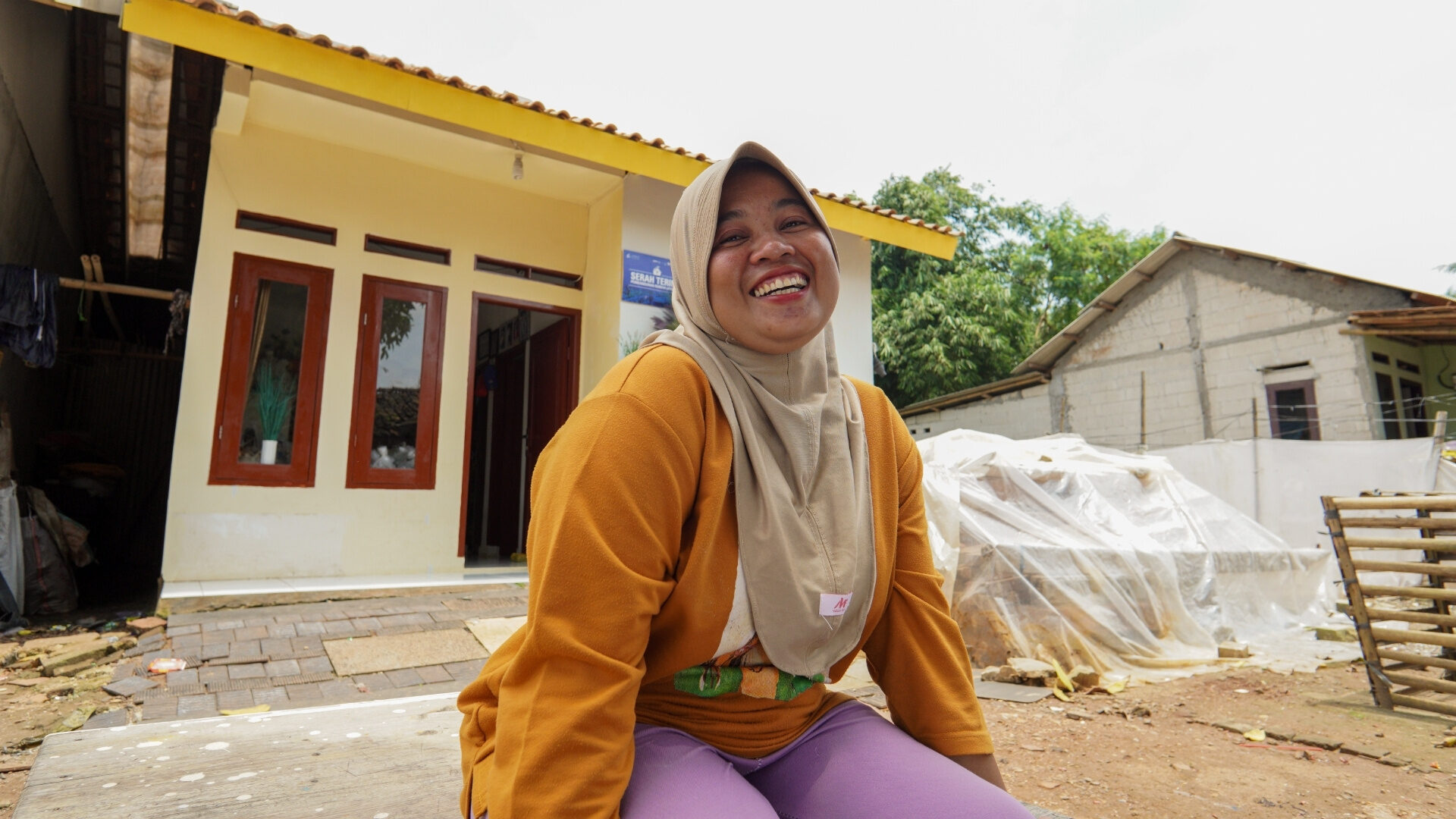
Then, hope finally arrived. With the support of donors, Habitat for Humanity Indonesia rebuilt Siti’s house into a decent home. Today, her house has been completely transformed. Sturdy cream-colored walls now stand firmly, a strong roof protects against heat and rain, and proper bathroom and toilet facilities are now available inside the house.
“Alhamdulillah, my house is now livable. When it rains, I no longer experience leaks, and I don’t have to run out of the house to my relatives’ home anymore,” Siti said with gratitude.
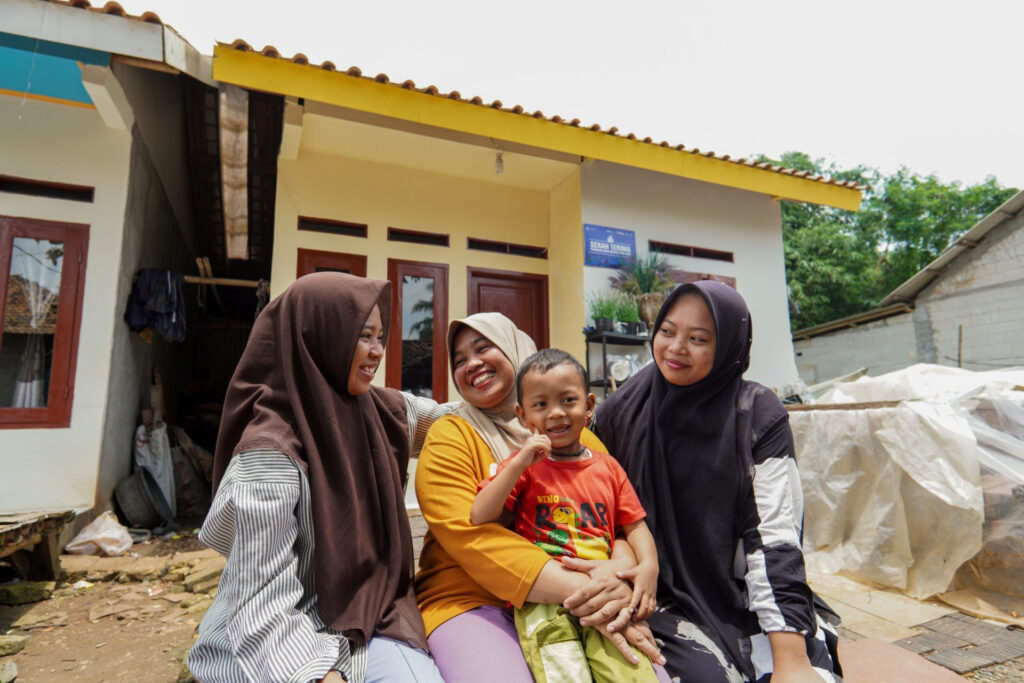
A portrait of Siti’s family in front of their now decent home, made possible by the support of donors through Habitat for Humanity Indonesia in Rajeg, Tangerang Regency, Indonesia. Photo: HFHI/Kevin Herbian
This transformation has brought significant changes to her family’s life. Siti now feels more confident and no longer ashamed. “Now I am more grateful. I finally have a home like my neighbors. Especially now that I have my own bathroom and room, I no longer feel embarrassed about having to rely on other people’s houses,” she said.
Siti’s children now also have their own space to rest and study. Where they once had to sleep in the kitchen area, they now have bedrooms that provide comfort and privacy. “Now it’s different—my children have their own rooms to sleep in, no longer mixed together,” Siti explained.
In addition, the improved housing conditions also support the family’s health. A cleaner environment, proper sanitation, and a safer building structure provide a sense of security they had never experienced before.
With these changes, Siti looks toward the future with renewed hope. “I hope this new house can bring new fortune to my family, and that the difficult times we experienced before will not happen again,” she said.
Siti is one of millions of families in Indonesia who have moved beyond the hardship of inadequate housing. Behind every home that stands, there is a story of resilience, hope, and dreams gradually coming true. “A home means everything to me,” she concluded.
Let’s work together to help more families like Siti’s have safe and decent homes. Visit the following link and be part of real change for those in need.
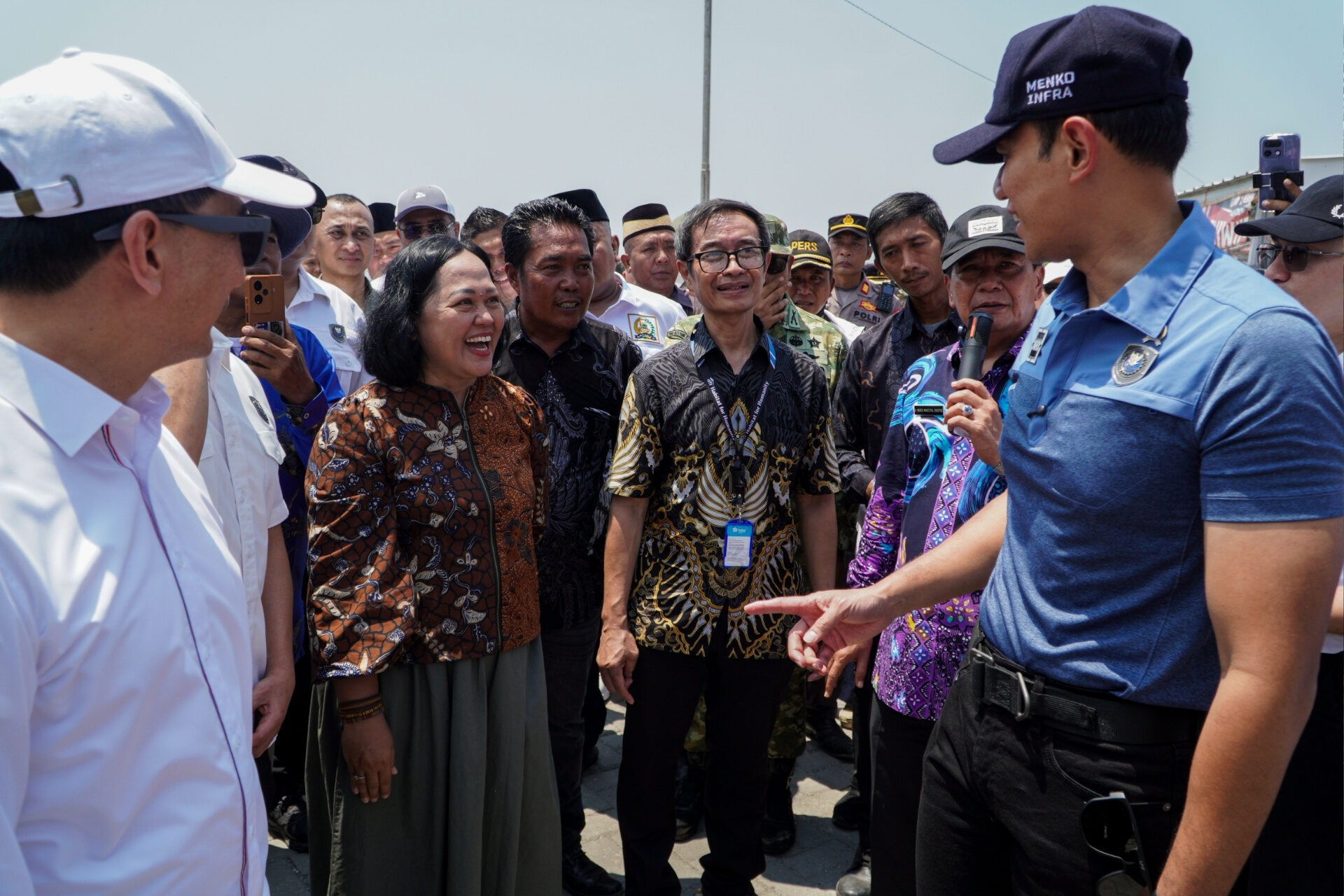
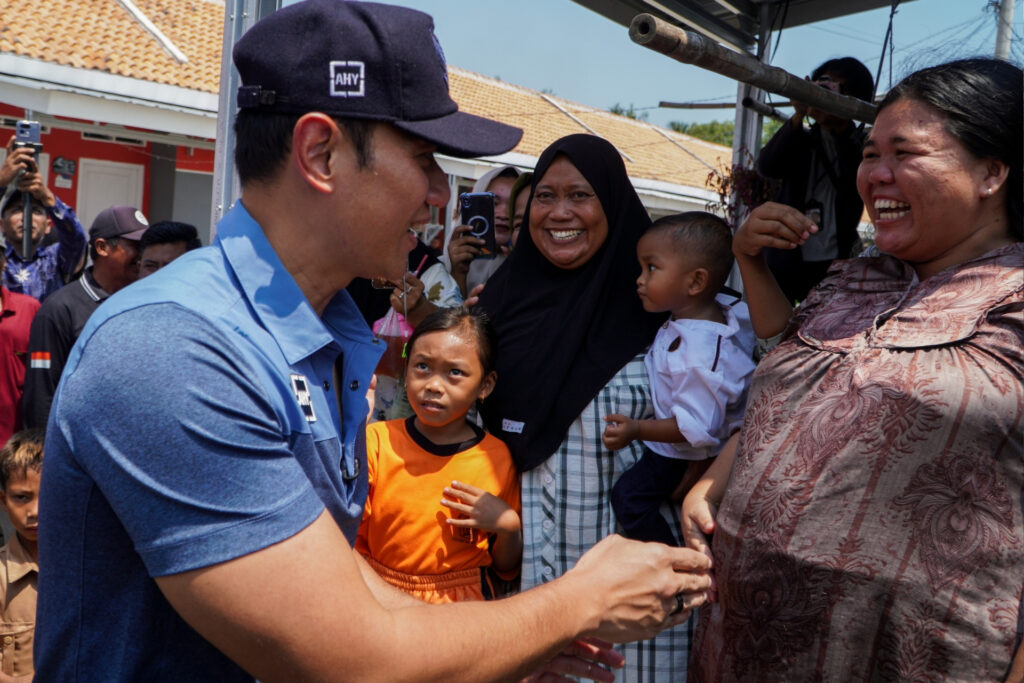
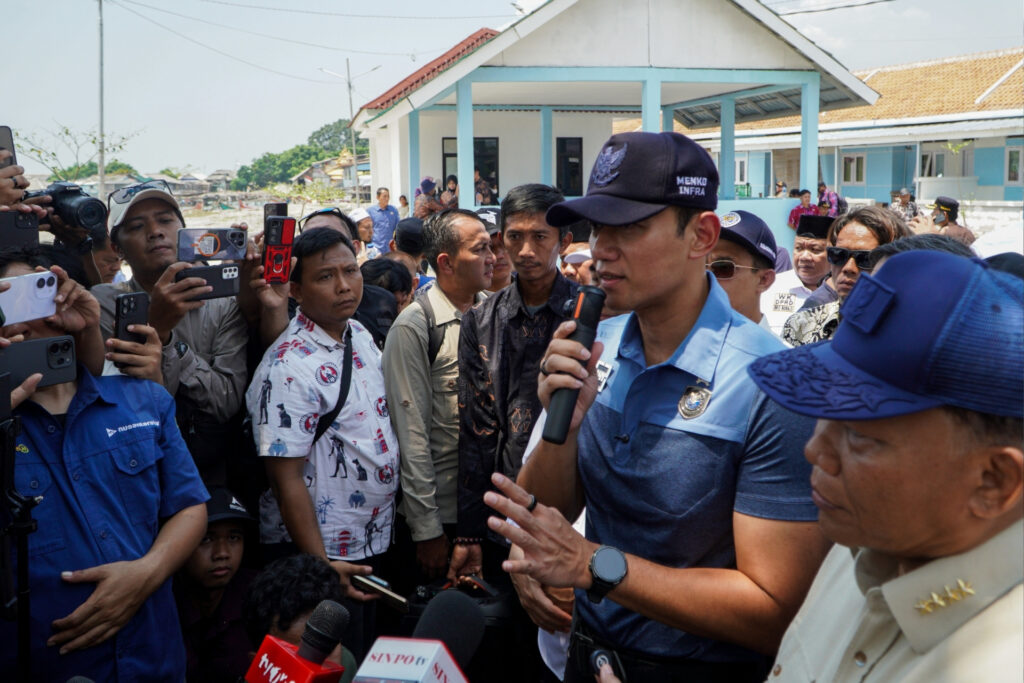
Tangerang, April 16, 2026 – Coordinating Minister for Infrastructure and Regional Development (Menko Infra), Agus Harimurti Yudhoyono (AHY), together with the Vice Minister of Marine Affairs and Fisheries (Wamen KKP), the Vice Governor of Banten, and the Regent of Tangerang, Moch. Maesyal Rasyid, conducted a working visit to review the results of the revitalization of Kampung Nelayan Tanjung Kait by Habitat for Humanity Indonesia in Tanjung Anom Village, Mauk District, Tangerang Regency on Thursday (16/4). This visit marks the success of collaboration between the government, private sector, and civil society organizations in creating an inclusive and climate-resilient coastal settlement model.
“We can all see that the fishermen’s settlement area has now been transformed into a place that is suitable for living. We want to ensure that this area is not only comfortable to live in, but also productive. Together with Habitat for Humanity Indonesia, which built and improved 110 houses, we witnessed firsthand that the community is happy to live in comfortable homes. I truly appreciate all parties involved—the Ministry of Marine Affairs and Fisheries, the Ministry of Agrarian Affairs and Spatial Planning, the Banten Provincial Government and Tangerang Regency Government, as well as Koperasi Mitra Dhuafa—for their collaboration in revitalizing this fishing village. We hope to continue strengthening this community over time,” said AHY.
“We hope that the synergy between the central government, regional governments, and non-governmental organizations in managing coastal areas can serve as a model for sustainable development in coastal regions—one that not only provides adequate housing but also considers environmental aspects and supports the economic growth of the community,” added Tangerang Regent, Moch. Maesyal Rasyid.
The Tanjung Kait revitalization program, which is part of the global “Home Equals” campaign by Habitat for Humanity Indonesia, has successfully transformed a vulnerable informal settlement into a legal and adequate living environment for 110 traditional fisher families. This project demonstrates that housing challenges in Indonesia can be addressed through a holistic, community-centered approach, revitalizing the social contract that has long been neglected due to inequality.
“The transformation of Tanjung Kait from a slum into a legal settlement for 110 fisher families was achieved through complex cross-sector collaboration. Using a participatory approach, residents were actively involved in designing climate-resilient housing and disaster mitigation measures. This success is supported by strong management between Habitat Indonesia, the government, as well as donors such as Prudential, PT Lautan Luas, and other industry partners to build an equitable housing ecosystem,” explained Arwin Soelaksono, Program Director of Habitat for Humanity Indonesia.
The revitalization of Kampung Tanjung Kait is based on four main pillars aimed at restoring human dignity and social justice:
Land Tenure Security: Breaking the cycle of vulnerability by facilitating access to legal land ownership through inclusive financing schemes in collaboration with Koperasi KOMIDA.
Meaningful Participation: Residents are actively involved as architects of their own future through the PASSA (Participatory Approach for Safe Shelter and Settlements Awareness) method.
Climate Change Adaptation: Construction of housing units designed with Build Back Safer (BBS) principles to address threats such as tidal flooding and extreme winds in coastal areas.
Access to Basic Services: Provision of integrated infrastructure, ranging from clean water and sanitation to electricity networks and drainage systems, to restore dignity and productivity of residents.
The program, which began in June 2023, has gone through several critical phases, including land legalization in October 2024 and completion of construction in December 2025. Residents have now returned to permanent and healthy homes. Moving forward, Tanjung Kait is projected to become a “Traditional Fisherfolk Tourism Village” to promote the community’s economic and ecological independence.
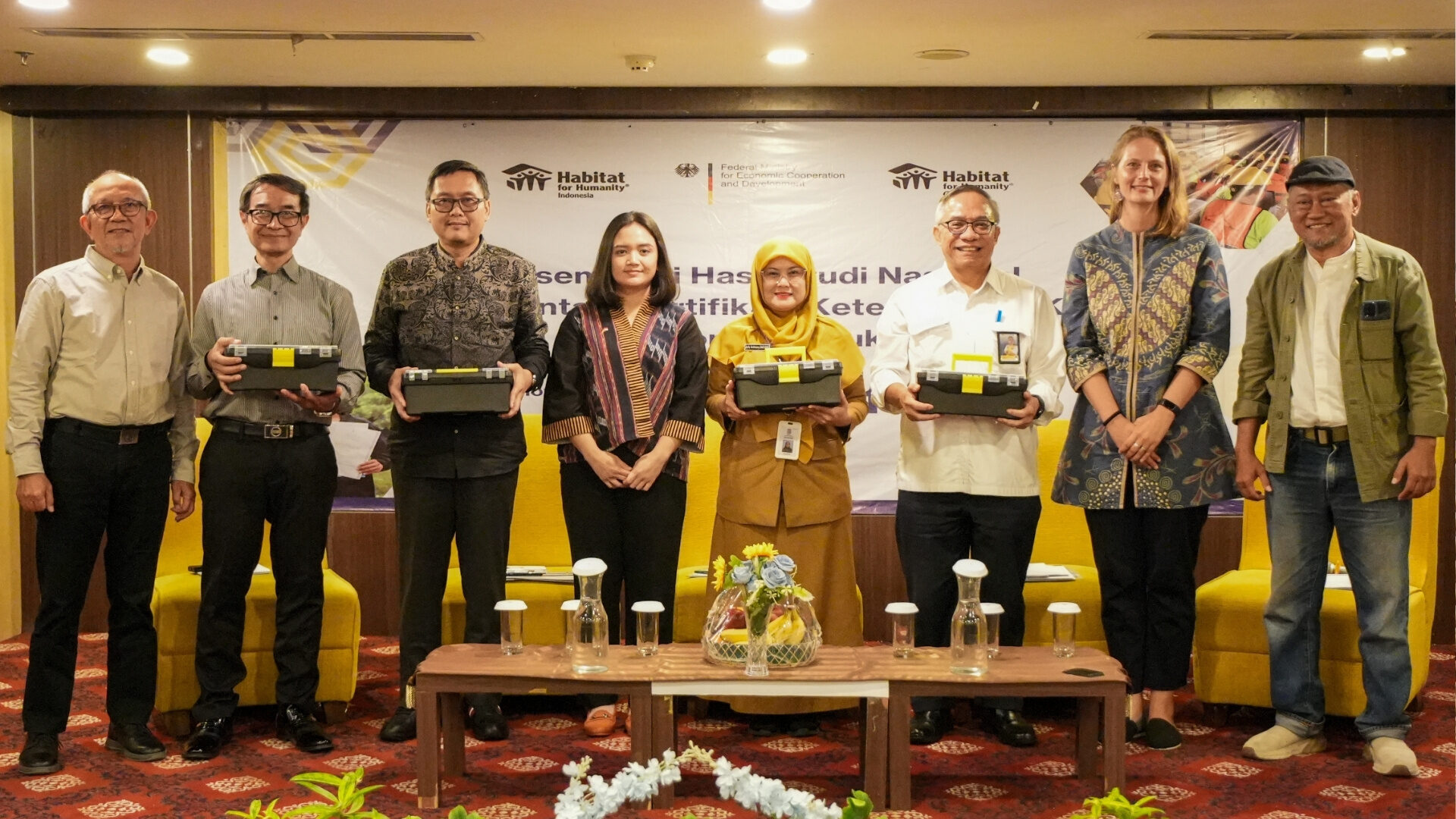
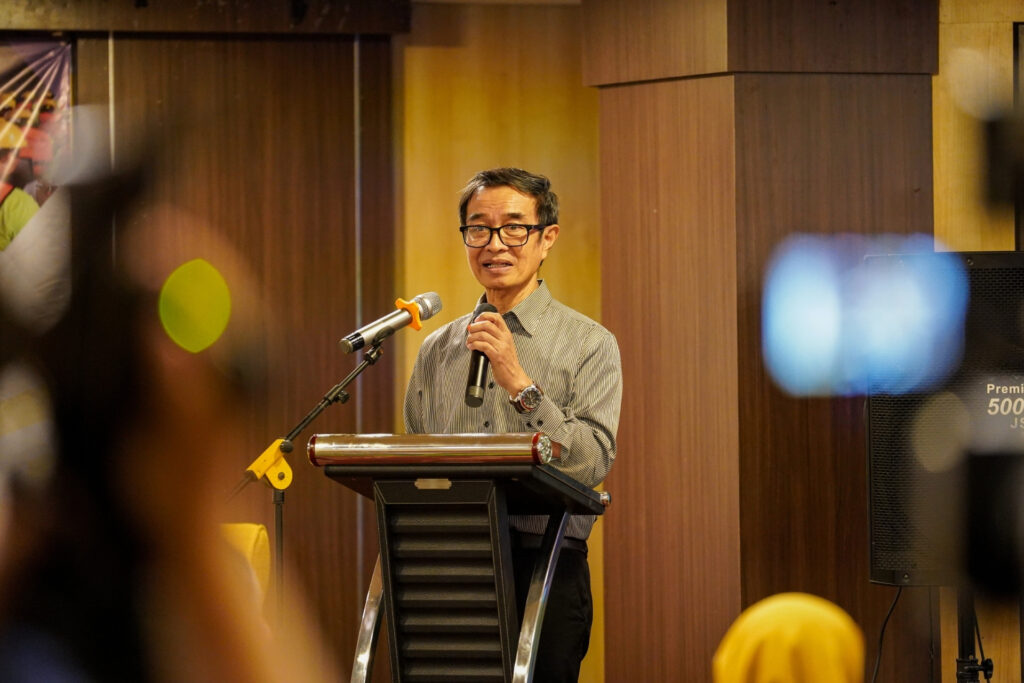
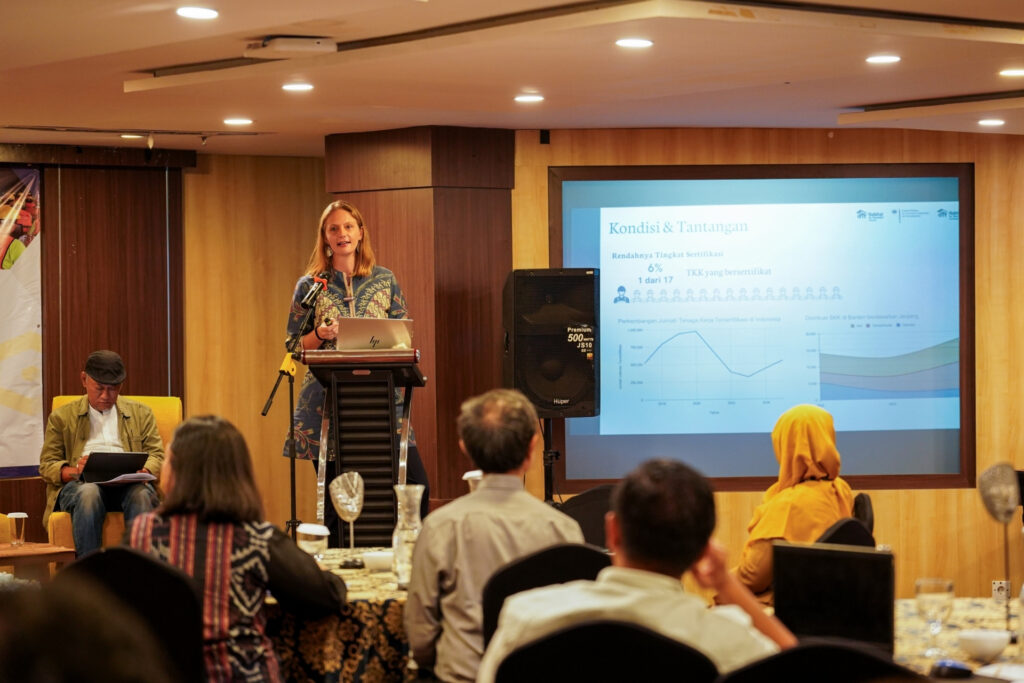
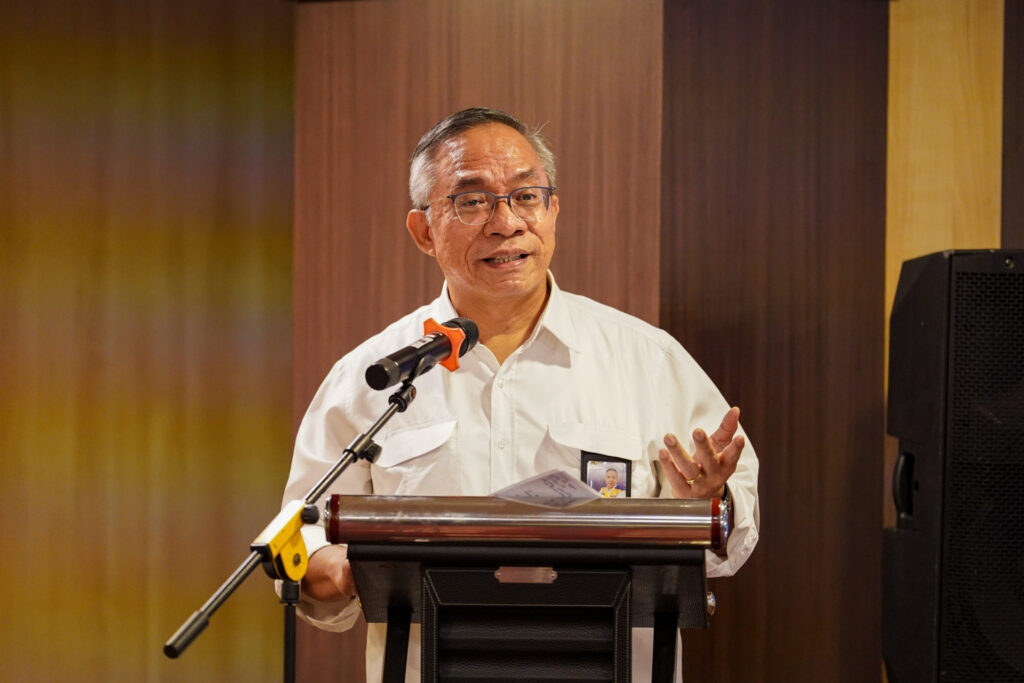
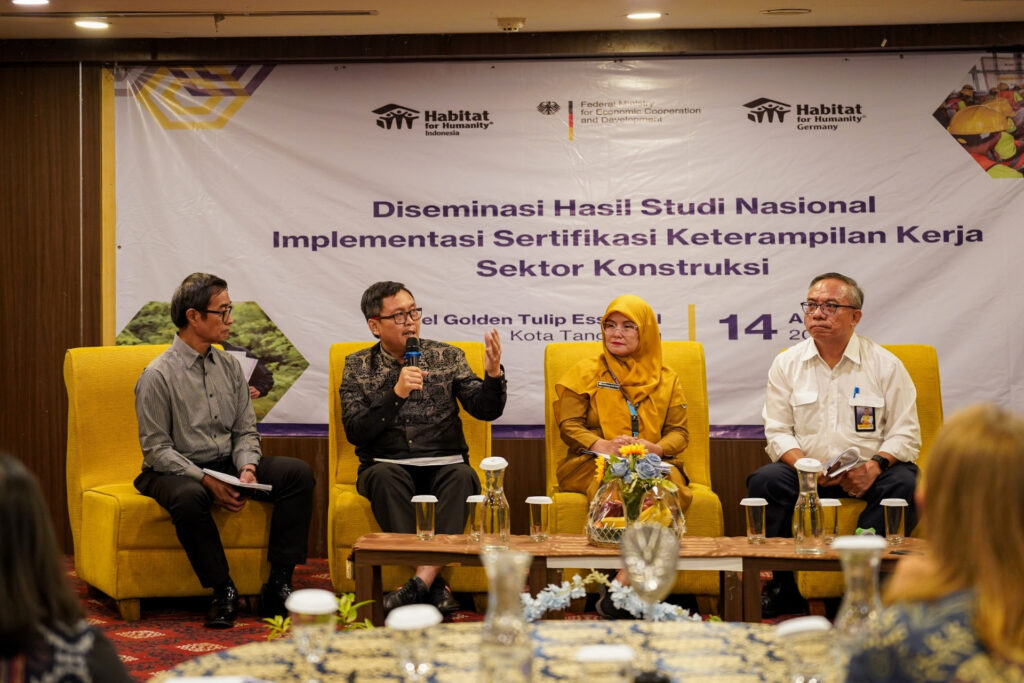
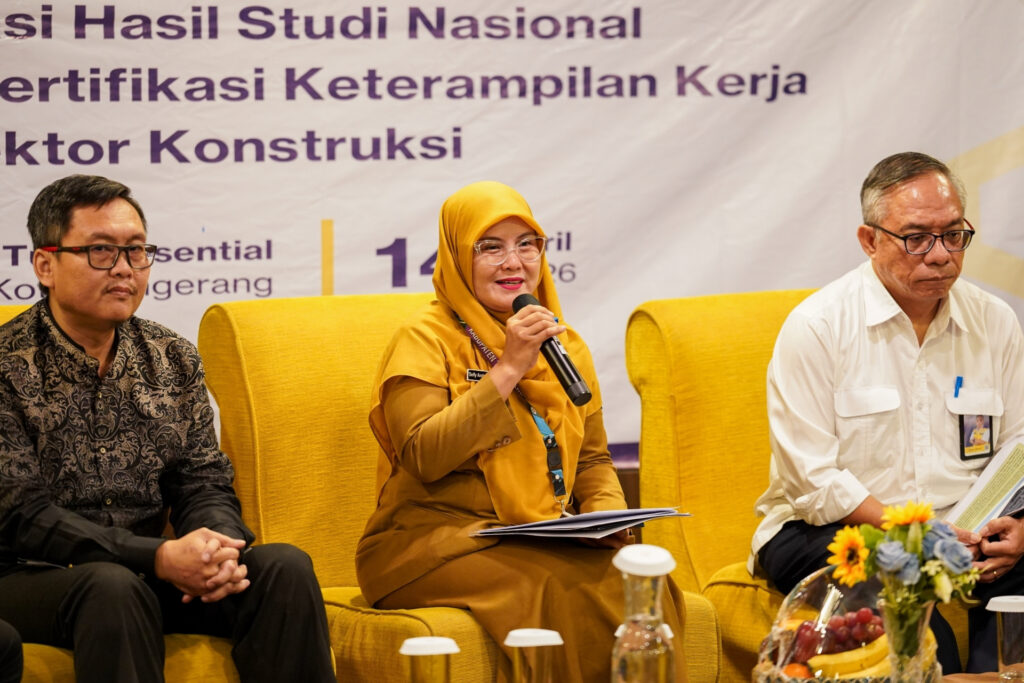
Tangerang, April 14, 2026 – Habitat for Humanity Indonesia presented the results of its National Study on the Implementation of Work Competency Certification (SKK) in the Construction Sector as part of its efforts to improve the quality and competitiveness of Indonesia’s construction workforce, particularly among low-income communities that still face limited access to certification. The event was held in Tangerang City on Tuesday, April 14, 2026, serving as a platform for knowledge sharing and fostering collaboration among stakeholders.
The construction sector plays a strategic role in infrastructure and housing development, while also being one of the largest employers in Indonesia. However, only around 6%, or 1 in 17 construction workers in Indonesia, are certified. Therefore, improving workforce quality is a key factor in ensuring safe, high-quality, and sustainable development. The Work Competency Certification (SKK) serves as a crucial instrument to ensure that construction workers possess competencies that meet national standards.
This national study is part of Habitat for Humanity Indonesia’s broader efforts to strengthen the construction workforce ecosystem, which began in 2023 through training and certification programs for low-income communities. From 2023 to 2025, a total of 581 construction workers in Tangerang City and Tangerang Regency successfully obtained national certification across various skill areas.
Beyond capacity building, Habitat for Humanity Indonesia has also promoted access to employment opportunities through the organization of a construction sector Job Fair in 2025, connecting trained workers with national and local construction companies. This initiative highlights the importance of aligning training, certification, and workforce absorption to create sustainable social and economic impact.
Through this national study, Habitat Indonesia identified three key challenges in the implementation of SKK: limited access to information for informal workers, certification costs that remain a barrier, and administrative processes that are not yet fully accessible for workers in the field. The study also highlights opportunities to strengthen the certification system moving forward.
Arwin Soelaksono, Program Director of Habitat for Humanity Indonesia, emphasized the critical role of construction workers in development and the challenges they face in accessing certification. “Construction workers play a vital role in development, yet they still face challenges in accessing certification. The programs that Habitat Indonesia has implemented over the past three years aim to prepare construction workers to become more skilled, knowledgeable, and confident in their abilities. Through this dissemination, we hope that more workers will gain standardized skills and access to better job opportunities,” he stated.
The program, which has been implemented since 2023 in Tangerang City and Tangerang Regency, has shown highly significant results, with 96% of participants successfully passing certification. This achievement confirms that workers fundamentally possess strong capacity and capability. It demonstrates that the primary barrier is not a lack of individual competence, but rather limited access to the certification system itself.
Ir. Kimron Manik, Director of Competency and Productivity of Construction Workforce at the Directorate General of Construction Development, Ministry of Public Works (PU), also emphasized that the construction sector is a key pillar in supporting Indonesia’s development. “Development activities cannot be separated from reliable and skilled human resources in the construction sector. We appreciate Habitat for Humanity Indonesia’s initiative in implementing SKK training programs and conducting further studies on the implementation of SKK in the construction sector. We hope that the findings and policy recommendations from this study can serve as a foundation for strengthening sustainable collaboration,” he explained.
The findings of this study are expected to serve as a reference for the government, industry players, training institutions, and civil society organizations in strengthening a more inclusive, effective, and sustainable construction workforce certification system.
The dissemination event was attended by various stakeholders, including representatives from the Embassy of the Federal Republic of Germany, the Directorate General of Construction Development of the Ministry of Public Works (PU), the Regional Development Planning Agency (Bappeda) of Tangerang Regency, the Technical Implementation Unit for Job Training (UPT BLK) of the Tangerang Manpower Office, as well as the Public Works Agency (Dinas Bina Marga), along with representatives from civil society organizations and the media.
Habitat for Humanity Indonesia hopes that the results of this study will serve as a strategic reference in improving the quality of the construction workforce, expanding access to certification, and supporting the development of safe and adequate housing for all Indonesians.
Sragen, April 14, 2026 – Since the inauguration of Prabowo Subianto as the 8th President of the Republic of Indonesia on October 20, 2024, the national housing development program has once again become a priority. One of the key initiatives being actively promoted is the 3 Million Houses Program, which aims to reduce the gap in access to adequate housing across Indonesia.
The urgency of this program stems from the persistently high and multidimensional housing deficit. Based on data from the 2024 National Socioeconomic Survey (Susenas), it is estimated that more than 9.9 million families are affected by the housing backlog—a condition in which families do not have access to adequate housing and are often forced to live in overcrowded conditions, sometimes with multiple generations under one roof.
On the other hand, around 26.9 million households live in housing that is unsafe, unhealthy, or built with poor-quality materials. The most affected groups are low-income families in the bottom income deciles (deciles 1 and 2). It is recorded that approximately 2.59 million families in this group fall into the housing backlog category, while around 9 million others live in severely inadequate housing.
Persistent Inequality
Vulnerability is also more pronounced among female-headed households. Of the total families affected by the housing backlog, around 340,000 households, or 22%, are led by women. In addition, approximately 2.986 million female-headed households live in substandard housing, highlighting a dimension of inequality that requires more inclusive solutions.
This condition is clearly reflected in Sragen Regency, one of the areas with the highest poverty rates in the Solo Raya region and among the eight poorest regions in Central Java. Out of a total population of 1,021,435 people, around 110,650 individuals—or approximately 12.41%—live below the poverty line.
Housing issues in Sragen reflect similar challenges. Data from the Sragen Regency Government shows that 13,945 families in the lowest income deciles (1 and 2) live in inadequate housing. This includes 3,229 female-headed households and 1,912 families with members with disabilities. In addition, 2,151 families from this group fall into the housing backlog category.
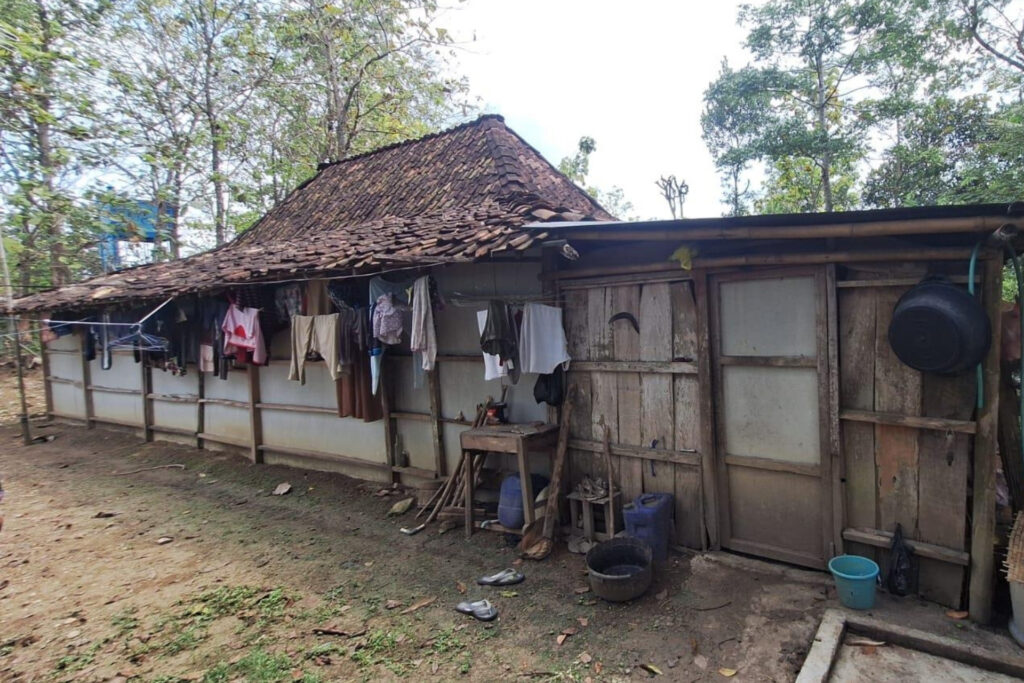
The condition of an uninhabitable house in Sragen Regency, Central Java, Indonesia. Photo: HFHI Team
Limitations of Existing Schemes
In response to these conditions, the Sragen local government has initiated the “Desa Tuntas RTLH (Substandard Housing Alleviation)” program as part of efforts to accelerate the improvement of inadequate housing. This program relies on two main approaches.
First, through the involvement of housing developers to build new homes. However, this approach tends to target households with formal employment and more stable financial capacity, meaning it has not fully reached families in the lowest income deciles who primarily work in the informal sector.
Second, through government support under the Self-Help Housing Stimulant Assistance Program (BSPS). Under this scheme, each household receives IDR 20 million, consisting of IDR 17.5 million for materials and IDR 2.5 million for labor. However, due to limited income, beneficiary families still struggle to cover the remaining construction costs.
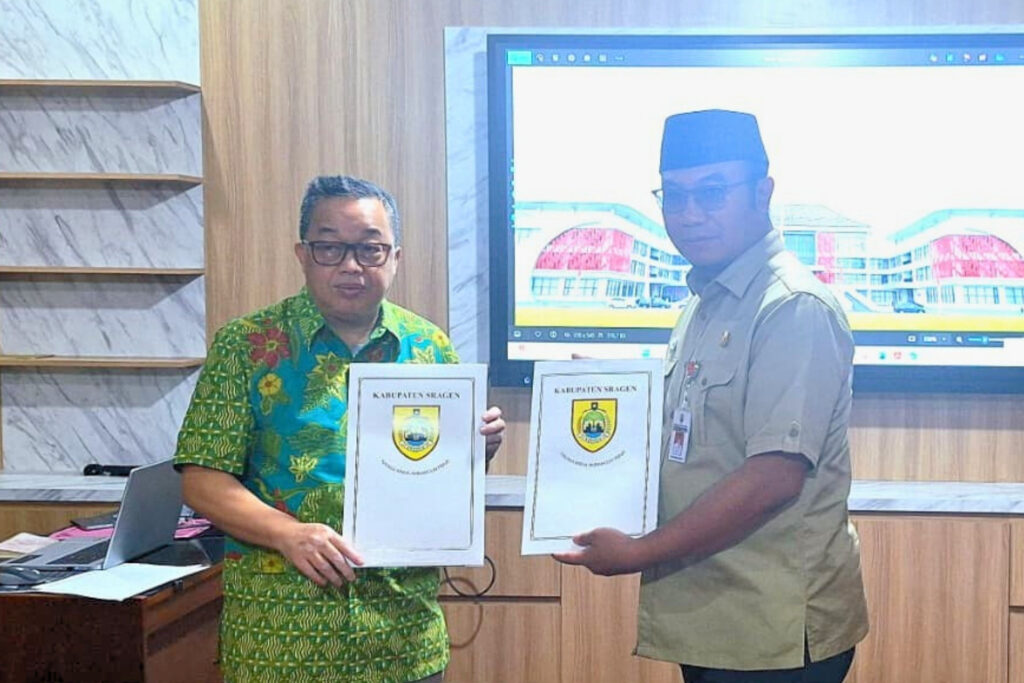
To address this gap, Habitat for Humanity Indonesia has partnered with the Sragen Regency Government through a match-funding scheme. This program is designed to complement the BSPS subsidy with additional funding support from donors, enabling it to reach the most vulnerable families.
Through this scheme, the government subsidy of IDR 20 million is matched with an additional IDR 20 million from Habitat Indonesia. As a result, beneficiary families are not burdened with financial contributions, but instead participate through labor contributions or sweat equity in the construction of their homes.
Habitat for Humanity Indonesia National Director Handoko Ngadiman (left) establishes a partnership with the Regent of Sragen (right) under the BSPS co-funding (match funding) program in Sragen Regency, Central Java, Indonesia. Photo: HFHI Team
A key strength of this program lies in the active participation of beneficiary families. They are directly involved in the home planning process with guidance from Habitat Indonesia’s construction supervisors and local government facilitators. Families also play a role in managing materials, supervising labor, and ensuring that the construction meets their specific needs—including accessibility for persons with disabilities and safety considerations for female-headed households.
Beyond physical construction, the program also includes Building Back Safer (BBS) training, equipping families with knowledge and skills in disaster-resilient construction. These efforts are further strengthened through advocacy activities such as workshops, campaigns, and other initiatives aimed at raising public awareness about housing poverty and the importance of inclusive and sustainable development.
The program, which is planned to run for eight months, targets 101 families as primary beneficiaries through this collaborative funding scheme. In addition, 130 individuals representing beneficiary families will participate in BBS training. Overall, the program is expected to directly benefit 1,084 individuals and reach 3,145 indirect beneficiaries.
Through collaboration between the government and the community, this program is expected to serve as a concrete step in reducing the housing backlog while ensuring that the most vulnerable families are not left behind in accessing decent housing.
We kindly ask for the support and prayers of #SahabatHabitat so that the implementation of this program can run smoothly and deliver meaningful impact for families in need.