Stories of Change
Tangerang, April 17, 2026 – There was a time when rain was not something to look forward to, but something to fear. For Siti, every strong wind and heavy downpour was a signal that she and her family had to prepare to leave their home—not to seek shelter, but to escape danger.
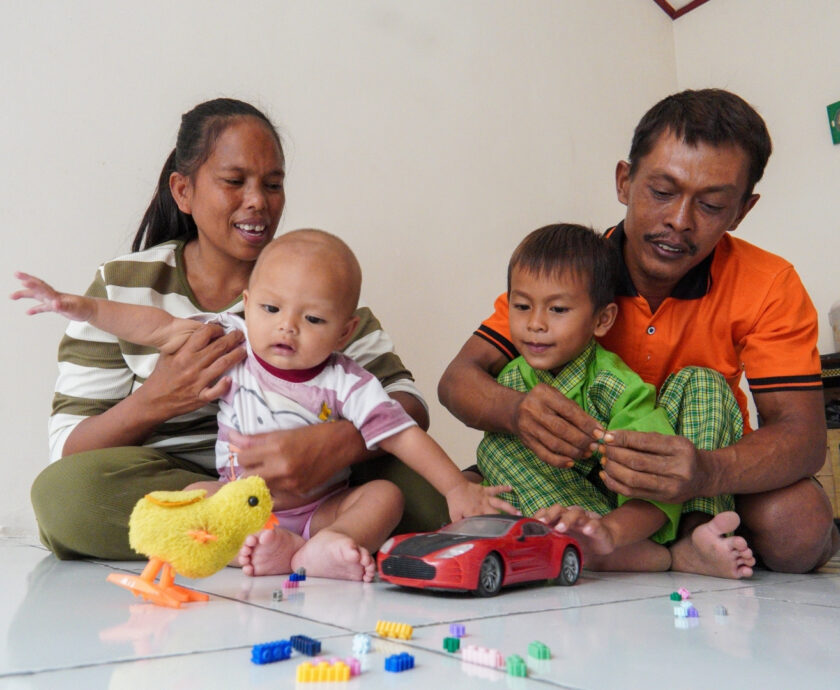
Siti, 40, is a homemaker living in Rajeg, Tangerang Regency, with her husband and three children. Her husband works as a scrap goods trader in Jakarta, with an unstable income. In a week, he can only bring home around IDR 200,000 to cover the family’s needs, from school expenses to daily meals.
The house they live in is far from decent. Its walls are made of layers of corrugated metal sheets, plywood, and tarpaulin supported by bamboo panels. Many of the roof tiles are broken, and the floor is still made of soil. The house does not even have its own bathroom or toilet.
“Our old house, if you say it was not livable, then yes—it really wasn’t,” Siti said. “When it rained, the whole family experienced leaks. When there were heavy winds, instead of taking shelter inside, we had to run outside because we were afraid the house would collapse.”
The lack of basic facilities made daily life full of limitations. For simple needs such as bathing, using the toilet, and cooking, Siti had to rely on her parents’ or relatives’ homes. “If I needed to use the toilet, I had to borrow one. If I wanted to bathe, I had to borrow one. Even for cooking, I had to ask for water,” she explained.
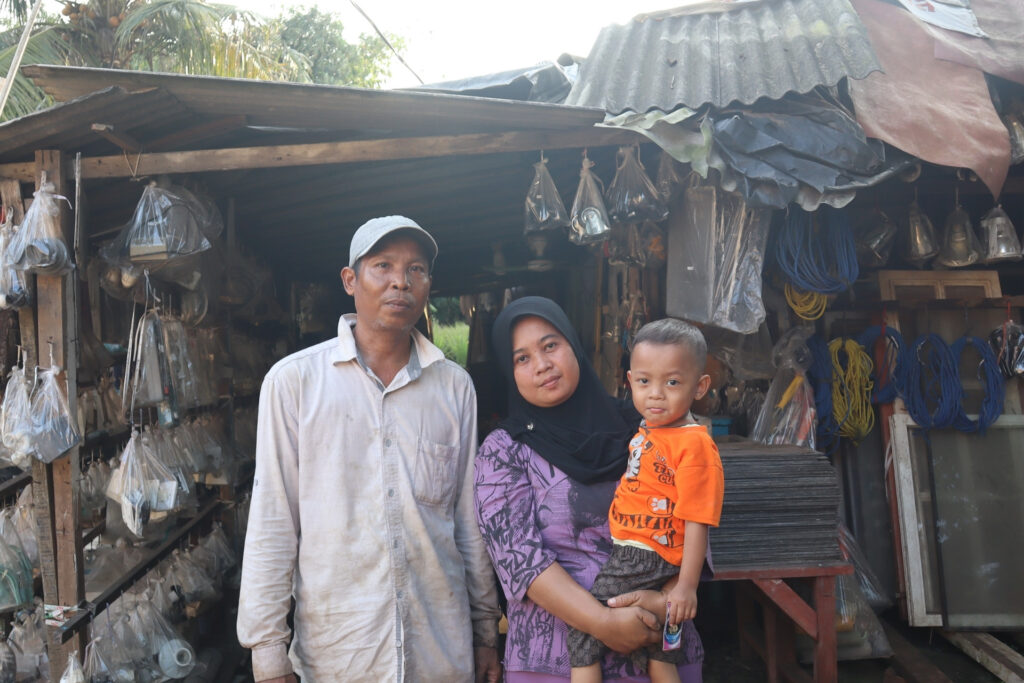
In such constrained conditions, Siti also had to face the harsh reality that her family’s food needs were not always met. There were days when they could eat in the morning but not in the evening, or vice versa. This situation inevitably affected her children’s growth, as they struggled to have a proper space to play and study.
“Our lives were very hand-to-mouth. We only had enough for daily meals. My husband’s work meant he sometimes came home once a week or every two weeks, depending on whether he had money to bring back,” Siti said.
Life became even more difficult when her husband fell ill. Without income, Siti had to face an uncertain situation while her children’s needs continued.
“Before this house was built, my husband once fell sick and couldn’t work, while the children still needed money for school. I was confused and cried, not knowing what to do. There was no income at all, and on top of that, the house was not livable,” she recalled.
In that situation, Siti could only rely on help from her parents and relatives. She often felt ashamed, and eventually decided to work as a domestic helper in her neighborhood to ensure her children could still eat.
Amid all these limitations, Siti could only endure and surrender. “Because of these limitations, I could only adapt to the condition of the house and put my trust in God,” she said.
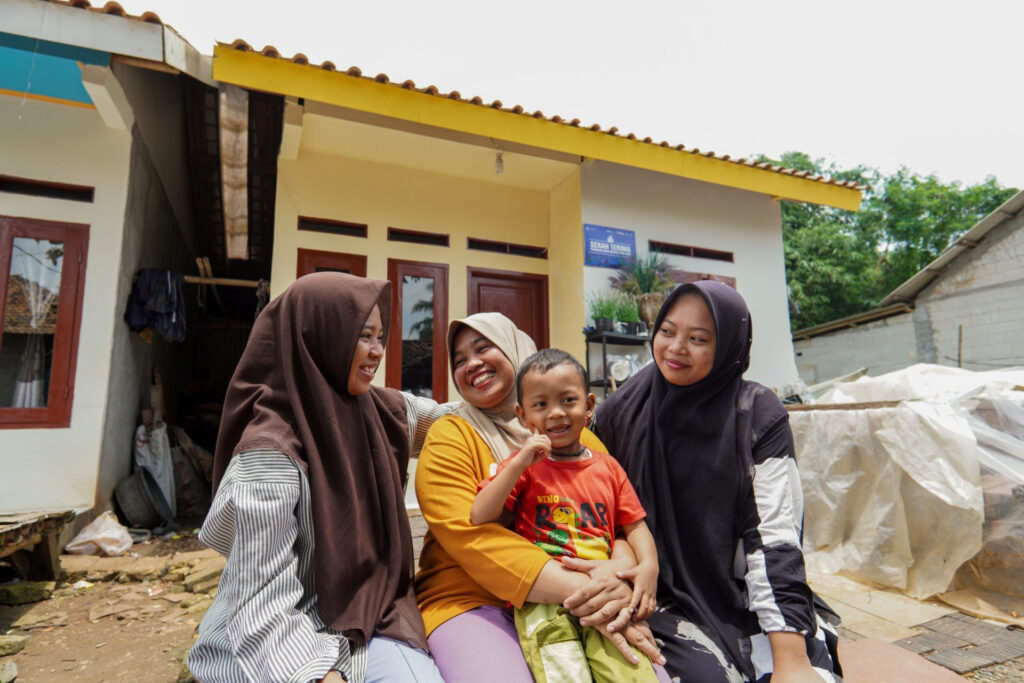
Then, hope finally arrived. With the support of donors, Habitat for Humanity Indonesia rebuilt Siti’s house into a decent home. Today, her house has been completely transformed. Sturdy cream-colored walls now stand firmly, a strong roof protects against heat and rain, and proper bathroom and toilet facilities are now available inside the house.
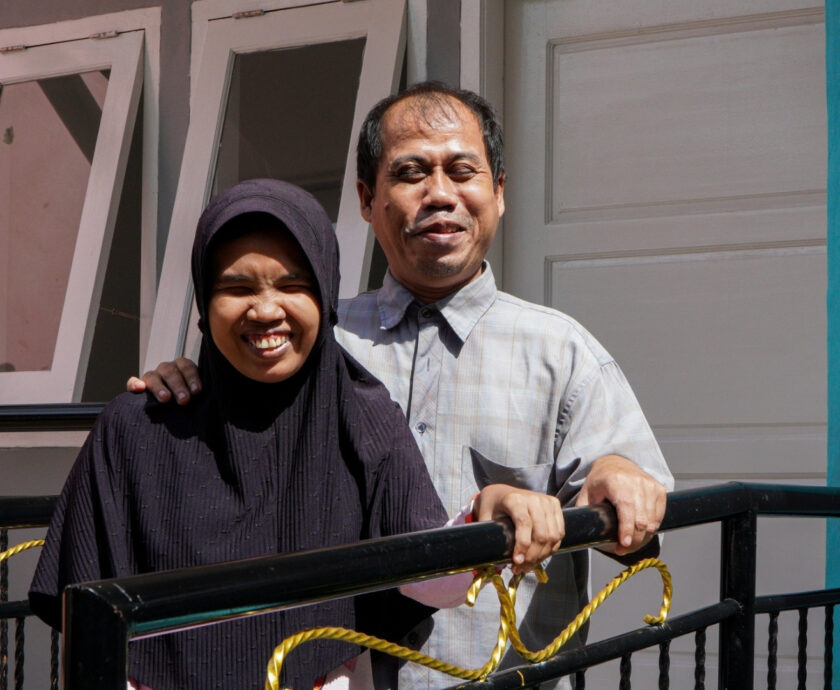
“Alhamdulillah, my house is now livable. When it rains, I no longer experience leaks, and I don’t have to run out of the house to my relatives’ home anymore,” Siti said with gratitude.
Read also: Women Behind the Construction of Decent Homes
This transformation has brought significant changes to her family’s life. Siti now feels more confident and no longer ashamed. “Now I am more grateful. I finally have a home like my neighbors. Especially now that I have my own bathroom and room, I no longer feel embarrassed about having to rely on other people’s houses,” she said.
Siti’s children now also have their own space to rest and study. Where they once had to sleep in the kitchen area, they now have bedrooms that provide comfort and privacy. “Now it’s different—my children have their own rooms to sleep in, no longer mixed together,” Siti explained.
In addition, the improved housing conditions also support the family’s health. A cleaner environment, proper sanitation, and a safer building structure provide a sense of security they had never experienced before.
With these changes, Siti looks toward the future with renewed hope. “I hope this new house can bring new fortune to my family, and that the difficult times we experienced before will not happen again,” she said.
Siti is one of millions of families in Indonesia who have moved beyond the hardship of inadequate housing. Behind every home that stands, there is a story of resilience, hope, and dreams gradually coming true. “A home means everything to me,” she concluded.
Let’s work together to help more families like Siti’s have safe and decent homes. Visit the following link and be part of real change for those in need.
Writer: Kevin Herbian
(kh/av)