logotype
Donate
HFHI2
Habitat Updates

After the Earthquake, Abdul Rajak Chooses to Rise and Hold on to Hope for His Family

East Nusa Tenggara, August 28, 2026 – The morning of August 15, 2026, was supposed to be an ordinary day for Abdul Rajak and his family. But within minutes, an earthquake shook Flores and changed the way they viewed the home that had always been their shelter. Although their house was still standing, the sense of security inside it had yet to fully return.

Abdul, a resident of Sambi Rampas Subdistrict, East Manggarai Regency, East Nusa Tenggara, still remembers that morning clearly. At around 6:00 a.m., after briefly going back to sleep following the dawn prayer, he felt the shaking grow stronger. From Congkar Subdistrict, where he was staying at the time, he immediately tried to make sure that his wife and children, who were at home, were safe.

Not long afterward, the news he had been waiting for arrived. His wife, niece, and two daughters had managed to evacuate and were staying at an evacuation site with other residents. His children had cried and were frightened, but they managed to get out of the house safely.

For Abdul, the safety of his family was the first thing he was grateful for. But when he returned to see the condition of his house and the surrounding area, he realized that the earthquake had caused considerable damage.

His storage building was completely destroyed. The kiosk at the front of the house had cracks in its upper section, while several other parts were also damaged. The fence of a nearby prayer room had also collapsed. Fortunately, the main house and several other facilities remained usable.

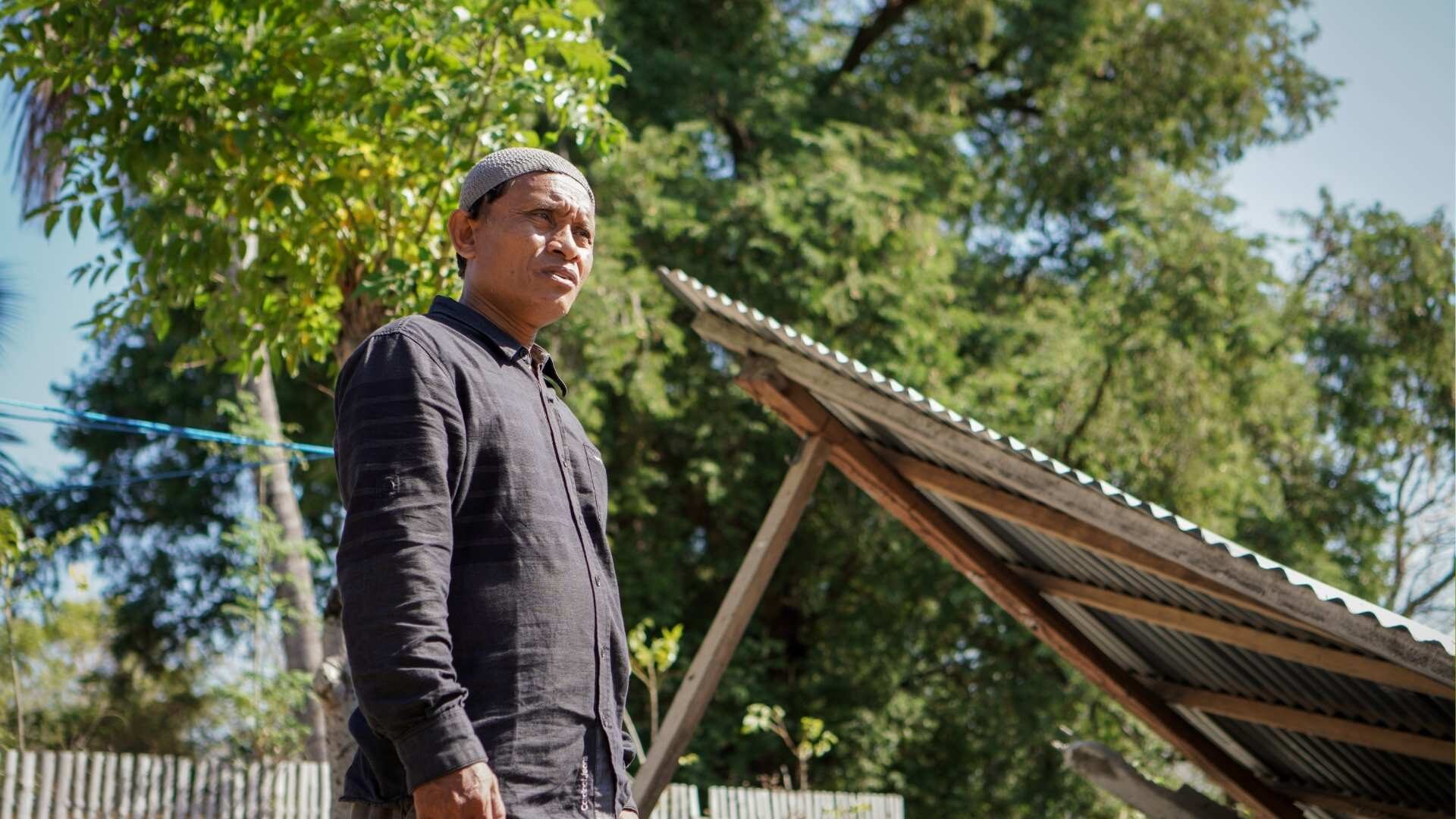
After the earthquake, Abdul and his family chose to spend the nights in a tent set up outside their house. With aftershocks still occurring, they were not yet confident enough to sleep inside the building. Support from neighbors in the form of blankets, clothing, mattresses, and other necessities also helped the family get through the first few nights after the disaster.

For Abdul’s family, however, the biggest challenge was not simply finding a place to sleep. The fear also remained, especially for his youngest child. Although their house had not suffered severe damage, his youngest child was still traumatized and was not yet ready to sleep inside the house. Every morning, the family returned home to clean, prepare food, and carry out their daily activities. When night came, they returned to a place they considered safer.

The days after the earthquake began to unfold differently. Daily activities gradually resumed, but there was always a sense of alertness in case another tremor occurred.

Amid this situation, Abdul did not want his family to remain trapped in fear. He decided to take a simple step that he could manage on his own. Using available wood, he began building a small gazebo beside the house to serve as a temporary resting place for his family.
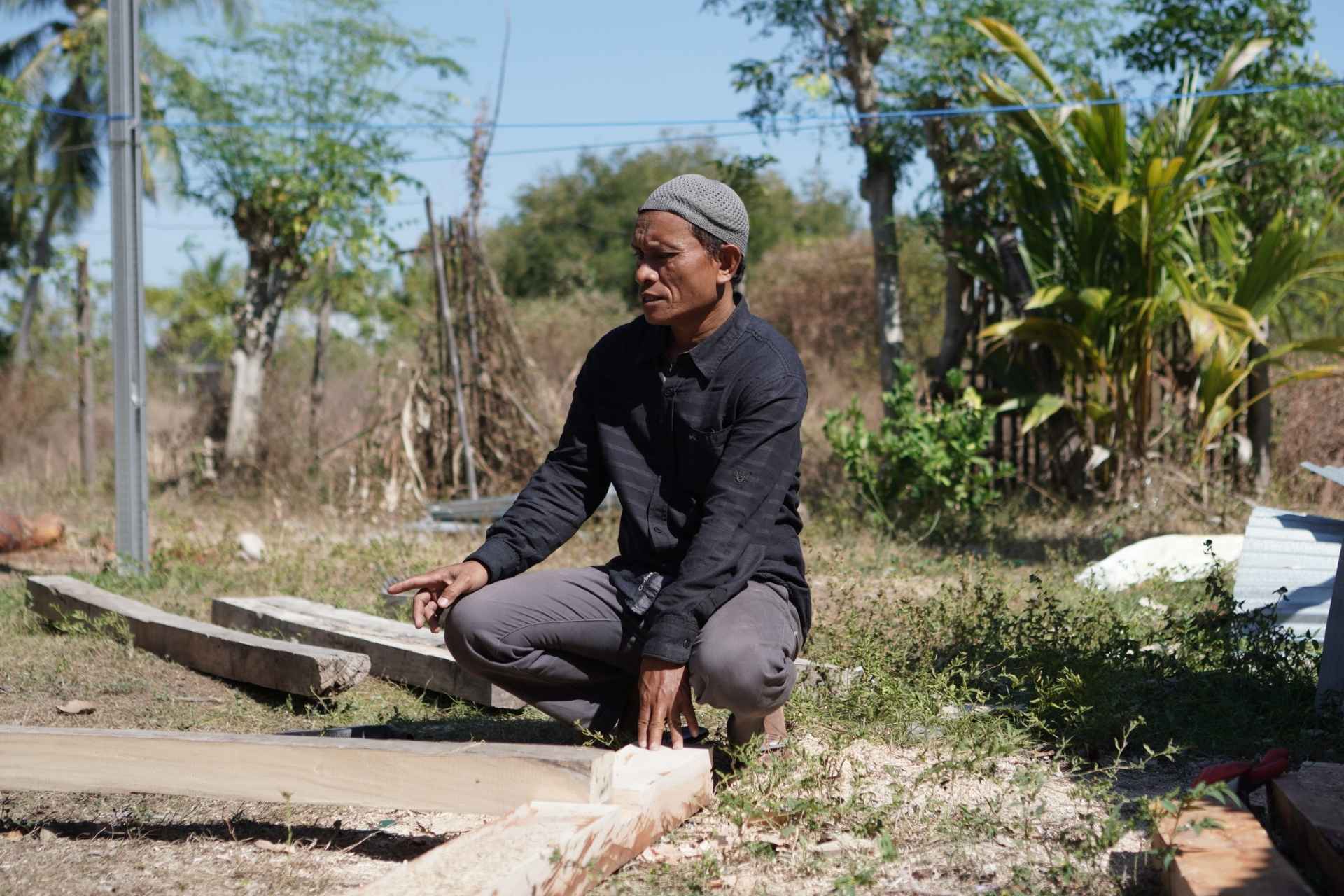
Abdul builds a gazebo beside his house to serve as temporary shelter following the Flores earthquake in East Manggarai Regency, East Nusa Tenggara, Indonesia. Photo: HFHI/Kevin Herbian

For Abdul, building this simple shelter was not merely about providing a place to sleep. It was also about nurturing hope within his family amid the difficult circumstances. “We cannot remain consumed by this disaster. As long as there is something we can do, we have to keep trying. I need to show my children and family that we can get through this, so they can also feel stronger and more at ease.”

That determination became Abdul’s way of facing a situation he had never imagined before. He realized that an earthquake was beyond his control, but how he responded afterward was still a choice.

In his view, a family needs someone who can remain strong when circumstances are uncertain. Not because the fear simply disappears, but because life must go on. “We have to accept that this is a disaster that happened beyond our control. But we also have to get back up and keep trying. Whatever we can still do, we should do it. I want my children and family to see that we still have hope.”

That hope became even more important because, for Abdul, home was never merely a building. Before the earthquake, it was where his family gathered, rested, talked, and lived their daily lives. After the earthquake, that meaning felt even deeper.

Home became the place they longed to return to, while at the same time, it was a place they temporarily had to stay away from because of fear. “For me, home is where the family gathers and protects one another. It is where we communicate, rest, and find shelter from the heat, rain, and unexpected circumstances,” he said.

That is why, for Abdul, having a safe home is about more than having a roof and walls. A home is an essential part of a family’s sense of security. When that place of shelter is disrupted, the family’s life is disrupted as well.

Today, although his house is still standing, Abdul has chosen not to simply wait for things to return to normal on their own. He cleans the house, builds a temporary shelter, and resumes daily activities as much as he can. Little by little, he is working to restore the sense of normalcy that was lost.

However, recovery after a disaster does not end when the earthquake subsides. For many families in Flores, regaining access to a safe and decent home remains an important part of their journey toward recovery.

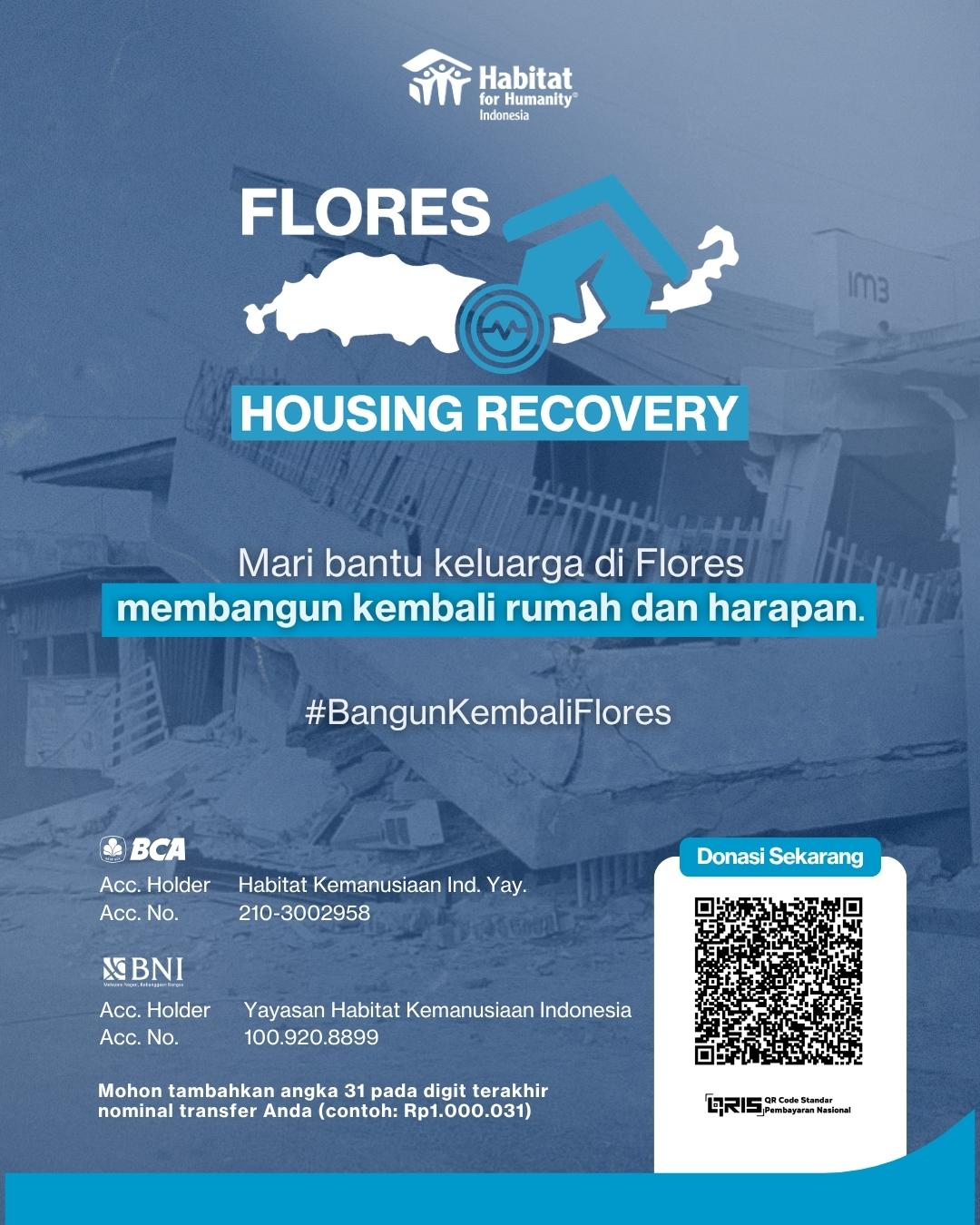
Let us come together to help families affected by the Flores earthquake regain safe and decent homes. Your support can be part of their journey to rise again and rebuild their lives after the disaster. Donations can be made through:
Writer: Kevin Herbian

Graphic: Tias Ester Widhari

(kh/av)
HFHI Flores3
Habitat Updates

When Home Is No Longer a Place of Shelter: Yofita’s Story of Resilience After the Flores Earthquake

East Nusa Tenggara, August 22, 2026 – That morning, Yofita Damul (37) was preparing breakfast for her children. The rice was already cooked, the vegetables were being reheated, and soon her family would begin their usual daily activities. But the peaceful morning changed in an instant when the ground began to shake. 

“My children immediately screamed, ‘Mom, what’s happening?’ I panicked too. I immediately told them, ‘Let’s get outside, let’s get outside, kids!’” Yofita recalled. 

The magnitude 7.7 earthquake that struck Flores on August 15, 2026, left Yofita’s home in West Kuwus Subdistrict, West Manggarai Regency, East Nusa Tenggara, no longer safe to live in as it had been before. When the earthquake struck, her thoughts were focused solely on the safety of her children and her mother, who was ill and had difficulty standing. 

Amid the panic, Yofita and her family tried to get out of the house. Her mother was then evacuated to a safer place. The house that had sheltered her family for years could only be watched from outside as it shook violently. 

“At that moment, we immediately carried Mom outside. We weren’t thinking about anything else anymore. The most important thing was that everyone could get out safely. After that, we could only watch the house shake right before our eyes,” she said. 

Amid the fear, there was one thing Yofita remained grateful for. None of her family members were injured or killed in the disaster. “Everything was chaotic. But I am grateful to God that we are all safe. No one was hurt. The house was damaged, and whether we like it or not, we have to accept that reality. What matters is that our family is safe,” Yofita said. 

However, surviving the earthquake did not mean that their ordeal was over. Once their home was no longer safe to live in, Yofita and her family had to find a temporary place to shelter. 

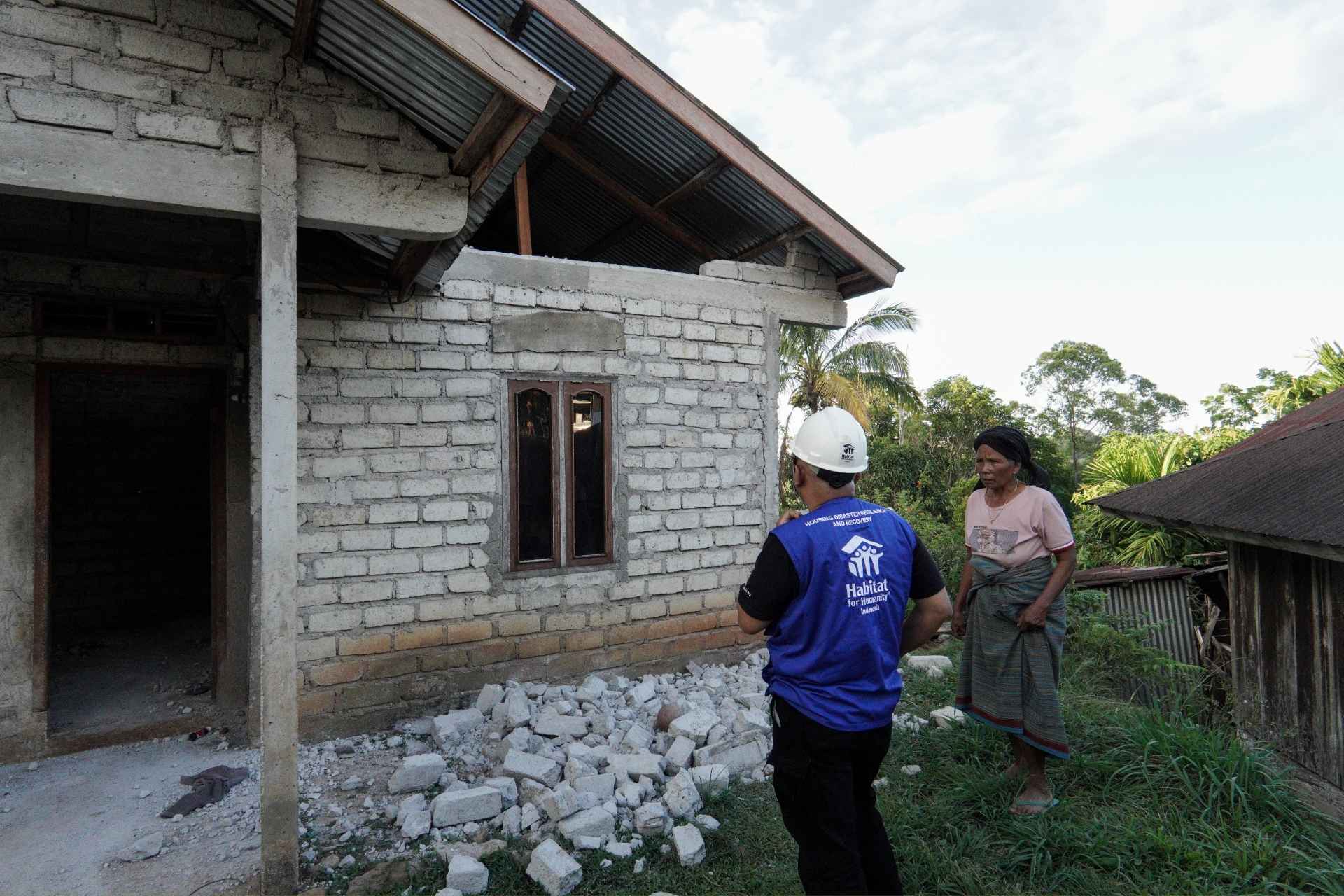
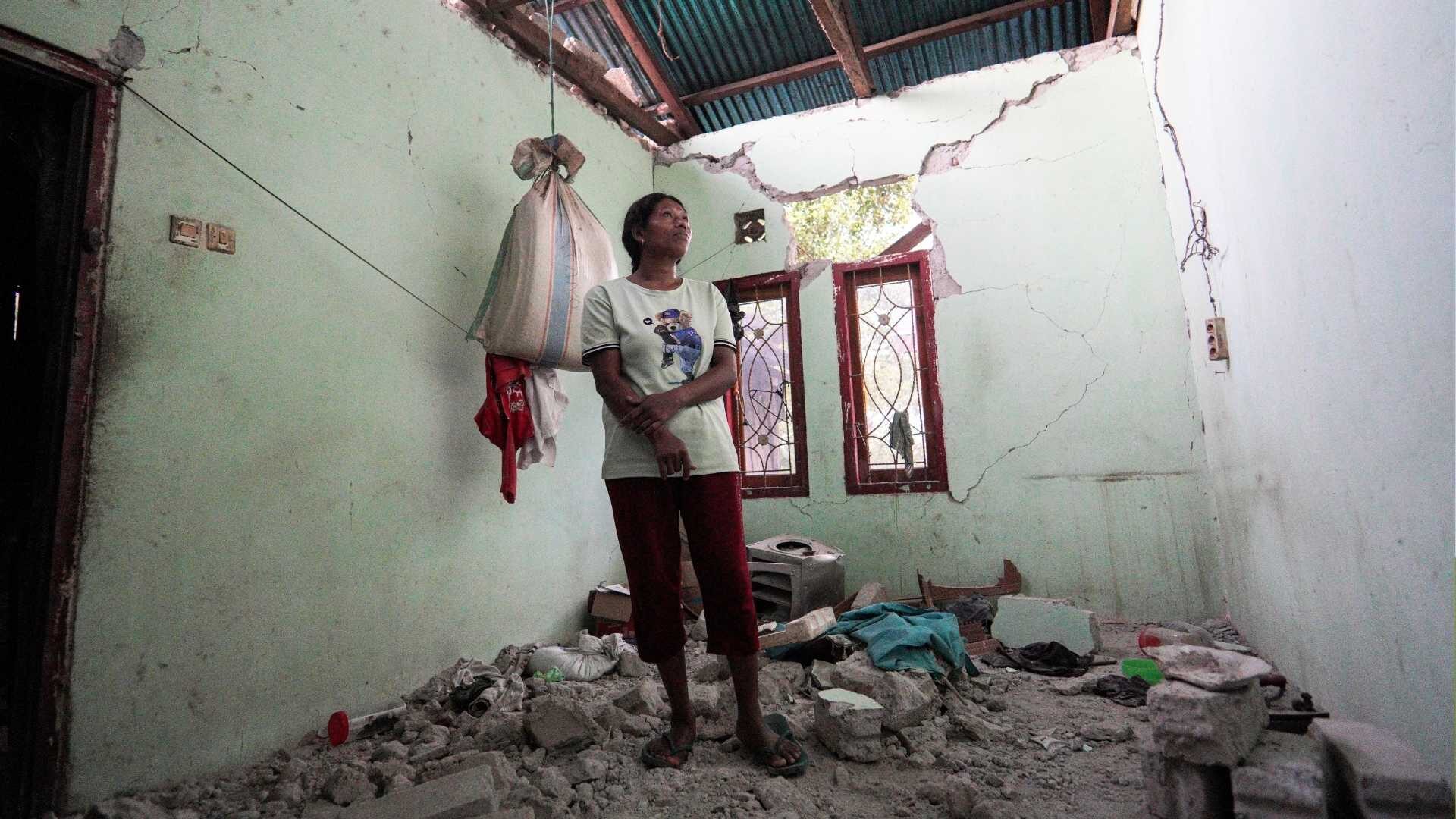
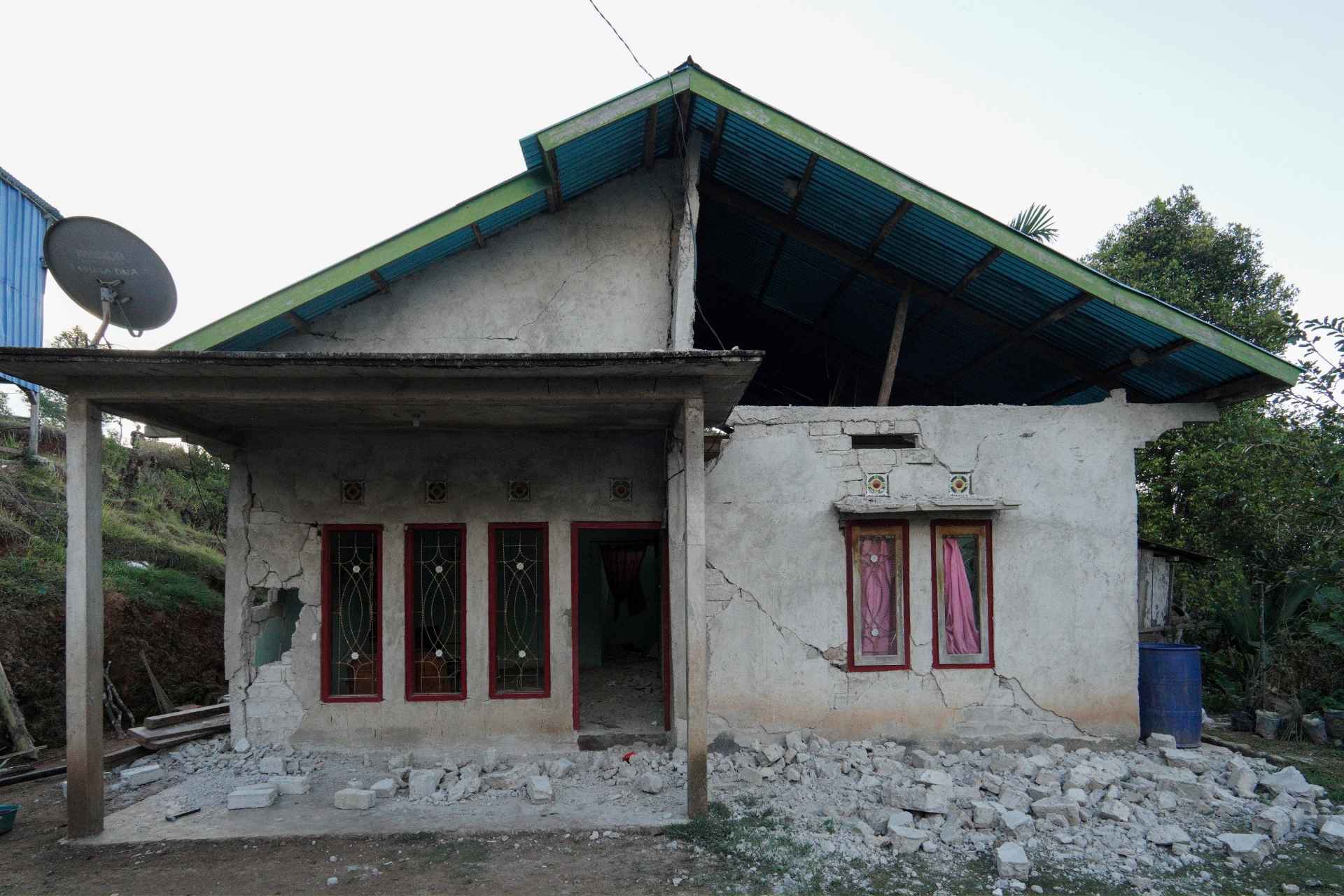
Damage to Yovita’s house following the Flores earthquake in West Kuwus District, West Manggarai Regency, East Nusa Tenggara, Indonesia (Aug. 18). Photo: HFHI/Kevin Herbian

A tent has now been set up in the yard of their neighbor’s house. In the limited space, three families have to share the same tent to rest and carry out their daily activities. Yofita’s family consists of nine people, including her children, her sick mother, and a child who has been entrusted to her care because the child’s parents are currently in Kalimantan. 

“We are now staying in a tent in front of our neighbor’s house. We have been there for several days since the earthquake. Three families are staying in this one tent. My own family has nine members,” Yofita said. 

For a relatively large family, living in a tent is not easy, especially for an extended period of time. Yofita also has to make sure that her children’s needs are met while continuing to care for her sick mother. 

That is why, when asked what her family needs most at the moment, Yofita did not hesitate to answer. “The most important thing is a place to live. We cannot stay in a tent for too long, especially because we have children. We also need basic daily necessities,” she said. 

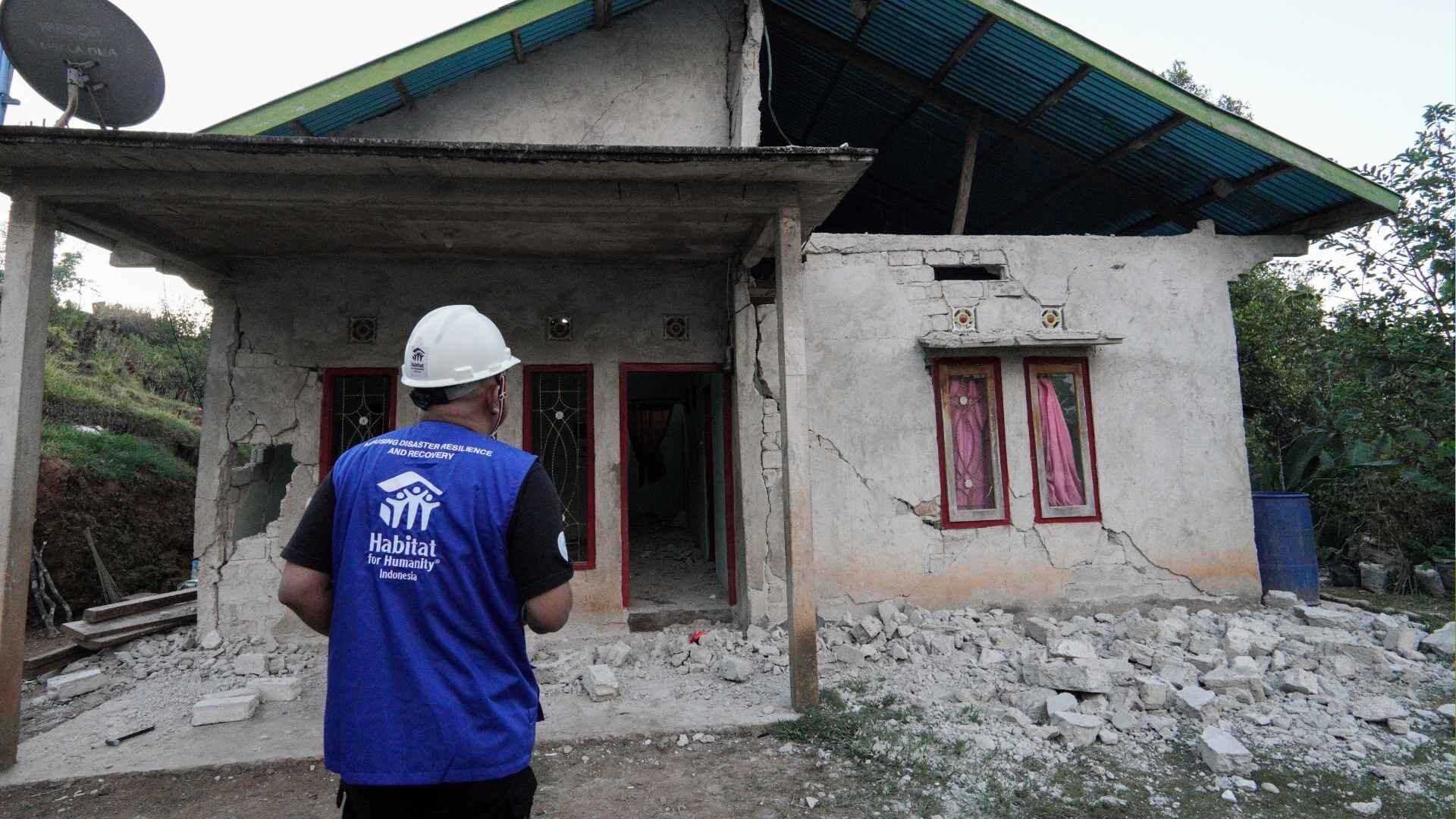
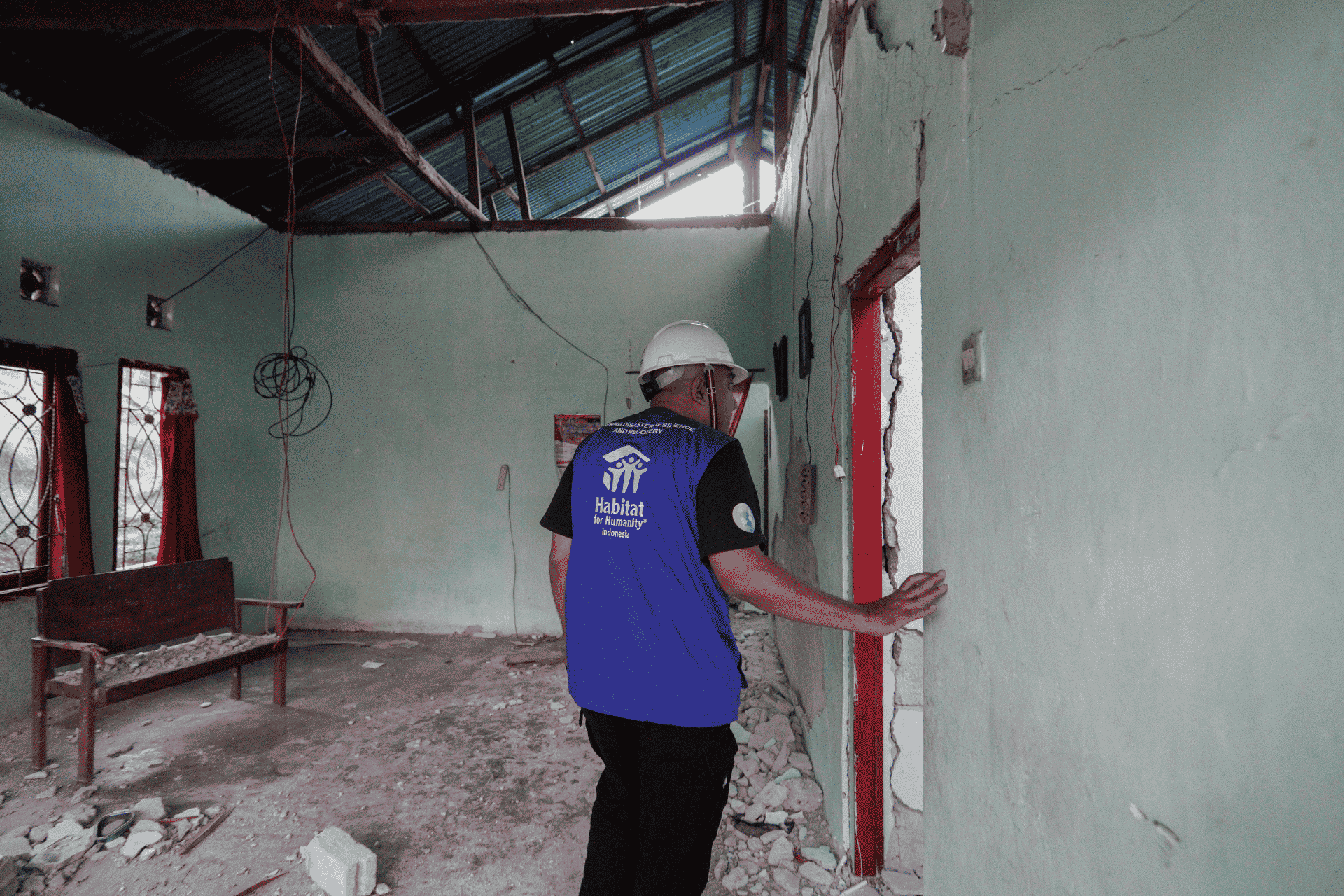
The Habitat for Humanity Indonesia team assesses Yovita’s house, which was affected by the Flores earthquake, in West Kuwus District, West Manggarai Regency, East Nusa Tenggara, Indonesia (Aug. 18). Photo: HFHI/Kevin Herbian

The hope of having a safe home is not new to Yofita. Before the earthquake damaged her home, the house was the result of years of hard work and struggle by her family. 

In 2019, Yofita moved to Kalimantan for almost five years to work and earn money. With the income she saved from her hard work, construction of the house began in March 2019. After some time, she and her family returned to their hometown in January 2021 and lived in the house until the earthquake struck. 

The house was more than just a building to Yofita. It represented her family’s long journey toward having a home of their own. However, the earthquake left the home they had built through years of hard work unable to provide the same sense of safety as before. 

Now, Yofita once again finds herself in a situation where housing has become an urgent need. For her, recovery is not only about repairing a damaged building, but also about restoring a safe space where her family can live together. 

Yofita’s experience shows how disasters can have impacts that extend far beyond physical damage. When a home is affected, daily activities, childcare, family health, and a sense of security can all be disrupted. 

Amid these circumstances, support for housing recovery is essential to help affected families regain access to safe and adequate homes. Habitat for Humanity is responding to the housing needs of families affected by the Flores earthquake through efforts to support the recovery of homes and communities. 

For Yofita, her hope is simple: that her family can soon have a place to return to—not just a temporary tent, but a home that can provide a sense of safety for her children and family. “My hope now is that we can soon have a decent place to live. We want to live peacefully with our family again. That is what we need most,” she said. 

Yofita’s journey after the earthquake is far from over. The home she built through years of hard work now needs to be rebuilt and restored. Yet, amid loss and uncertainty, she chooses to remain grateful for the one thing that matters most: her family is safe. 

For families like Yofita’s, supporting housing recovery means more than simply rebuilding a structure. It is about restoring a sense of safety, keeping families together, and helping them gradually rebuild their lives after a disaster. 

Let us come together to help thousands of families like Yofita’s regain access to safe and adequate homes. Donations can be made through:

Writer: Kevin Herbian

Graphic: Tias Ester Widhari

(kh/av)
Thumbnail – Website Blog
Habitat Updates

Flores Earthquake: Habitat for Humanity Indonesia Deploys Team to Assess Housing Damage

East Nusa Tenggara, August 19, 2026 – A magnitude 7.7 earthquake that struck East Nusa Tenggara on August 15, 2026, has brought deep sorrow to thousands of families, particularly in several areas of Flores Island. The earthquake damaged homes and various public facilities, while forcing tens of thousands of people to leave their homes in search of safer places.

According to data from the National Disaster Management Agency (BNPB) as of 7:00 a.m. WITA on August 19, 2026, 70 people had died, while another 1,184 people were reported injured or ill. A total of 40,216 people were still displaced across 11 affected regencies and cities. East Manggarai Regency was among the areas with the highest number of displaced people, with 15,465 displaced residents.

The impact of the earthquake was also evident in the damage to people’s homes. At least 11,950 families were recorded as having damaged homes, comprising 5,518 heavily damaged homes, 1,924 moderately damaged homes, and 4,508 lightly damaged homes. The damage was not limited to residential buildings but also affected facilities that support people’s daily lives.

BNPB recorded at least 208 damaged educational facilities, followed by 75 healthcare facilities, 39 offices, and 53 places of worship. These figures may continue to change as the government and various organizations carry out further data collection and verification in the field.

Habitat for Humanity Indonesia’s Response

The Habitat for Humanity Indonesia team assesses a house damaged by the Flores earthquake in Tueng Village, West Kuwus District, West Manggarai Regency, East Nusa Tenggara, Indonesia (Aug. 19). Photo: HFHI/Kevin Herbian

In response to the extensive impact on housing, Habitat for Humanity Indonesia deployed a Roster Deployment team to the affected areas. The team conducted a rapid assessment to understand the extent of housing damage and the living conditions of affected families, while also identifying their most urgent shelter needs.

The rapid assessment serves as an initial step in determining Habitat Indonesia’s interventions to support housing recovery on Flores Island, East Nusa Tenggara. In addition to assessing the extent of damage, the assessment is necessary to ensure that the response provided is aligned with the needs of affected families and the conditions of the affected areas.

Through the Flores Housing Recovery program, Habitat for Humanity will prioritize support for the housing needs of affected communities. In the initial stage, the response will focus on distributing Emergency Shelter Kits to help families meet their immediate shelter needs following the disaster.

For long-term recovery, Habitat is also preparing interventions for house repairs and seismic retrofitting, which involves strengthening building structures to make homes safer and more resilient to future earthquake risks. The type and scope of these interventions will be determined based on the findings of the field assessments.

This response is part of Habitat for Humanity Indonesia’s efforts to help affected families not only receive protection in the aftermath of the disaster, but also have the opportunity to return to homes that are safer and more resilient.

Habitat Indonesia invites Sahabat Habitat to support families affected by the Flores earthquake. Your support can help meet their immediate housing needs while contributing to the long-term recovery of their homes.

Let us stand together with families affected by the earthquake in Flores. Donations can be made through:

Writer: Kevin Herbian

Graphic: Tias Ester Widhari

(kh/av)
HFHI – Posco
Habitat Updates

POSCO 1% Foundation and Habitat for Humanity Indonesia Support Better Learning Environment at SDN Belumbang in Cilegon

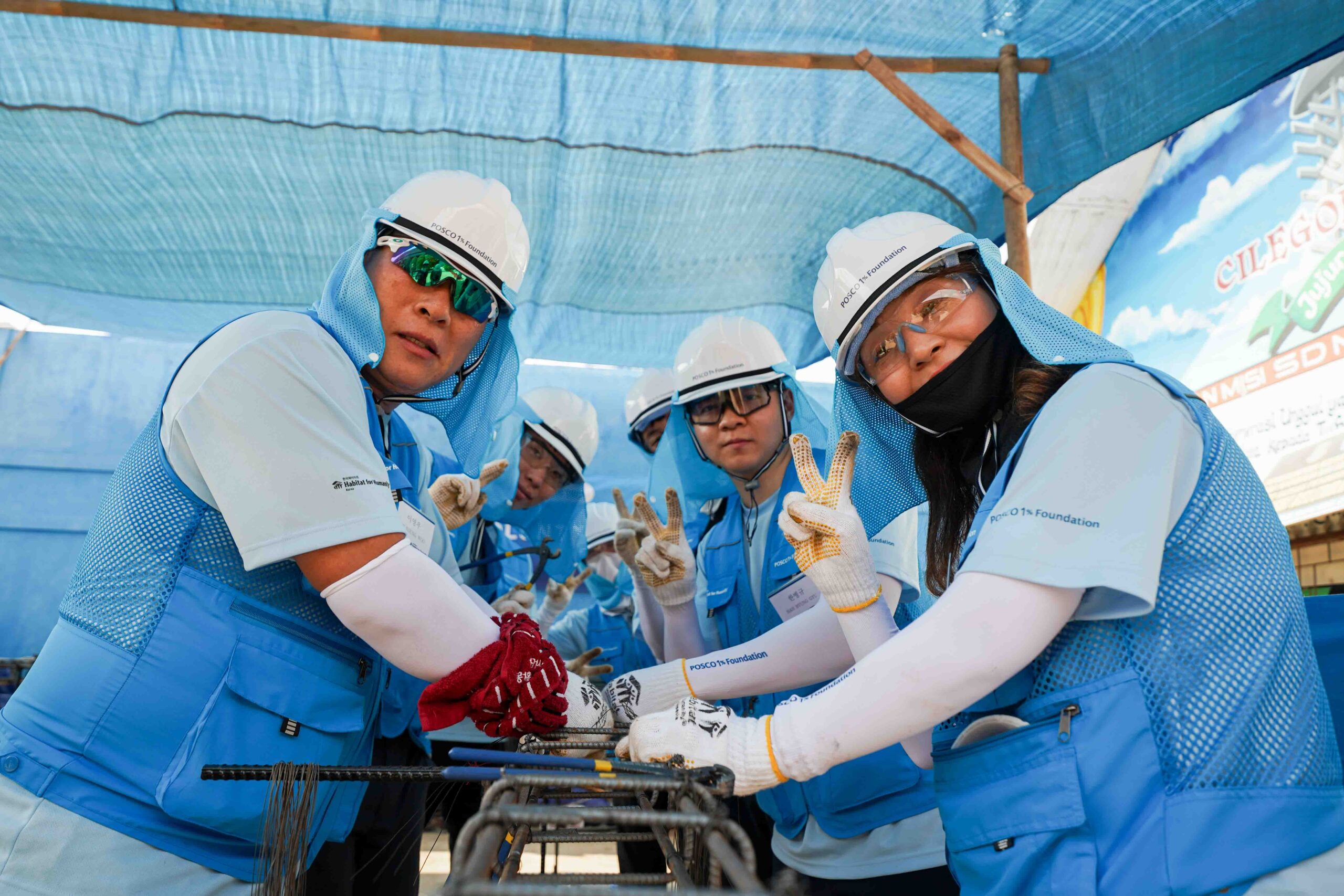
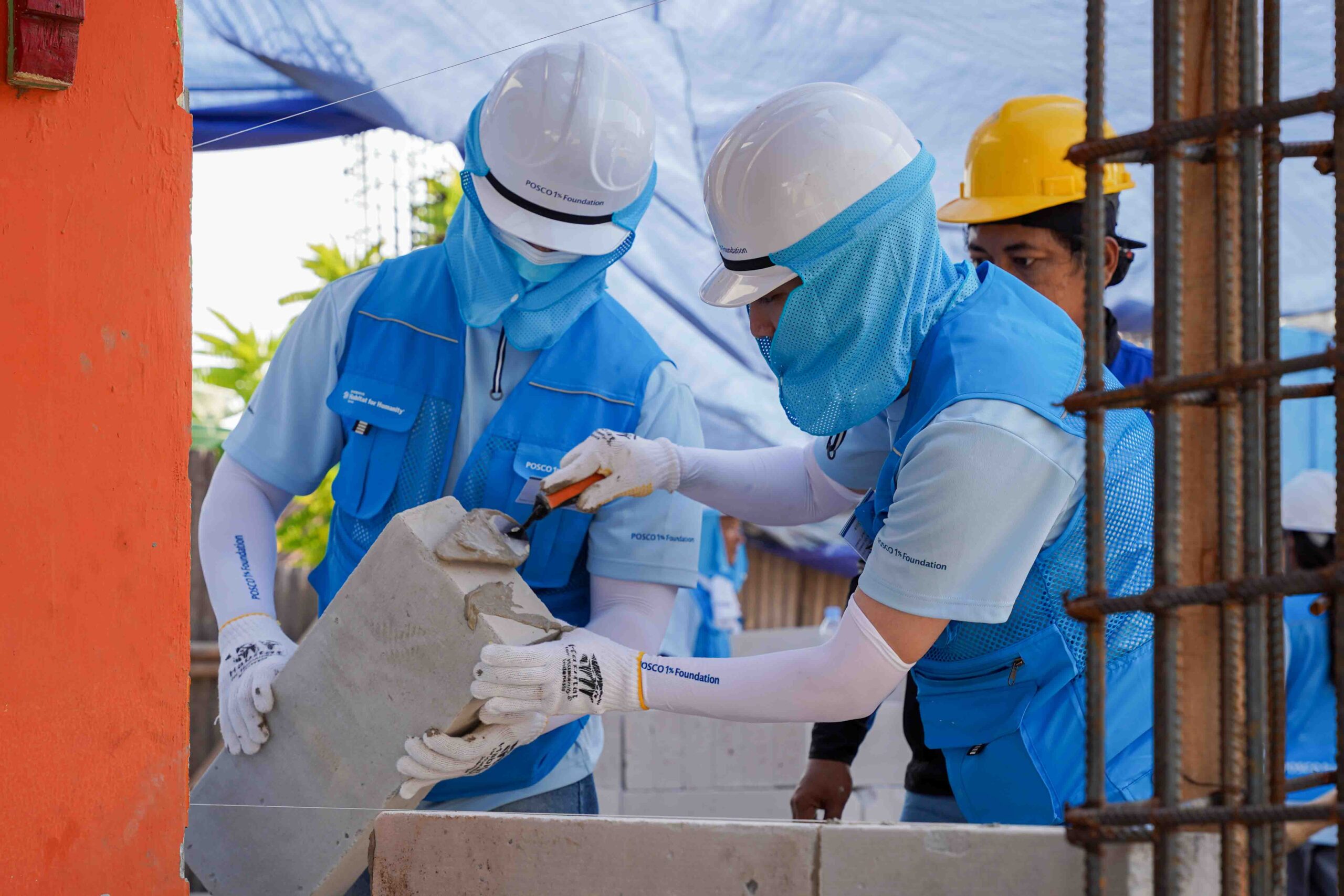
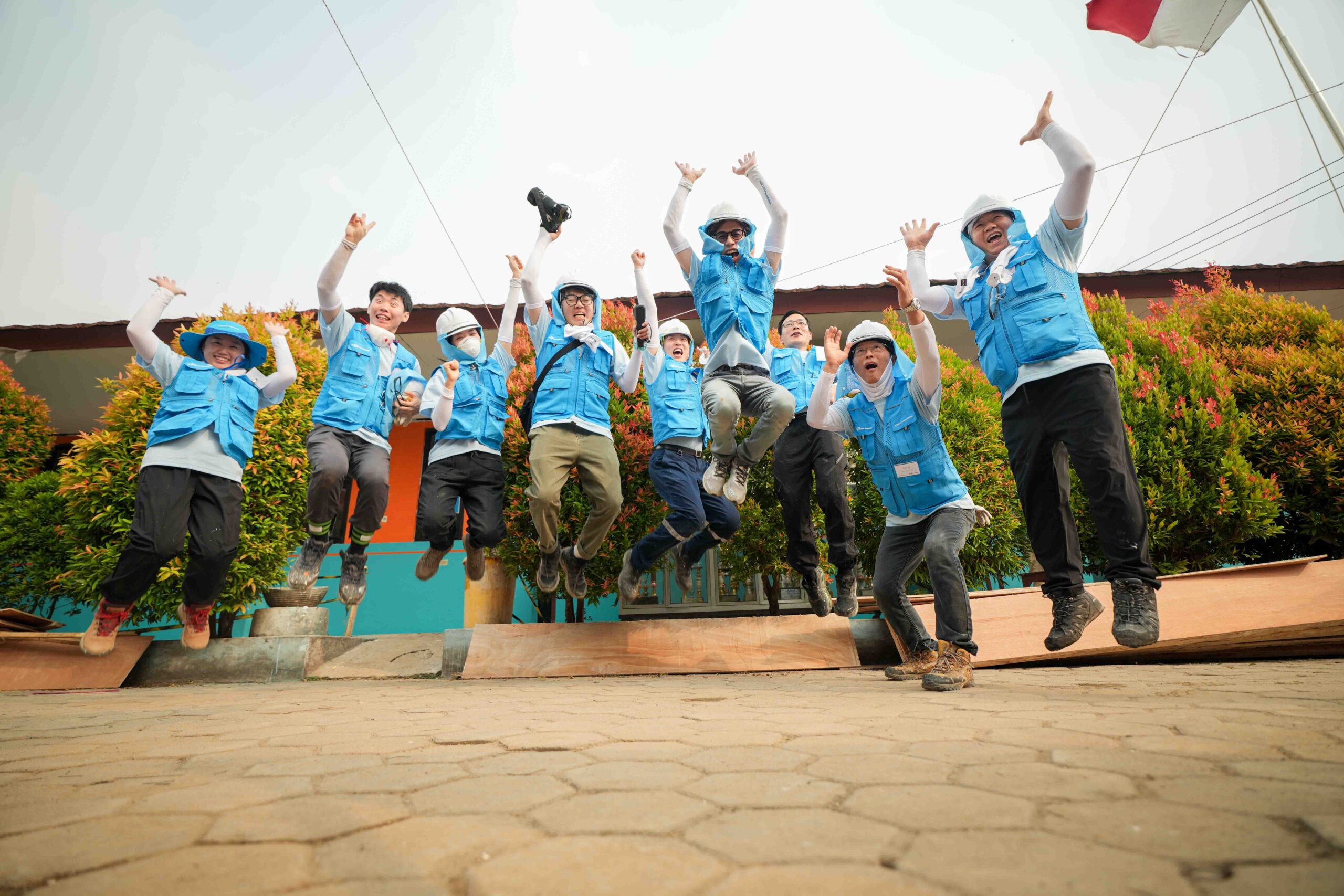
Cilegon, August 6, 2026 – A total of 50 volunteers from POSCO 1% Foundation participated in the “1% Global Village Volunteer” program held from August 3–6, 2026, at SDN Belumbang, Cilegon, Banten. The activity reflects the commitment of POSCO 1% Foundation and Habitat for Humanity Indonesia to supporting a better, safer, and more comfortable learning environment for children in Indonesia.

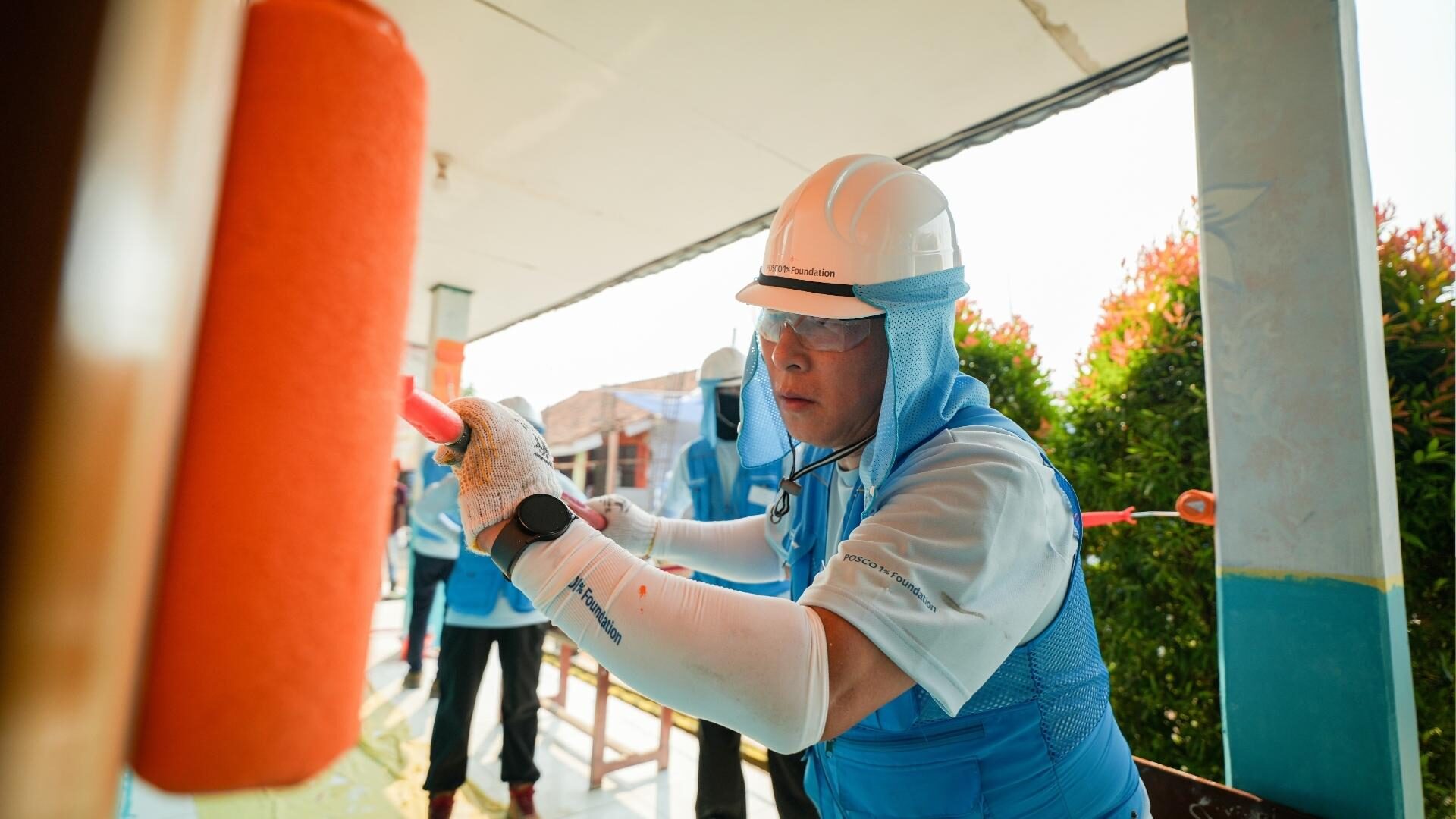
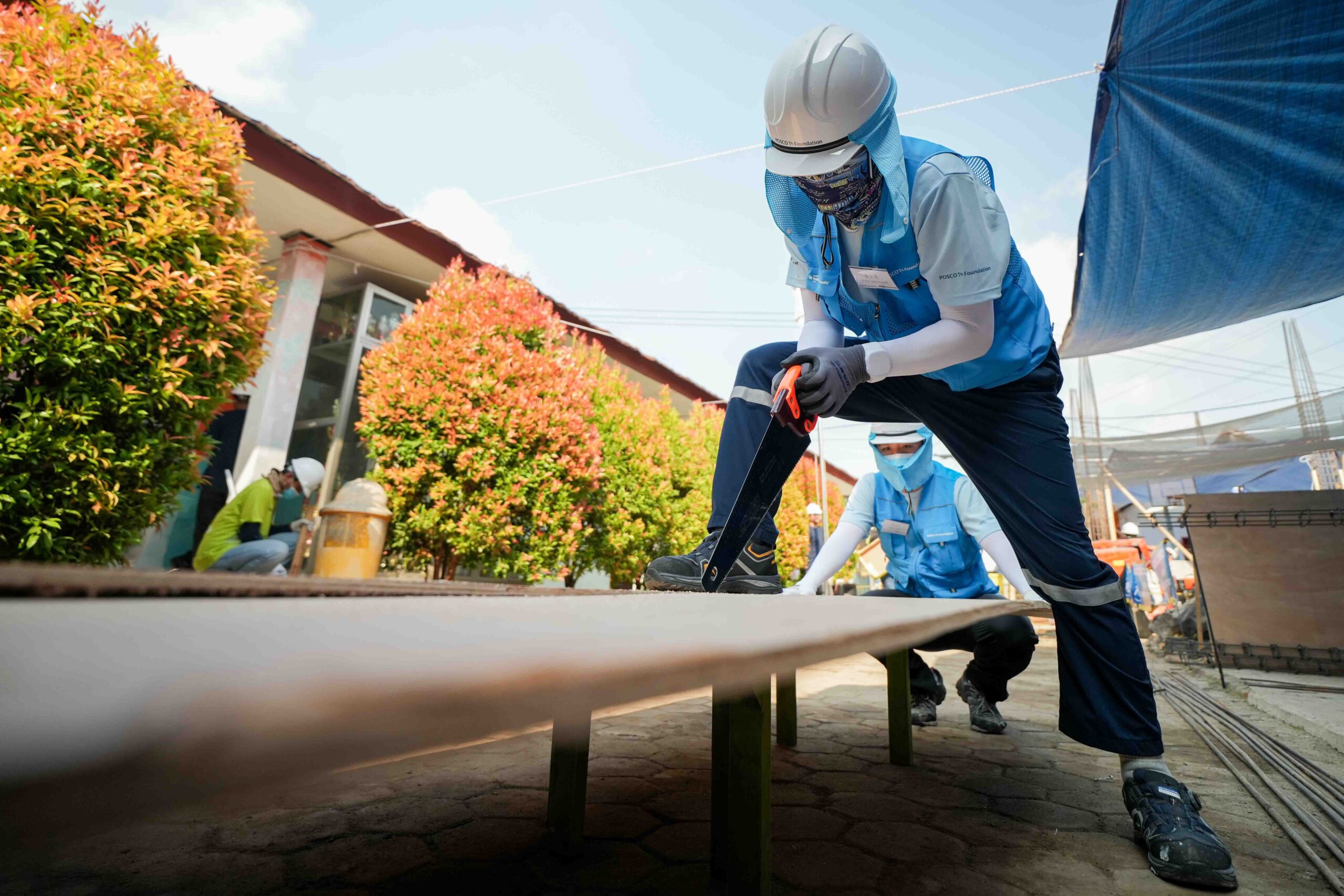
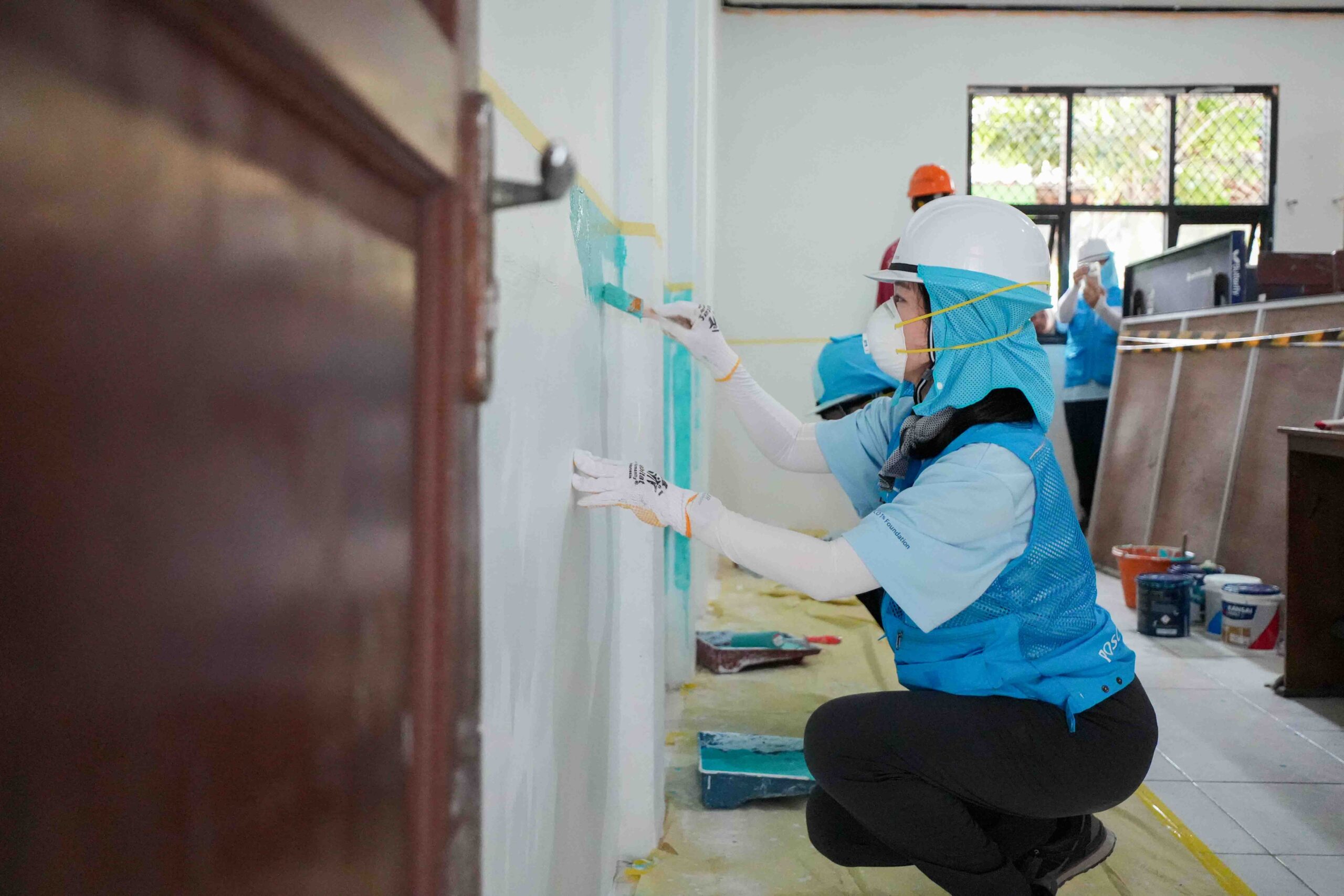
Over three days, from August 3–5, the volunteers were directly involved in constructing the walls of one new classroom and repainting six existing classrooms, both inside and outside the buildings. The activities were part of POSCO 1% Foundation’s support for the construction of one new classroom, the renovation of six existing classrooms, and the construction of three new toilets at SDN Belumbang.

SDN Belumbang is the elementary school with the largest student population in Cilegon, with 460 students. However, the school previously had only six classrooms, which had to be used in shifts by all students, affecting the effectiveness and comfort of the learning process. In addition, the condition of the school buildings was concerning, with peeling walls and several classrooms experiencing structural damage and significant cracks.

“With the current condition of the classrooms, the facilities are certainly far from adequate. With 460 students, they have to be divided into morning and afternoon sessions, which significantly affects their comfort during the learning process,” said Uung Rosdiana, S.Pd., Principal of SDN Belumbang.

Through the construction and renovation support, SDN Belumbang is expected to provide more adequate learning spaces, allowing students to participate in learning activities in a more comfortable, healthy, and enthusiastic environment.

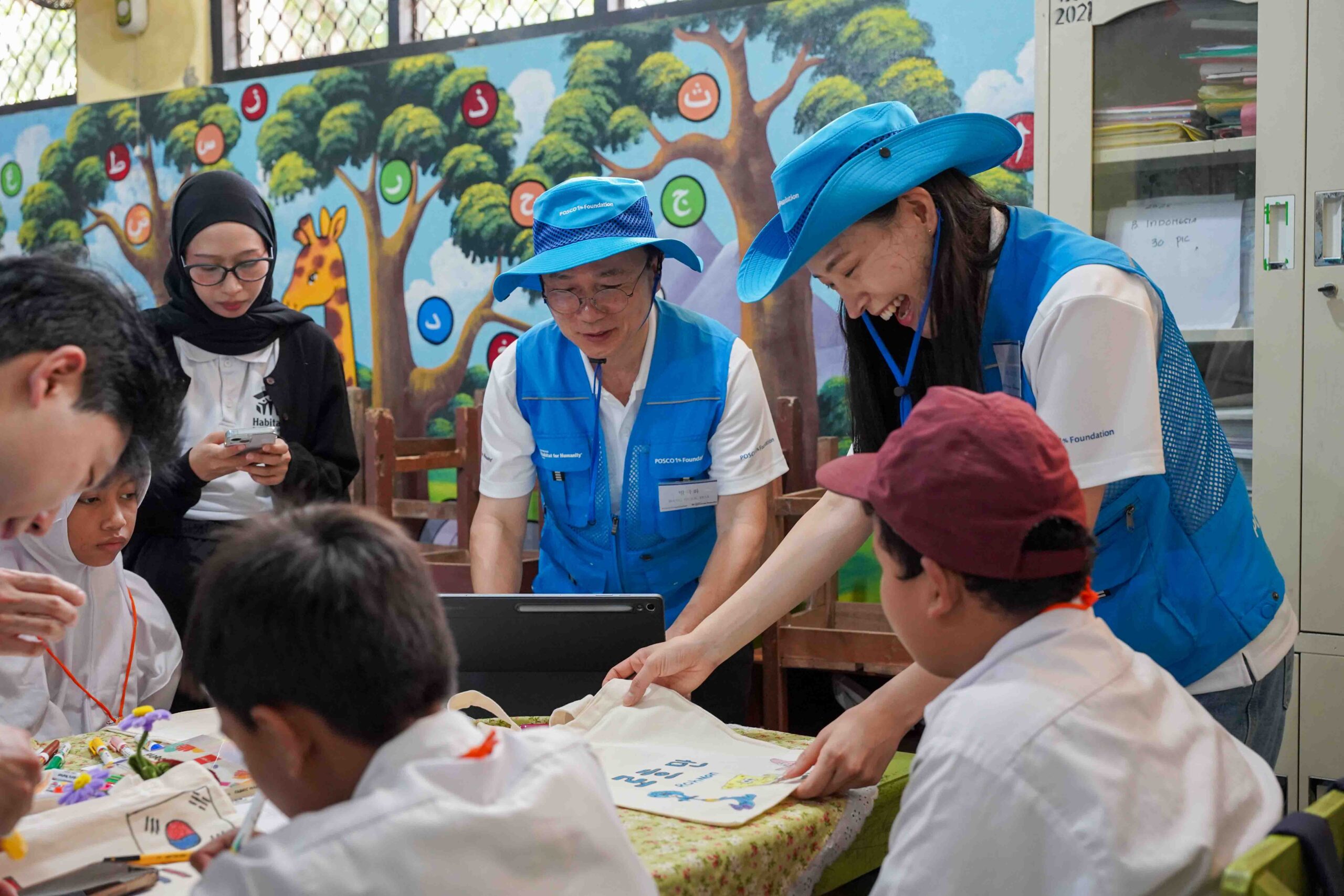
In addition to contributing to the physical improvement of the school, the volunteers also held a Korean cultural education session on August 6, attended by approximately 60 students of SDN Belumbang. Various interactive activities were organized to strengthen friendship between Indonesia and South Korea, including decorating eco-bags, creating name tags using Korean Hangeul characters, coloring traditional Korean masks, and making Polaroid photo frames. The activities were filled with enthusiasm and joy, while also providing the students with a cross-cultural learning experience.

Read also: Building Indonesia: POSCO and Habitat for Humanity Collaborate to Provide Decent Homes in Cilegon

The series of activities concluded with a Dedication Ceremony, attended by Deputy Mayor of Cilegon Fajar Hadi Prabowo, President Director of PT Krakatau POSCO Kim Young-joong, and National Director of Habitat for Humanity Indonesia Handoko Ngadiman. The ceremony symbolized the handover of the collaborative project’s achievements and served as an appreciation for all volunteers and partners who contributed to creating a better learning environment for the children of SDN Belumbang.

“We are very grateful to POSCO 1% Foundation and PT Krakatau POSCO for their continued contributions and commitment to the people of Cilegon through the construction of decent homes and the renovation of SDN Belumbang. We hope POSCO’s efforts can serve as an example and inspiration for other industries in Cilegon to contribute and work together to improve the well-being of the community,” said Fajar Hadi Prabowo, Deputy Mayor of Cilegon.

Handoko Ngadiman, National Director of Habitat for Humanity Indonesia, highlighted the connection between decent housing and a supportive educational environment for children’s growth and development.

“At Habitat for Humanity Indonesia, we believe that decent homes and safe learning environments are essential foundations for future generations. This project reflects our shared commitment to advancing the Sustainable Development Goals, particularly SDG 11 on sustainable cities and communities and SDG 4 on quality education, through the construction of a new classroom, the provision of improved sanitation facilities, and the enhancement of the school environment at SDN Belumbang,” he said.

The collaboration between POSCO 1% Foundation and Habitat for Humanity Indonesia demonstrates how partnerships among the private sector, communities, and social organizations can help advance the well-being of children in Banten Province, particularly in Cilegon. Through improved educational facilities and cultural exchange activities, this collaboration is expected to support children’s growth and development while strengthening the bonds of friendship between Indonesia and South Korea.

Photo & Writer: Syefira Salsabilla

(ss/kh)

HFHI
Habitat Updates

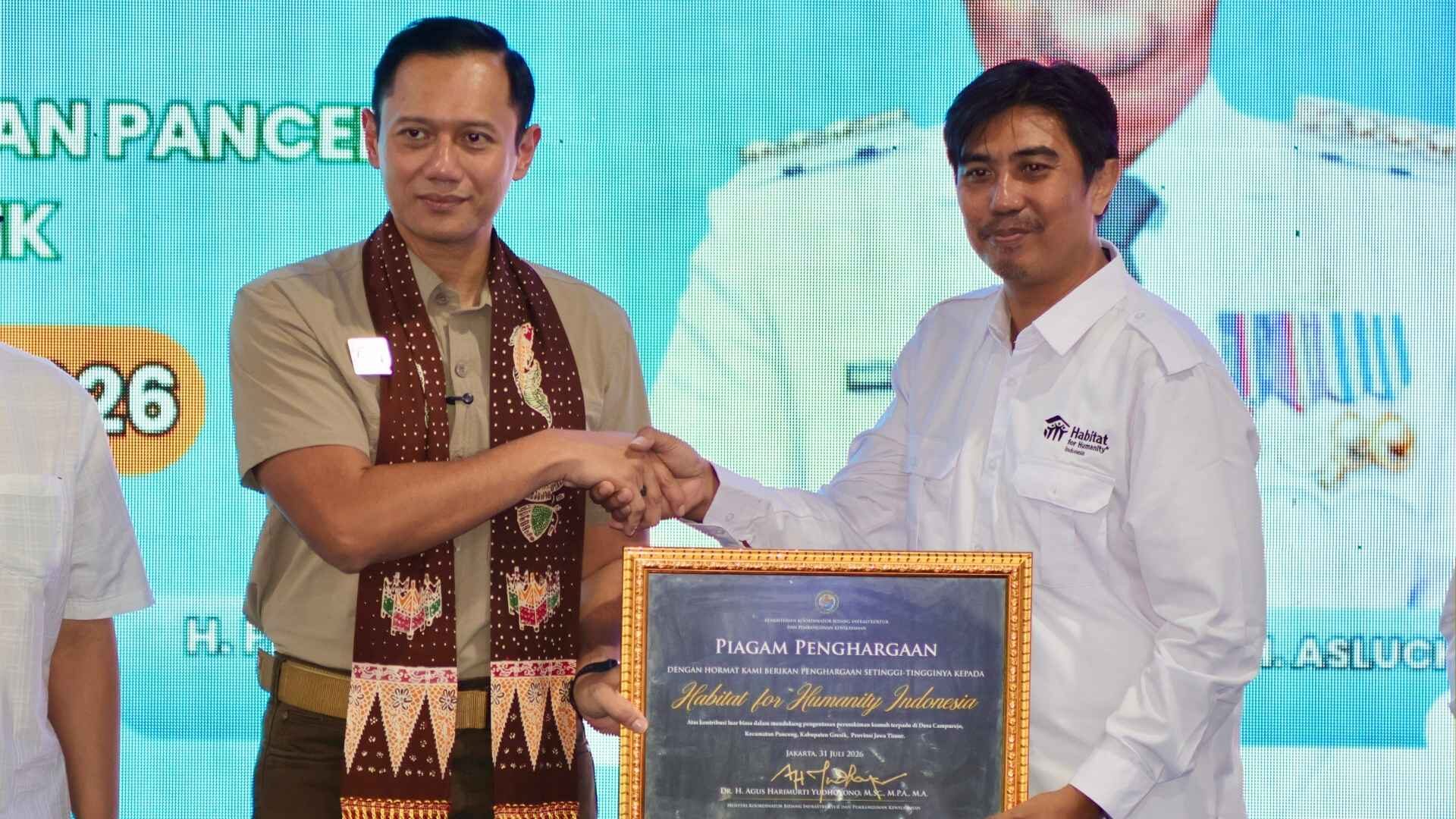
Habitat for Humanity Indonesia Receives Award from Coordinating Minister AHY for Its Contribution to Integrated Slum Upgrading in Gresik

Gresik, August 1, 2026 – Habitat for Humanity Indonesia received an award from Agus Harimurti Yudhoyono (AHY), Coordinating Minister for Infrastructure and Regional Development of the Republic of Indonesia, in recognition of its contribution to supporting integrated slum upgrading in Campurejo Village, Panceng District, Gresik Regency, East Java. The award was presented during the inauguration of the 2025 Thematic Special Allocation Fund (DAK) for Integrated Slum Upgrading (TPKT) on Saturday, August 1, 2026.

The recognition acknowledges the collaboration between Habitat for Humanity Indonesia and Pakuwon Group in supporting the transformation of the area through the construction of 21 decent homes, the delivery of healthy housing and basic construction training for 99 community members, and the construction of the relocation area’s entrance gate as part of efforts to create a safer, healthier, and better-organized community.

Habitat Indonesia’s contribution forms part of the government’s integrated settlement upgrading program, which addresses slum areas through cross-sector collaboration. In Campurejo Village, the initiative covers a 7.11-hectare coastal settlement that is home to approximately 1,152 residents. In addition to housing construction, the area has been equipped with essential infrastructure, including neighborhood roads, drainage systems, clean water distribution networks, a wastewater treatment facility (WWTP), a water reservoir, and a Reduce, Reuse, Recycle (3R) waste management facility.

In his remarks, Minister AHY emphasized that settlement upgrading cannot be carried out in isolation but requires strong collaboration among the government, the private sector, and development partners to deliver sustainable improvements for communities.

“Settlement upgrading must create communities that are more developed, more prosperous, and greener. It all begins with homes and families as the foundation of society,” said AHY.

The Campurejo initiative also serves as an example of a hybrid financing approach, combining government funding through the Thematic Special Allocation Fund for Integrated Slum Upgrading (DAK TPKT) with Corporate Social Responsibility (CSR) support from the private sector. Of the 166 housing units included in the program, 145 homes were funded through DAK TPKT, while the remaining 21 homes were built through the partnership between Habitat for Humanity Indonesia and Pakuwon Group. This collaboration demonstrates how cross-sector partnerships can accelerate the provision of adequate housing while supporting comprehensive neighborhood upgrading.

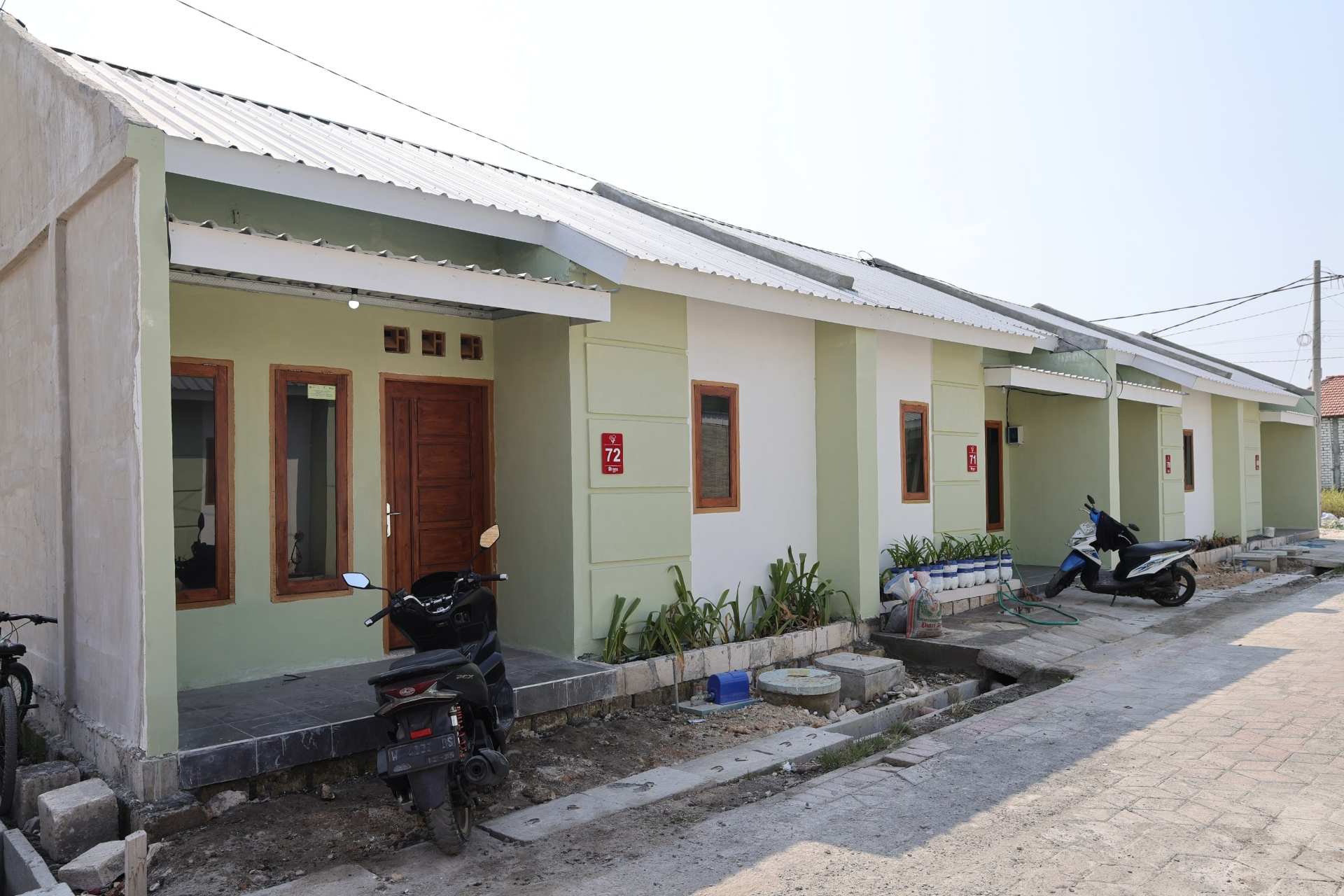
A decent home built by Habitat for Humanity Indonesia in partnership with Pakuwon Group in Campurejo Village, Gresik Regency, Indonesia. Photo: Courtesy

Read also: Habitat for Humanity Indonesia Receives Award from the Ministry of Public Works and Housing

During his visit to the site, AHY also confirmed that several essential facilities, including the clean water distribution system, are now fully operational and benefiting local residents. According to him, the transformation in Campurejo Village is reflected not only in the newly built homes but also in the improved neighborhood environment and supporting infrastructure.

“The transformation is clearly visible. It’s not just about the houses that have been built, but also about the improved environment and supporting facilities that have made this community a much more comfortable place to live,” AHY said.

The improvements have also been felt by Imam Ansori, a fisherman and one of the homeowner beneficiaries. After spending years living in a house with a leaking roof, he and his family can now enjoy a safer and more comfortable home. “Whenever it rained, we were always worried because water would leak through the roof. Now we can live with peace of mind. This home has truly changed our family’s life,” said Imam Ansori.

The award from the Coordinating Ministry for Infrastructure and Regional Development of the Republic of Indonesia recognizes Habitat for Humanity Indonesia’s contribution to integrated settlement upgrading. Through collaboration with the government and private sector partners, Habitat Indonesia remains committed to expanding access to adequate housing, promoting healthier communities, and improving the quality of life for families in need.

(kh/av)
HFHI_MAG3
Habitat Updates

Inclusive Homes: The First Step Toward More Independent Living

Yogyakarta, July 30, 2026 – For most people, home is a place to rest, spend time with family, and feel safe and comfortable. However, for many people with disabilities in Indonesia, home still presents significant challenges in carrying out daily activities. Stairs without ramps, narrow bathrooms, uneven floors, and inaccessible layouts mean that many homes are not yet safe, comfortable, or accessible for everyone.

These challenges remain an important issue that deserves greater attention. Data show that approximately 9.9 million families in Indonesia still face a housing backlog, while 26.9 million families live in homes that do not meet minimum standards for adequate housing. The situation becomes even more complex for families with members living with disabilities. Indonesia is estimated to have around 23 million people with disabilities, yet only a small proportion of homes are equipped with basic accessibility features such as ramps, handrails, and disability-friendly sanitation facilities.

Beyond inadequate infrastructure, other factors—including financial constraints, limited awareness of the importance of inclusive housing, and persistent stigma toward people with disabilities—continue to hinder the development of homes that are both adequate and accessible. As a result, simple daily activities such as going to the bathroom, leaving the house, or moving from one room to another often still depend on assistance from family members.

The Partnership Between Asuransi MAG and Habitat Indonesia

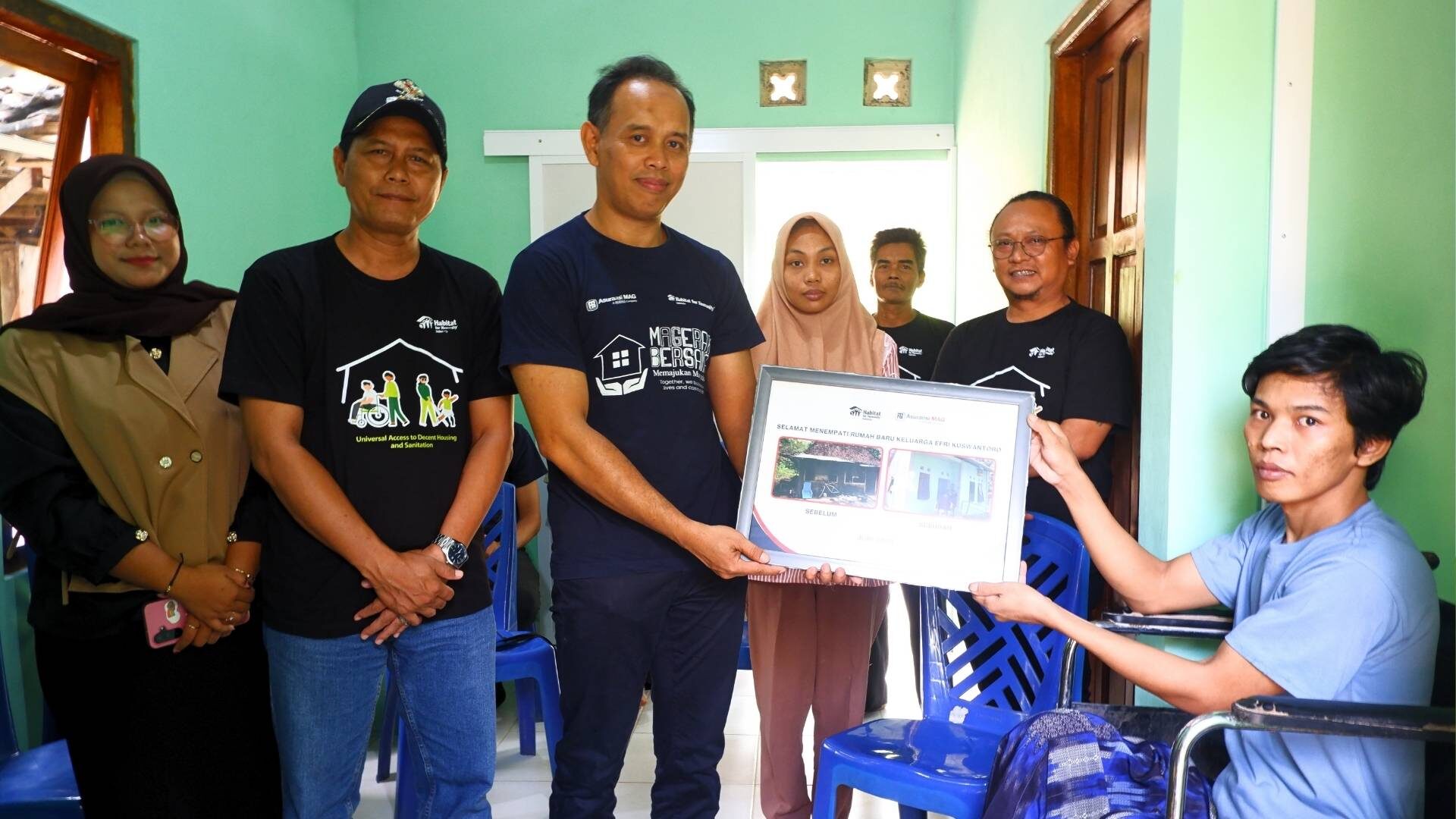
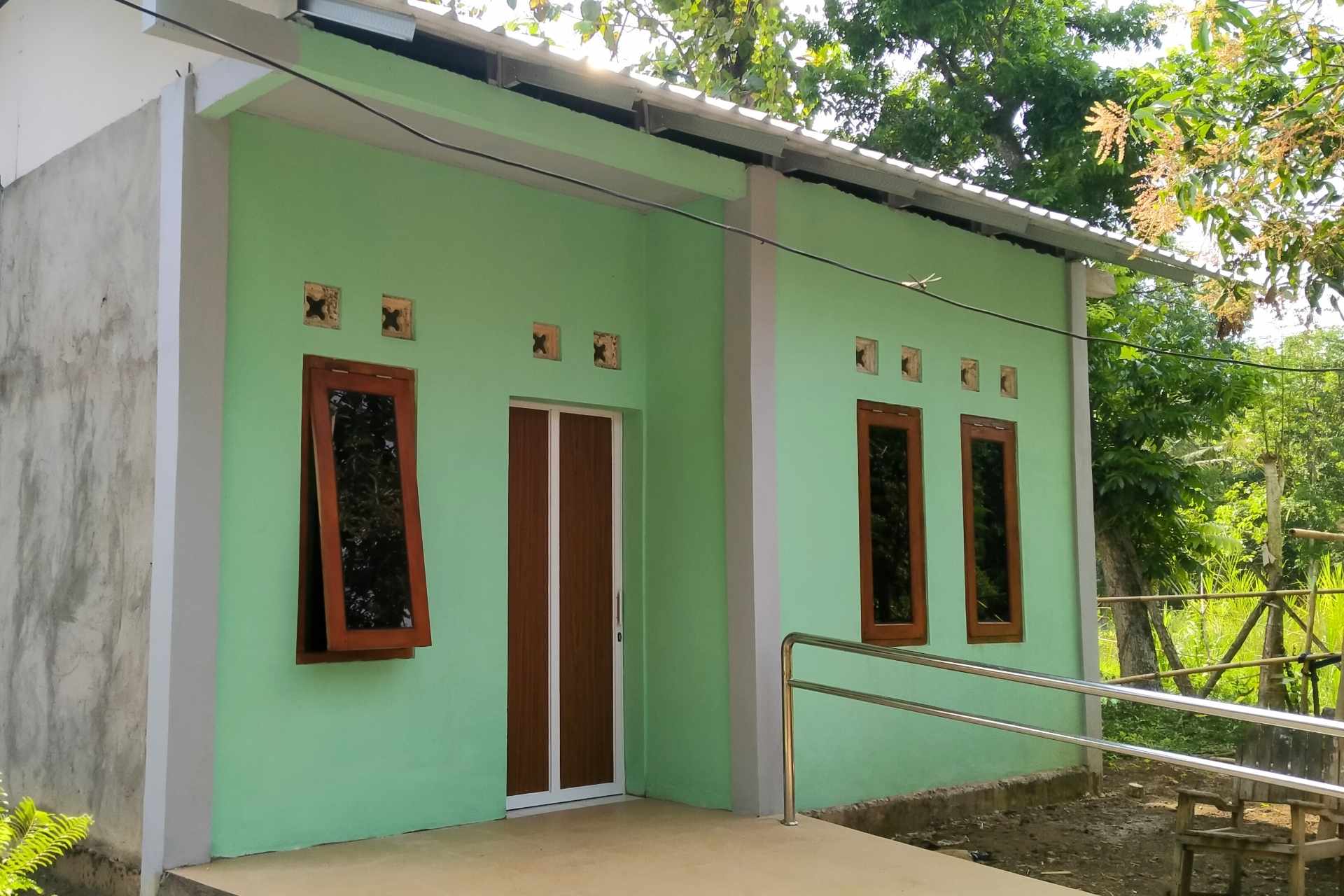
In response to these challenges, PT Asuransi Multi Artha Guna Tbk (Asuransi MAG) and Habitat for Humanity Indonesia partnered to build 10 inclusive, decent homes for families with members living with disabilities in Sentolo District, Kulon Progo Regency, Special Region of Yogyakarta.

Each home was designed with the residents’ needs, safety, and comfort in mind. Accessibility features—including safer bathrooms, handrails, accessible pathways, and layouts that support mobility—were incorporated to create more inclusive living spaces. Through these improvements, the homes are intended not only to provide physical shelter but also to promote safety, greater independence, and a more dignified quality of life for people with disabilities.

One of the inclusive homes built by Asuransi MAG in partnership with Habitat Indonesia in Sentolo District, Kulon Progo Regency, Special Region of Yogyakarta, Indonesia. Photo: HFHI Team

In addition to housing construction, the program also provided inclusive housing training for 20 participants, including people with disabilities, family members, and local stakeholders. The training aimed to increase awareness that decent housing is not only about structural strength and safety, but also about ensuring accessibility, security, and equal opportunities for every resident.

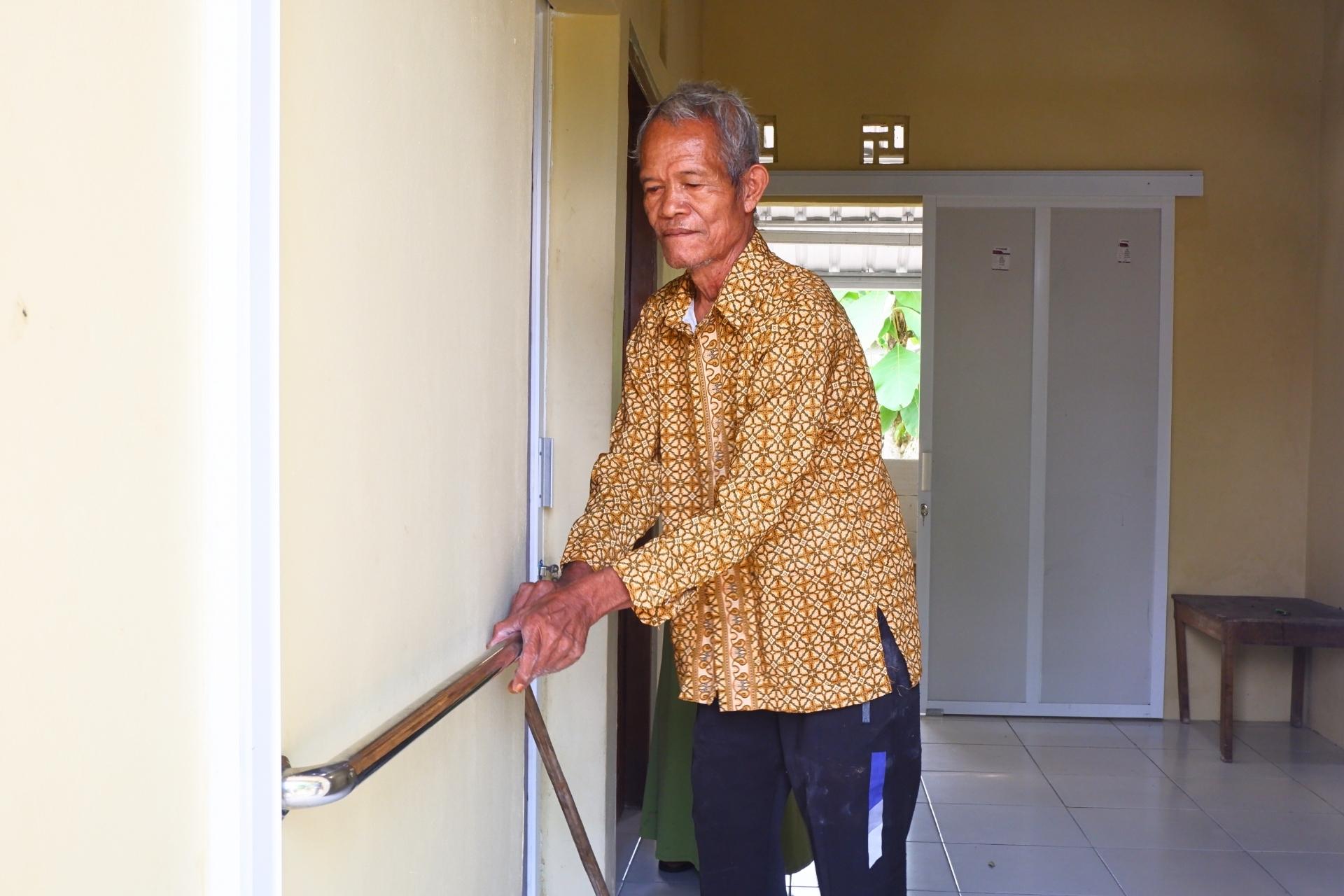
One of the beneficiary families is Legimin (65) from Bulak Hamlet, Tuksono Village. For many years, Legimin and his family lived under difficult financial circumstances. Today, his mobility has become increasingly limited due to illness. Despite these challenges, his second child, who has a psychosocial disability, continues to strive for independence. He is able to communicate well and works as a day laborer to help support the family’s daily needs.

Before receiving assistance, their home was far from adequate. The walls were made of concrete blocks without proper structural reinforcement, parts of the floor were still dirt and unfinished cement, the roof was deteriorating, and the bathroom did not meet basic standards. These conditions not only affected the family’s comfort but also significantly limited the mobility and independence of both Legimin and his son.

“Having two family members with disabilities while facing financial hardship, owning a decent home has always been our dream. Now this house makes our daily activities much easier because it was designed to suit our needs, allowing us to live more independently,” said Legimin.

Legimin (65) uses a handrail inside his now decent and inclusive home, built by PT Asuransi Multi Artha Guna Tbk (Asuransi MAG) in partnership with Habitat for Humanity Indonesia in Sentolo District, Kulon Progo Regency, Special Region of Yogyakarta, Indonesia. Photo: HFHI Team

A similar transformation has been experienced by Rahmad (27) and his family in Demangan Hamlet. Since birth, Rahmad has lived with a mobility impairment, making him dependent on his parents and siblings for daily activities, including bathing and using the toilet. Before receiving assistance, he slept on the floor of a back room next to the kitchen and bathroom. Whenever he needed to bathe, family members had to carry him because the bathroom doorway was too narrow for a wheelchair to pass through.

Today, that situation has changed. The new home, designed with accessibility in mind, provides Rahmad with a safer and more comfortable living environment. With disability-friendly features, he has become more independent in his daily activities, including being able to access the bathroom without always relying on assistance from family members.

“We used to face so many challenges. Thank God, our new home was designed to meet our son’s accessibility needs. Daily life has become much easier, and now he can even go to the bathroom by himself,” said Rahmad’s parents.

The positive changes experienced by these families demonstrate that a decent home is measured not only by the strength of its structure, but also by its ability to provide a safe, comfortable, and accessible living environment for everyone. When physical barriers within the home are removed, people with disabilities have greater opportunities to live independently, carry out daily activities safely, and participate more actively in family and community life.

Through the collaboration between Asuransi MAG and Habitat for Humanity Indonesia, this inclusive housing initiative aims not only to provide better homes for 10 beneficiary families, but also to encourage greater public awareness that every home should be designed to meet the needs of all its residents. Ultimately, a truly decent home is more than just a place to live—it is a space that provides safety, equal opportunity, and dignity for everyone who calls it home.

(kh/av)
HFHI Air Bersih (1)
Habitat Perspectives

The Dry Season Is Here: Smart Ways to Manage Clean Water at Home

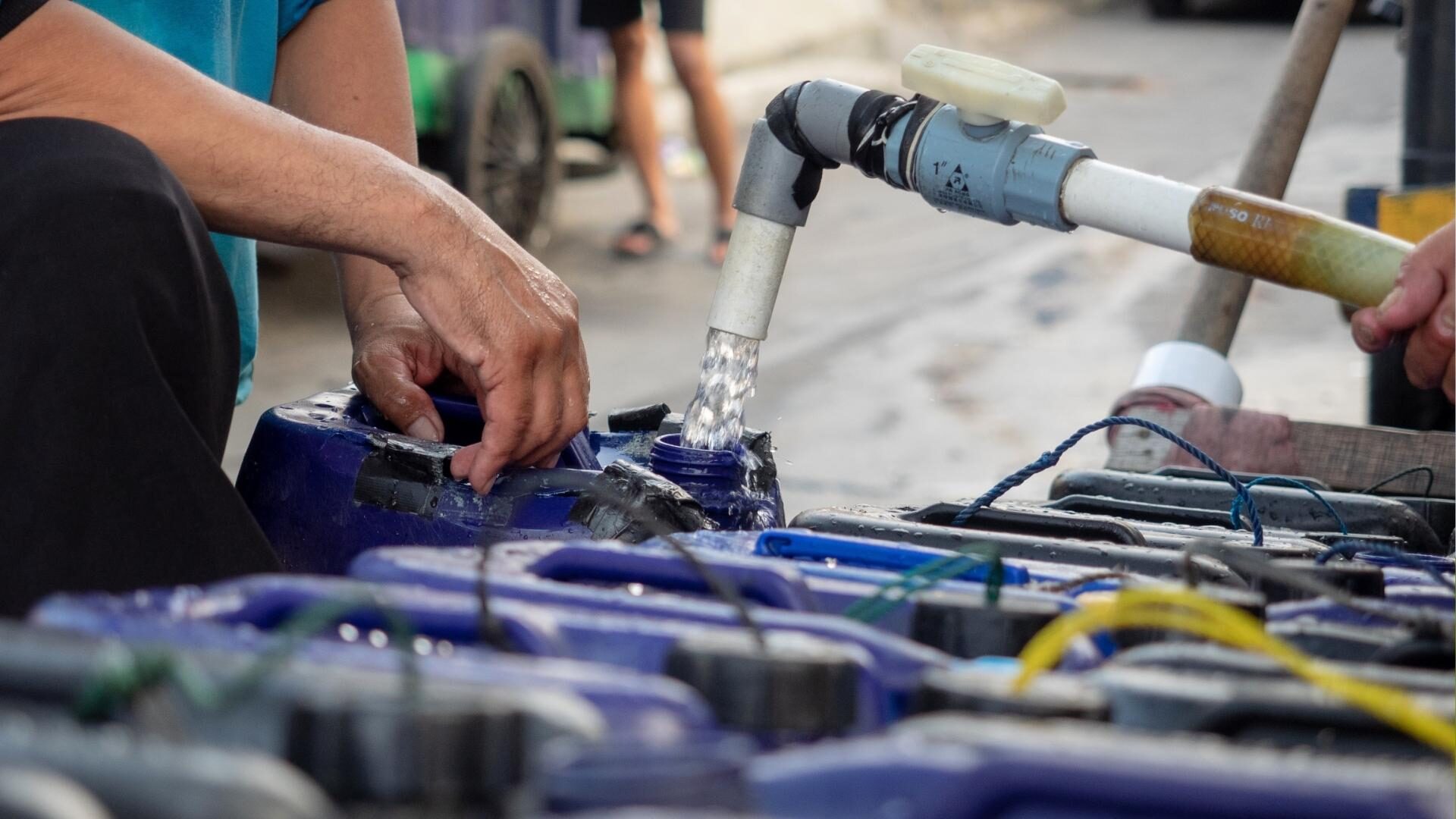
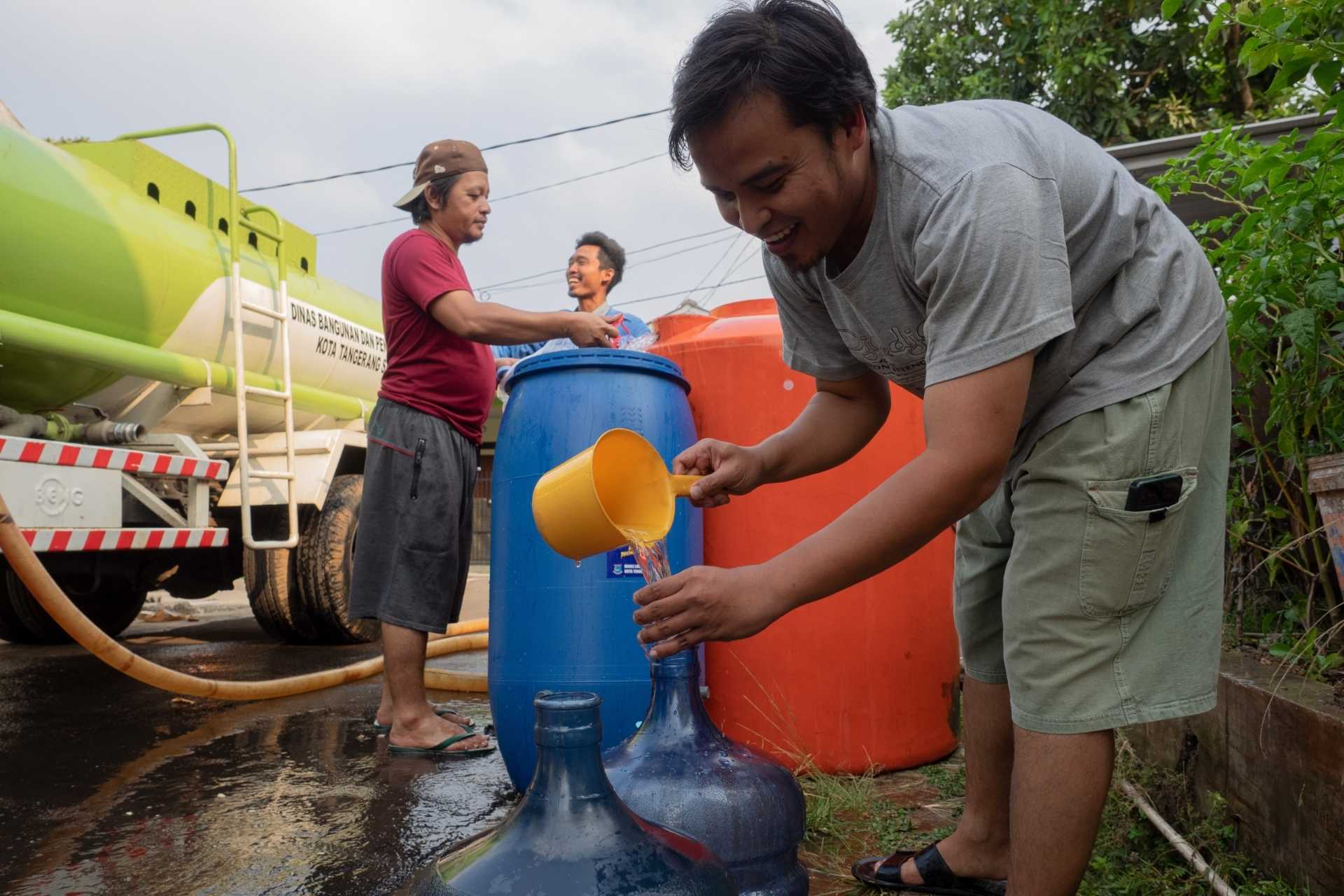
(Illustration) Residents queue to collect clean water distributed by a water tanker truck. Photo: Kevin Herbian

The dry season brings more than just hotter weather—it also serves as a reminder that access to clean water remains a challenge for many families across Indonesia.

Jakarta, July 29, 2026 – As rainfall decreases, clean water shortages are beginning to affect communities in several regions. In Karawang Regency, for example, the Regional Disaster Management Agency (BPBD) distributed approximately 150,000 liters of clean water to 7,704 people across six villages affected by drought on 22 July 2026. Meanwhile, in Gunung Batur Village, Cilegon City, 125 households must queue and walk along rocky footpaths to Sumur Bendung Spring to collect water for their daily needs. The burden is especially heavy for vulnerable groups, particularly women, who often carry jerry cans or water containers weighing several kilograms over distances of nearly one kilometer.

Clean water plays a role far beyond meeting drinking needs. It is the foundation of family health, proper sanitation, and a clean living environment. Reliable access to water enables families to prepare food safely, wash clothes, maintain personal hygiene, and keep their homes clean and healthy. Conversely, when access to clean water is limited, household burdens increase, often affecting women, children, older persons, and people with disabilities the most. Ultimately, even a structurally sound house cannot truly be considered adequate if its occupants struggle to access clean water every day.

Amid these challenges, every family can begin adopting simple habits to use water more wisely. In addition to helping preserve water supplies during the dry season, these practices reduce waste and promote more efficient water use.

1. Harvest rainwater for non-drinking purposes

If possible, collect rainwater for activities such as watering plants, cleaning outdoor areas, or other non-potable uses. Be sure to store it in clean, covered containers to maintain its quality.

2. Repair leaking taps and pipes immediately

A small leak may seem insignificant, but it can waste a substantial amount of water over time. Regularly inspecting taps, pipe connections, and hoses can help prevent unnecessary water loss.

(Illustration) A resident uses clean water for cooking. Photo: HFHI/Kevin Herbian

Read also: Women Behind the Construction of Decent Homes

3. Reuse water whenever it is safe to do so

Water used to rinse rice, vegetables, or fruit can be reused for watering plants or cleaning outdoor spaces. This simple practice helps reduce the use of clean water without compromising its benefits.

4. Prioritize essential water needs

When water supplies are limited, prioritize its use for drinking, cooking, personal hygiene, and household sanitation. This helps ensure that basic needs continue to be met even during periods of water scarcity.

5. Store emergency water supplies safely

Keeping a reserve of clean water can help households prepare for temporary disruptions in water supply. Store water in tightly sealed containers to protect it from dust, insects, and contamination.

6. Clean water storage containers regularly

Water tanks, reservoirs, and storage containers should be cleaned routinely to maintain water quality and prevent the growth of algae, dirt, and harmful microorganisms that could pose health risks.

Managing water wisely is a simple habit that begins at home. Small, consistent actions not only help preserve water supplies during the dry season but also strengthen families’ resilience in the face of future challenges.

At a time when many communities still struggle to access clean water every day, using water responsibly is one meaningful way to ensure that this precious resource remains available for more people—today and for generations to come.

(kh/av)
HFH – Hyundai (1)
Volunteer Action

Global Village ‘Happy Move’ Brings Together Korean and Indonesian Students to Build Decent Homes in Tangerang

Tangerang, July 22, 2026 – What happens when hundreds of university students from South Korea travel to Indonesia—not for a vacation, but to spend their time building decent homes for families in need?

That was exactly the scene in Rajeg District, Tangerang Regency, where the spirit of collaboration transcended national borders and language barriers, proving that compassion has the power to unite people from all walks of life.

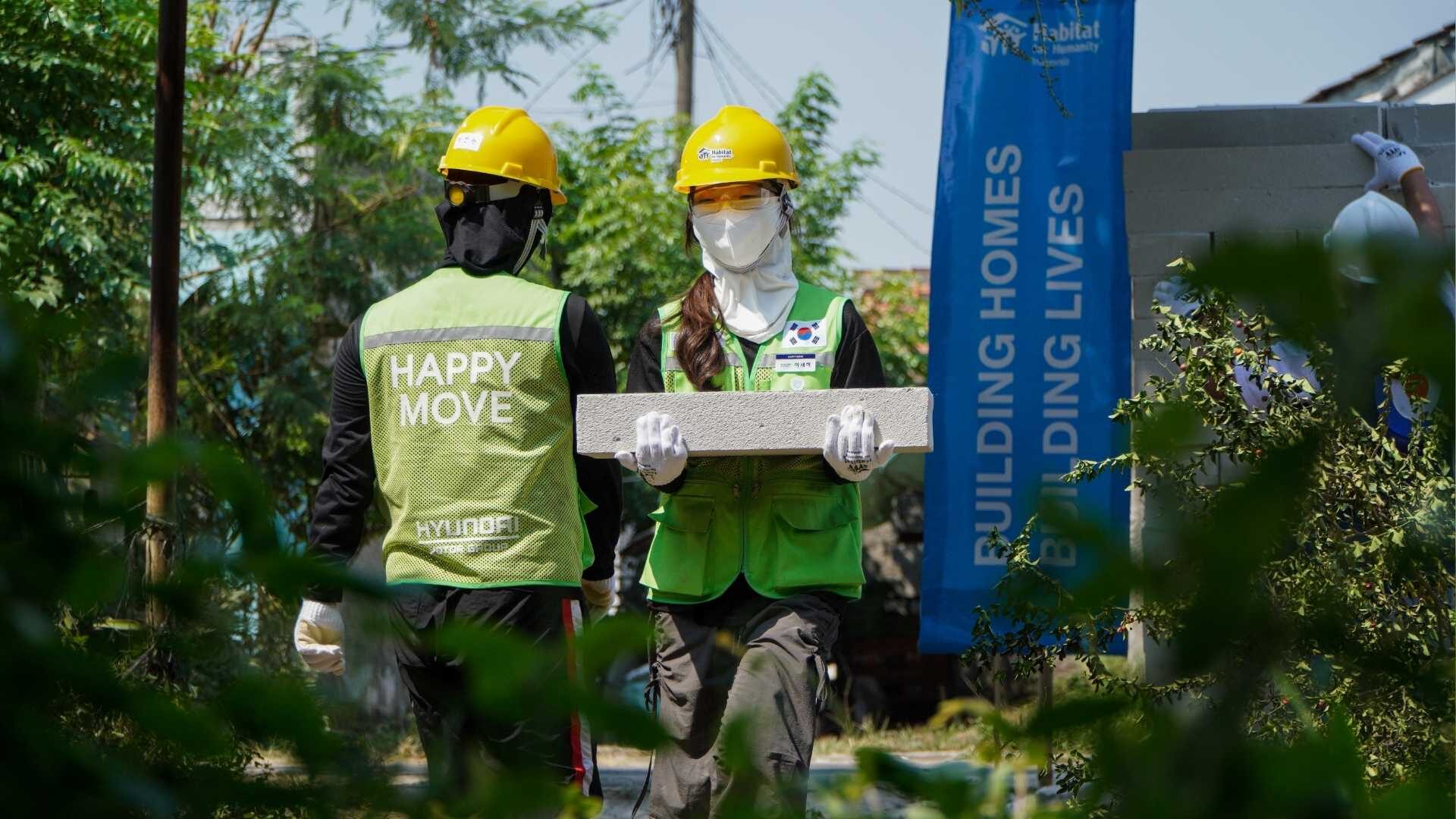
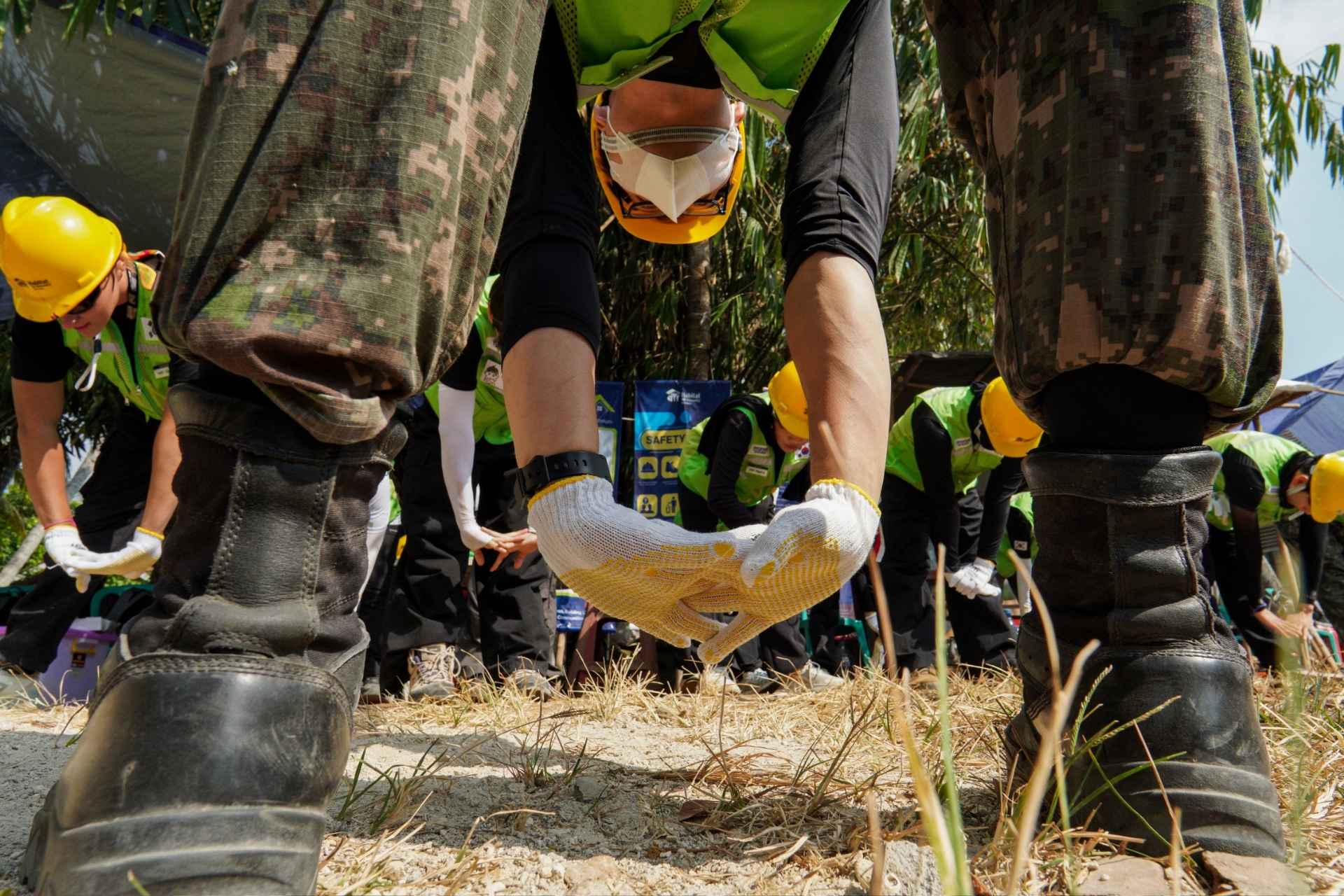
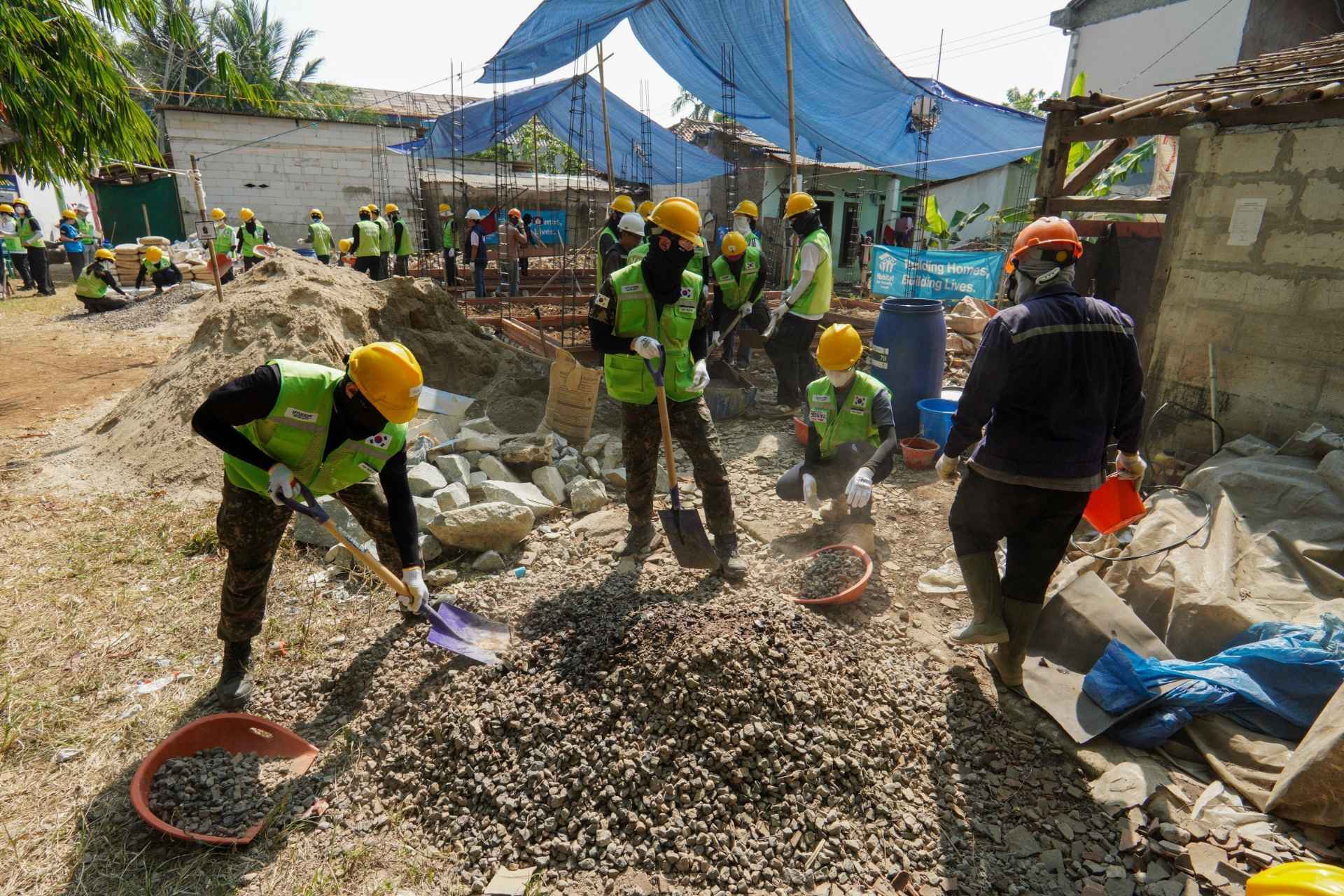
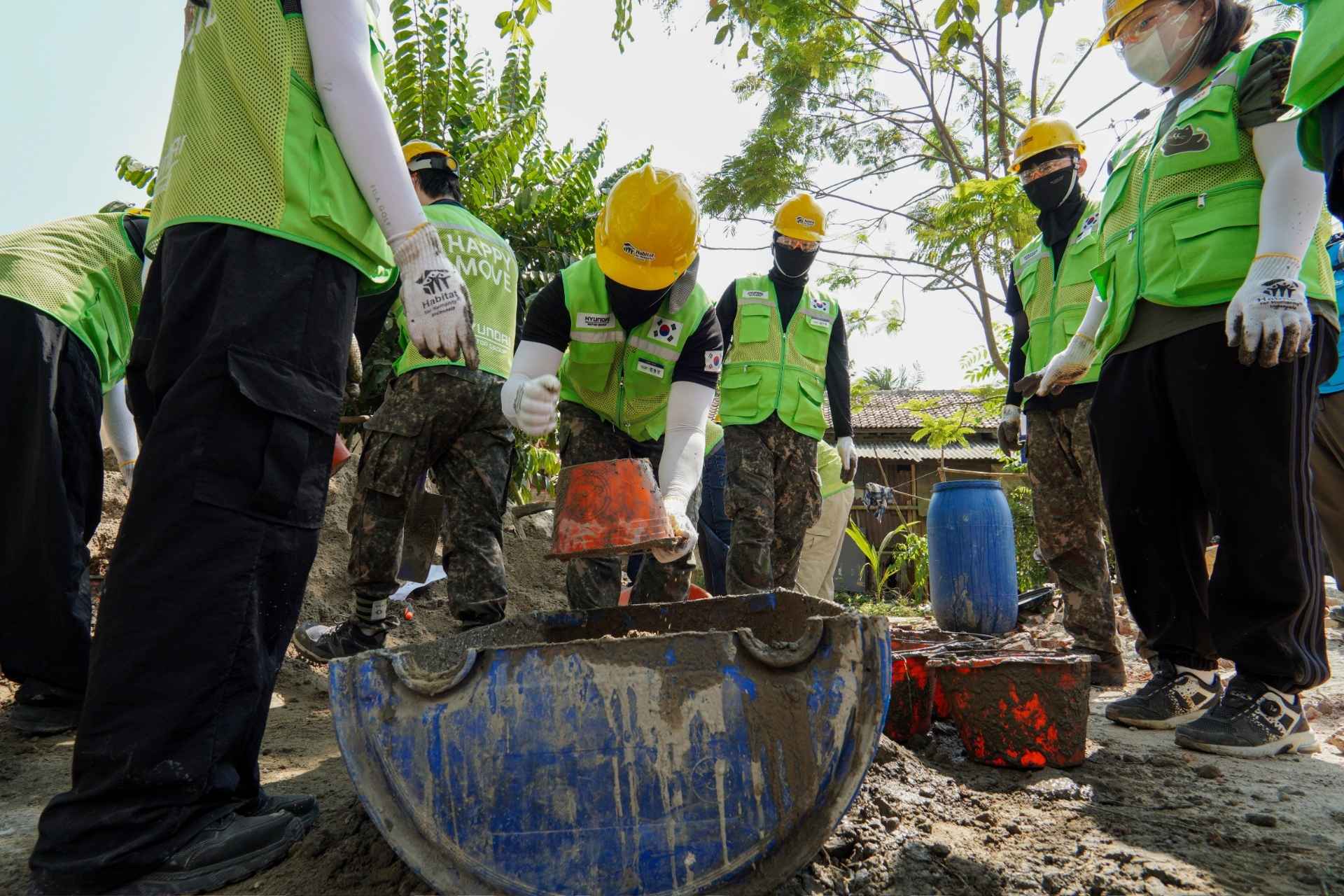
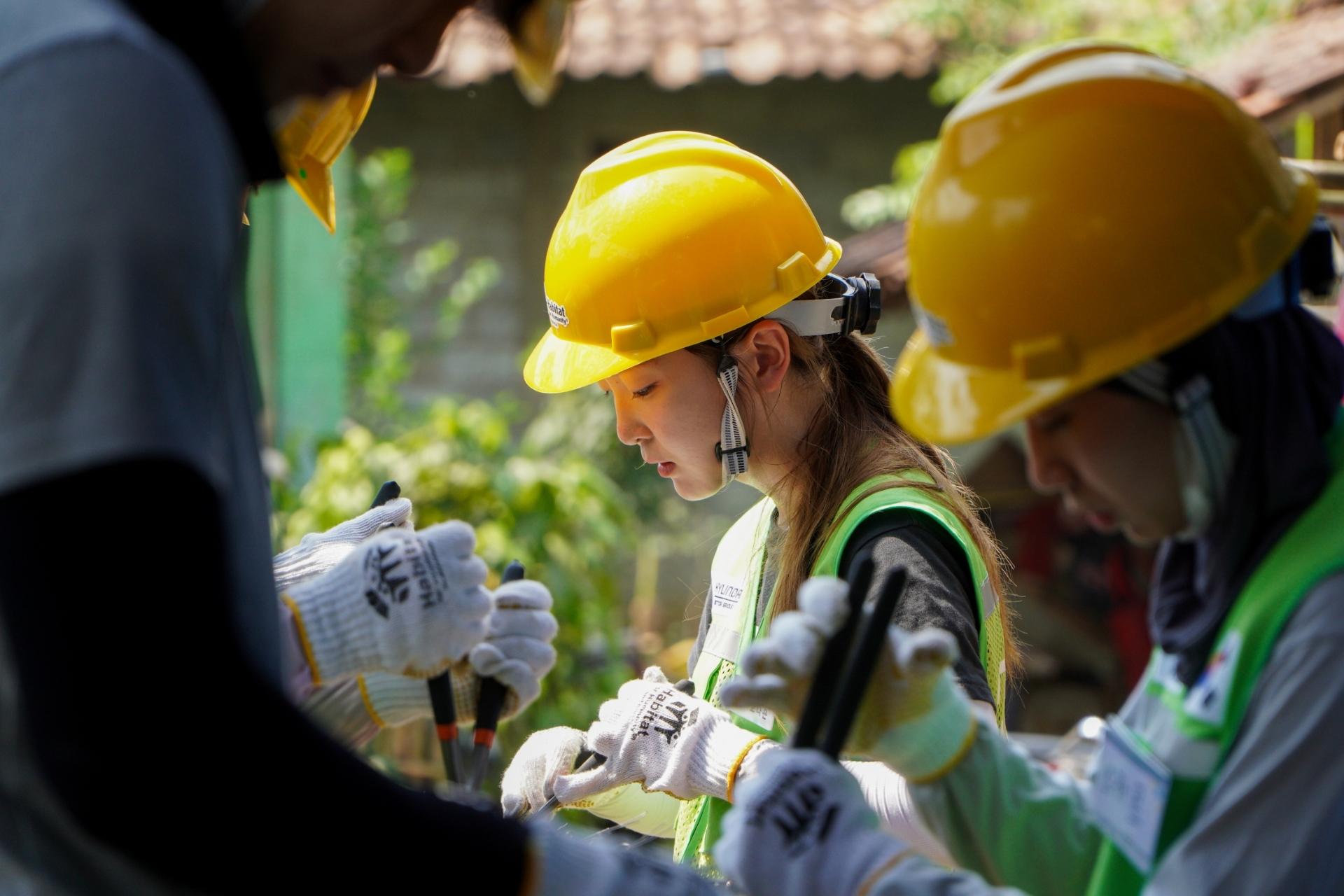
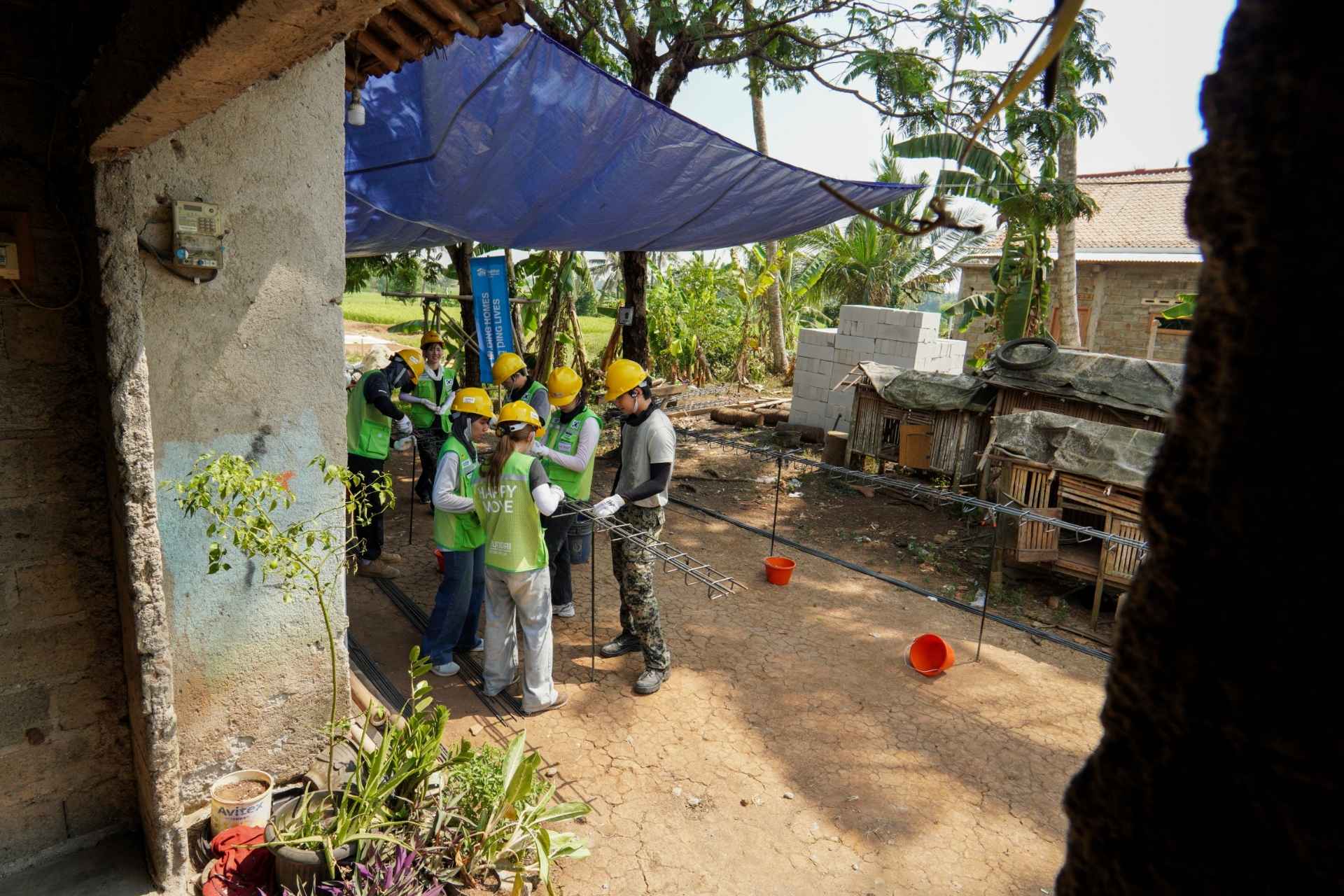
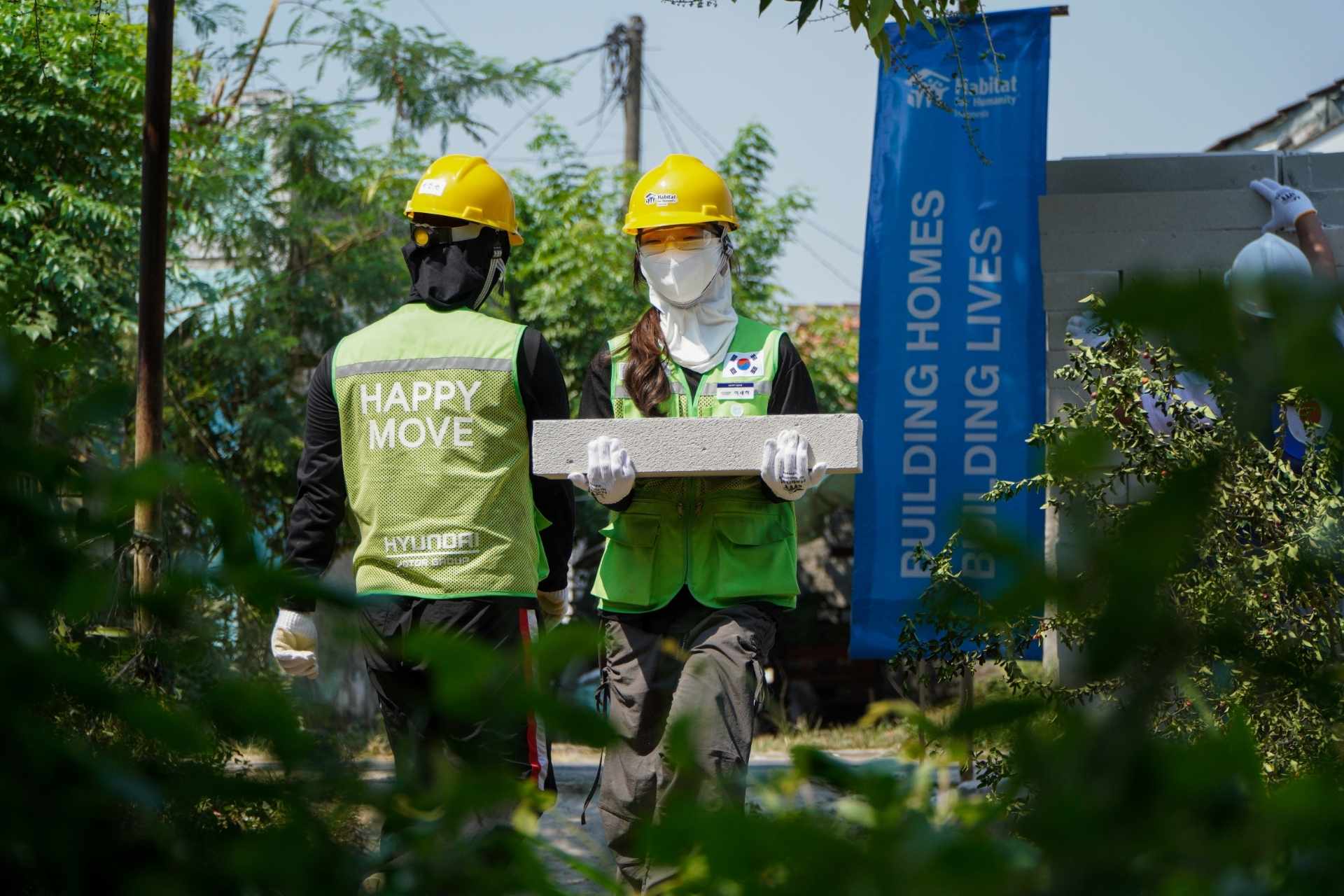
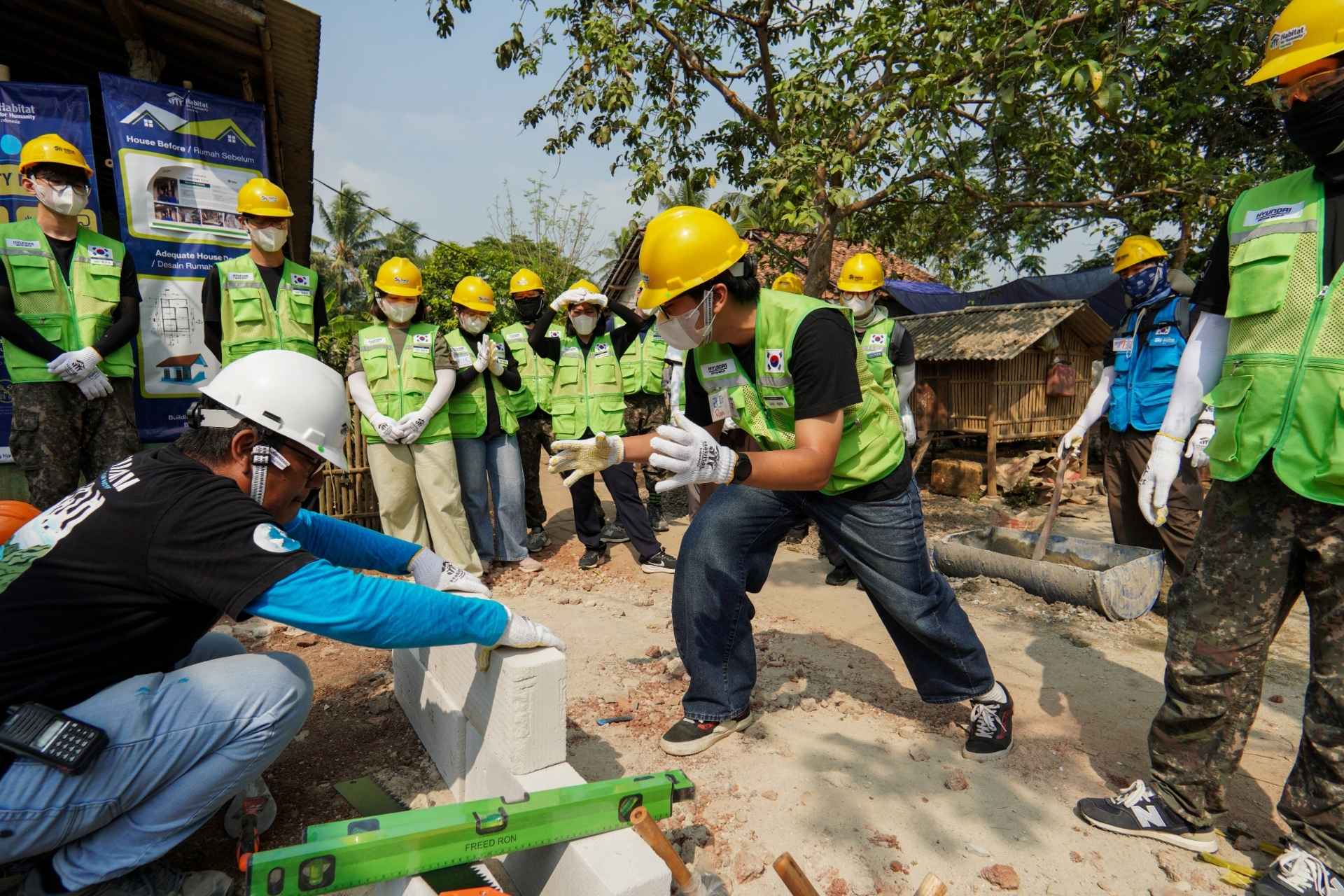
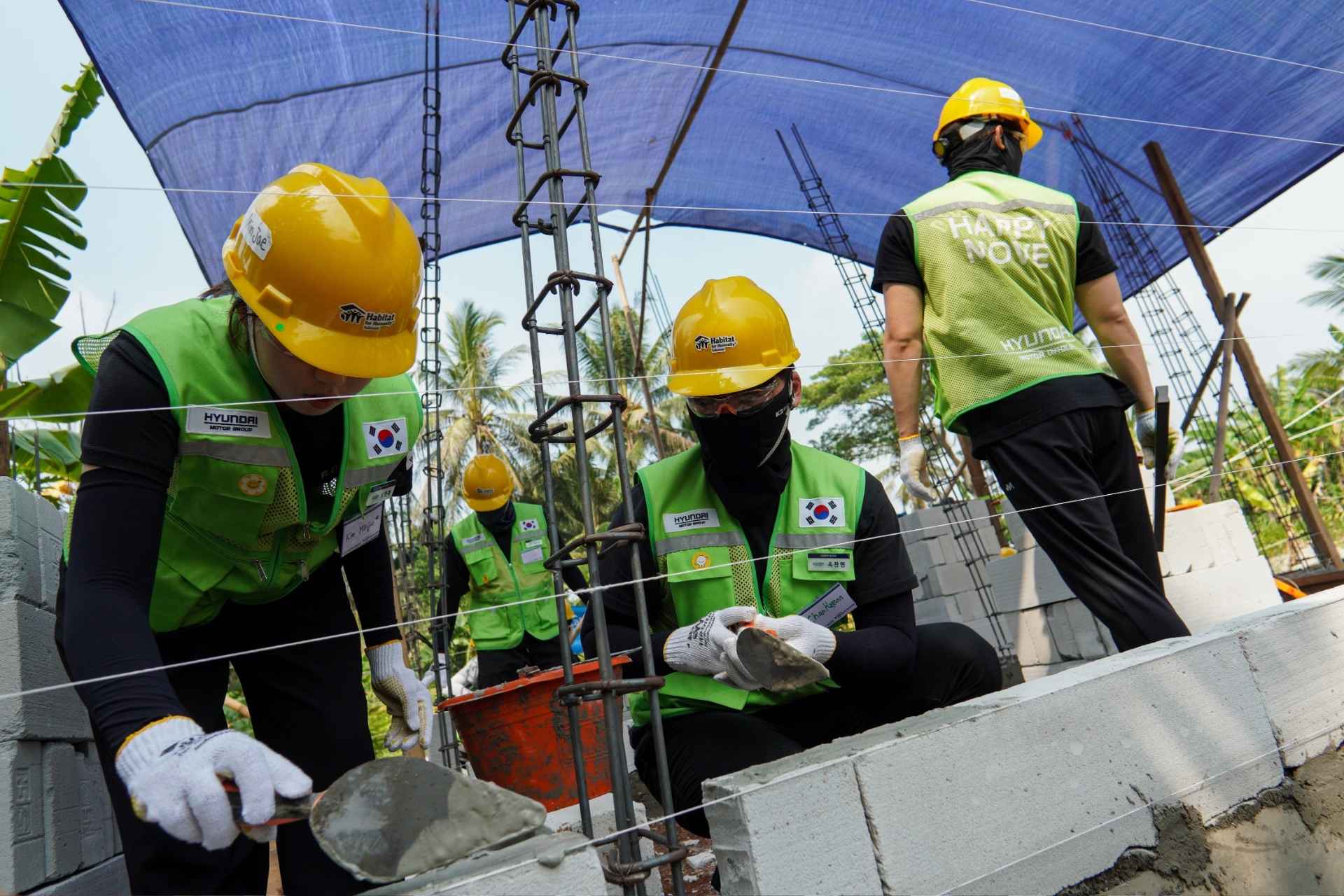
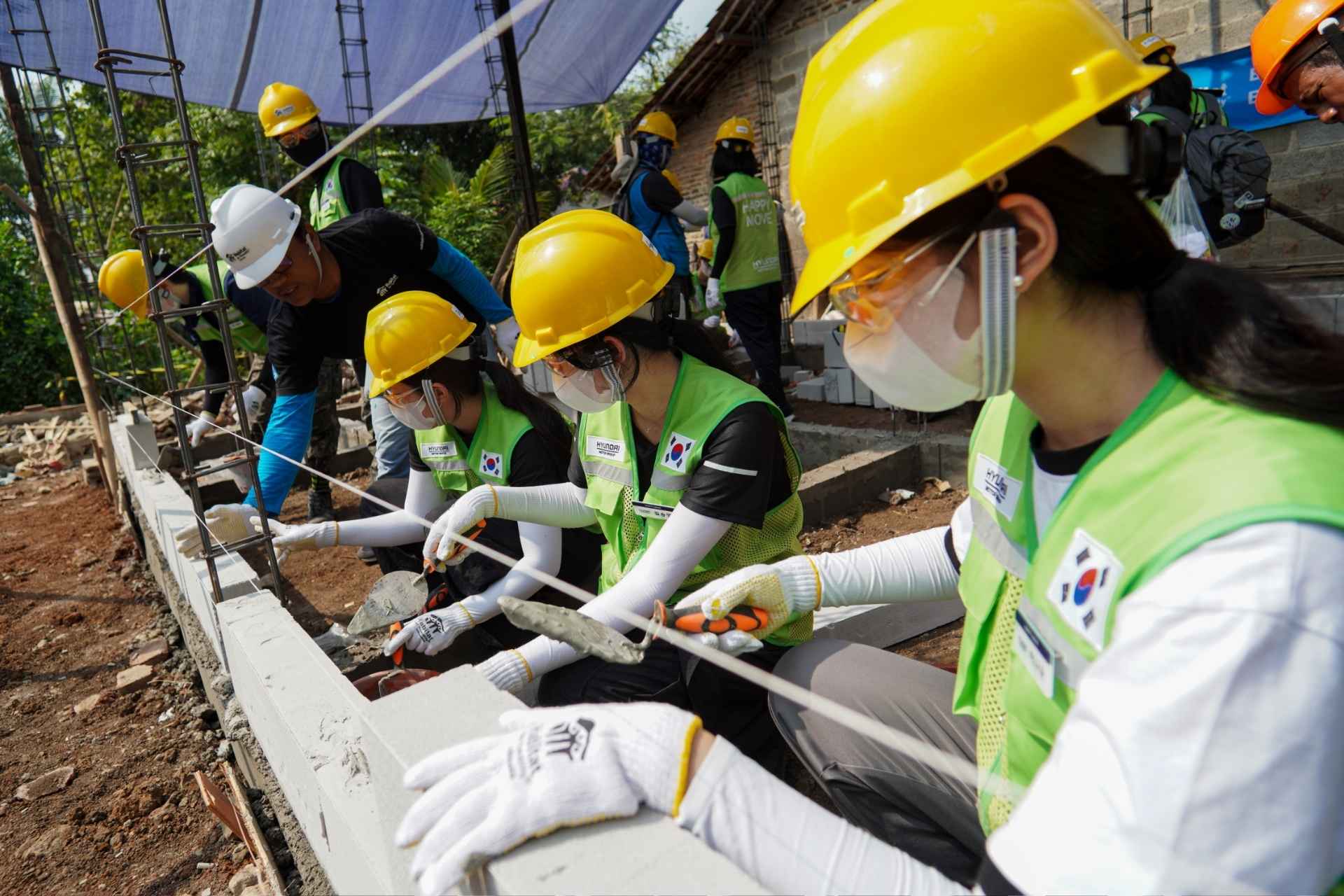
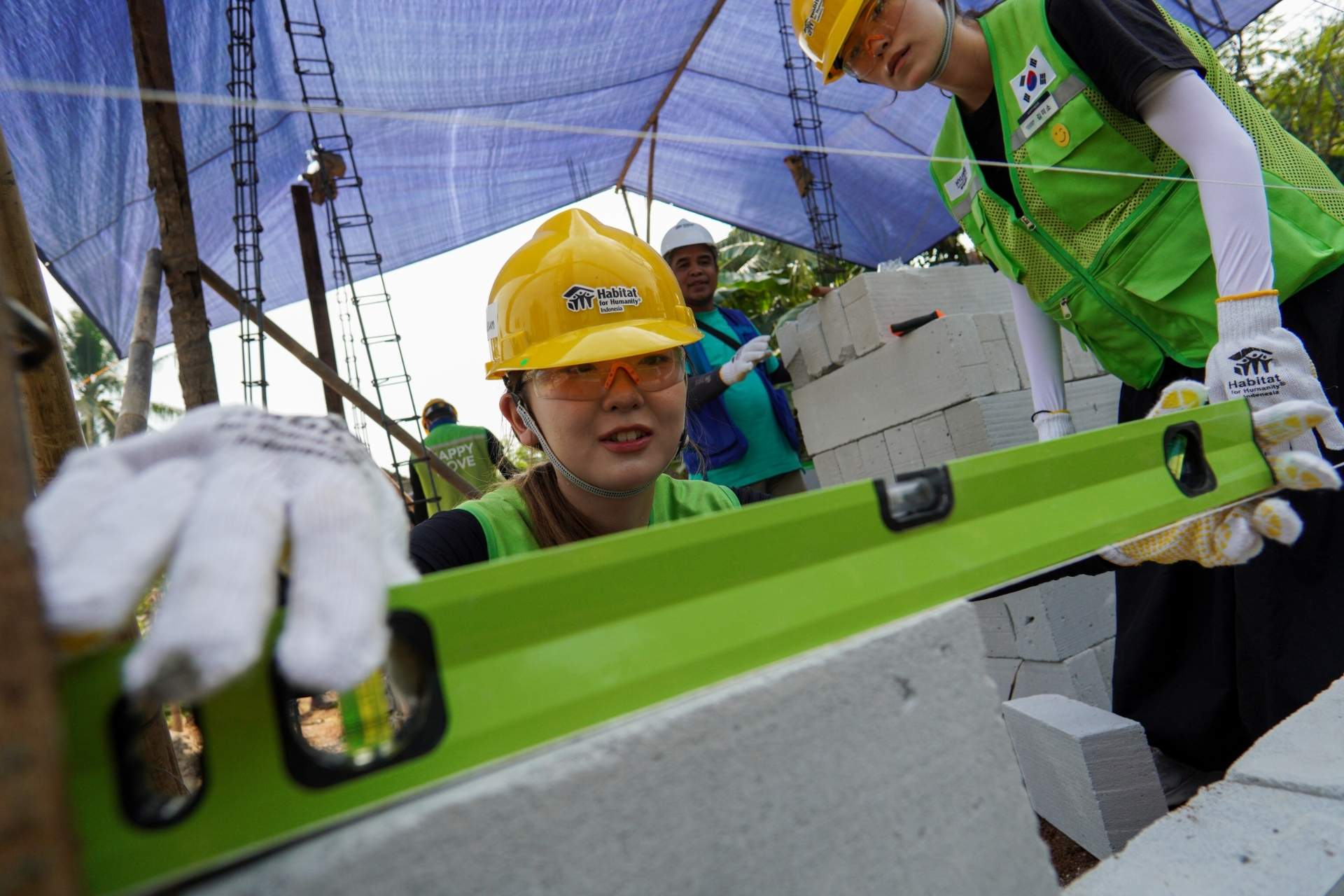
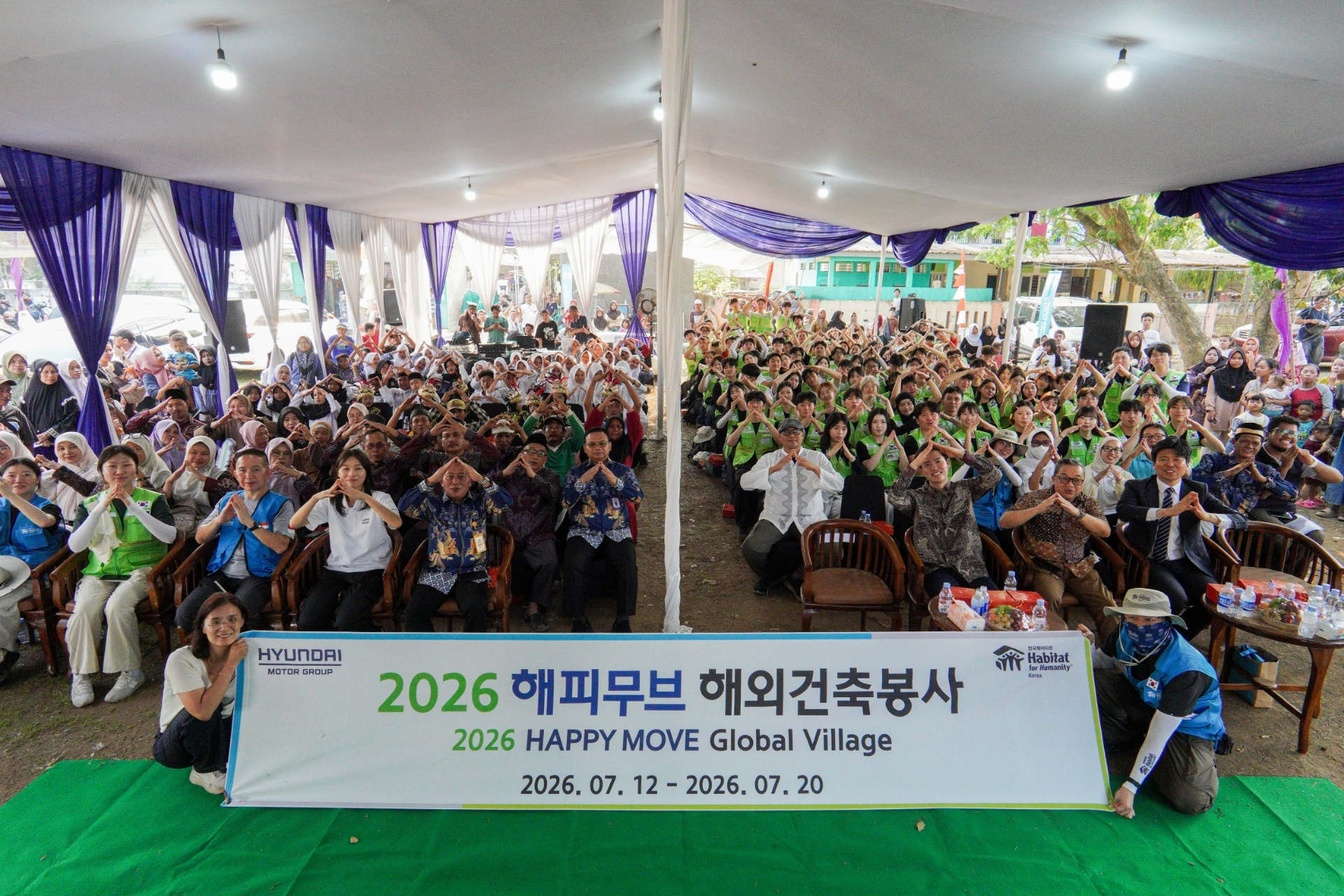
Over six days, from 13–18 July 2026, 120 volunteers—comprised of university students from South Korea and the University of Indonesia—worked side by side to build eight decent homes for eight families. From laying foundations and tying reinforcing steel to constructing walls, every stage of the building process was completed together under the guidance of Habitat for Humanity’s construction team.

The activity, titled “Happy Move,” was part of the Global Village program, a collaboration between Habitat for Humanity Korea and Habitat for Humanity Indonesia, supported by Hyundai Motor Group. Neither the scorching sun nor the physically demanding work diminished the volunteers’ enthusiasm. Instead, every bucket of mixed cement, every brick laid, and every shared laugh with local residents became part of an unforgettable experience.

For Lee, one of the volunteers from South Korea, the experience marked both his first visit to Indonesia and a valuable opportunity to connect with local communities. “This is my first time visiting Indonesia, and I’m very happy to be here. The local community welcomed us with such warmth and kindness. Their hospitality inspired us even more to contribute and share kindness together,” said Lee.

The same spirit was shared by Sekar, a student from the University of Indonesia who joined the program as a volunteer. For her, witnessing the living conditions of local families firsthand reinforced the reality that many households still need support to secure a safe place to live. “After seeing the neighborhood and the condition of the homes here, I truly believe these families deserve this support. Most of them face economic hardship, making it difficult to improve their homes on their own,” she said.

Read also: Photo: 30 BOSCH Volunteers Build Clean Water Access for 40 Homes in Bekasi

The eight beneficiary families in this program belong to the first and second income deciles, representing some of the country’s most economically vulnerable households. Most work as daily wage laborers, earning generally no more than IDR 100,000 per day. Under these circumstances, the dream of owning a decent home is often postponed, as meeting daily necessities remains their highest priority.

For the volunteers, every task they carried out was about far more than constructing walls or laying foundations—it was about creating new hope for the families they were serving. “We hope that what we’re doing here will help improve the quality of life of these families by providing them with a decent home,” said Sekar.

Lee shared the same hope for the future of the families. “We hope that once these homes are completed, each family can begin a new chapter in their lives with a greater sense of security and renewed hope,” he said.

That hope was deeply felt by Suheni, one of the beneficiary homeowners, who struggled to hold back her emotions as she watched her dream home take shape. “I don’t even know what to say. I’m truly overwhelmed with emotion. Thank you so much for helping my family,” Suheni said.

The celebration culminated in a house key handover ceremony held on 17 July 2026. Symbolically, Won Sung Hong, Head of the Corporate Affairs Team at Hyundai Motor Company Asia Pacific, presented the keys to the eight beneficiary families. The event was further enlivened by cultural performances showcasing both Indonesian and South Korean traditions, celebrating the friendship and cultural exchange between the two countries.

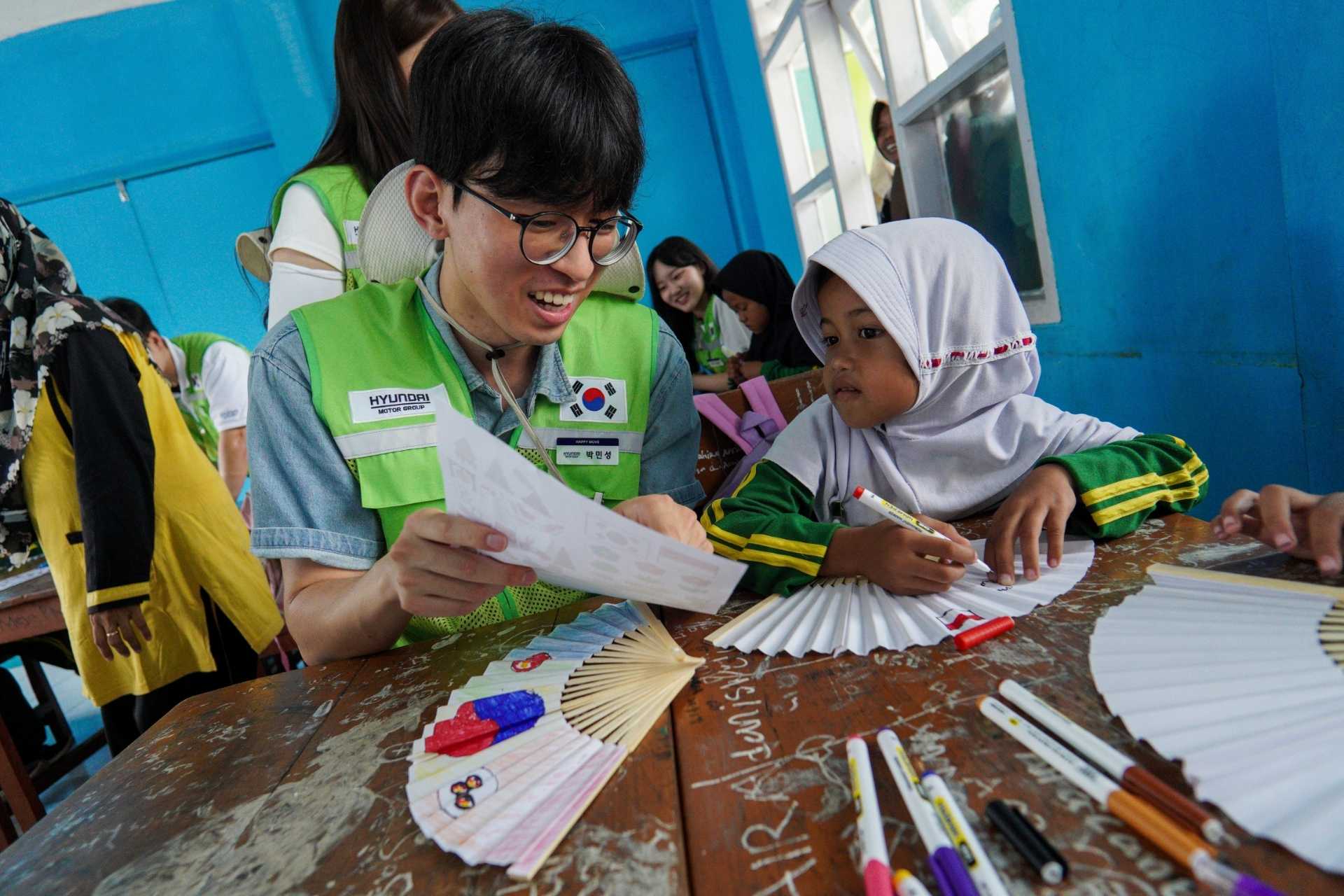
The spirit of giving extended beyond the construction site. On the final day of the program, 18 July 2026, the volunteers visited students at MI Nurul Iman, where they shared joyful learning experiences through a variety of educational activities, including making handicrafts, teaching proper handwashing techniques, and playing traditional games together.

Through Global Village Program, homebuilding becomes more than a construction project. It creates opportunities for volunteers from different countries to learn from one another, work together, and build meaningful relationships with local communities. With every home completed, new cross-cultural friendships are formed, the spirit of volunteerism grows stronger, and hope is renewed that collective compassion can help create a better future for more families.

Photo & Writer: Kevin Herbian

(kh/av)
HFHI – Arada (2)
Habitat Updates

Habitat Indonesia Expands Access to Clean Water for 525 Families in Panggang District, Gunungkidul

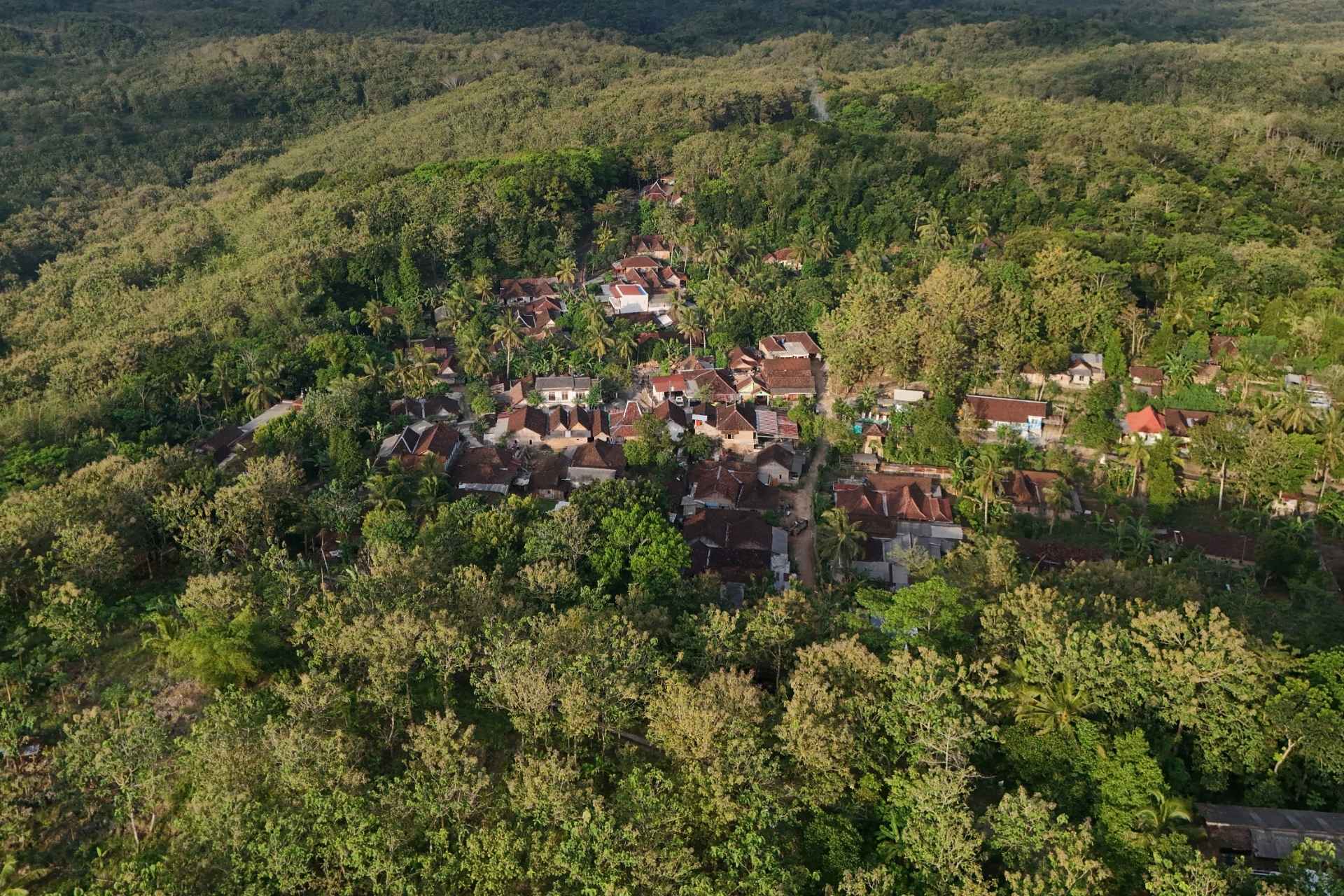
An aerial view of Girisuko Village, Panggang Subdistrict, Gunungkidul Regency, Special Region of Yogyakarta, Indonesia. Photo: HFHI/Kevin Herbian

Gunungkidul, July 21, 2026 – Following the successful provision of clean water access to more than 250 household connections in Nglipar District, Gunungkidul Regency, Habitat for Humanity Indonesia is expanding its efforts through the support of generous donors. This time, the clean water initiative is focused on Panggang District, with the goal of reaching 525 families across four hamlets in Girisuko Village.

The expansion of the program is driven by a long-standing challenge faced by the local community. The karst landscape that dominates Panggang District has made access to clean water a recurring problem, particularly during the dry season. Under these conditions, hundreds of families continue to rely on purchasing clean water to meet their daily needs.

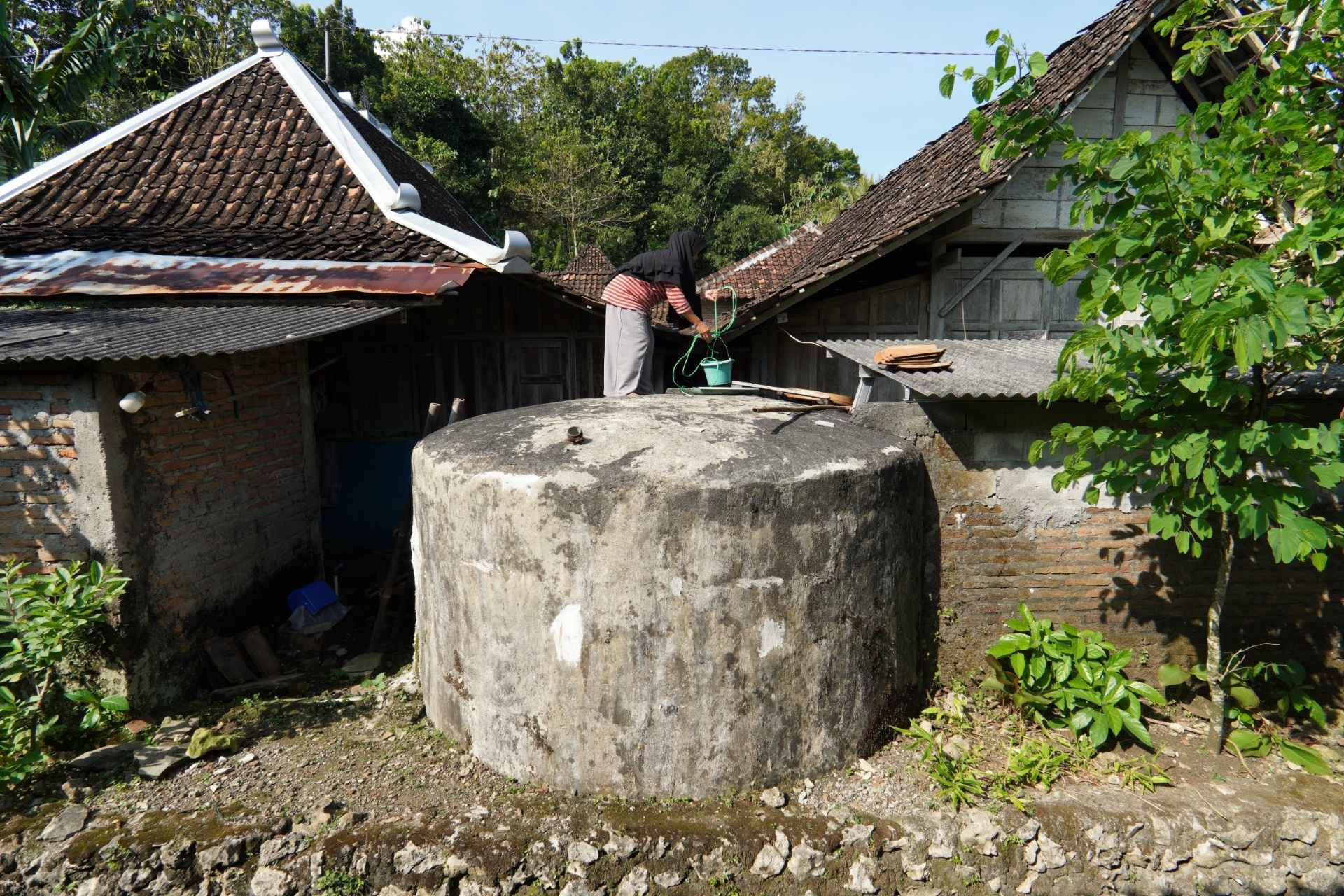
On average, each family spends around IDR 300,000 per month to purchase two tanker loads of clean water, which are then stored in water tanks located in their home yards. For many households, this expense represents a significant financial burden, yet it remains unavoidable to ensure that basic needs such as cooking, bathing, washing, and drinking can be met.

Suwiyati, a resident of Girisuko Village, collects water from a storage tank beside her home, which is supplied by a water tanker truck. Photo: HFHI/Kevin Herbian

One of the residents of Girisuko Village, Suwiyati, has experienced these challenges firsthand. For her, buying clean water is no longer a choice, but a necessity—even if it means sacrificing a substantial portion of the family’s income. “What else can we do? Whether we like it or not, we have to buy clean water for our daily needs. Even though spending three hundred thousand rupiah every month is difficult, we still have to make it work,” she said.

The community’s challenges extend beyond the high cost of water. During the dry season, clean water becomes increasingly scarce. Water tank deliveries are more difficult to obtain, and when available, prices often rise above their normal rates. As a result, families face uncertainty not only in terms of water availability but also the costs they must bear.

Read also: GEDSI Training: Strengthening Clean Water Management and Inclusive Housing in Panggang District, Gunungkidul Regency

Recognizing these challenges, Habitat for Humanity Indonesia conducted an assessment to identify sustainable water sources that could serve the community. The assessment found that the springs at Goa Wuluh Kumet and the Kedung Lumut River have strong potential to be developed as sustainable sources of clean water for the surrounding communities.

Through the project currently underway, clean water will be distributed to 525 household connections across the hamlets of Gebang, Pacar 1, Sanglor 1, and Sanglor 2. The system will also include water storage reservoirs and a filtration system to help maintain water quality before it is distributed to households.

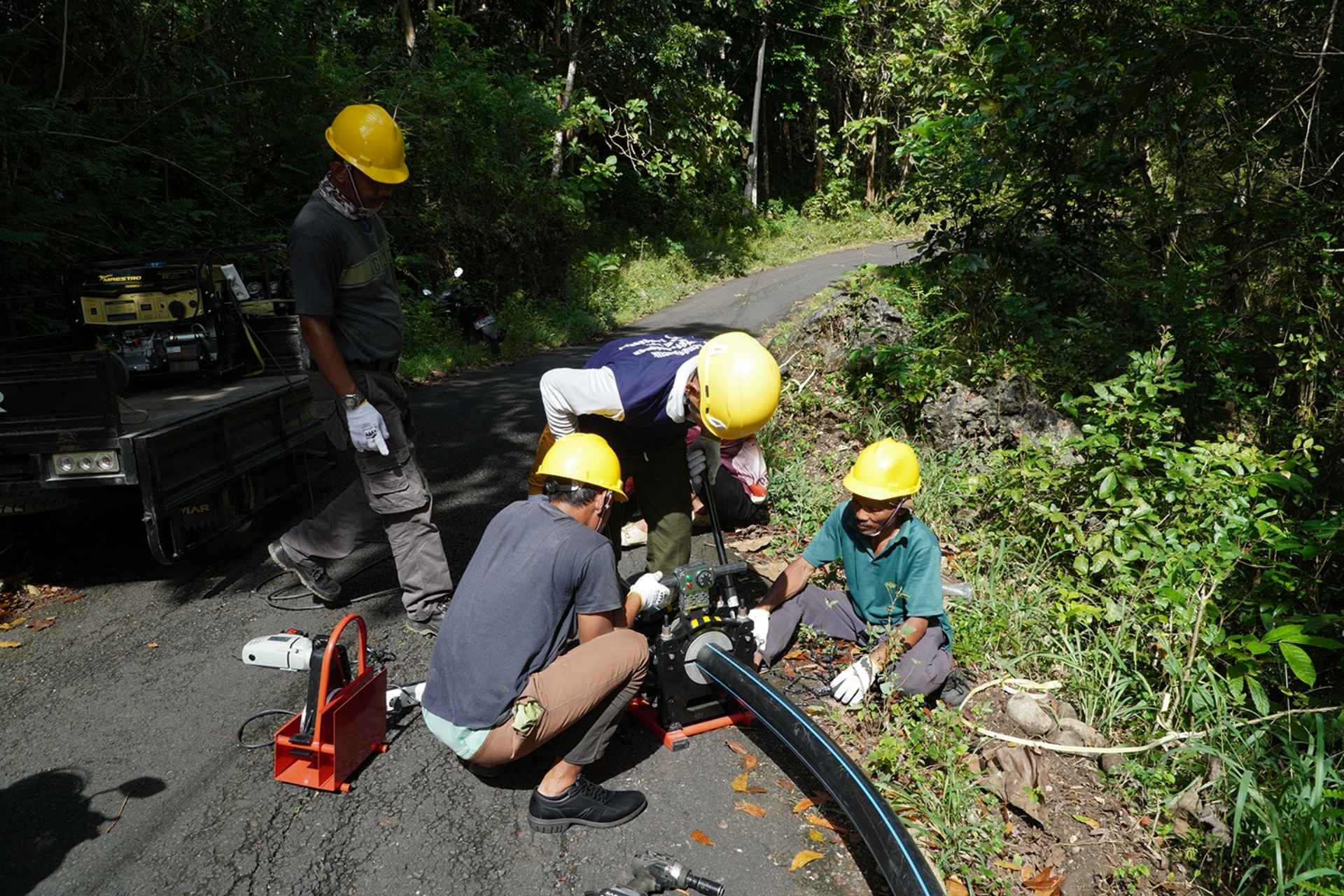
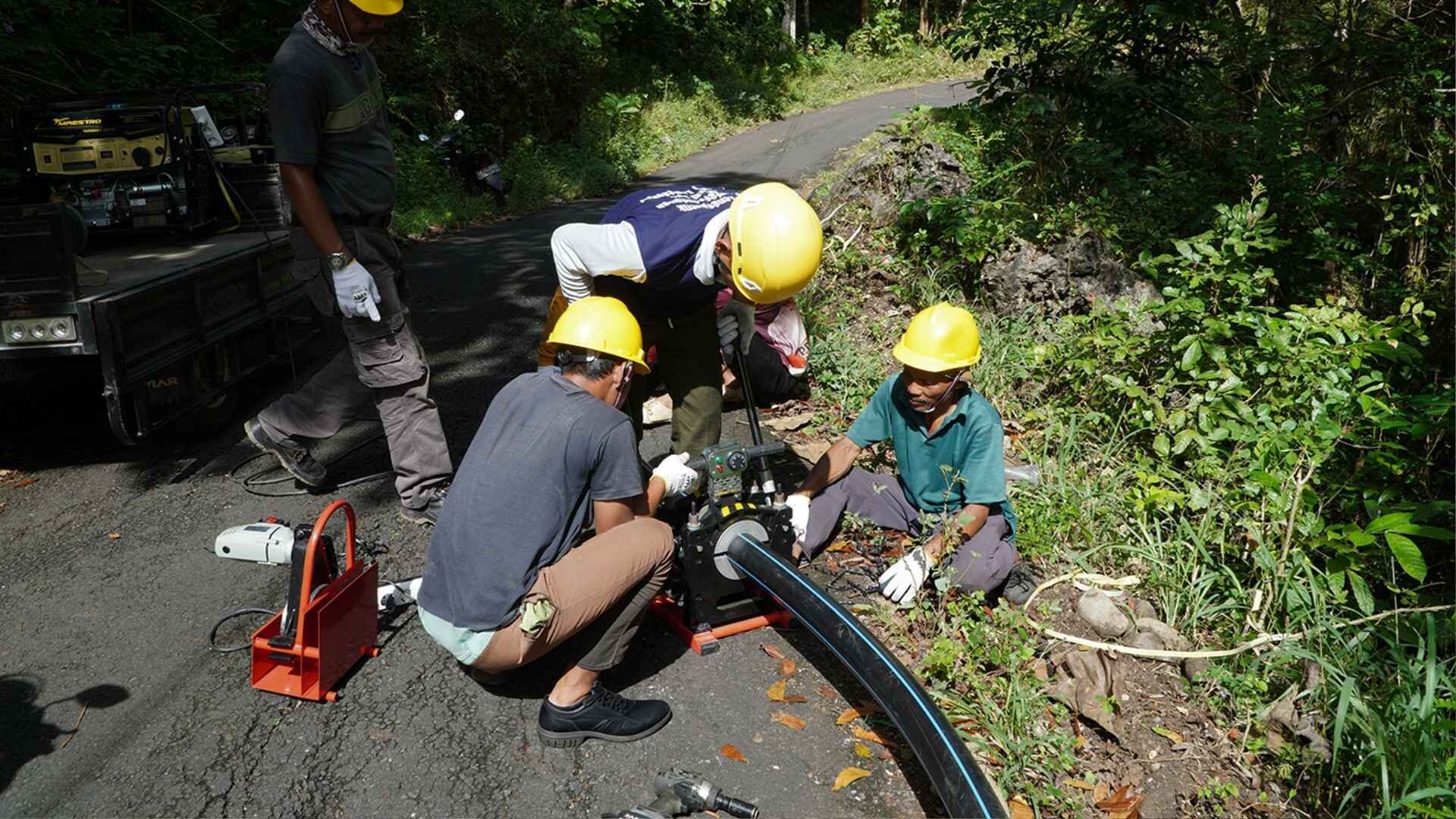
The Habitat for Humanity Indonesia team and local residents install HDPE pipes as part of a clean water access program in Girisuko Village, Gunungkidul Regency, Indonesia. Photo: HFHI/Kevin Herbian

For Habitat for Humanity Indonesia, a decent home is not defined solely by a strong physical structure, but also by access to the essential services that support the well-being of its occupants. Access to clean water is an integral part of decent housing, playing a critical role in promoting family health, improving sanitation, and creating a safe, healthy, and dignified living environment.

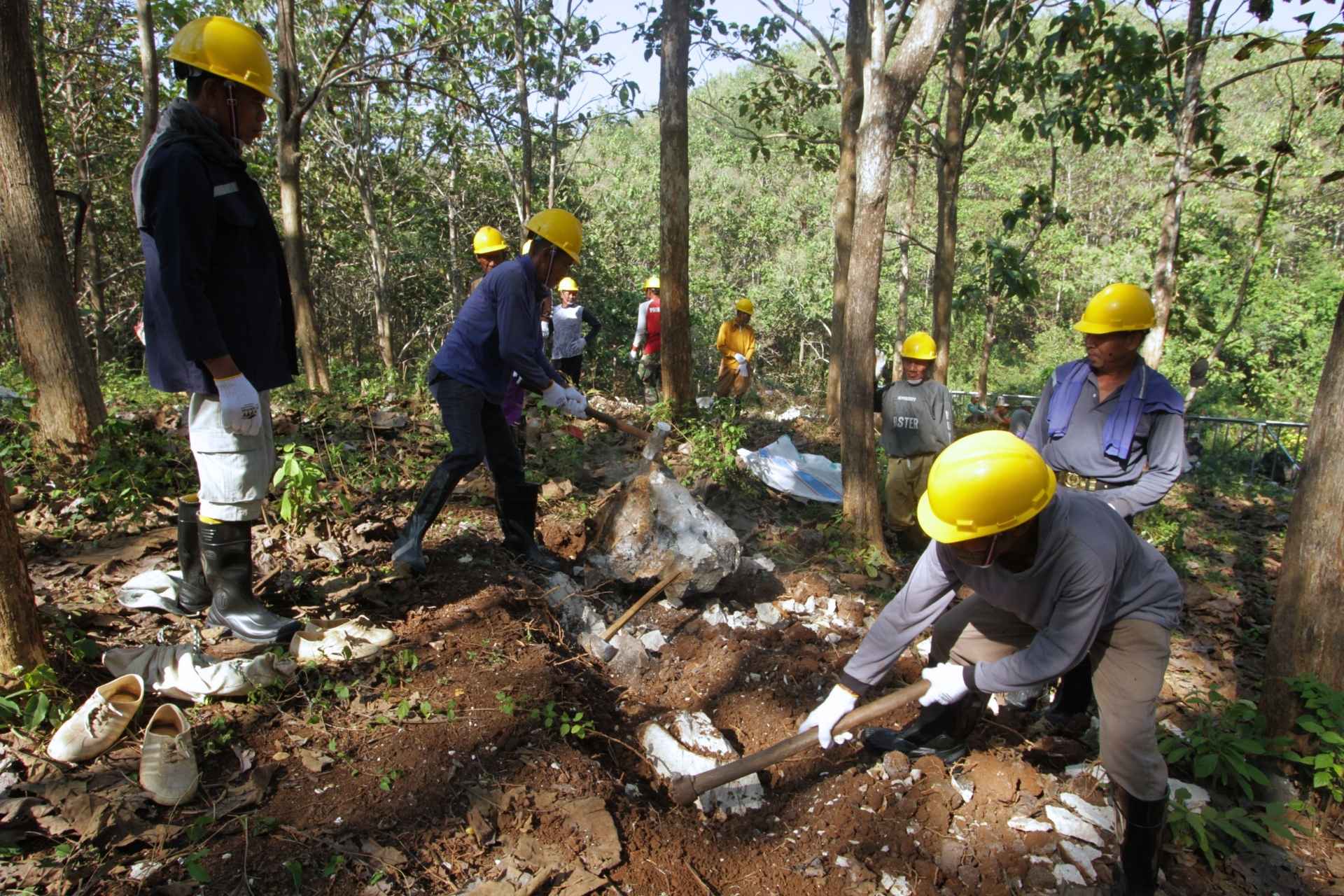
The construction of this infrastructure also actively involves community participation. Through collective community efforts, local groups have begun excavating pipeline routes, installing HDPE pipelines, and fitting water meters at beneficiary households. This active participation not only accelerates the construction process but also fosters a sense of ownership, helping ensure that the facilities will be maintained and used sustainably over the long term.

Residents of Girisuko Village work together to install a pipeline as part of a clean water access program. Photo: HFHI/Patrick Cahyo

In addition to developing the infrastructure, Habitat for Humanity Indonesia is strengthening community capacity through a series of training programs. All beneficiary families will participate in Clean and Healthy Living Behavior (PHBS) training, while Gender Equality, Disability, and Social Inclusion (GEDSI) training will be delivered to promote more inclusive water management and ensure equal participation for all community members. Meanwhile, the community-based water committees will receive training on system operation and maintenance to ensure that the infrastructure continues to function effectively for years to come.

Through the collaboration of local communities, Habitat for Humanity Indonesia, and its generous donors, this program is expected to create lasting change. Beyond improving access to clean water, it will help reduce household expenses, improve public health, and strengthen the quality of housing and community life in Panggang District for years to come.

Writer: Kevin Herbian

(kh/av)
HFHI – IES
Habitat Updates

IES Jakarta Foundation and Habitat Indonesia Complete the Construction of 56 Decent Homes in Tangerang Regency

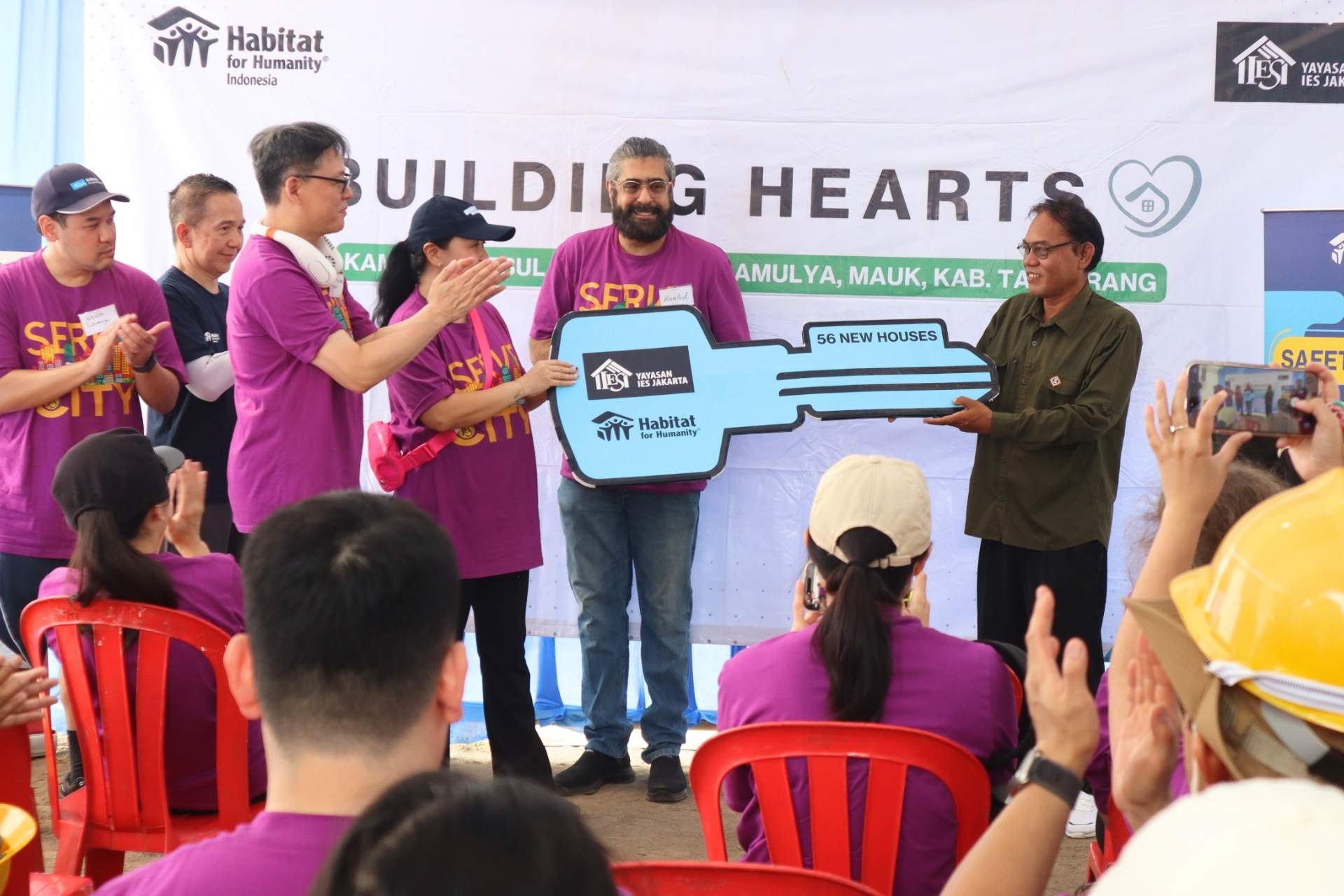
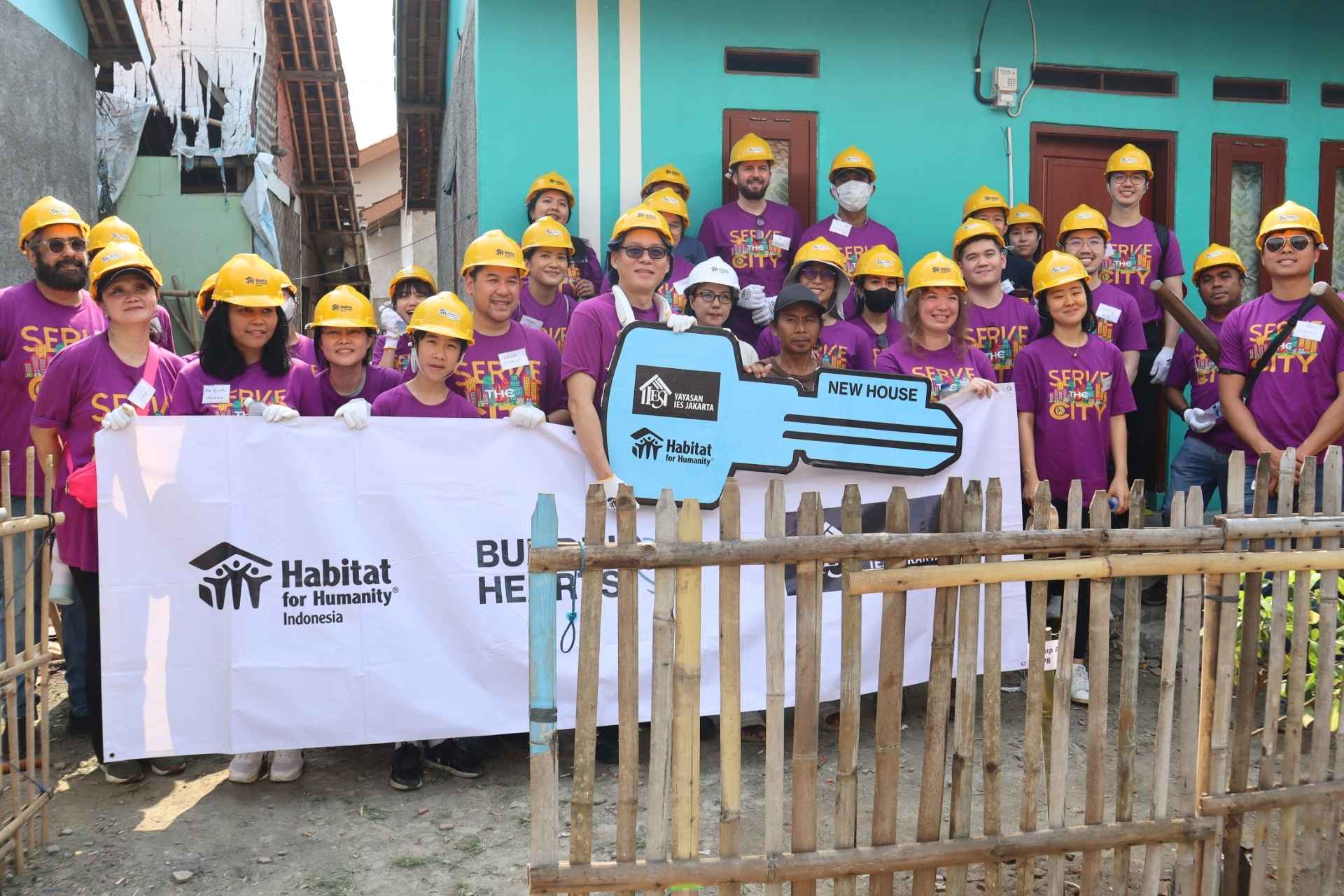
Tangerang, July 15, 2026 – IES Jakarta Foundation, in partnership with Habitat for Humanity Indonesia, officially handed over decent homes to 56 families in Margamulya Village, Mauk District, Tangerang Regency. The handover marked the completion of a housing program that began in 2023 to help low-income families gain access to safe and adequate housing.

The symbolic key handover ceremony was led by Kamlesh Chandiramani, Chief Financial Officer (CFO) of IES Jakarta Foundation, who presented the keys to Syafei, Head of the Government Affairs Section of Margamulya Village, representing the beneficiary families. The event was also attended by Kevin Sutantyo and Wai Toong Chong from the IES Mission Project Team, Abraham Tulung, General Manager of Resource Development at Habitat for Humanity Indonesia, along with dozens of beneficiary families.
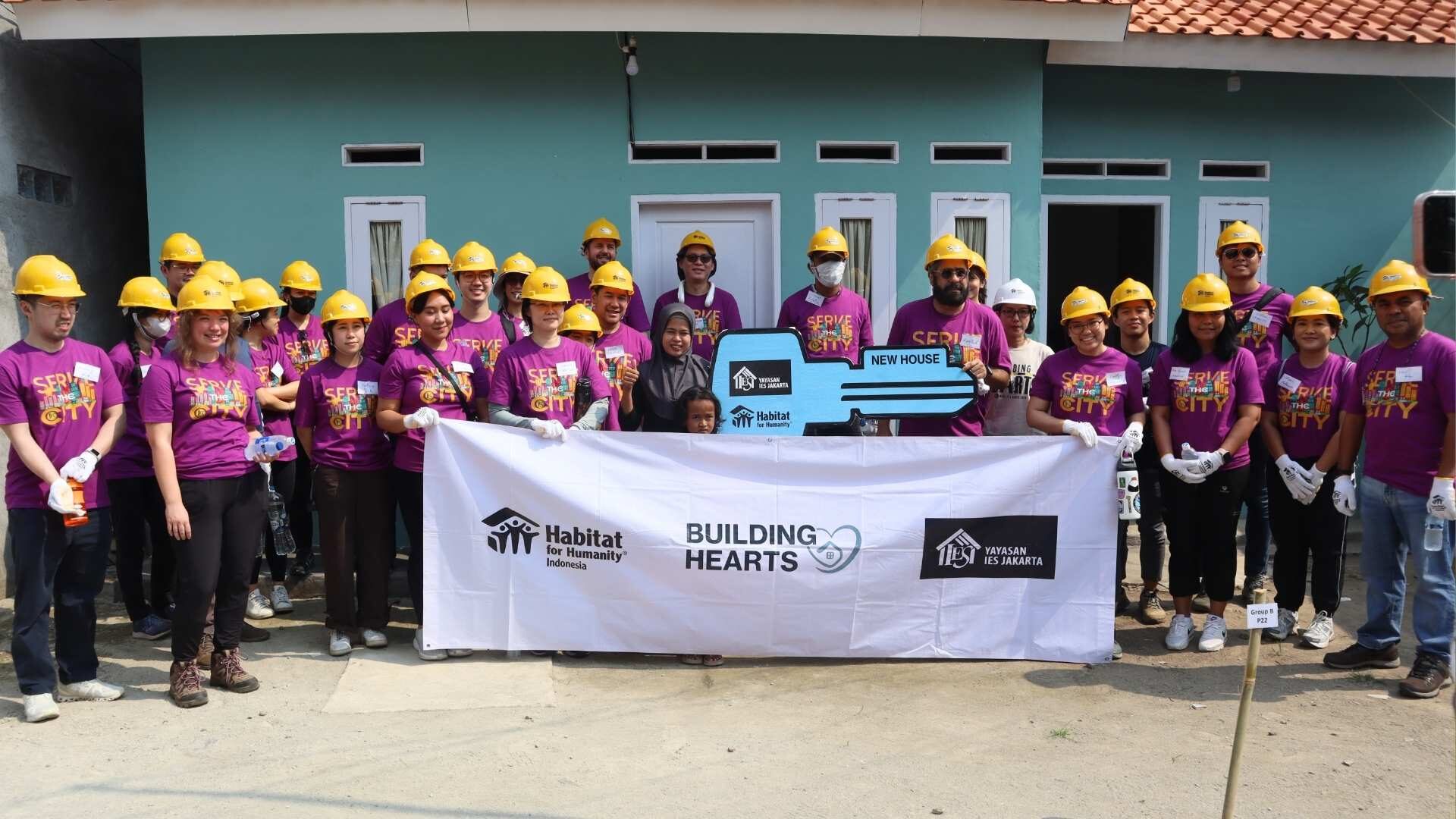
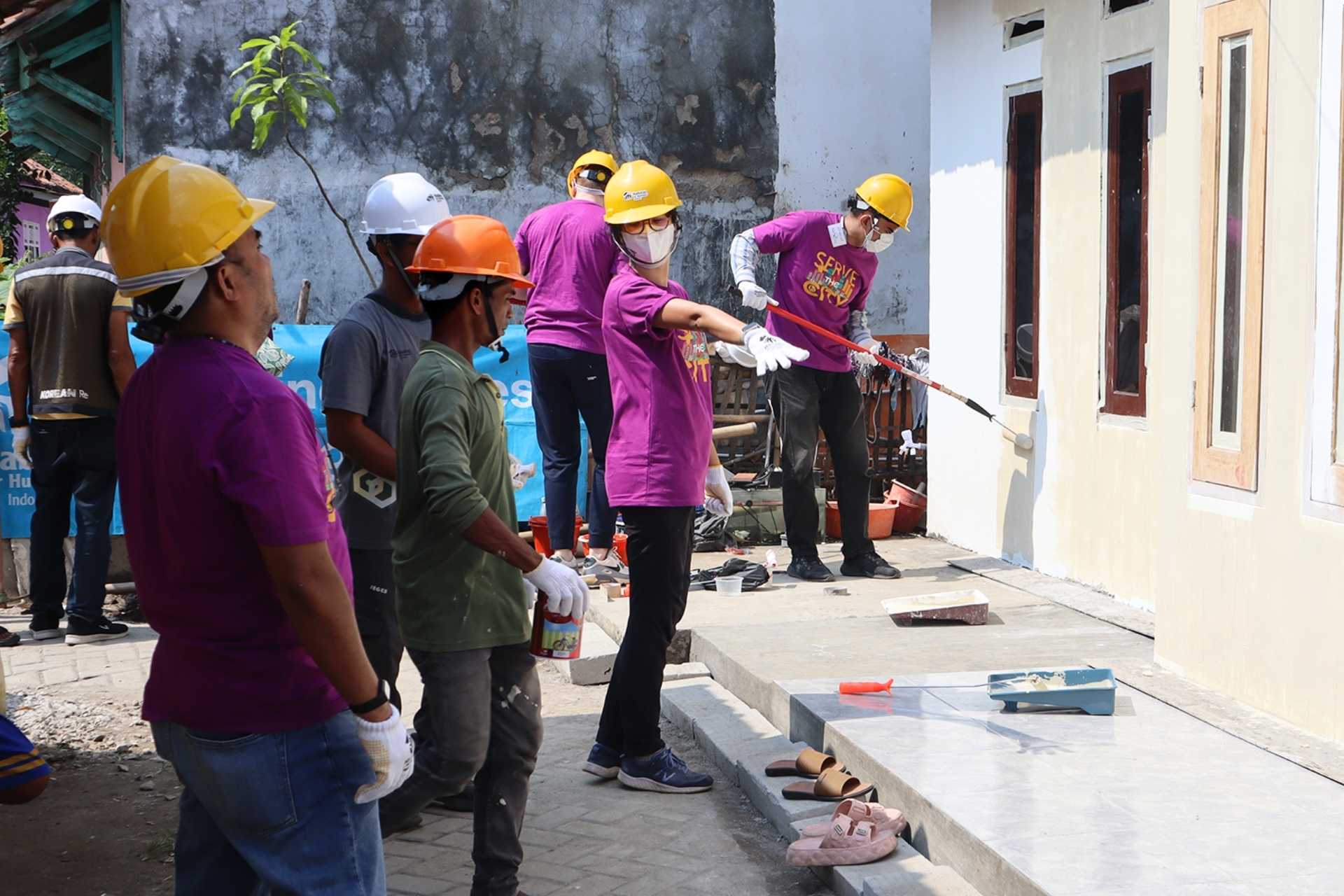
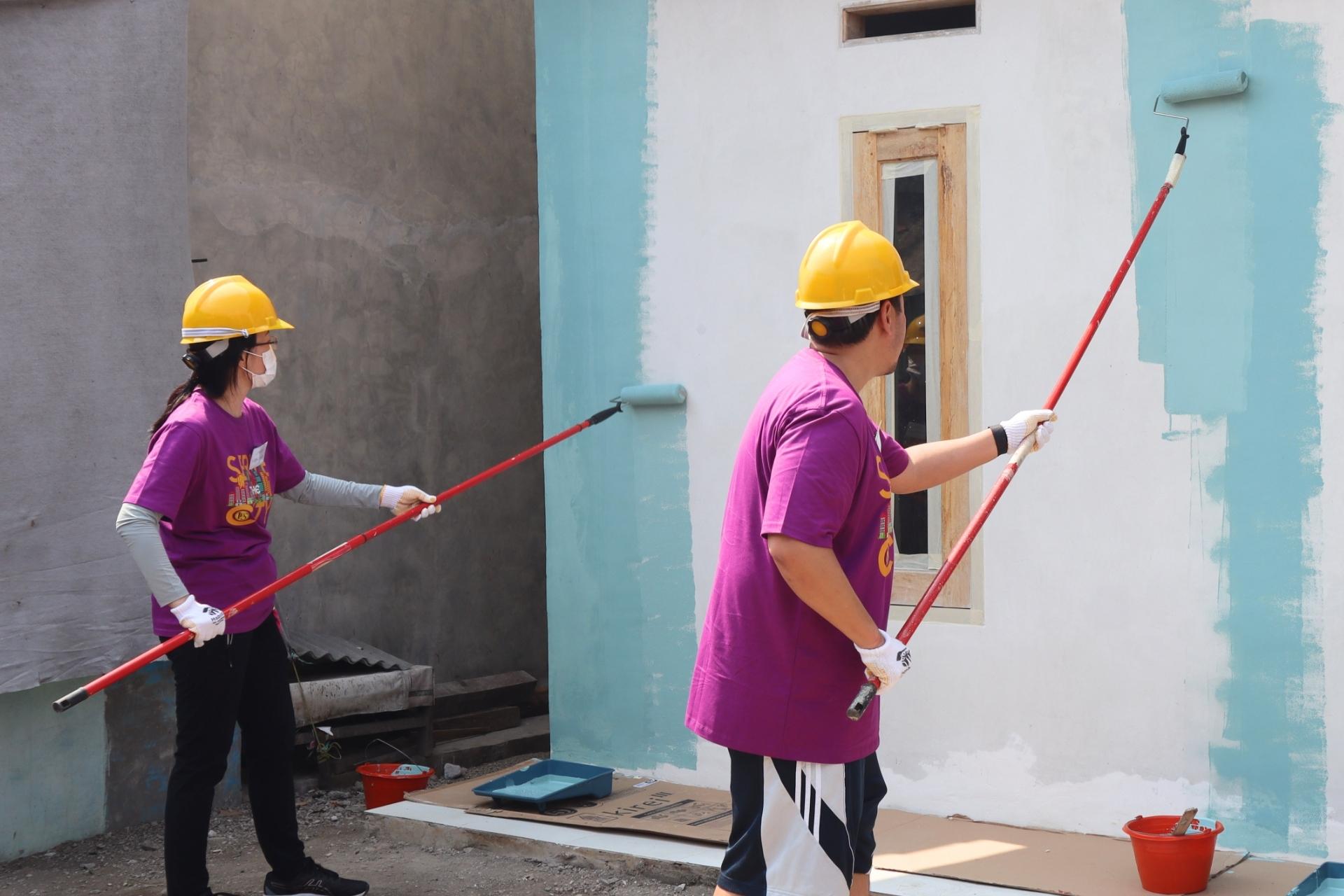
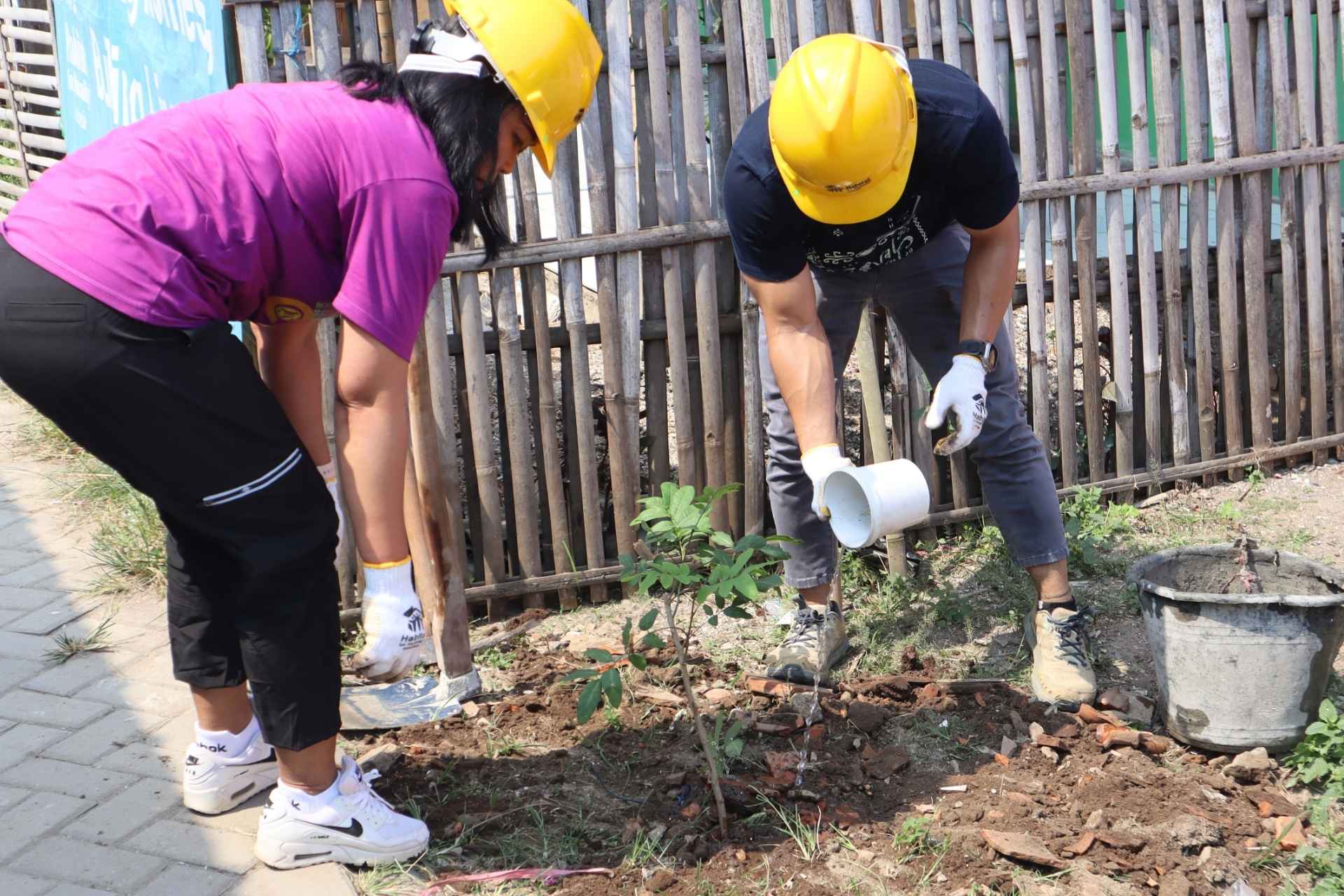
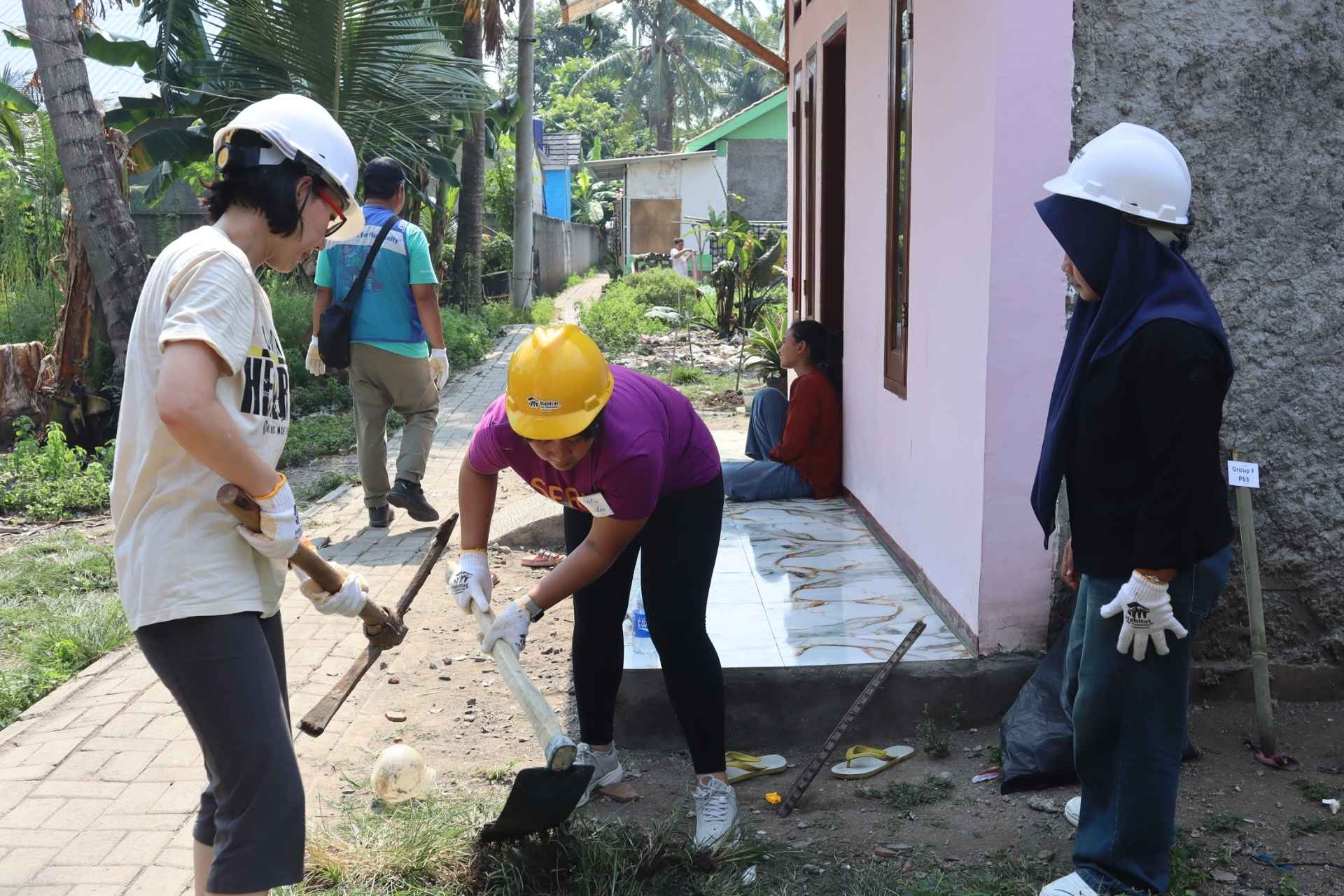
To mark the final phase of the program, 30 volunteers from IES Jakarta Foundation participated in a volunteer activity by painting the last three homes, completing all 56 houses built under the initiative. On the same occasion, the volunteers also planted 70 trees around the neighborhood to help create a greener, shadier, and more comfortable living environment for the community. The trees included productive fruit varieties such as longan and mango, as well as red shoot (Syzygium oleina) trees that now line the roads throughout the neighborhood.

Read also: Laughter, Sweat, and Hope: The Story of IES Volunteers in Mauk, Tangerang

Syafei expressed his appreciation for the collaboration throughout the program. According to him, the initiative has not only provided decent homes for local families but has also brought visible improvements to the overall environment of Margamulya Village. “We would like to express our sincere gratitude to IES Jakarta Foundation and Habitat Indonesia for their support. We can now clearly see the transformation that has taken place. Kampung Bebulak has become much neater, better organized, and has brought a renewed sense of optimism to the community,” he said.

Kamlesh Chandiramani shared a similar sentiment, stating that the collaboration between IES Jakarta Foundation and Habitat Indonesia has benefited not only the recipient families but also the wider community. “We are proud to be part of this transformation. The impact extends beyond the homeowners themselves to the surrounding community, which now enjoys a better-organized, more comfortable, and more livable neighborhood,” Kamlesh said.

For Tinah, one of the beneficiary families, her new home has provided the sense of security she had long hoped for. “Thank you very much to Habitat Indonesia and IES Jakarta Foundation for this support. Our house no longer leaks, it feels much safer, and I can now live each day with greater peace of mind alongside my family,” she said.

The collaboration between IES Jakarta Foundation and Habitat for Humanity Indonesia is expected to continue through future initiatives that support improvements in community well-being. Together with its partners and generous donors, Habitat Indonesia remains committed to realizing its vision of a world where every family has the opportunity to live in a decent, safe home that serves as the foundation for a better future.

Writer: Kevin Herbian

(kh/av)