logotype
Donate

Category: Stories of Change

HFHI Prudential (1)
Stories of Change

Behind the Walls of an Old Rented House: Ibu Meilina’s Journey Toward a New Home of Hope

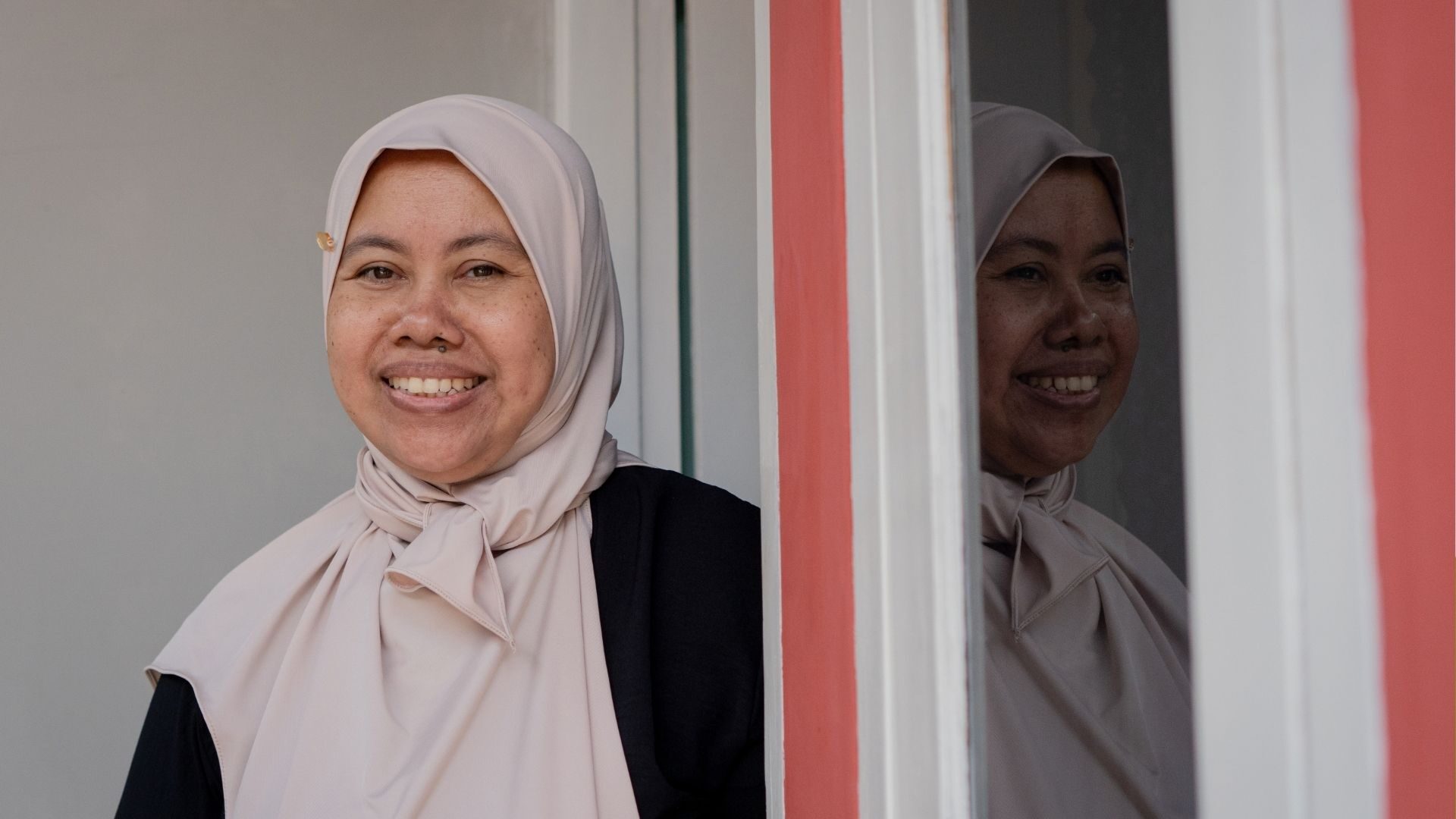
Bogor, October 6, 2026 – Every morning at four o’clock, while Gunung Putri in Bogor Regency is still wrapped in cool air and silence, Ibu Meilina (46) is already awake. Without wasting a moment, she prepares for her demanding daily routine—from offering her morning prayers and tidying up the house to ironing clothes for her only son, who currently works as an Office Boy (OB).

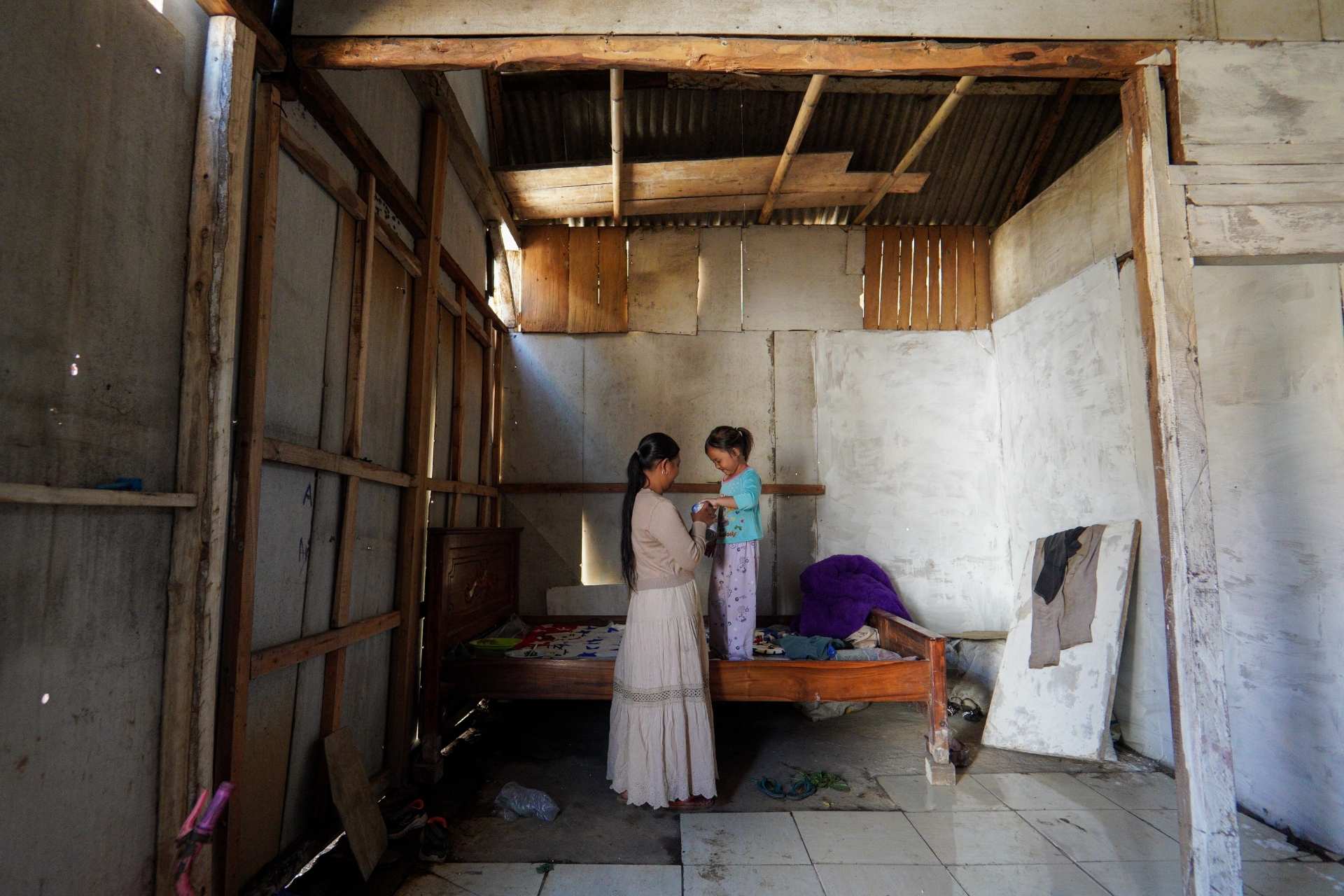
For a female head of household who has fought alone for decades, every morning marks the start of a new battle. Recently, however, a noticeable change has appeared on Ibu Meilina’s face and in her posture. Gone is the anxiety when looking up at the ceiling, and gone is the dread of rainwater dripping directly onto her bed. Behind the simplicity of her new home, Ibu Meilina can finally breathe a sigh of relief and reclaim a sense of peace that had been missing for so long.

A Long Struggle and Crumbling Walls

Ibu Meilina’s path in life has been anything but easy. Her struggle began in 2004 when she made the difficult decision to separate from her husband and become a single parent. From that point forward, the entire burden of making a living and raising her son rested solely on her shoulders.

A hardworking woman, Ibu Meilina spent over a decade working as a factory employee. Life dealt a heavy blow when her health suddenly deteriorated. Ovarian cysts forced her to undergo two major surgeries, causing both her physical well-being and financial stability to collapse. “I was sick with cysts for about 10 years. After recovering from surgery, I immediately started working as a domestic worker in 2022,” Ibu Meilina recalled, remembering when her physical strength began to fade.

Unable to sustain heavy factory labor, she transitioned to working as a domestic helper. Washing, mopping, and ironing at her employer’s home earned her around IDR 700,000 to IDR 1,000,000 per month—just enough to cover basic daily food expenses.

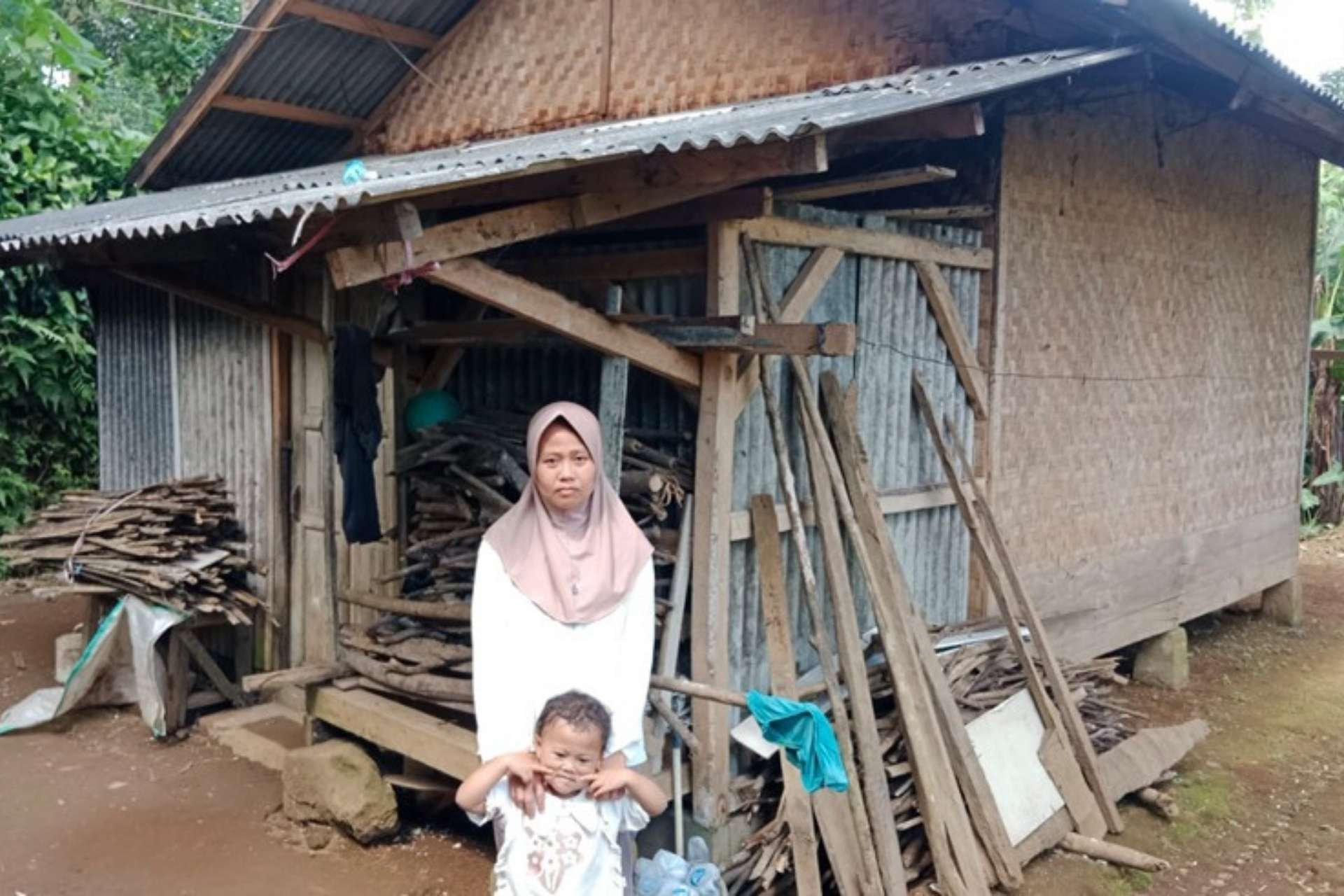
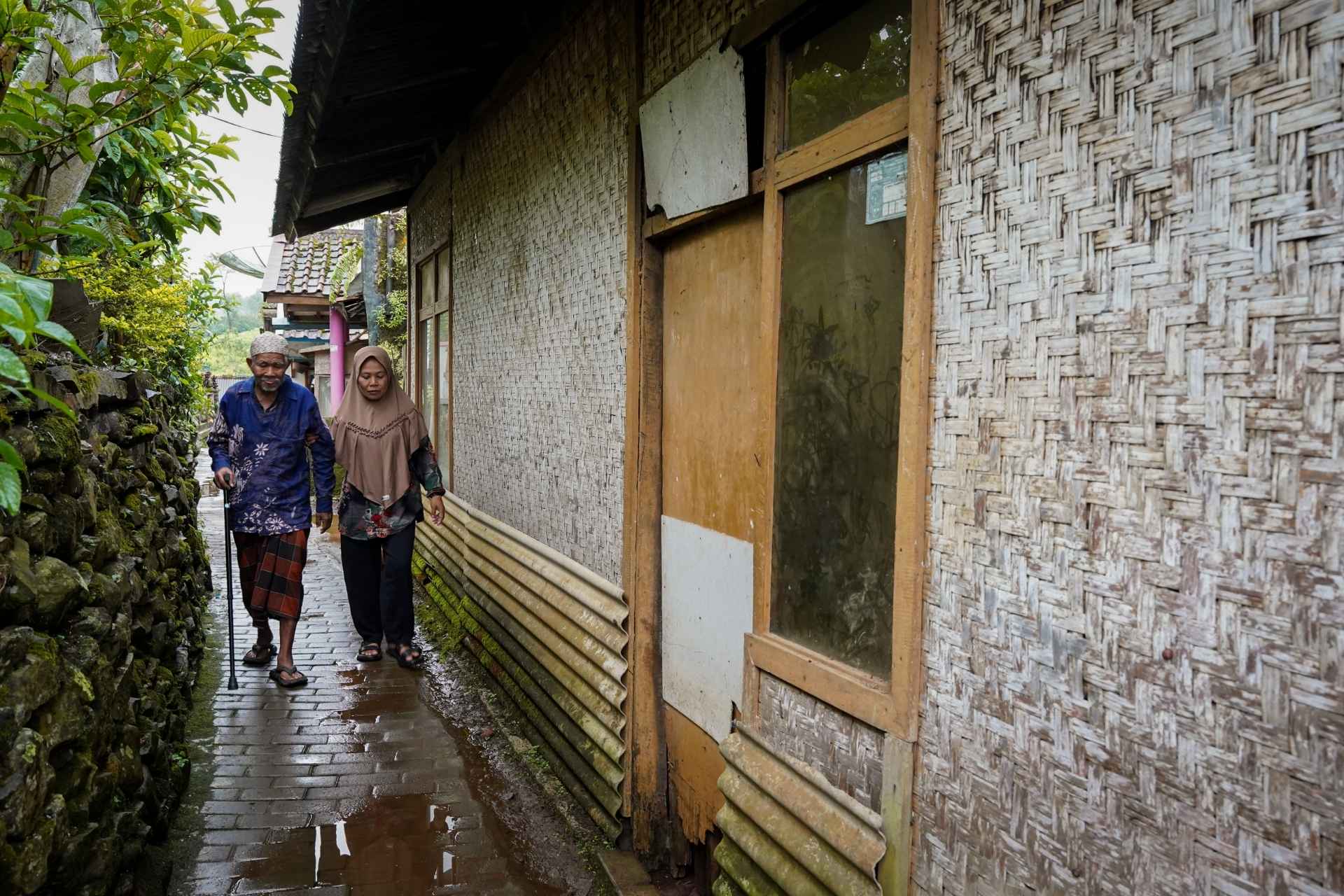
With such limited income, the dream of renovating her living space felt entirely out of reach. Ibu Meilina and her son were forced to endure living in an uninhabitable former rented house owned by her family. “Our old home was actually a former rented unit. The entire roof leaked… The doors were broken and no longer fit for use,” she shared, reflecting on their harsh living conditions.

A Turning Point and the Arrival of New Hope

That fading hope began to flicker back to life when neighbors and local village officials noticed her dire situation. Following an application for assistance routed through local community leaders (RT and RW), Ibu Meilina’s story reached the team at Habitat for Humanity Indonesia.

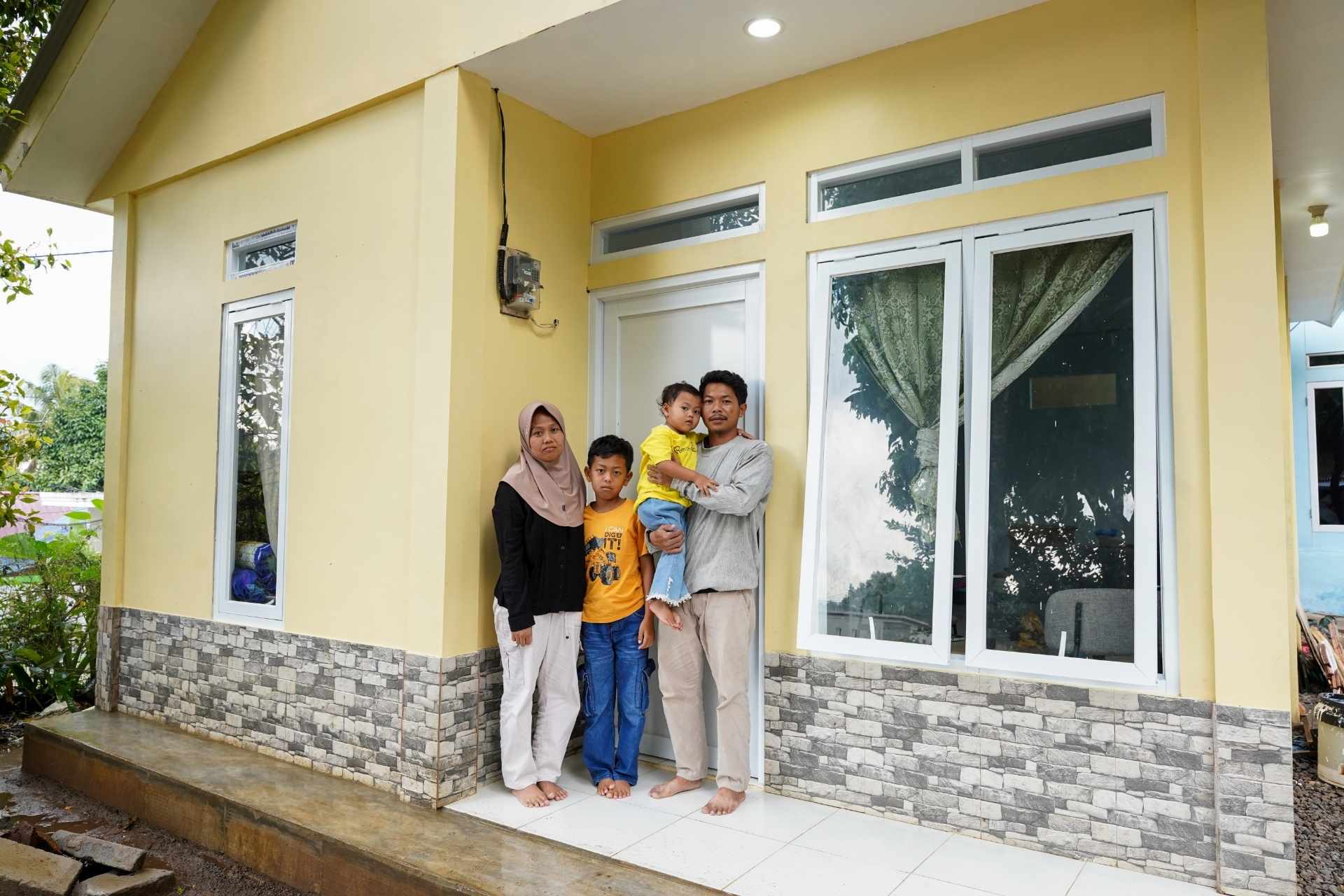
Through collaboration and shared care with Prudential Indonesia, concrete steps to change this small family’s fate began. The dilapidated and unsafe structure was demolished to make way for a sturdy new foundation. Day by day, a safe, healthy, and decent home rose in its place.
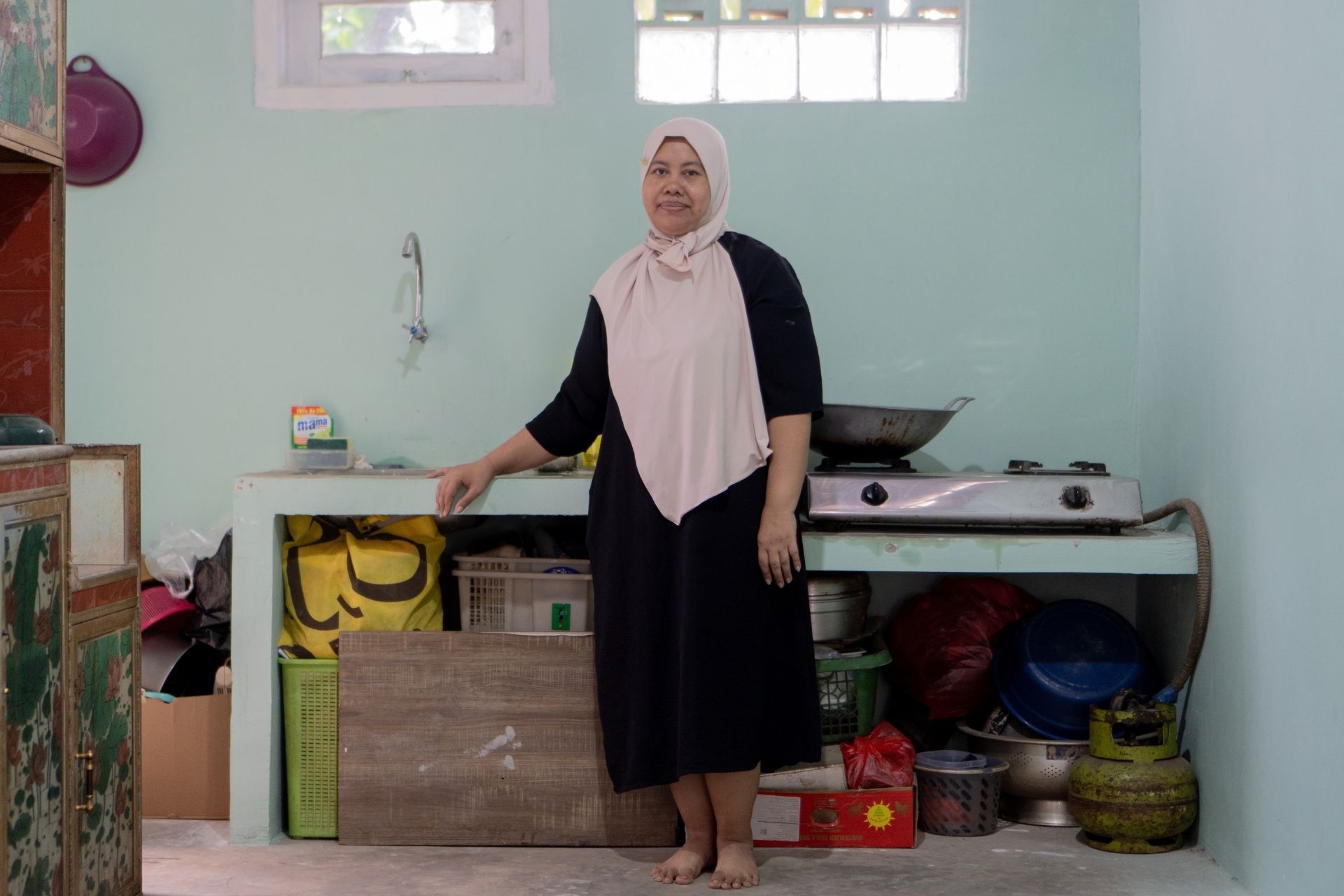
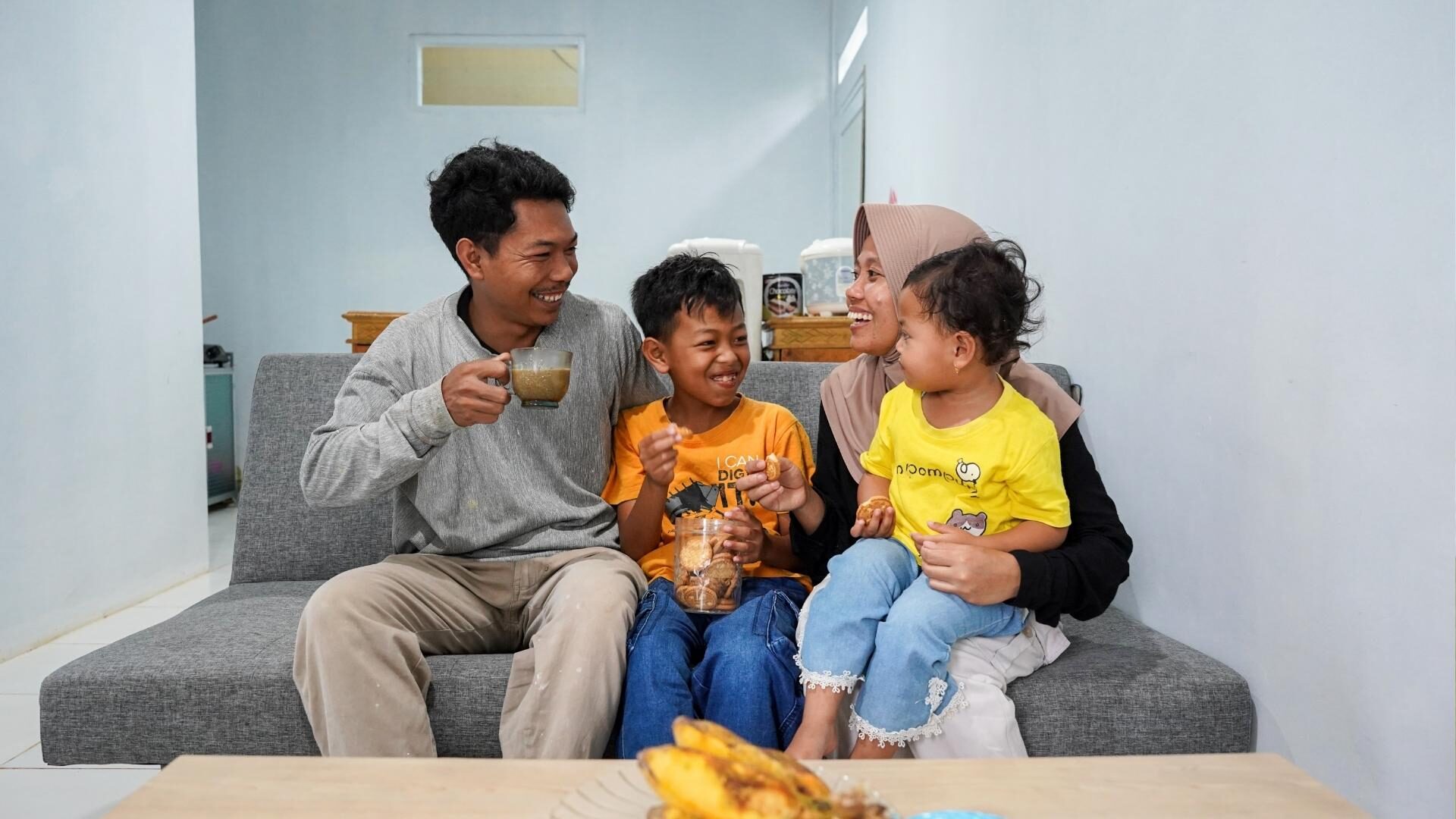
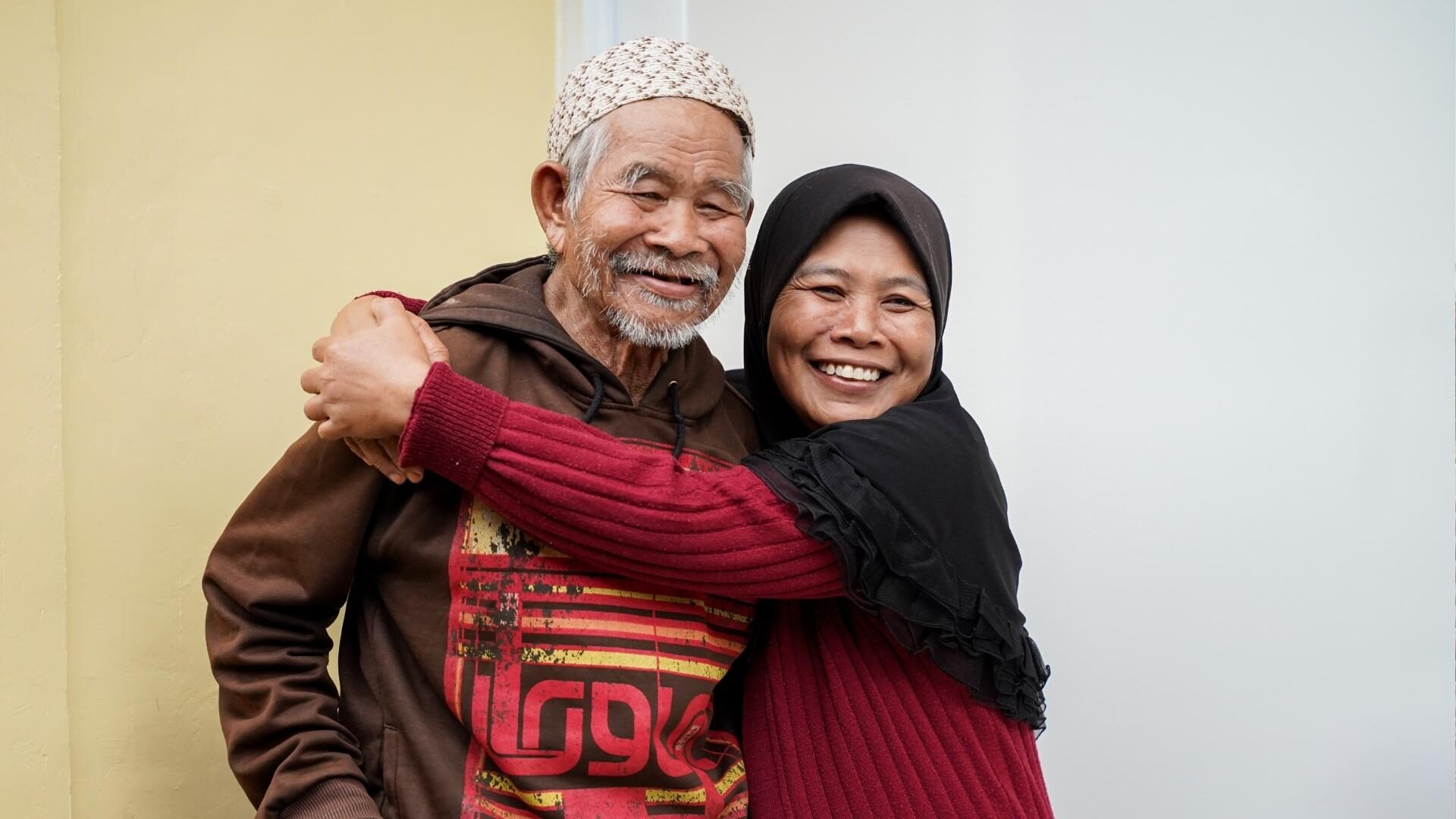
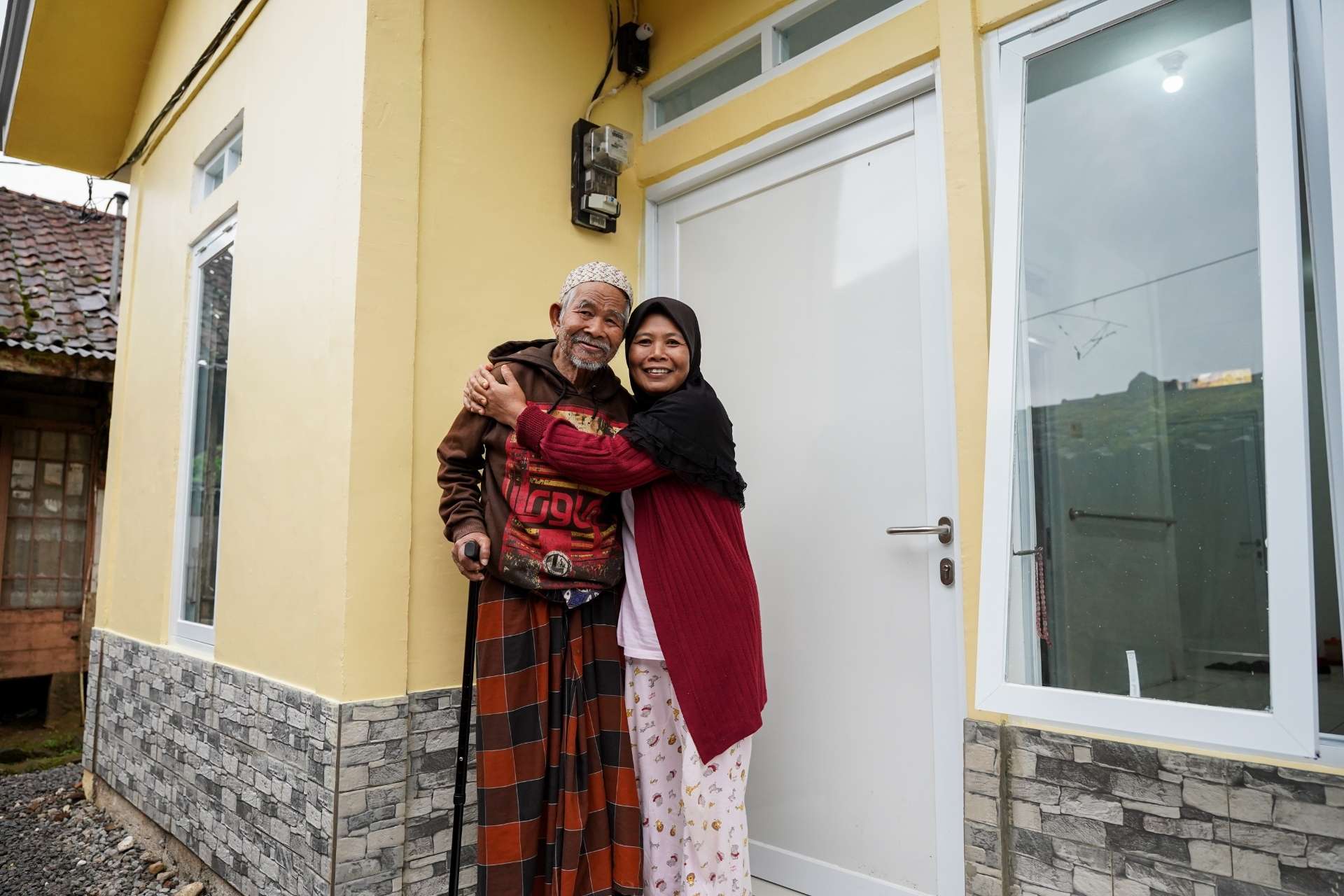
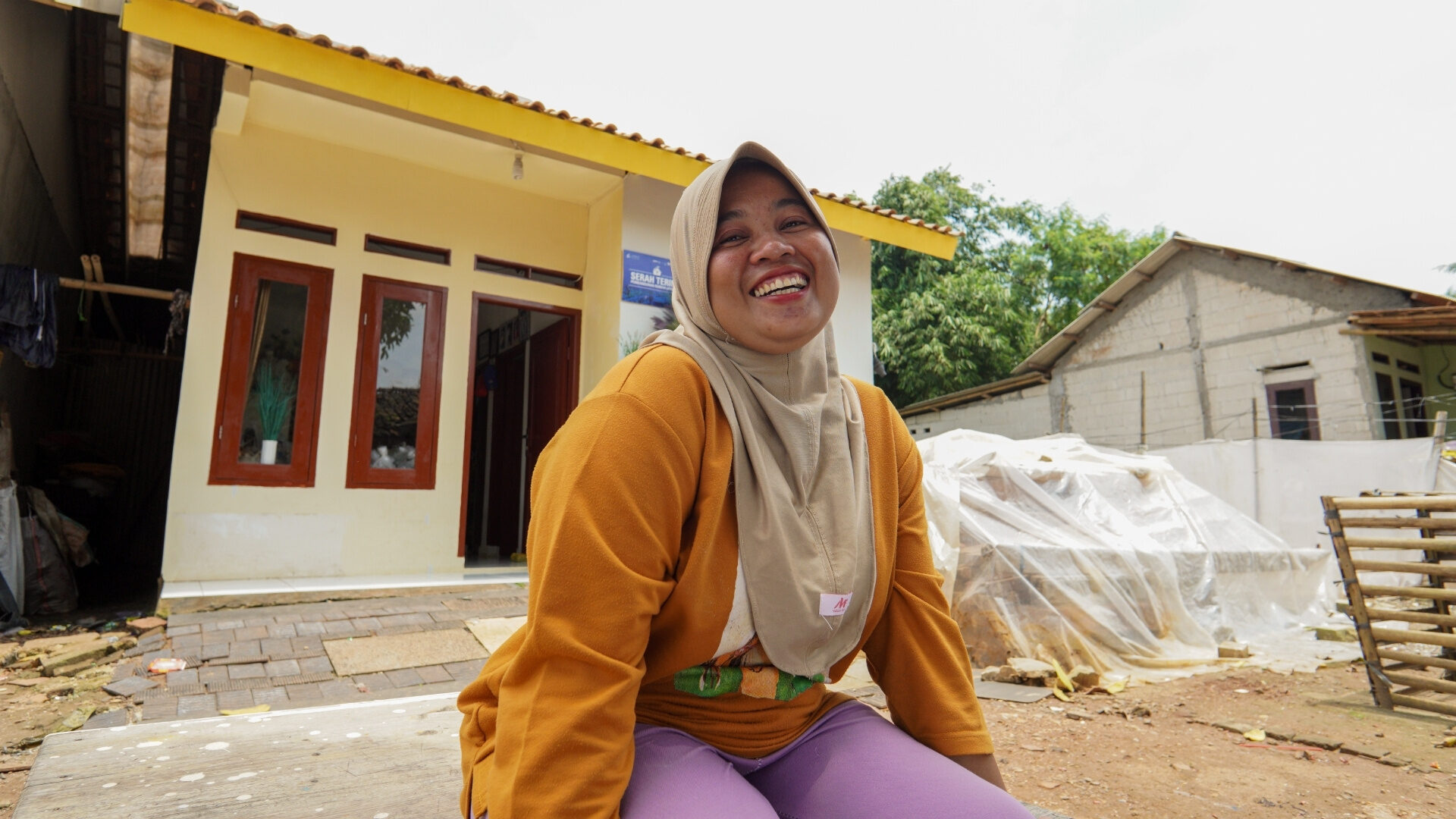
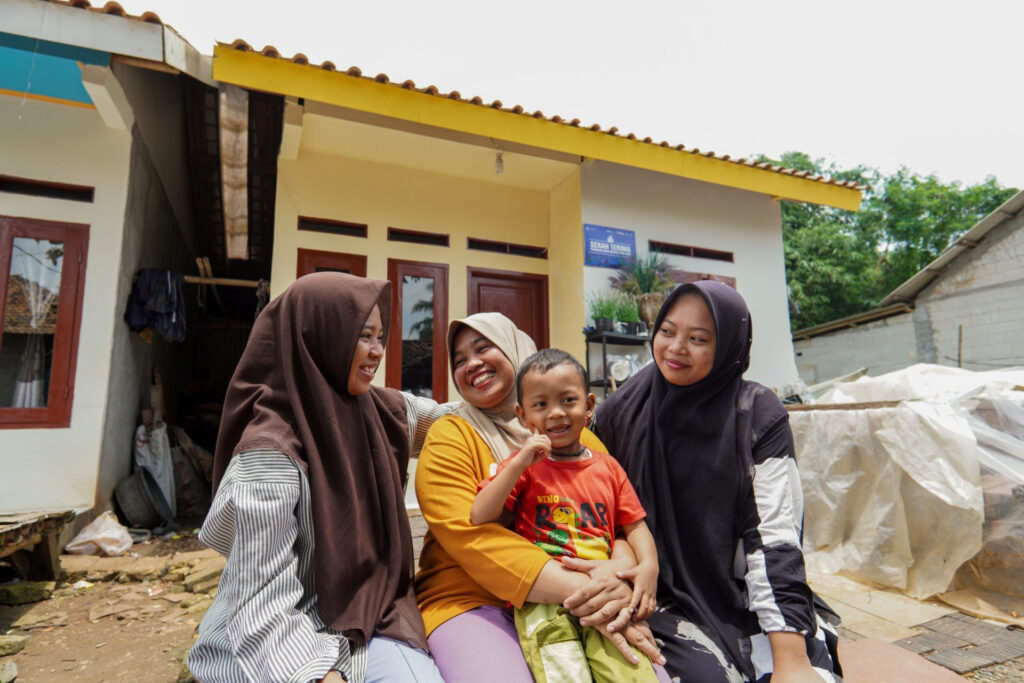
A portrait of Meilina inside her newly renovated home in Bogor Regency, West Java. Photo: HFHI/Kevin Herbian

New Home, New Spirit, and Blossoming Dreams

Today, Ibu Meilina’s life has been completely transformed. The new home has brought a profound psychological impact for both her and her son, replacing constant anxiety with joy that is hard to put into words. “The change is enormous. Words can’t even describe how happy I am. I’m just so grateful,” Ibu Meilina said with a beaming smile.

With a clean and orderly home, her enthusiasm for life has renewed. Waking up in the morning now feels pleasant. The sense of security she experiences indoors provides a positive drive to face each day with optimism. “When you have a proper home, you go to work with more energy because your mind is at ease,” she added with deep gratitude.

Having a decent residence has also empowered Ibu Meilina to pursue new economic aspirations. No longer preoccupied with a leaking roof, she is now planning to save up capital to start a small home business selling her own homemade food and cakes. For Ibu Meilina, this new home is more than just a physical shelter—it is a foundation for her beloved son’s future.

Ibu Meilina expresses continuous gratitude for the assistance that changed her life’s trajectory. “I am deeply thankful to Prudential and all the donors. May your endeavors always be eased, your health preserved, your lives blessed, and may God reward all your kindness,” she concluded with emotion.

Ibu Meilina’s story stands as proof that a safe, healthy, and decent home can restore hope and dignity to a family facing uncertainty. Countless other female heads of household and vulnerable individuals are still struggling to survive behind crumbling walls that endanger their lives.

Join hands with Habitat for Humanity Indonesia. Continue supporting proper housing programs to bring more stories of change, new smiles, and a brighter future to families in need across the nation.

Writer: Kevin Herbian

(kh/av)
HFH -3
Stories of Change

When Clean Water Finally Reached Nenih’s Home

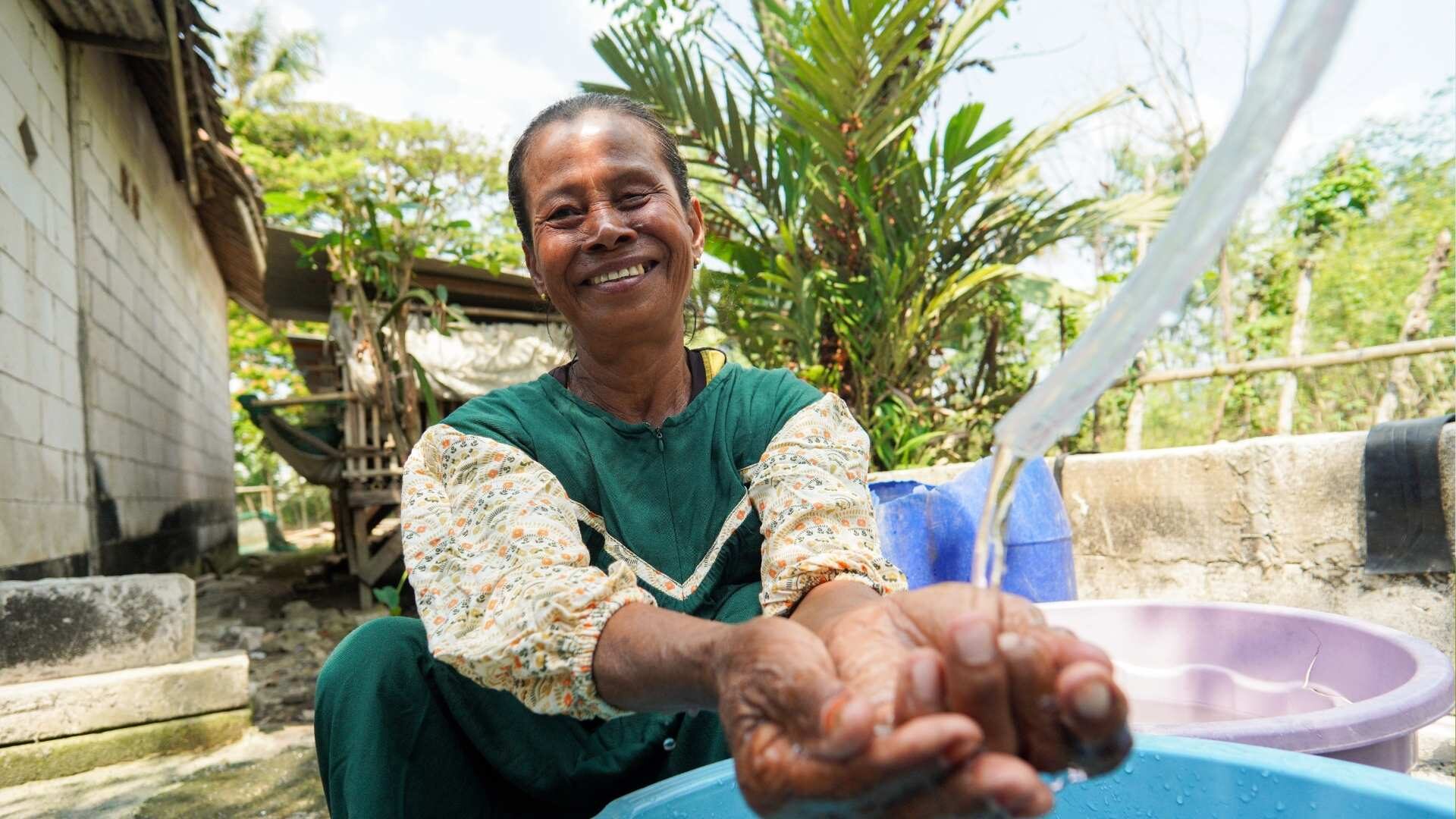
Karawang, September 21, 2026 – That morning, Nenih, a resident of Baturaden Village, Batujaya Subdistrict, Karawang Regency, was overcome with a mixture of emotion, sadness, and happiness. After 61 years of life, she was finally able to experience clean water flowing directly into her home for the first time. For some people, water may be an ordinary part of everyday life. For Nenih, however, it was something she had long been able to do nothing more than hope for.

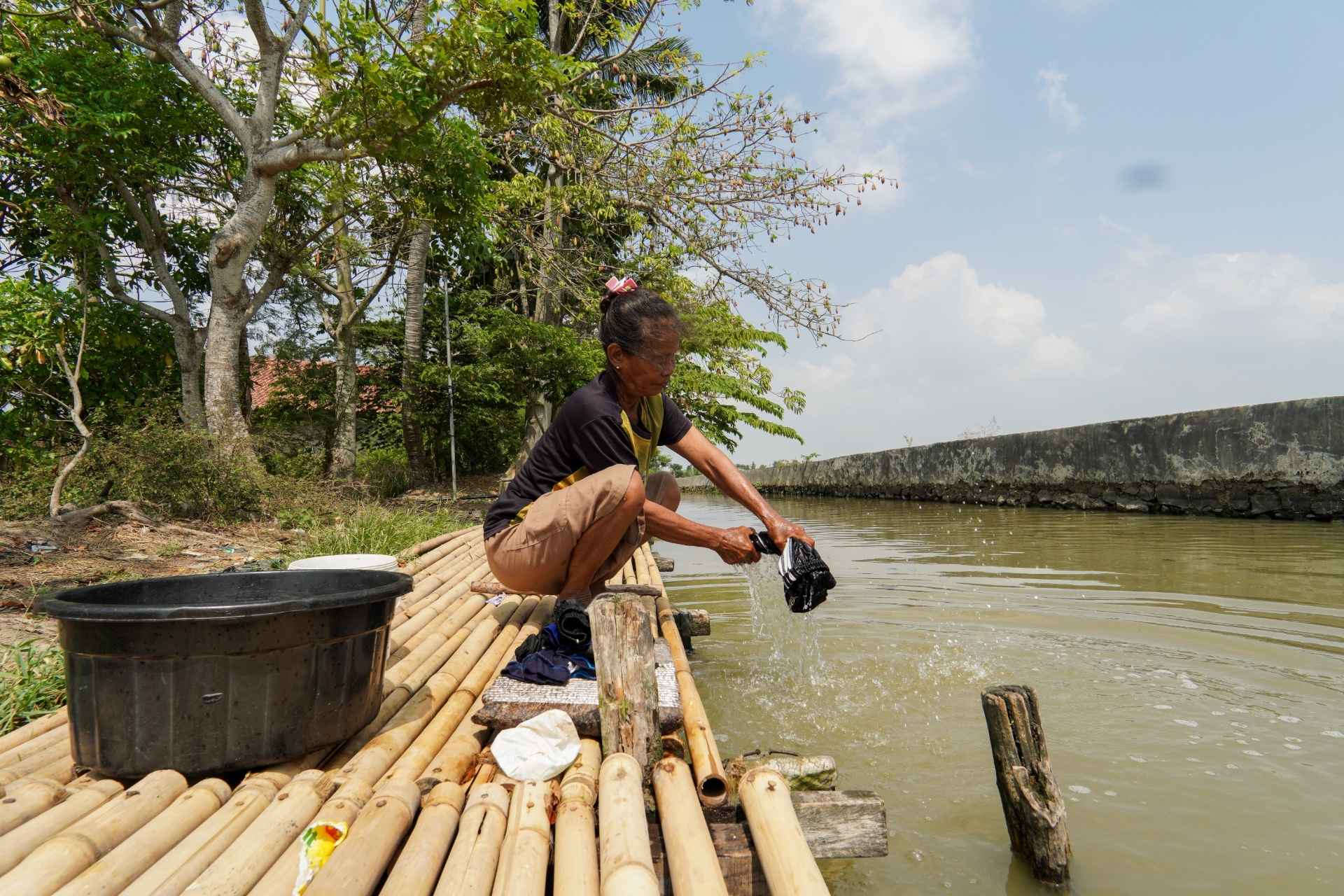
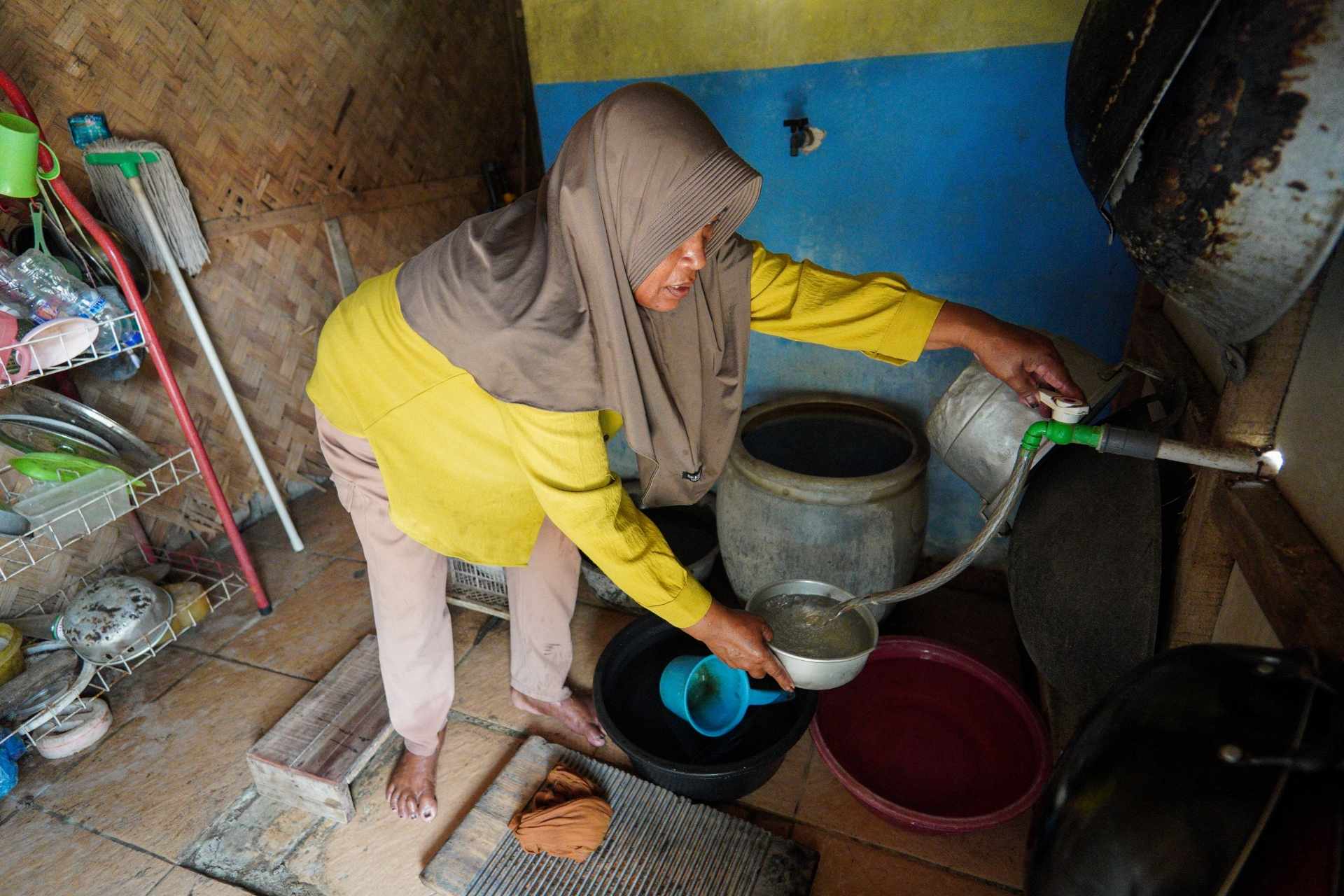
Throughout her life, Nenih had relied on an irrigation canal located about 100 meters from her home. The water served as her primary source for various daily needs, from bathing and washing clothes to washing rice and other food ingredients. Yet the water was far from suitable for use. It was often cloudy, foul-smelling, and contaminated with dirt.

Nenih was not the only one. Several families living nearby also depended on the irrigation canal for their daily water needs. For families with better financial means, digging a well was an option. However, this was not an easy choice for Nenih, who had to make ends meet on a limited income.

Nenih is a widow who works as a farm laborer, earning no more than IDR 100,000 a day. At home, she also takes care of and raises her grandchildren because their parents work as Indonesian migrant workers overseas. With her limited income and the many family needs she has to meet, providing a water source of her own was something she could not yet afford.

For drinking water, Nenih had to purchase refillable drinking water. Each gallon cost around IDR 5,000, and she could use up to 30 gallons a month, spending approximately IDR 150,000 just to obtain water that was safe to drink.

“If one gallon costs IDR 5,000, I can use up to 30 gallons a month. So, that’s around IDR 150,000 just for drinking water. Whether it is enough or not, I still have to make it work. What else can I do? We need water, but I also have to divide the money between food and school expenses,” Nenih said.

The situation became even more difficult during the dry season. The flow of the irrigation water that the family depended on decreased significantly, sometimes leaving behind only very murky water. During such times, Nenih had to wait until morning, when the water conditions were slightly better, before collecting it and carrying it home.

“During the dry season, there is less water and it becomes more polluted. The only solution is to save water. Usually, every morning I check the condition of the water first. If it looks a little better, I collect it and carry it home,” she said.

Nenih used to rely on irrigation water to wash clothes, vegetables, and food ingredients, and even to bathe, before receiving clean water assistance from Habitat for Humanity in Baturaden Village, Karawang Regency. Photo: HFHI/Kevin Herbian

A distance of 100 meters between her home and the water source may not sound particularly far. For Nenih, however, the journey was not easy. She has impaired vision in her left eye following a workplace accident. This condition made collecting and carrying water even more exhausting, especially when she had to make repeated trips to meet her family’s daily needs.

Using water from the irrigation canal was also a source of concern for Nenih. She recalled that her grandchildren had experienced itchy skin several times after using the water. The cloudy, contaminated water meant that even simple activities such as bathing and washing had to be carried out under difficult conditions.

Nenih’s experience shows that access to clean water is about more than simply having water available for drinking. Safe and adequate water is an essential part of a decent home because it is directly connected to health, hygiene, comfort, and a family’s ability to carry out daily activities safely and with dignity.

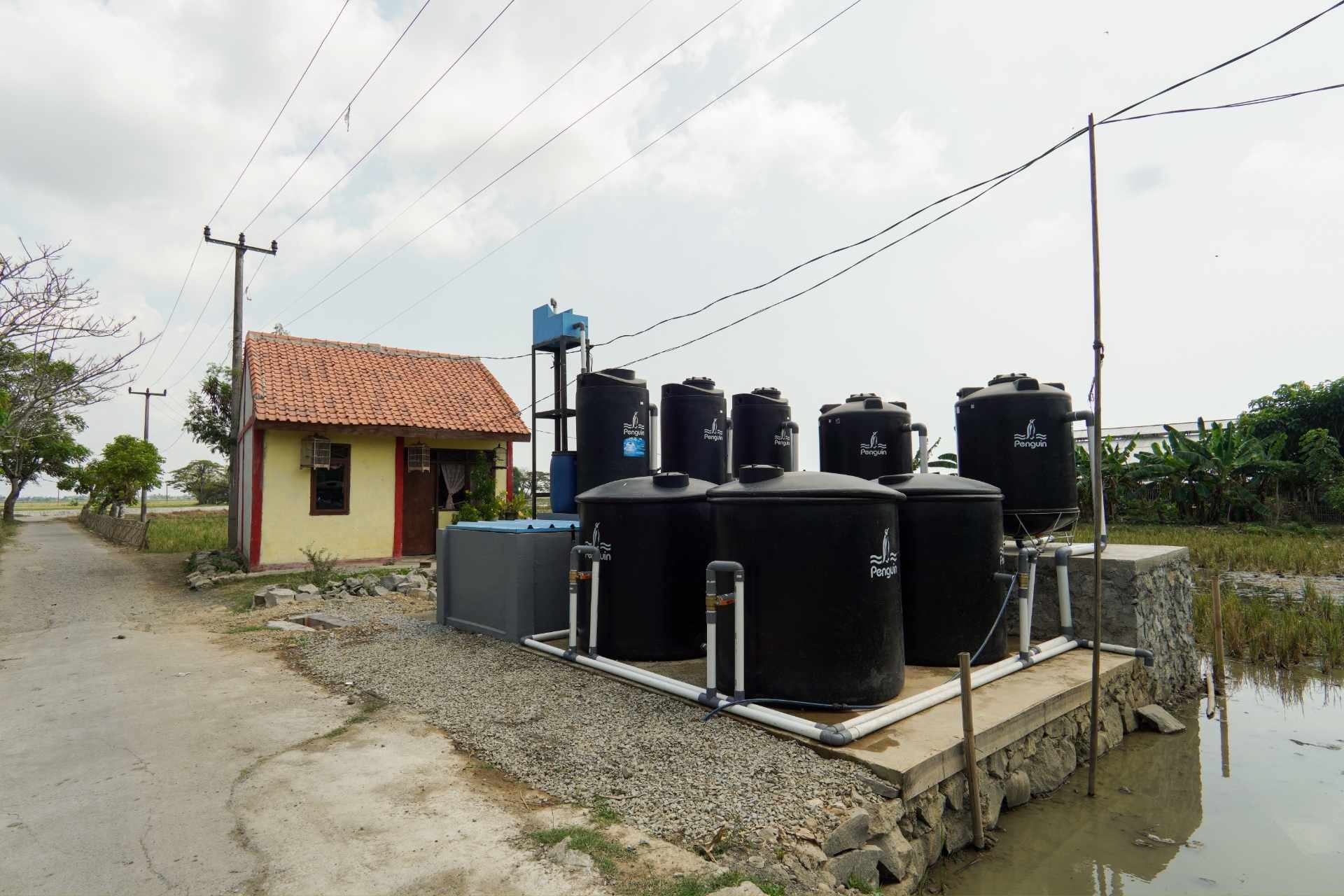
Then, a glimmer of hope finally arrived. Change began when Habitat for Humanity Indonesia, together with Habitat for Humanity Netherlands, developed a clean water supply system using water from the local irrigation canal. The system is equipped with filtration technology to treat the water before distributing it to 10 priority families who previously lacked adequate access to clean water.

To ensure the quality of the water, the filtered water was also tested in a laboratory. This step was taken to ensure that the water met the required quality standards before being used by the beneficiary families.

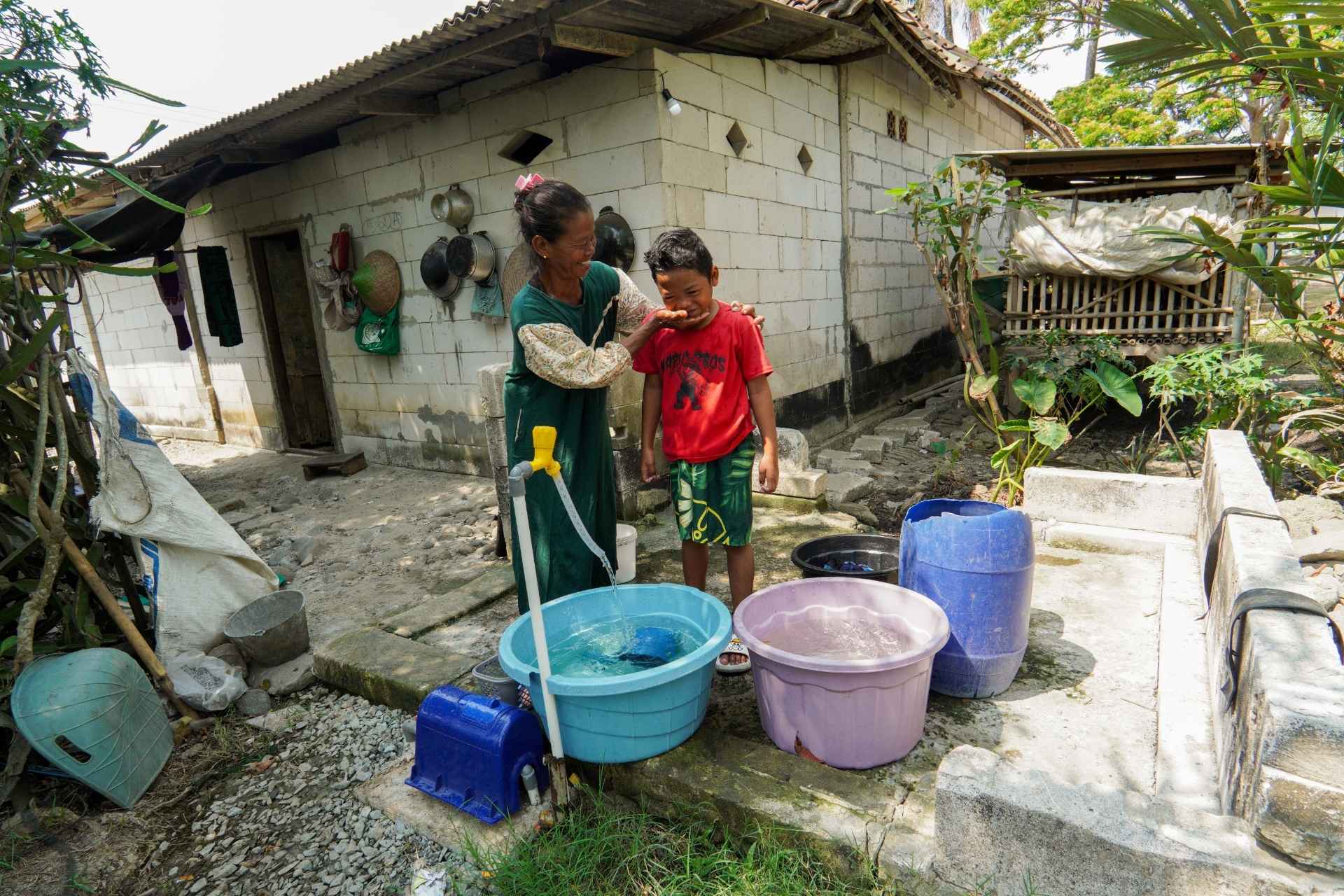
Today, the water that Nenih once had to collect and carry approximately 100 meters from the irrigation canal is now available much closer to her home. “I no longer use water from the canal. Now I use the new water for everything—from bathing and using the toilet to washing clothes and vegetables,” Nenih said.

The change may seem simple, but it has had a profound meaning for Nenih. She no longer has to wait for the irrigation water to improve, carry water home, or worry when the dry season makes the water source increasingly difficult to use.

What she notices most is the difference it has made for her grandchildren. “My grandchildren are also very happy because they can bathe using clean water. They no longer complain about having to bathe with muddy water mixed with dirt. I am happy to see them being able to bathe more comfortably,” Nenih said.

Nenih washes her grandchild’s face with clean running water installed at her home, thanks to support from Habitat for Humanity in Baturaden Village, Karawang Regency. Photo: HFHI/Kevin Herbian

For Nenih, access to clean water has also brought new hope for her family’s health. Previously, using water from the irrigation canal was often followed by complaints of itchy skin. Now, she feels more at ease knowing that her family can carry out their daily activities using cleaner and safer water.

She has even started using the water for consumption. “I tried using this water for cooking and making coffee. It tastes very good. Now I feel much more at ease because I can use clean water,” she said.

Access to clean water has also brought economic benefits. Previously, Nenih had to set aside around IDR 150,000 every month to purchase refillable drinking water. With access to a clean water supply, this expense is no longer as much of a burden as it once was.

For families with limited incomes, these savings create more room to meet other needs. Money that was previously spent on purchasing water can now be saved or allocated to other household expenses.

After 61 years of living with limited access to clean water, Nenih can finally experience something she had never had before: safe and adequate water that she can use without having to travel far from home.

“This is such a great blessing for me. I never imagined that at my age I would finally be able to have clean water available near my home. In the past, every time I needed water, I had to think about where to get it. Now, I can use it much more easily,” Nenih said.

However, Nenih’s happiness does not end with what her family is experiencing today. She hopes that the newly built water facility will be properly maintained and cared for so that its benefits can last for many years to come.

“I hope this water facility will continue to be looked after and maintained so that its benefits are not only enjoyed today, but can also be used by my children and grandchildren. I also hope that other neighbors who do not yet have access to clean water will one day be able to experience the same benefits that I have,” she said.

Writer: Kevin Herbian

(kh/av)
HFHI_ (2)
Stories of Change

Clean Water for the Health, Education, and Hopes of Sami’s Family

Karawang, September 16, 2026 – For some families, the morning may begin with preparing breakfast and making sure the children are ready for school. But for Sami (53) and her family, mornings once began with a much more basic question: where would they get water to bathe that day?

In Baturaden Village, Batujaya Subdistrict, Karawang Regency, access to clean water is more than just a household necessity for Sami and her family. Its availability determines how her children start their day, whether they can get ready for school comfortably, and how much money the family has to set aside each month.

Sami earns a living by selling snacks and refreshments for children in front of her home. From this small business, she earns around IDR 50,000 a day. Her husband, Caplin (55), works as a farm laborer and earns approximately IDR 1.5 million per month. With limited household income, every expense has to be carefully considered, including the cost of obtaining water that is safe and suitable for everyday use.

For years, Sami’s family relied on water from a well provided by the village government and shared by four families. The water was used for daily needs such as bathing and washing clothes. However, the water from the well tasted bitter, making it unsuitable for drinking or other consumption needs.

To meet those needs, Sami had to purchase refillable drinking water. The water was not only used for her family’s drinking needs, but also to make iced beverages that she sold in front of her house.

“Every month, I have to buy around 20 gallons. Each gallon costs IDR 5,000, so I spend around IDR 100,000 just on water. The water is used both for our family’s drinking needs and to make the drinks I sell. So, I really have to manage our expenses carefully to make sure we can still afford our other needs,” Sami said.

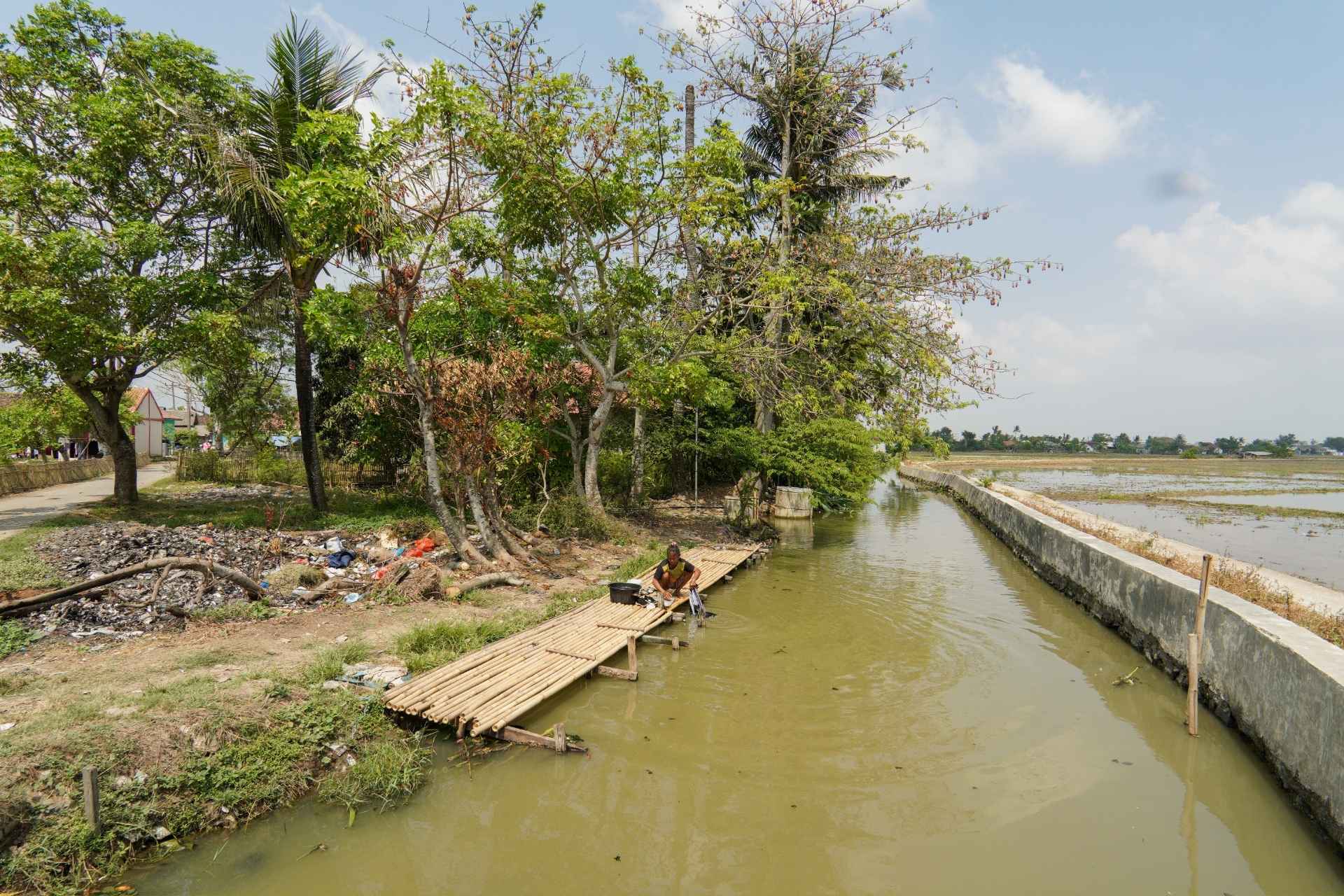
However, relying on the well did not always ensure that Sami’s family had enough water. When the dry season arrived and the well’s water supply decreased, Sami and her family had to take turns using whatever water sources were available. In certain situations, they were even forced to rely again on the irrigation canal, where the water was cloudy and unsuitable for everyday use.

An irrigation canal used by Sami’s family and local residents to meet their daily water needs in Baturaden Village, Karawang Regency. Photo: HFHI/Kevin Herbian

For Sami, the situation became even more difficult when her children had to use the water to bathe before going to school. They often experienced itchy skin after using water from the irrigation canal. The situation also affected their comfort as they went about their daily activities, including attending school and studying.

“In the past, almost every morning after dawn prayers, my children would bathe in the canal before going to school. They were actually uncomfortable because they had to bathe in an open area and were afraid that people might see them. On top of that, their skin often felt itchy afterward. As a parent, it was heartbreaking to see my children having to go through that,” Sami said.

Water, which should be one of the most basic necessities of everyday life, had instead become a source of concern for Sami’s family. Limited access to water was not only about drinking or bathing. It also affected their health, comfort, privacy, and the children’s ability to start their day and attend school without unnecessary difficulties.

The situation began to change when Habitat for Humanity Indonesia, together with Habitat for Humanity Netherlands, developed a clean water supply system using water from the local irrigation canal. The water is treated through a filtration system before being distributed to 10 priority families who previously faced limited access to clean water, including Sami’s family.

To ensure that the water was safe to use, the filtered water was also tested in a laboratory. This process was an important step in ensuring that the water quality met the required standards before being used by the families.

An irrigation water treatment and filtration facility established by Habitat for Humanity Indonesia to produce clean water in Baturaden Village, Karawang Regency. Photo: HFHI/Kevin Herbian

Now, after using water from the new system for around two weeks, Sami is experiencing changes that she once found difficult to imagine. Water that she previously had to search for, conserve, or purchase is now available for various household needs.

“Alhamdulillah, we now have a new water source. We no longer have to struggle to find water or worry when the dry season comes. The water is also much better than what we used before. Our skin no longer feels rough after bathing,” she said.

The most noticeable change for Sami has been in her children’s lives. They no longer have to go to the irrigation canal to bathe before going to school. They no longer have to worry about bathing in an open area or using water that causes their skin to itch.

“What makes me happiest is seeing my children being able to bathe with clean water. Their skin is no longer like it used to be, when it often became itchy after using water from the canal. They are more comfortable now and can go to school without having to worry about things like that,” Sami said.

For the children, the change may seem simple. But for Sami, being able to bathe with clean and safe water means much more than comfort. It gives her children a greater sense of safety and privacy, as well as the opportunity to go about their daily activities in better conditions.

Sami uses clean running water at home for her daily needs, including preparing water to sell ice treats in Baturaden Village, Karawang Regency. Photo: HFHI/Kevin Herbian

Clean water has also brought changes to Sami’s livelihood. Until now, part of the money she spent on refillable drinking water was used both for household needs and to support her small business selling beverages. With the new water source, her reliance on purchased water has begun to decrease.

“The water is also good for drinking. The biggest difference is that we no longer need to buy refillable water as often. It also makes things easier for my business because the water we need is already available. That means I can save some of the money that I would normally spend on water,” Sami said.

Sami has not yet been able to calculate exactly how much additional income she has gained from the new water supply system, as she has only been using it for around two weeks. However, for her, simply reducing the amount she spends on purchasing water is already meaningful support for her family.

Amid the dry season, when water availability has become a challenge for many families in the surrounding area, Sami no longer faces the dry months with the same level of worry. Together with nine other families in Baturaden Village, she is beginning to experience how improved access to water can transform many aspects of everyday life.

Because clean water is about more than simply having water flow from a tap. It means better protection of children’s health, the opportunity to go to school more comfortably, reduced household expenses, and a small business that can operate with less financial pressure.

More broadly, access to clean water is an inseparable part of a decent home. A safe and comfortable home is not defined solely by strong walls and a sturdy roof. Families also need access to basic services that enable them to live healthy lives, maintain hygiene, and carry out their daily activities with dignity.

Writer: Kevin Herbian

(kh/av)
HFHI4
Stories of Change

Kristin’s Story: Starting Over from the Ruins of Her Home After the Flores Earthquake

Nagekeo, September 7, 2026 – For Kristina Wae, a modest home in Marapokot Village, Aesesa District, Nagekeo Regency, East Nusa Tenggara, was more than just a place to live. It was where she and her family shared meals, exchanged stories, and spent their days together in happiness. But the Flores earthquake changed everything in a matter of minutes.

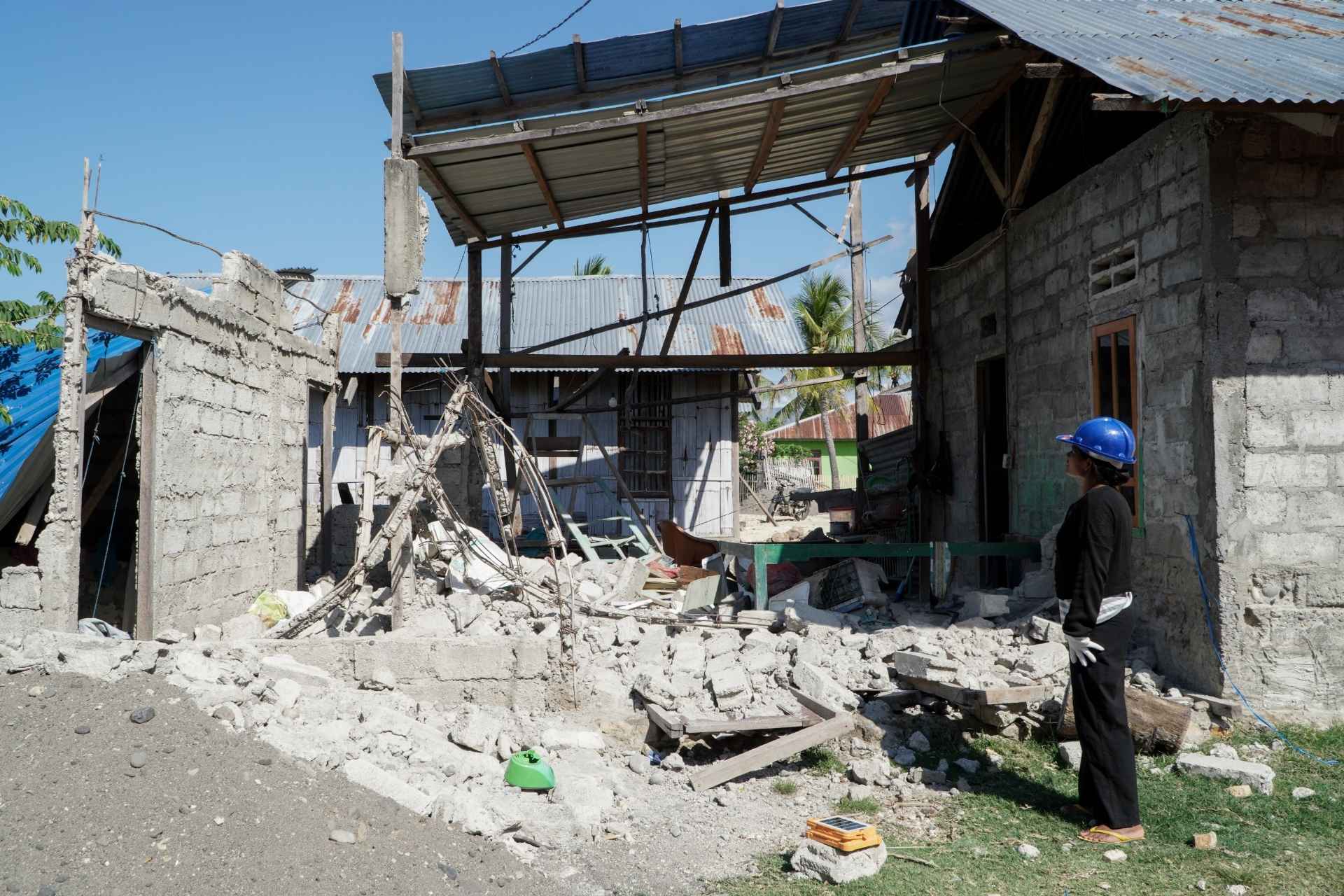
When the earthquake struck, Kristin, 39, her husband, Fransiskus Lita, 40, and their three children tried to escape as their house began to collapse. The front section of the house was damaged, while the kitchen at the back was also buried under the rubble. The usual exit they relied on was no longer safe.

“When the earthquake happened, we immediately became worried and started crying. We wanted to get out through the front, but the terrace had already started collapsing. We tried to go through the back, but the kitchen had also collapsed. Thankfully, there was a side door. My husband broke the door open, and we all managed to get out through there,” Kristin recalled.

They did not have time to take anything with them. At that moment, their safety was the only thing that mattered to Kristin and her family.

Losing a Home, But Not Losing Hope

Before the earthquake, Kristin was a homemaker while her husband worked as a farmer. The family also raised livestock to support their daily needs. Their income depended on farming and livestock sales, which were unpredictable and amounted to no more than IDR 2 million per month.

Their three children were also a reason for Kristin and her husband to keep going. The family’s needs, including their children’s school expenses, still had to be met even though their home was no longer habitable.

“That house meant everything to my family. It was the most comfortable place for my little family. Although it was a simple house, it was where we shared so much happiness,” Kristin said.

After the earthquake, Kristin’s family evacuated to Bukit Danga, quite far from their home. For about two weeks, they stayed in an evacuation tent and relied on food and basic necessities provided by the government.

However, Kristin realized that she could not stay at the evacuation site forever. There were still livestock at home that could help support the family’s livelihood. Her children also needed to return to their daily lives.

After spending about two weeks in Bukit Danga, Kristin and her family therefore decided to return to Marapokot. They set up a tent beside their damaged home and stayed there temporarily.

“If we continued staying up there, what would happen to our income? We have children who are still in school. We still have livestock that may help us make a living every day. So, we chose to get back on our feet,” she said.

Kristina Wae points to a collapsed section of her home damaged by the earthquake in Nagekeo Regency, East Nusa Tenggara. Photo: HFHI/Kevin Herbian

A Kit That Became a First Step Toward Recovery

A few days after returning home, Kristin was informed by village officials that she should come to the village office. She did not know that the visit was related to assistance she was about to receive.

Her motorcycle was still trapped beneath the rubble of the house, so she had to take a neighbor’s motorcycle taxi to get to the village office.

When she arrived, Kristin was unsure and did not know what she was going to receive. She eventually learned that her family would receive a set of tools to help clean up their earthquake-damaged home.

The assistance was an Emergency Shelter Kit (ESK) distributed by Habitat for Humanity Indonesia with support from donors. A total of 100 ESK packages were provided to 100 earthquake-affected families across five villages in Aesesa District, Nagekeo Regency, East Nusa Tenggara, as part of the Flores Housing Recovery program.

Unlike assistance intended for daily necessities, the ESK contains various tools that families can use to clear earthquake debris and carry out initial repairs on homes that have sustained light to moderate damage.

For Kristin, the kit came at just the right time. “I am very grateful and thankful. No matter how small the assistance may seem, I can make use of it,” Kristin said.

More than just a set of tools, the ESK gave Kristin the encouragement to start doing something. Her house could not be rebuilt immediately, and she did not yet have the funds to repair it. But she now had the tools to begin with the simplest task: cleaning her home little by little.

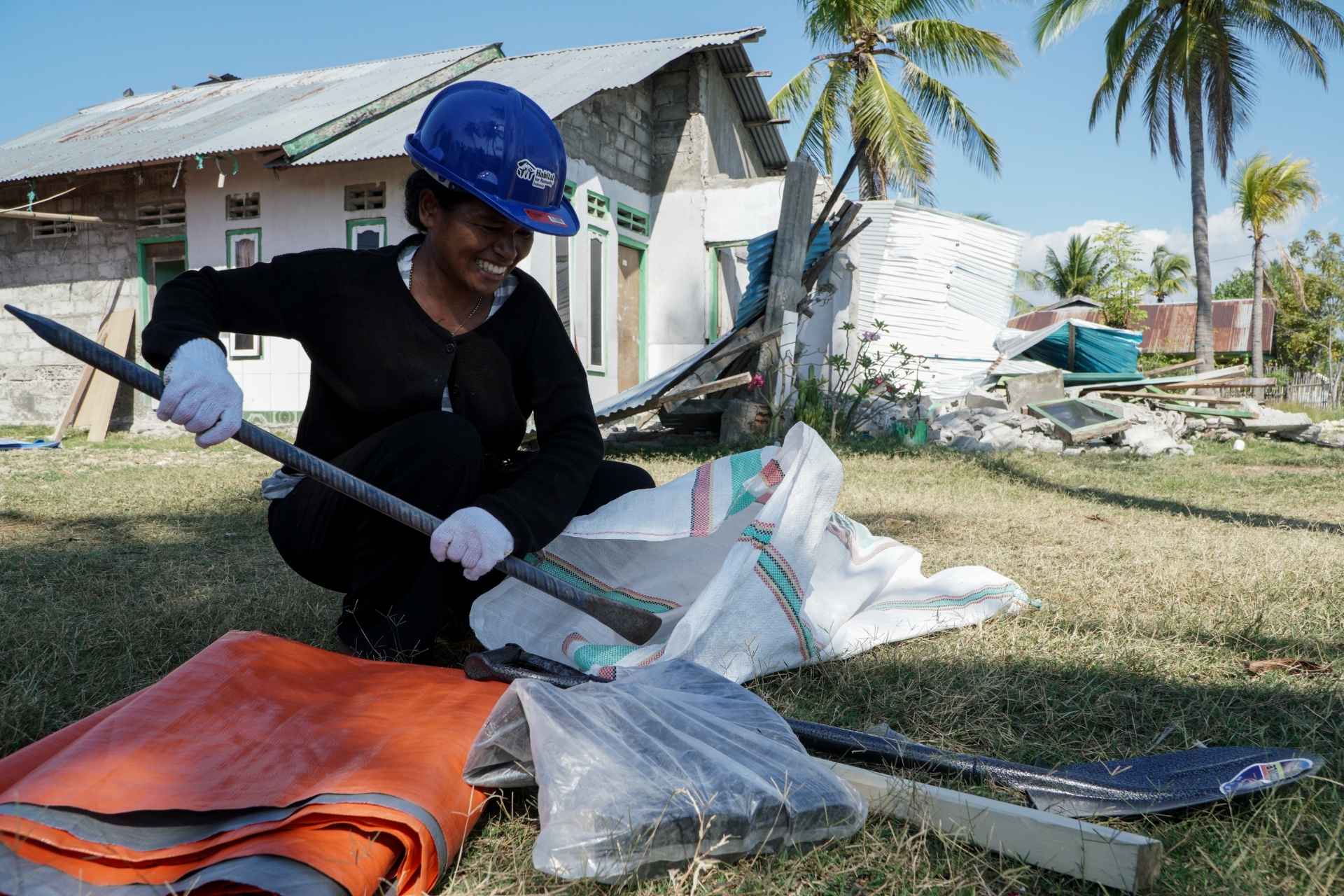
Kristina Wae opens an Emergency Shelter Kit (ESK) provided by Habitat for Humanity Indonesia in Nagekeo Regency, East Nusa Tenggara. Photo: HFHI/Kevin Herbian

Read also: After the Earthquake, Abdul Rajak Chooses to Rise and Hold on to Hope for His Family

Cleaning the Kitchen, Preparing for the Next Step

Kristin plans to start with the kitchen. The area was one of the parts of the house that sustained damage, and she hopes to clean it so that it can be used for cooking again.

“At the very least, we will clean the kitchen first so that we can use it for cooking. We will do it little by little with these tools,” she said.

The desire to repair the house had actually been there even before the earthquake. Kristin recalled that her family had bought a truckload of sand to repair the kitchen floor. They planned to buy cement the following day to continue the work. But the earthquake struck before they could carry out the plan.

The sand they had purchased had not yet been used when the family had to leave their home to save themselves. Their simple plan to make their home better had to be put on hold.

Now, Kristin is trying to start again from the beginning. “Help like this makes me feel that I need to be stronger and gives me the motivation to keep going. I want to rebuild my house, even though for now I still have to wait until I have the funds or the means to do so. For now, we are cleaning it little by little. If we are blessed with the resources later, we want to build a better home,” she said.

For Habitat for Humanity Indonesia, small steps such as cleaning a damaged home are an important part of the recovery process. That is why the ESK assistance is not only intended to help families clear earthquake debris, but also to provide a starting point for families to regain control over the recovery of their homes.

The distribution of ESK packages also marks the beginning of the housing recovery plan in Aesesa, Nagekeo. Moving forward, Habitat Indonesia will support the repair and strengthening of homes through a retrofitting approach for 200 families, so that the repaired homes will not only be more livable but also safer and more resilient to future disasters.

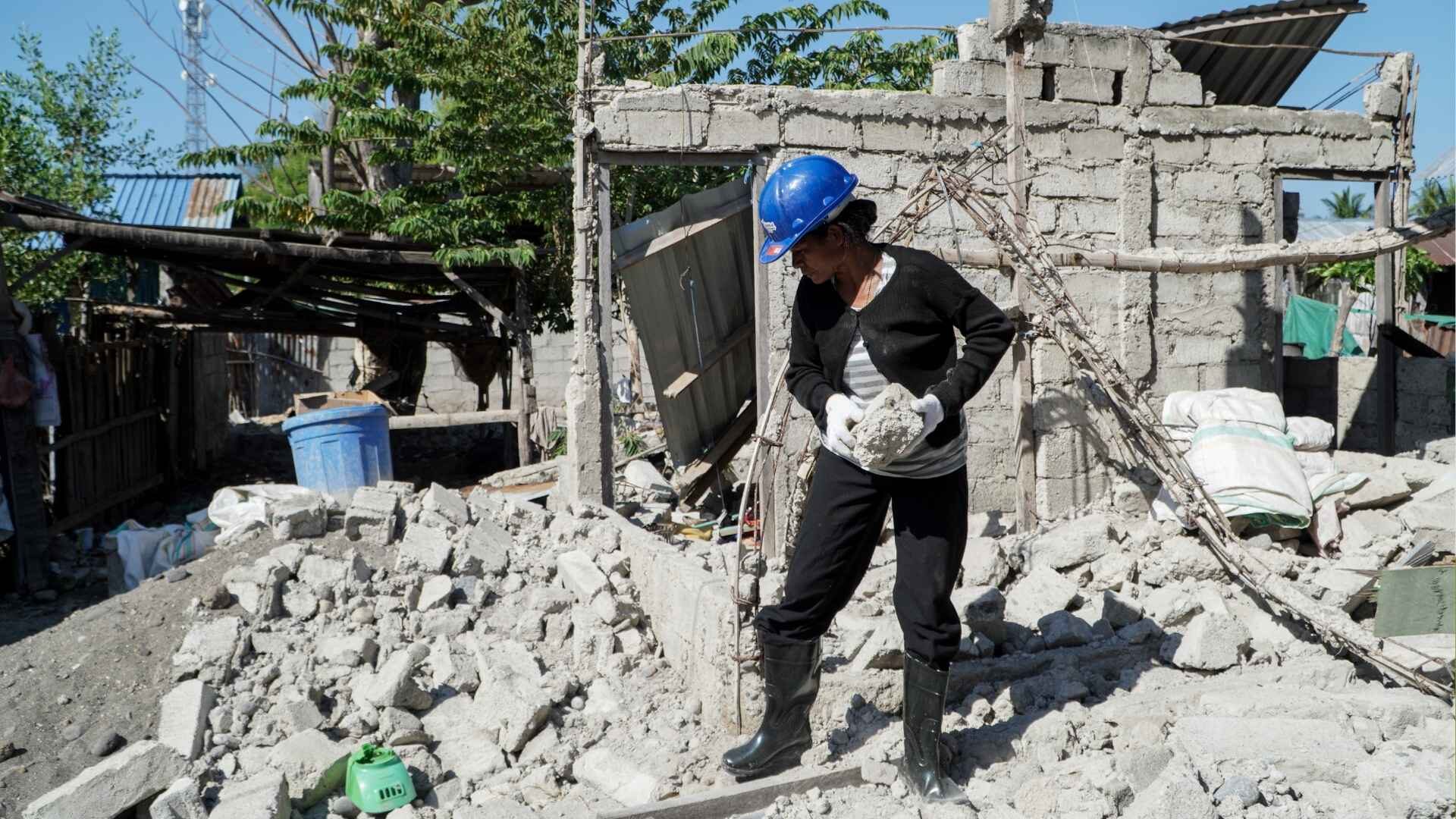
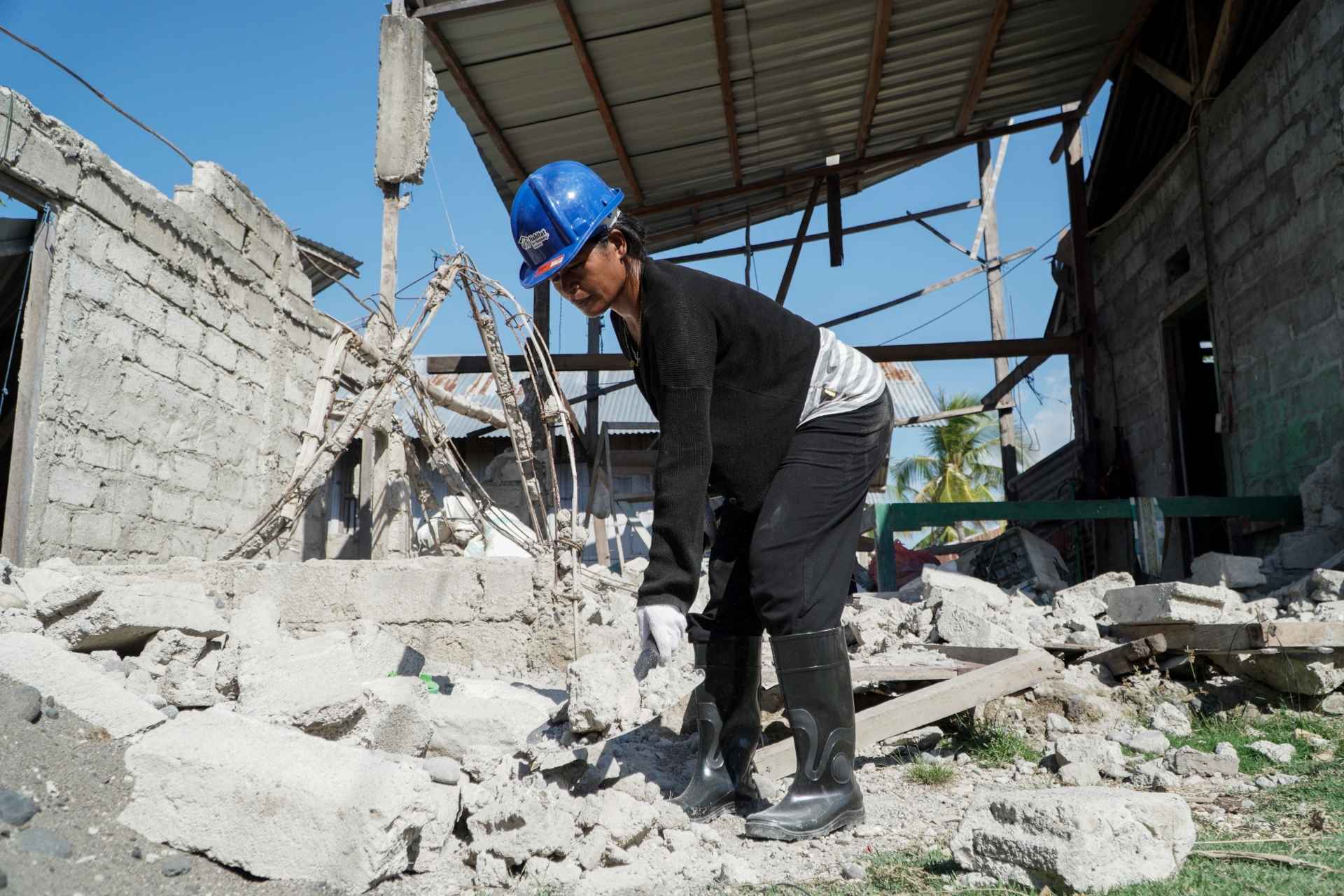
Kristina Wae uses a tool from Habitat for Humanity Indonesia’s Emergency Shelter Kit to clear earthquake debris at her home in Nagekeo Regency, East Nusa Tenggara. Photo: HFHI/Kevin Herbian

From the Ruins of a Home, Hope Grows Again

Life is still far from easy for Kristin and her family. They continue to live in a tent beside their home. Most of the building remains uninhabitable due to damage and cracks.

Yet, despite these limitations, Kristin has chosen not to stop. She is slowly cleaning her home while waiting for an opportunity and the resources needed to rebuild it. For her, the process is not only about repairing a building, but also about restoring the place that has long been at the heart of her family’s life.

The modest home that once stood as a witness to her family’s many happy moments has now become a place where Kristin holds on to hope for a new beginning. “Home is everything to my family,” she said.

For Kristin and other families affected by the earthquake, recovery may not happen in a single day. But from a tent, a few simple tools, and the determination to start cleaning again, the first step has already begun.

Your support as a Habitat Friend can help families affected by the Flores earthquake rebuild safer and more decent homes. Together, we can support housing recovery for families in Nagekeo through the Flores Housing Recovery program.

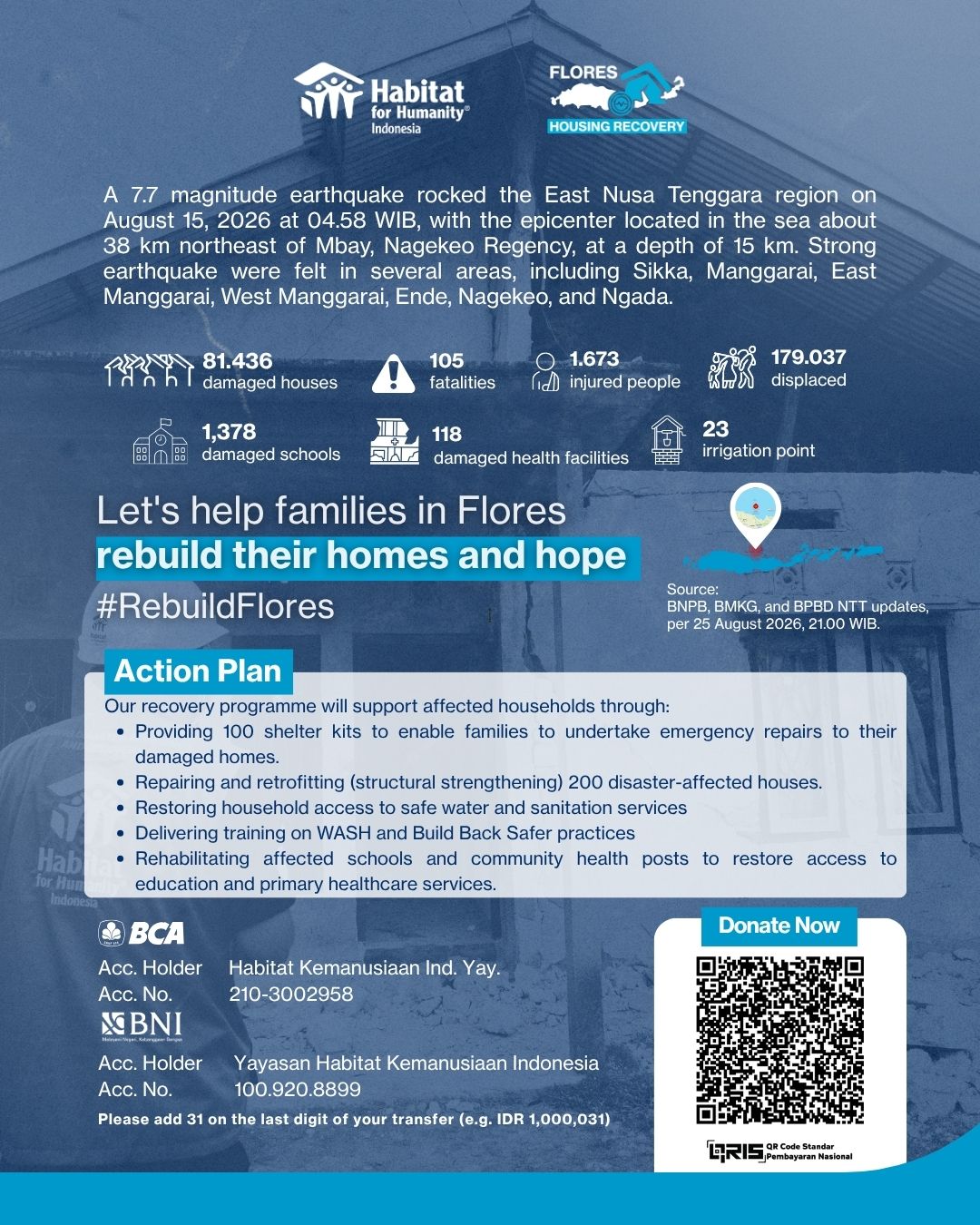
Make a donation through the information provided on the campaign flyer below.

Writer: Kevin Herbian

Graphic: Tias Ester Widhari

(kh/av)

HFHI
Stories of Change

Yanto’s Story from the Foothills of Bondowoso, Enduring Life in a Fragile Home

For many people, the sound of rain can be soothing. But for Yanto, every raindrop falling on the roof of his former home brought nothing but anxiety.

Bondowoso, July 7, 2026 – For nearly ten years, the 34-year-old resident of Sumberwringin, Bondowoso Regency, lived with his family in a modest house that had steadily deteriorated with age. The floor was still made of bare earth, the walls were constructed from plywood sheets that had become weathered and full of holes, and the asbestos roof above them was riddled with gaps that allowed rainwater to pour into the house.

“The roof used to leak, and there were holes everywhere along the edges. When it rained heavily, water would come in and everything inside would get wet,” Yanto recalled.

As an odd-job laborer earning around IDR 50,000 per day, Yanto had very few options. Most of his income was spent covering daily necessities for his wife and their six-year-old daughter. Whenever there was any money left over, food for the family remained the top priority.

“We had to be very frugal. If we weren’t, we wouldn’t have enough to meet our daily needs,” he said.

Living in a mountainous area brought its own challenges. At night, cold air would enter the house from all directions. Wind passed through the holes in the walls, while the damaged roof could no longer provide proper protection. Yanto and his family relied solely on blankets to keep warm.

Amid all these hardships, the thing that troubled him most was the safety of his family.

“I felt sad, sometimes even to the point of crying when I looked at the condition of the house. But what could I do? I didn’t have the money to repair it. As long as we had enough to eat, that was what mattered most,” he said.

His worries grew whenever he imagined the worst possible scenario. The aging house made him fear that a disaster or earthquake could cause the structure to collapse. At the same time, the asbestos roof was another source of concern, as the material is known to pose health risks, especially for children who spend their days living and growing up beneath it.

Yanto’s wife and daughter are inside their inadequate home in Bondowoso Regency, Indonesia. Photo: HFHI/Kevin Herbian

Read also: Seven Years Waiting for a Decent Home: Nining’s Struggle to Care for Her Parents Amid Hardship

In the midst of these difficult circumstances, Yanto never imagined that his life would change.

Then one day, a team from Habitat for Humanity Indonesia visited his home to conduct an assessment.

At first, he assumed it was simply a routine survey. However, he was shocked to learn that his family had been selected to receive support for the construction of a decent home.

Yanto did not let the opportunity pass him by. Throughout the construction process, he actively participated in any work he could do. From digging the septic tank and carrying building materials to assisting with various construction tasks, he contributed wherever possible.

For Yanto, the house was not something that simply appeared. It was built with his own labor, time, and dedication throughout the construction process.

The transformation he experienced was remarkable.

Today, his home looks completely different. Cream-colored walls have replaced the fragile materials of the past, while the stronger structure provides the sense of security he had dreamed of for years.

“My wife and daughter are very happy now. There are no more leaks. I’m no longer afraid that the house might collapse,” he said with a relieved smile.

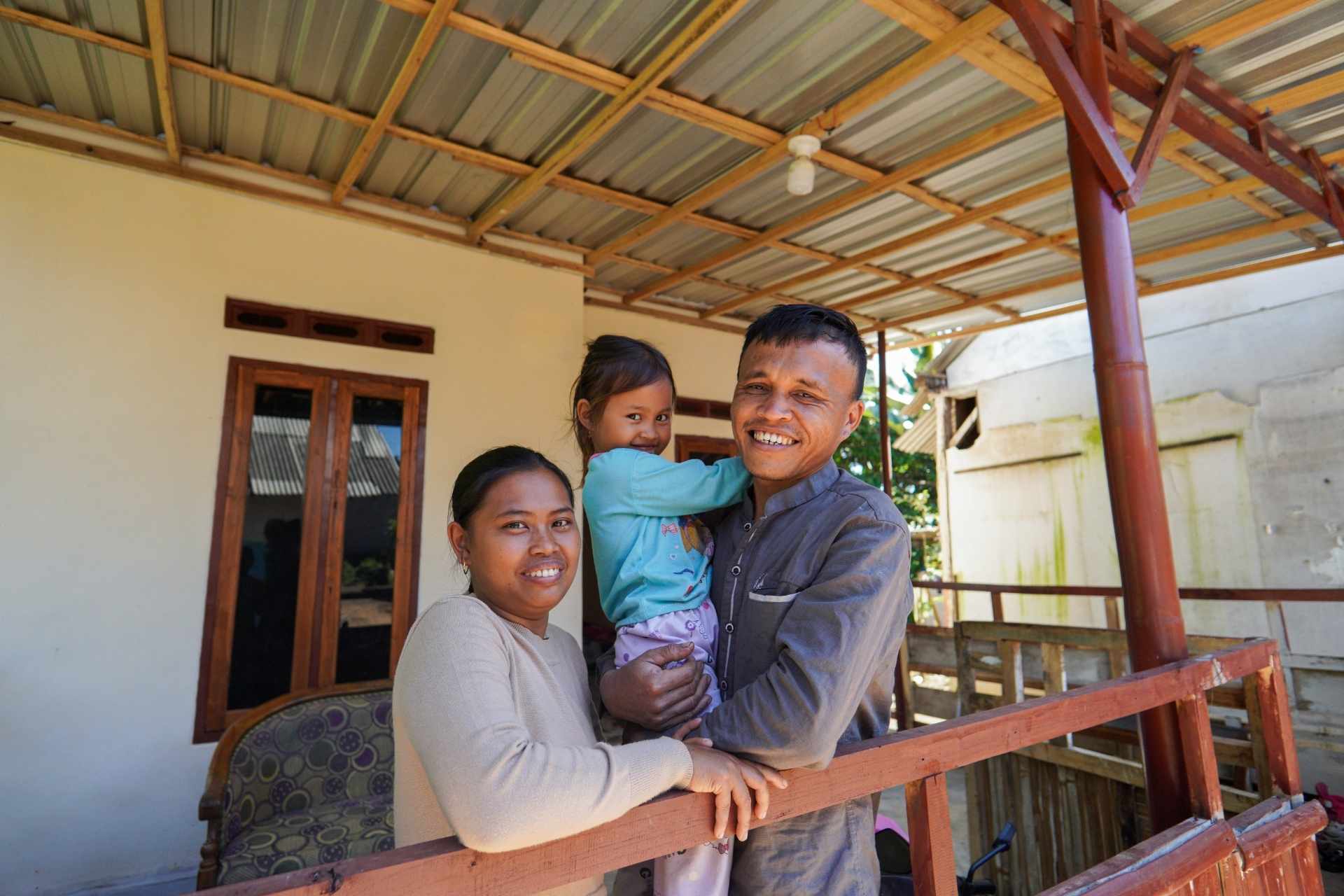
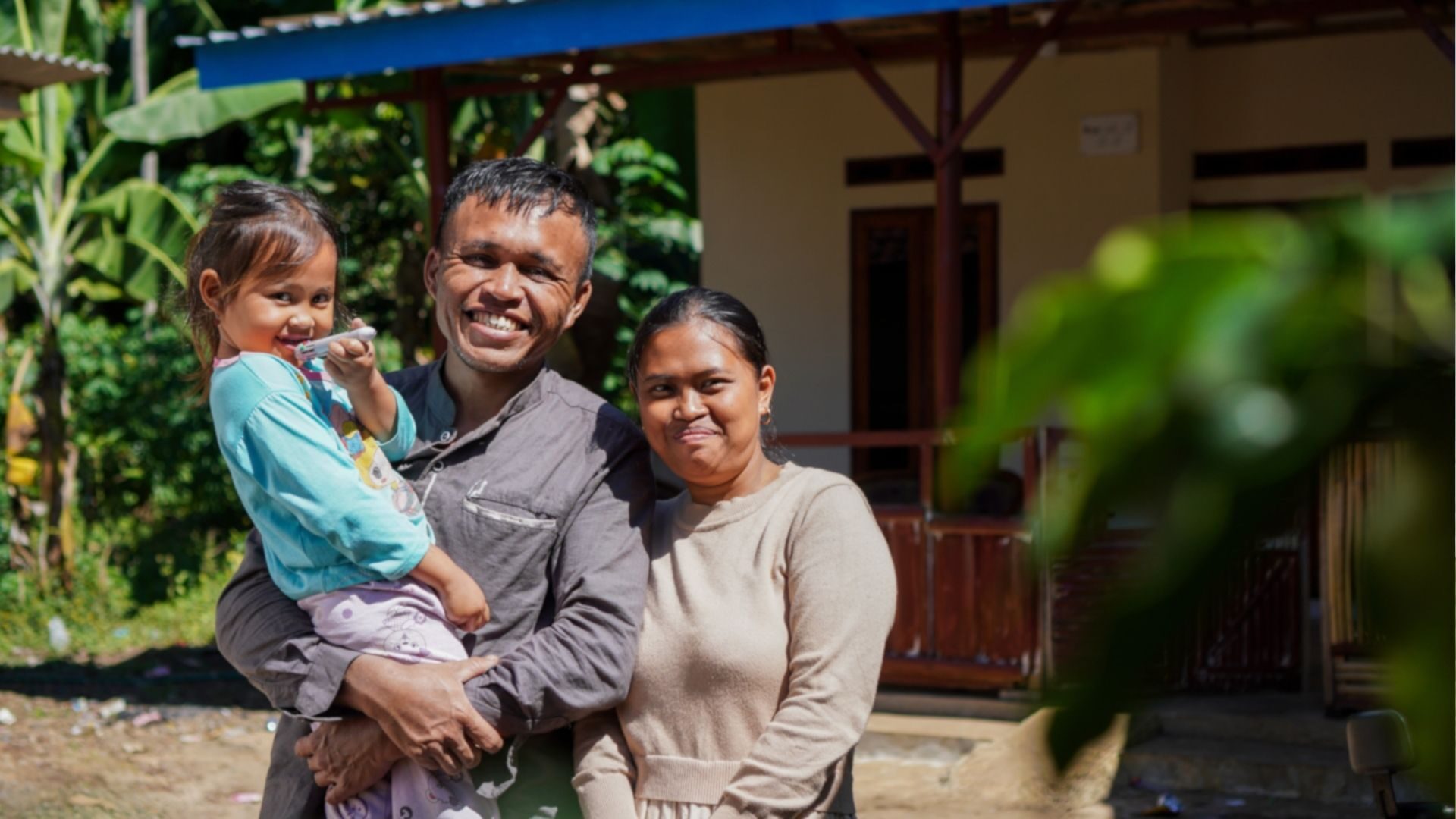
A portrait of Yanto’s family standing on the porch of their now decent home, made possible by the support of donors through Habitat for Humanity Indonesia in Bondowoso Regency, Indonesia. Photo: HFHI/Kevin Herbian

The impact extends beyond the physical condition of the house. Yanto has also seen positive changes in his family’s daily life. His wife and daughter can now rest comfortably without having to endure cold air seeping through gaps in the walls. They also no longer live under an asbestos roof that had long been a source of concern.

His daughter has grown into a happier and more cheerful child. The safer yard around their home now gives her space to play and explore her surroundings.

“In the past, I often stopped her from playing too much. I was worried the house was too unsafe or that she might get hurt. Now she can play freely wherever she wants,” Yanto said.

The nights that were once filled with worry have gradually been replaced by peaceful rest. There is no longer overwhelming anxiety whenever it rains or when strong mountain winds blow.

That peace of mind has given Yanto renewed energy to continue working and to look toward the future with greater optimism. He can now focus on things that were previously overshadowed by concerns about the house, including preparing for his daughter’s education.

For Yanto, this transformation is about more than simply having a safer place to live. It is an opportunity to live with greater peace of mind, care for his family more effectively, and move forward with confidence that the future he dreams of for his daughter is now much closer than ever before.

Writer: Kevin Herbian

(kh/av)
HFHI – Astra
Stories of Change

No Longer Seeking Shelter During the Rain: Andri’s Struggle to Build a Decent Home for His Family

Garut, June 22, 2026 – Andri (36) lives with his wife, Rina (33), and their two children in Garut Regency, West Java. Their first child is currently in the third grade of elementary school, while the youngest is three years old. For the past seven years, this small family has lived in a simple house whose condition was far from decent.

Daily, Andri works on odd jobs with an unpredictable income. When work is available, he becomes a farm laborer or helps forage grass to feed livestock in residents’ gardens. However, his income averages only about IDR 50,000 per day.

With such a limited income, Andri could only afford to repair his house bit by bit. He would sometimes patch the dirt floor with cement whenever he had extra money. “If we are blessed with a little extra income, I use it to patch the floor with cement. But only part of it, I can’t afford to do the whole thing,” Andri said.

Their housing condition was deeply concerning. The roof was made of asbestos without a ceiling, a material that poses health risks, especially for the children who stayed inside every day. Furthermore, the walls were made of woven bamboo that had holes in many places, allowing cold air and rainwater to easily enter the house.

Their biggest fear came whenever the rainy season arrived. “If it’s just light rain, we still brave it out inside the house. But if it’s a heavy downpour accompanied by strong winds, we always evacuate because we are afraid the house might collapse,” Andri explained. “The most difficult part is when it rains at night. It is pitch black here with minimal street lighting. We have to run to my parents’ house to seek shelter,” he recalled.

Andri’s wife, Rina (36), and their daughter stand in front of their uninhabitable home in Garut Regency, Indonesia. Photo: HFHI Team

The hardest period came when Rina was pregnant with their second child. At that time, the family’s economic condition was truly at its lowest point, while the due date was fast approaching. “At that time, I felt hopeless. I felt like I couldn’t be a useful husband and father for my family,” Andri said.

In addition, the fragile condition of the house made them worry about the safety of their unborn baby. After their youngest child was born, Andri and his family finally decided to temporarily evacuate to his parents’ house for two months to avoid any unwanted incidents.

Amid all these struggles, Andri could only keep trying while leaving the rest to God. “I learned to accept reality. I have tried my absolute best to earn a living. The rest, I leave it up to Allah,” he said.

Read also: Seven Years Waiting for a Decent Home: Nining’s Struggle to Care for Her Parents Amid Hardship

New hope finally arrived when Habitat for Humanity Indonesia, in collaboration with Astra, rebuilt Andri’s house into a decent home, along with 84 other families in Garut Regency. “Praise be to God (Alhamdulillah), my life felt filled with a renewed spirit when I found out that my house was selected to be rebuilt,” Andri said emotionally.

For him, this new house is the answer to the long struggle he and his family have endured. “This feels like the fruit of my family’s long struggle to finally have a decent home. I am sure this is the answer to our prayers,” he said.

Now, Andri’s house is much sturdier and safer. Not only was it built with proper walls and roofing, but the house is also equipped with various furniture such as a living room table and chairs, mattresses, wardrobes, and other necessities.

A portrait of Andri’s family standing in front of their now decent home made possible through the support of Astra in Garut Regency, Indonesia. Photo: HFHI/Kevin Herbian

The change has brought a sense of security that they had never truly felt before. “This house makes me feel more confident; it is something I can be proud of. Most importantly, now I am no longer afraid when it rains and I don’t need to stay over at my parents’ house anymore,” Andri said with a smile.

It did not stop there; Habitat Indonesia also invited Andri to get involved in building decent homes for other families in his neighborhood. Armed with his experience as a construction worker, Andri now helps with the house construction after finishing his half-day work in the garden.

This opportunity has also helped increase his income. “Now I have additional income, so it can be twice as much as before,” Andri said.

The transformation is also felt by their children. Andri believes that a safer and more comfortable home environment has significantly improved his children’s physical and mental health. His children are no longer ashamed of their own home.

In this new house, Andri has finally found what he had been searching for all these years: peace of mind. “I am very grateful and would like to thank Astra. This house has truly become a proper place to live. This is what a decent home should be,” Andri concluded.

Andri’s story is proof that a decent home is not just about a sturdy structure, but about providing a sense of security, preserving a family’s dignity, and opening new hope for a better life.

Writer: Kevin Herbian

(kh/av)
HFHI – Songs for NTT (3)
Stories of Change

Opening the Door to Healthier Families in Sabu Island

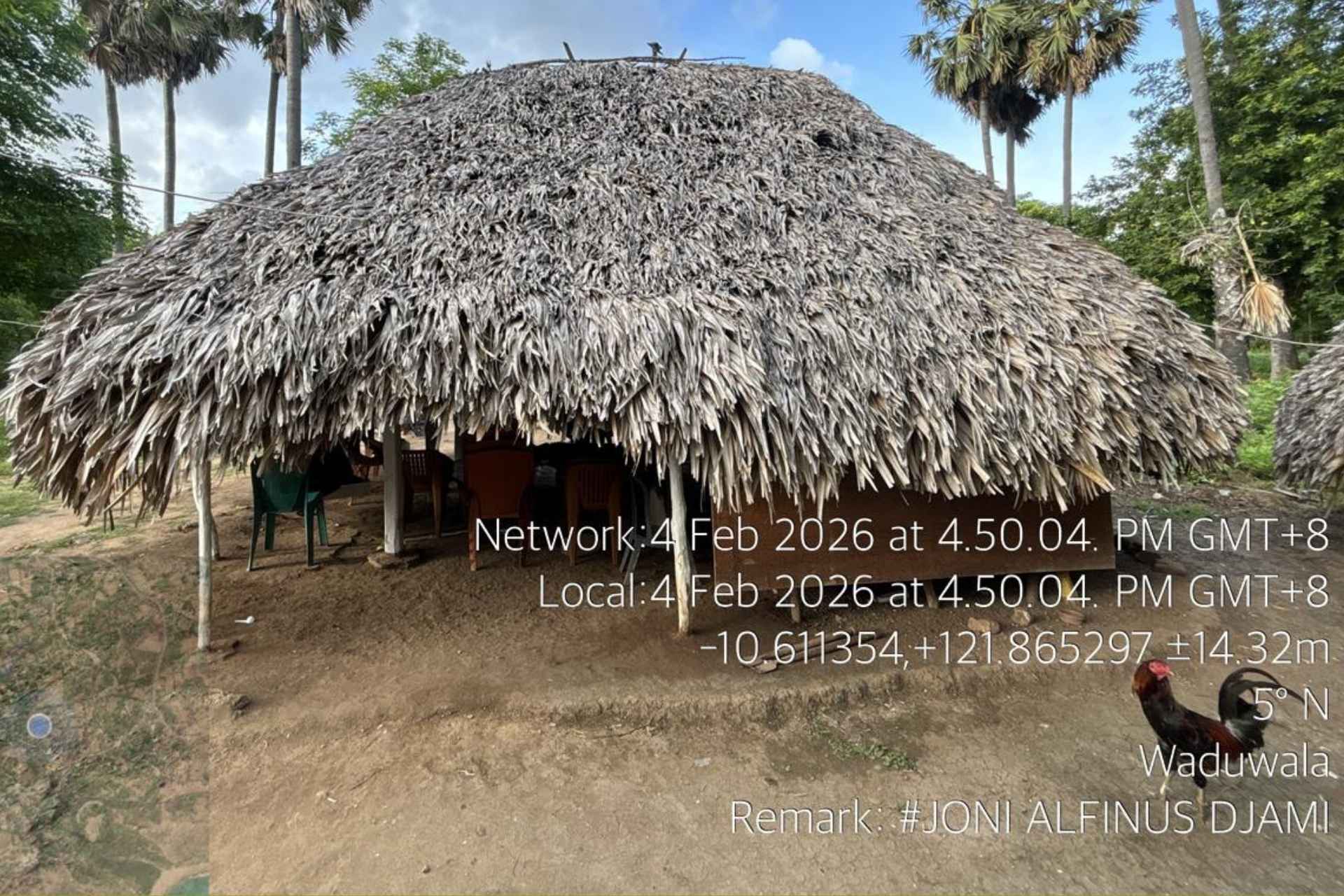
Sabu Raijua, June 12, 2026 – Mornings on Sabu Island often begin with dust. During the dry season, strong winds carry dried leaf fragments from the deteriorating roof of Joni’s house. The floor has to be swept repeatedly every day, yet dust still enters through the gaps in the fragile plywood walls.

A few months ago, Joni’s youngest child, only three months old, fell ill with acute respiratory infection (ARI). Inside the small house, the air felt stuffy due to the lack of windows for proper ventilation. When strong winds blew, dust from the roof continued to fall into the house. “When the wind is strong at night, we are afraid the children will struggle to breathe,” Joni said.

Joni’s story reflects the situation faced by many families on Sabu Island, East Nusa Tenggara. The region recently experienced an extreme drought lasting 128 days without rain, more than twice the national extreme drought threshold according to BMKG in 2025. The prolonged dry season has made communities increasingly vulnerable to health issues and poor housing conditions.

The condition of Joni’s house before it was rebuilt into a decent home in Sabu Raijua, East Nusa Tenggara, Indonesia. Photo: HFHI Team

In East Nusa Tenggara alone, the incidence of acute respiratory infections (ARI) reaches 36.3%. Poorly ventilated houses, deteriorating roofs, and inadequate sanitation are among the factors increasing the risk of respiratory illnesses, especially for children and the elderly.

In Sabu Liae District, where Joni lives, 23,809 families are still living in inadequate housing. Many homes are built with makeshift materials and are unable to provide safe protection from extreme heat, dust, and unpredictable weather conditions.

Amid these challenges, Joni continues his work as a mentor at a local church’s Children Development Center (PPA). With an income of around IDR 1 million (approximately USD 56.58) per month, he and his wife strive to meet the needs of their three children. When most of their income is spent on daily necessities and medical expenses when their children fall sick, improving their home becomes something out of reach.

“The roof often leaked and there was so much dust. But at that time, we didn’t know where to start,” he said.

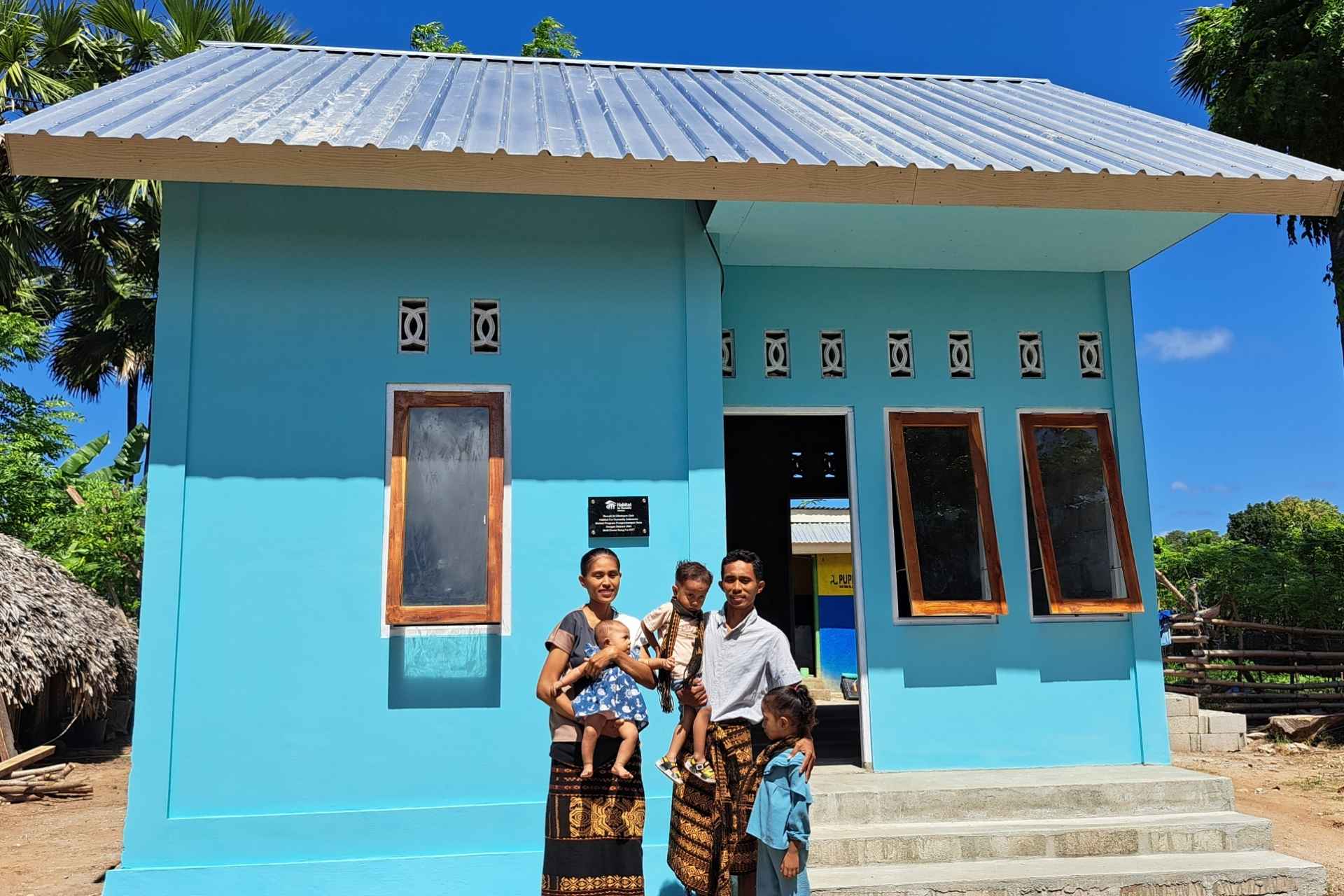
A portrait of Joni’s family in front of their home after it was rebuilt into a decent house in Sabu Raijua, East Nusa Tenggara, Indonesia. Photo: HFHI Team

Read also: Habitat for Humanity Indonesia Arrives in Sabu Raijua, NTT: Efforts to Address Decent Housing Challenges in Eastern Indonesia

When the housing improvement program reached his area, Joni decided to fully participate. He completed the required documents and began collecting river stones on his own for the foundation of his new house. For Joni, the house is not just a new building. It is an opportunity for his children to grow up healthier.

Today, their home has stronger walls, a safer roof, and ventilation that allows better airflow. Dust no longer fills the house every day. “I feel relieved now that the children rarely cough. We also sleep more peacefully,” Joni said.

The change is clearly felt in their daily lives. Money that was previously often spent on medicine is now set aside for the children’s education and nutrition. Joni is also no longer haunted by worry every time the dry season comes or when strong winds blow.

For many families on Sabu Island, a decent home is more than just shelter. A healthy home helps children stay healthy, enables parents to maintain their livelihoods, and gives families the chance to think about their future with greater peace of mind. In regions increasingly vulnerable to extreme weather, a safe home is also the first line of protection for families facing the impacts of climate change.

For Joni, that change began with one simple thing: a home where his children can breathe more easily.

Writer: Astridinar Vania

(av/kh)

HFHI – Astra
Stories of Change

Seven Years Waiting for a Decent Home: Nining’s Struggle to Care for Her Parents Amid Hardship

For years, Nining has lived between exhaustion, worry, and hope that never truly faded. In a fragile house that was nearly collapsing, she cared for her parents who suffered from stroke while trying to survive despite all of life’s limitations.

Garut, June 9, 2026 – Nining (46), a female head of household from Cikajang, Garut Regency, spends most of her days caring for her sick parents. Her father can still walk slowly with the help of a cane, while her mother remains bedridden. At the same time, Nining is also raising her youngest child, who is currently in junior high school.

To meet their daily needs, Nining relies on financial support from her two older children, who are already married and working. The money they send each month must be divided between household expenses and medication for her parents. In fact, she often has to buy food on credit from a neighbor’s small shop just to survive. “Whether it’s enough or not, I just have to make it work,” Nining said softly.

Amid financial hardship, the condition of the house they lived in only made life even more difficult. The house was built from bamboo walls and wooden boards, with a roof made of worn-out roof tiles. Whenever it rained, water leaked into the house from every direction, creating chaos inside.

“My biggest struggle is financial. I only depend on the money my children give me once a month. That money has to cover daily needs and my parents’ medical care. On top of that, we have to live in an uninhabitable house like this. My mind is always overwhelmed,” Nining explained.

Nining guides her parents while walking beside their inadequate home in Garut Regency, Indonesia. Photo: HFHI/Kevin Herbian

To earn additional income, Nining occasionally works as a farm laborer in her neighbor’s fields, earning no more than Rp30,000 per day. Yet even while working, her mind is never truly at peace. “When I’m working in the fields, I’m always thinking about my parents at home because the house is no longer safe to live in,” she said.

Caring for her parents in such a fragile house became a challenge of its own. Whenever heavy rain poured and water started entering the house, Nining had to move her parents to the driest corners of the house to protect them from the leaks.

“One time during heavy rain, the back part of the house collapsed. I panicked and called the neighbors for help because I was afraid it would hit my parents. Thankfully, they weren’t injured because we managed to move them in time,” she recalled.

After the incident, Nining could only afford temporary repairs. She used wooden supports to hold up the structure and covered damaged sections with banners so the house could still be occupied.

Behind all of these struggles, there was one regret that continued to weigh heavily on Nining’s heart. She believes her mother’s condition worsened after falling in their bathroom, which still had dirt flooring and was slippery.

Before meeting Habitat for Humanity Indonesia, Nining had even considered working abroad as a migrant worker. For her, it seemed like the only way to repair the house and afford medical treatment for her parents.

A portrait of Nining and her parents standing in front of their now decent home in Garut Regency, Indonesia. Photo: HFHI/Kevin Herbian

Read also: The Struggle of a Mother Head of Household to Achieve a Decent Home

The hope that once felt so distant finally arrived. With support from Astra, Habitat for Humanity Indonesia rebuilt Nining’s home into a decent and livable house, alongside homes for 84 other families in Garut Regency.

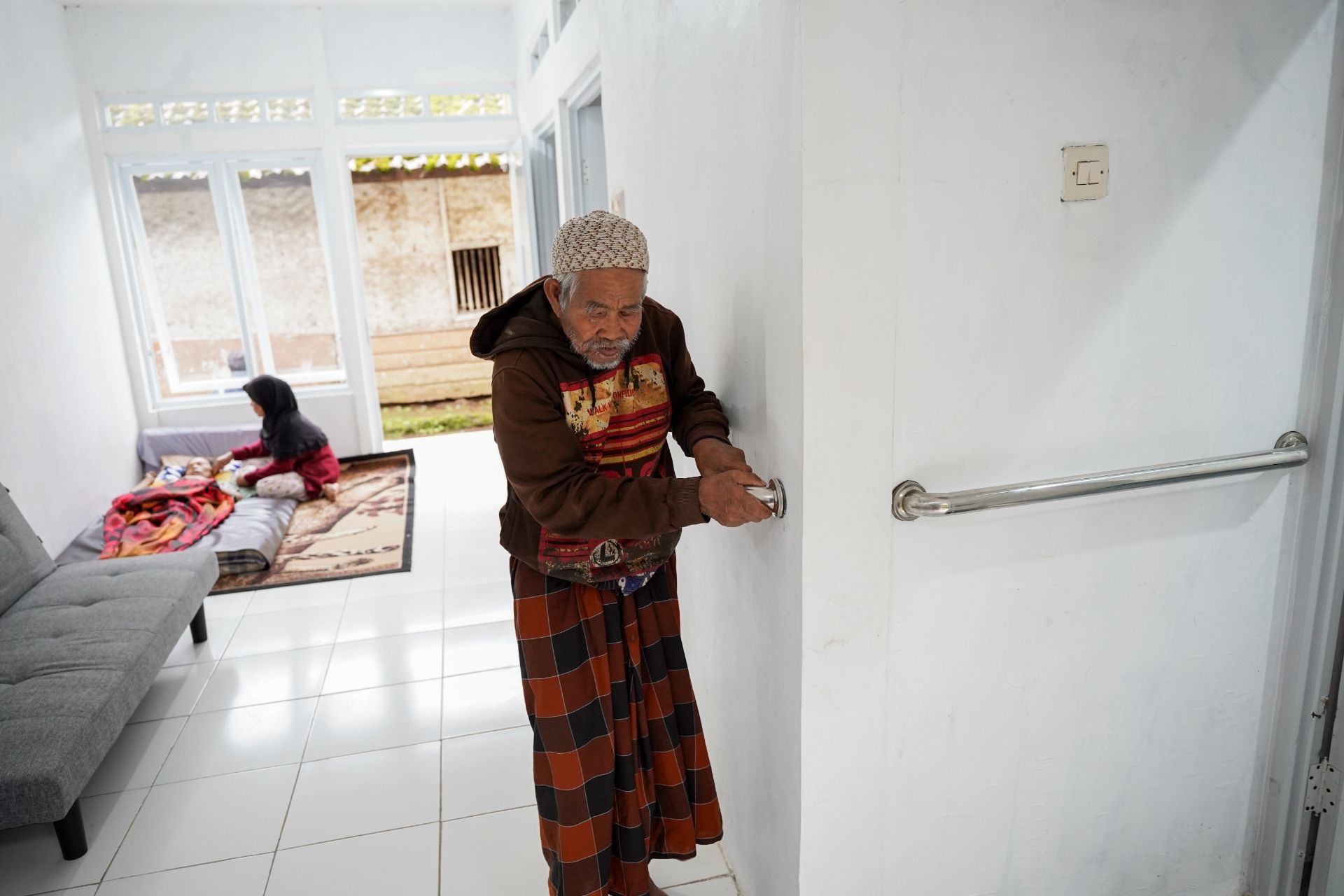
Today, Nining’s house stands strong with bright yellow walls. Not only is it safer and more comfortable, but it was also specially designed to support the needs of elderly people and persons with disabilities. The house is equipped with handrails in the living room and bathroom, as well as wider doorways to make mobility easier for her parents.

In addition, the house is furnished with various household items such as a living room table and chairs, a wardrobe, and beds, making it far more comfortable and suitable for living.

For Nining, this house is the answer to prayers she had been saying for more than seven years. She admitted that she had previously received several promises of assistance, but none had ever materialized until the support finally came through Habitat Indonesia and Astra.

“My house has changed so much. The most important thing is that it never leaks anymore. The house is also much nicer and more pleasant to look at. I no longer feel insecure or embarrassed around my neighbors,” Nining said with tears in her eyes.

Nining’s parents use the handrail installed inside their now decent home in Garut Regency, Indonesia. Photo: HFHI/Kevin Herbian

Having a decent home has also brought new peace into her life. Now, Nining no longer feels overwhelming fear every time she has to leave home to earn additional income. Her home is now equipped with handrails, allowing her elderly father to walk around the house with steady support.

“Because this house is now truly livable, I’m no longer afraid or worried about leaving my parents alone for a while when I go out to work as a farm laborer,” she said.

This house has become a symbol of a daughter’s struggle and devotion to her parents. Despite all the hardships, Nining never stopped trying to provide a safe and decent home where her parents could spend their old age with greater comfort and dignity.

Nining’s story is a reminder that a decent home is not just about walls and a roof, but about safety, peace of mind, and renewed hope for families who have long lived in hardship.

There are still many families like Nining’s who are waiting for the opportunity to have a decent home. Let us be part of the change and help more families build a better life.

Writer: Kevin Herbian

(kh/av)
HFHI (3)
Stories of Change

From Worry to Gratitude: Pak Rigo’s Journey to Owning a Decent Home

Morning and night no longer feel the same for Rigo Suhendra. Behind his simple daily life, one question used to constantly linger in his mind: would his house still be standing when the next rain came?

Bogor, May 5, 2026 – Rigo, 47, is a day laborer who depends on any work he can find. Some days he works as a construction worker, on others he becomes a driver, or takes on whatever jobs come his way—without any certainty. His income is just as unpredictable. On some days, he brings home IDR 100,000, on others IDR 50,000, and sometimes nothing at all. Together with his wife, Laya (46), a homemaker, they strive to meet the needs of their two school-aged children.

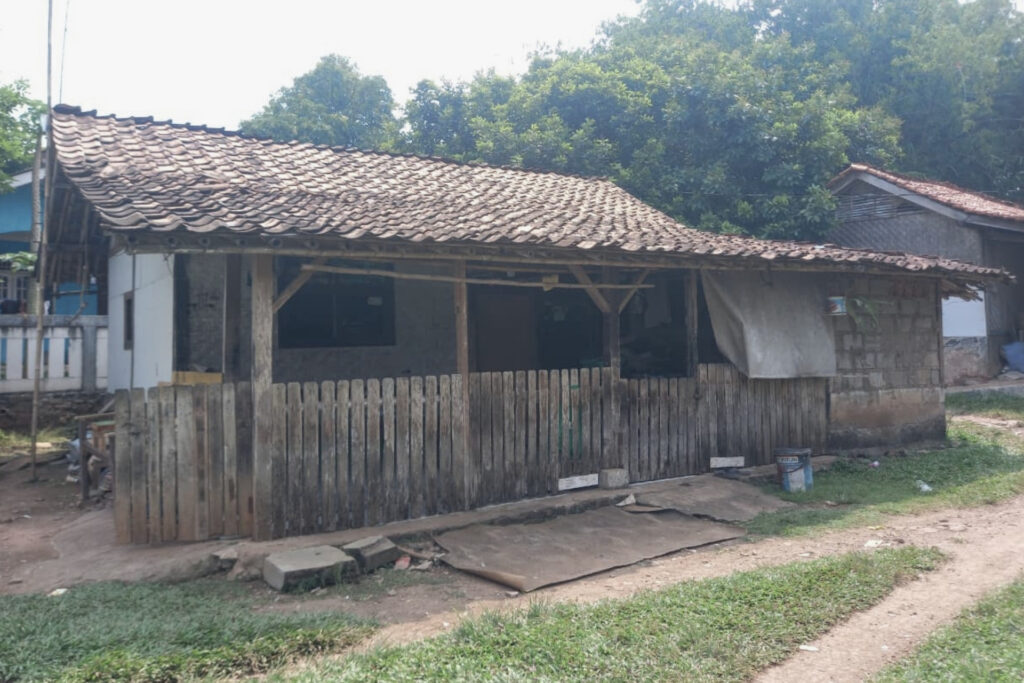
Amid these limitations, the small family had to live in a house inherited from Rigo’s parents. A house that should have been a place of shelter could not fully provide a sense of security. Its walls were made of weathered bamboo panels, patched with pieces of plywood and GRC boards. From the outside, the house looked fragile. From the inside, worry was always present.

For Rigo, comfort was no longer a matter of choice, but acceptance. He tried to make peace with his situation, convincing himself to live with what he had. Yet deep down, he held onto a simple wish that felt out of reach.

“Who wouldn’t want a good house? But this is all we can afford—what else can we do?” Rigo said.

Every time heavy rain fell, that fragile sense of calm would disappear instantly. Water seeped through the roof and cracked walls, soaking the floors and making it difficult for the family to rest properly. Many nights were spent in unease.

The condition of Rigo’s house before receiving support for the construction of a decent home from donors through Habitat for Humanity Indonesia in Bogor Regency, Indonesia. Photo: HFHI/Ari Darmawan

In moments like these, it was not just discomfort that arose, but fear. Rigo often worried that his house might collapse under strong winds. Thoughts about his family’s safety haunted him, while his ability to repair the house remained very limited. He could only set aside small portions of his daily income to patch damaged parts of the house, even though he knew it would never be enough.

Despite everything, he held onto a simple dream: to have a decent home for his family—a place that could truly protect them, not just barely shelter them. But for Rigo, that dream felt far beyond reach. With his limited financial situation, all he could do was try his best and hold on to hope.

The condition of the house also affected his children. Rigo realized that his son often felt embarrassed to invite friends over. A space that should have been a place to learn and grow together had instead become a source of insecurity.

Read also: From Running Out of the House to Feeling Safe Inside: Siti’s Story

Until one day, hope arrived in a way he had never imagined before. With support from generous donors, Habitat for Humanity Indonesia selected Rigo’s home in Wanaherang Village, Gunung Putri District, Bogor Regency, as one of the beneficiaries of a decent housing assistance program.

The news brought mixed emotions. On one hand, there was immense happiness and gratitude. On the other, a new concern arose—whether he would have to bear costs he could not afford. That concern was soon eased when he learned that the program required no financial contribution, but rather participation through sweat equity.

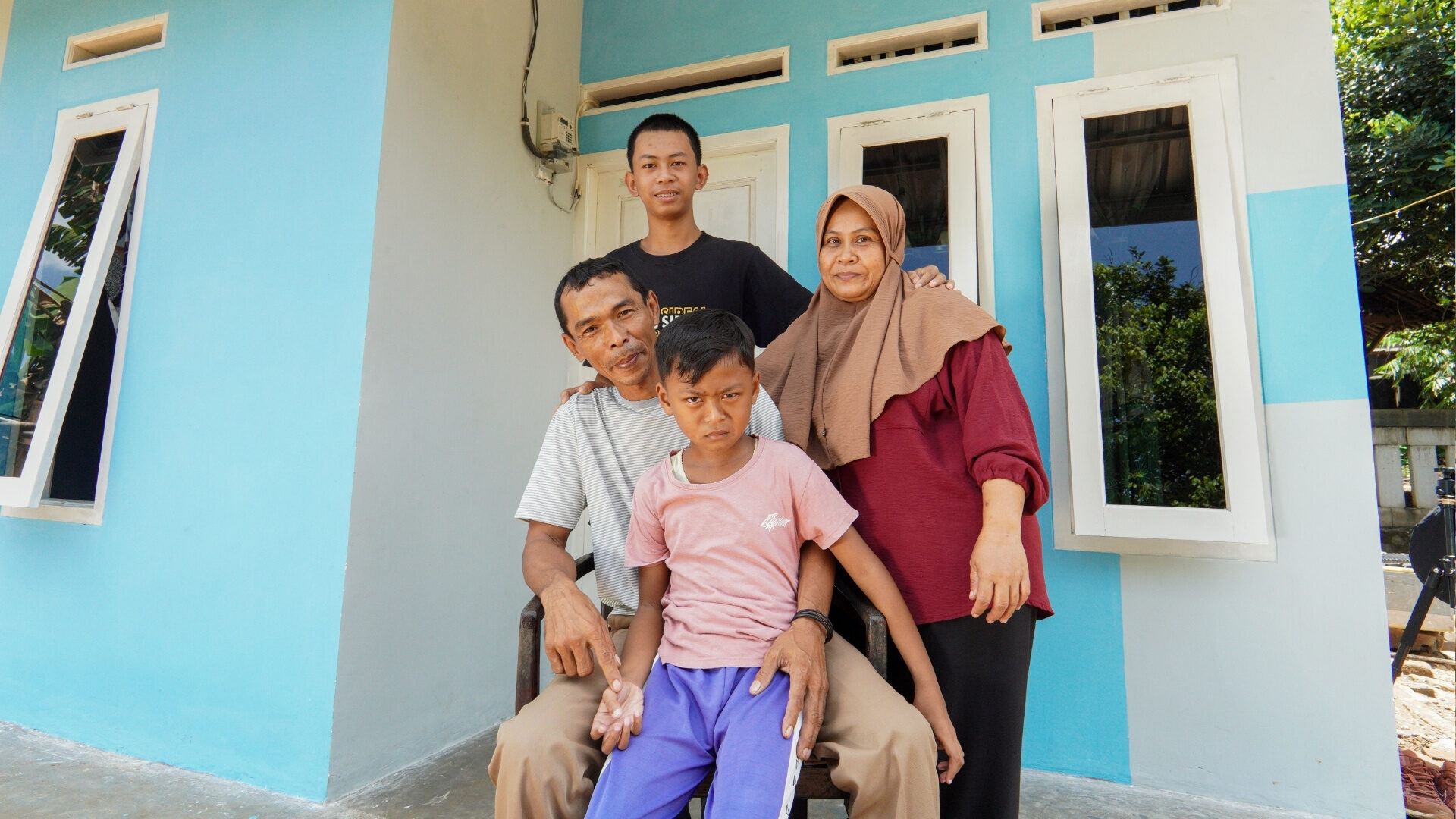
Over time, the once fragile house slowly transformed. The worn, damaged walls were replaced with a sturdy structure. In its place now stands a simple house with bright blue walls—modest, yet deeply meaningful. For Rigo, it is not just a new building, but an answer to the prayers he had long carried.

This change has brought a profound impact on Rigo’s family. A sense of security that once felt out of reach is now part of their everyday life. No more overwhelming worry when it rains, no more fear of the house collapsing.

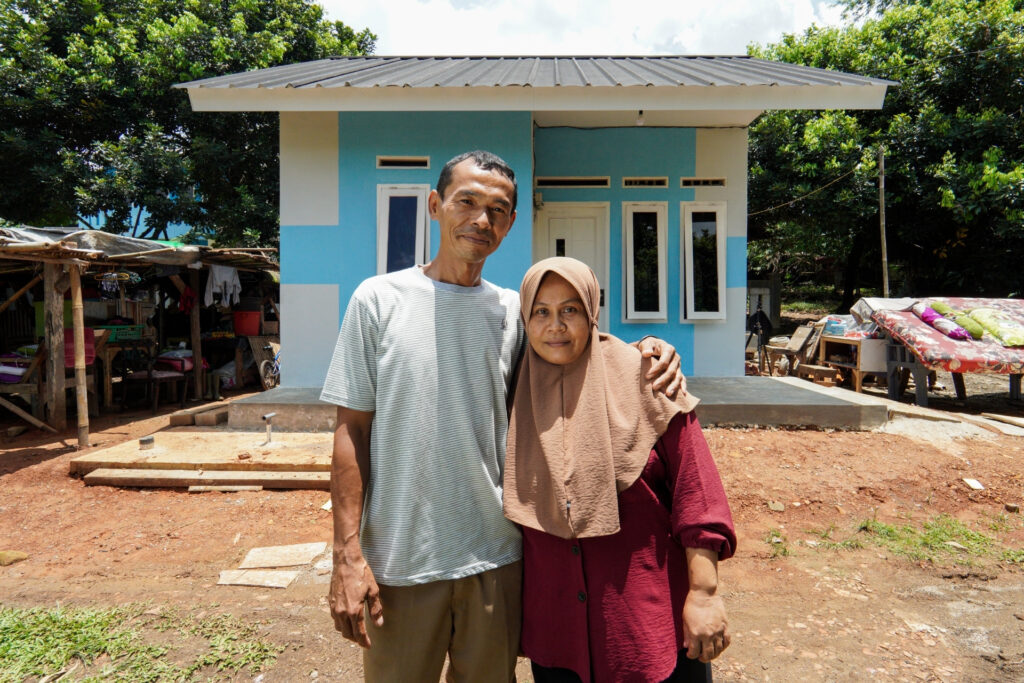
A portrait of Rigo and his wife in front of their now decent home, made possible by the support of donors through Habitat for Humanity Indonesia in Bogor Regency, Indonesia. Photo: HFHI/Kevin Herbian

The change is also felt by his children. Where they once held back out of embarrassment, that feeling has gradually faded. They have become more confident and now even invite their friends over to study together.

Rigo himself feels a significant change within. The burden he once carried has slowly lifted. He is no longer haunted by anxiety every time he leaves home for work. Instead, he moves forward with a calmer mind and renewed spirit.

“Alhamdulillah, now my house is truly livable. I can finally provide the best shelter for my family. It feels like a huge weight has been lifted off my shoulders,” Rigo said. “It feels like a dream… suddenly having a proper home like this,” he added.

For him, this house is more than just a place to live. It is a symbol of hope fulfilled—a reminder that even in the midst of limitations, a better life is always possible.

Now, every corner of the house holds a story of struggle and gratitude. And for Rigo, that simple happiness feels complete—because at last, he can provide a safe and decent home for the family he loves.

Writer: Kevin Herbian

(kh/av)
HFHI
Stories of Change

From Running Out of the House to Feeling Safe Inside: Siti’s Story

Tangerang, April 17, 2026 – There was a time when rain was not something to look forward to, but something to fear. For Siti, every strong wind and heavy downpour was a signal that she and her family had to prepare to leave their home—not to seek shelter, but to escape danger.

Siti, 40, is a homemaker living in Rajeg, Tangerang Regency, with her husband and three children. Her husband works as a scrap goods trader in Jakarta, with an unstable income. In a week, he can only bring home around IDR 200,000 to cover the family’s needs, from school expenses to daily meals.

The house they live in is far from decent. Its walls are made of layers of corrugated metal sheets, plywood, and tarpaulin supported by bamboo panels. Many of the roof tiles are broken, and the floor is still made of soil. The house does not even have its own bathroom or toilet.

“Our old house, if you say it was not livable, then yes—it really wasn’t,” Siti said. “When it rained, the whole family experienced leaks. When there were heavy winds, instead of taking shelter inside, we had to run outside because we were afraid the house would collapse.”

The lack of basic facilities made daily life full of limitations. For simple needs such as bathing, using the toilet, and cooking, Siti had to rely on her parents’ or relatives’ homes. “If I needed to use the toilet, I had to borrow one. If I wanted to bathe, I had to borrow one. Even for cooking, I had to ask for water,” she explained.

A portrait of Siti’s family in front of their inadequate home in Rajeg, Tangerang Regency, Indonesia. Photo: HFHI/Indah Mai

In such constrained conditions, Siti also had to face the harsh reality that her family’s food needs were not always met. There were days when they could eat in the morning but not in the evening, or vice versa. This situation inevitably affected her children’s growth, as they struggled to have a proper space to play and study.

“Our lives were very hand-to-mouth. We only had enough for daily meals. My husband’s work meant he sometimes came home once a week or every two weeks, depending on whether he had money to bring back,” Siti said.

Life became even more difficult when her husband fell ill. Without income, Siti had to face an uncertain situation while her children’s needs continued.

“Before this house was built, my husband once fell sick and couldn’t work, while the children still needed money for school. I was confused and cried, not knowing what to do. There was no income at all, and on top of that, the house was not livable,” she recalled.

In that situation, Siti could only rely on help from her parents and relatives. She often felt ashamed, and eventually decided to work as a domestic helper in her neighborhood to ensure her children could still eat.

Amid all these limitations, Siti could only endure and surrender. “Because of these limitations, I could only adapt to the condition of the house and put my trust in God,” she said.

Then, hope finally arrived. With the support of donors, Habitat for Humanity Indonesia rebuilt Siti’s house into a decent home. Today, her house has been completely transformed. Sturdy cream-colored walls now stand firmly, a strong roof protects against heat and rain, and proper bathroom and toilet facilities are now available inside the house.

“Alhamdulillah, my house is now livable. When it rains, I no longer experience leaks, and I don’t have to run out of the house to my relatives’ home anymore,” Siti said with gratitude.

A portrait of Siti’s family in front of their now decent home, made possible by the support of donors through Habitat for Humanity Indonesia in Rajeg, Tangerang Regency, Indonesia. Photo: HFHI/Kevin Herbian

Read also: Women Behind the Construction of Decent Homes

This transformation has brought significant changes to her family’s life. Siti now feels more confident and no longer ashamed. “Now I am more grateful. I finally have a home like my neighbors. Especially now that I have my own bathroom and room, I no longer feel embarrassed about having to rely on other people’s houses,” she said.

Siti’s children now also have their own space to rest and study. Where they once had to sleep in the kitchen area, they now have bedrooms that provide comfort and privacy. “Now it’s different—my children have their own rooms to sleep in, no longer mixed together,” Siti explained.

In addition, the improved housing conditions also support the family’s health. A cleaner environment, proper sanitation, and a safer building structure provide a sense of security they had never experienced before.

With these changes, Siti looks toward the future with renewed hope. “I hope this new house can bring new fortune to my family, and that the difficult times we experienced before will not happen again,” she said.

Siti is one of millions of families in Indonesia who have moved beyond the hardship of inadequate housing. Behind every home that stands, there is a story of resilience, hope, and dreams gradually coming true. “A home means everything to me,” she concluded.

Let’s work together to help more families like Siti’s have safe and decent homes. Visit the following link and be part of real change for those in need.

Writer: Kevin Herbian

(kh/av)