Habitat Updates
East Nusa Tenggara, August 28, 2026 – The morning of August 15, 2026, was supposed to be an ordinary day for Abdul Rajak and his family. But within minutes, an earthquake shook Flores and changed the way they viewed the home that had always been their shelter. Although their house was still standing, the sense of security inside it had yet to fully return.
Abdul, a resident of Sambi Rampas Subdistrict, East Manggarai Regency, East Nusa Tenggara, still remembers that morning clearly. At around 6:00 a.m., after briefly going back to sleep following the dawn prayer, he felt the shaking grow stronger. From Congkar Subdistrict, where he was staying at the time, he immediately tried to make sure that his wife and children, who were at home, were safe.
Not long afterward, the news he had been waiting for arrived. His wife, niece, and two daughters had managed to evacuate and were staying at an evacuation site with other residents. His children had cried and were frightened, but they managed to get out of the house safely.
For Abdul, the safety of his family was the first thing he was grateful for. But when he returned to see the condition of his house and the surrounding area, he realized that the earthquake had caused considerable damage.
His storage building was completely destroyed. The kiosk at the front of the house had cracks in its upper section, while several other parts were also damaged. The fence of a nearby prayer room had also collapsed. Fortunately, the main house and several other facilities remained usable.
After the earthquake, Abdul and his family chose to spend the nights in a tent set up outside their house. With aftershocks still occurring, they were not yet confident enough to sleep inside the building. Support from neighbors in the form of blankets, clothing, mattresses, and other necessities also helped the family get through the first few nights after the disaster.
For Abdul’s family, however, the biggest challenge was not simply finding a place to sleep. The fear also remained, especially for his youngest child. Although their house had not suffered severe damage, his youngest child was still traumatized and was not yet ready to sleep inside the house. Every morning, the family returned home to clean, prepare food, and carry out their daily activities. When night came, they returned to a place they considered safer.
The days after the earthquake began to unfold differently. Daily activities gradually resumed, but there was always a sense of alertness in case another tremor occurred.
Amid this situation, Abdul did not want his family to remain trapped in fear. He decided to take a simple step that he could manage on his own. Using available wood, he began building a small gazebo beside the house to serve as a temporary resting place for his family.
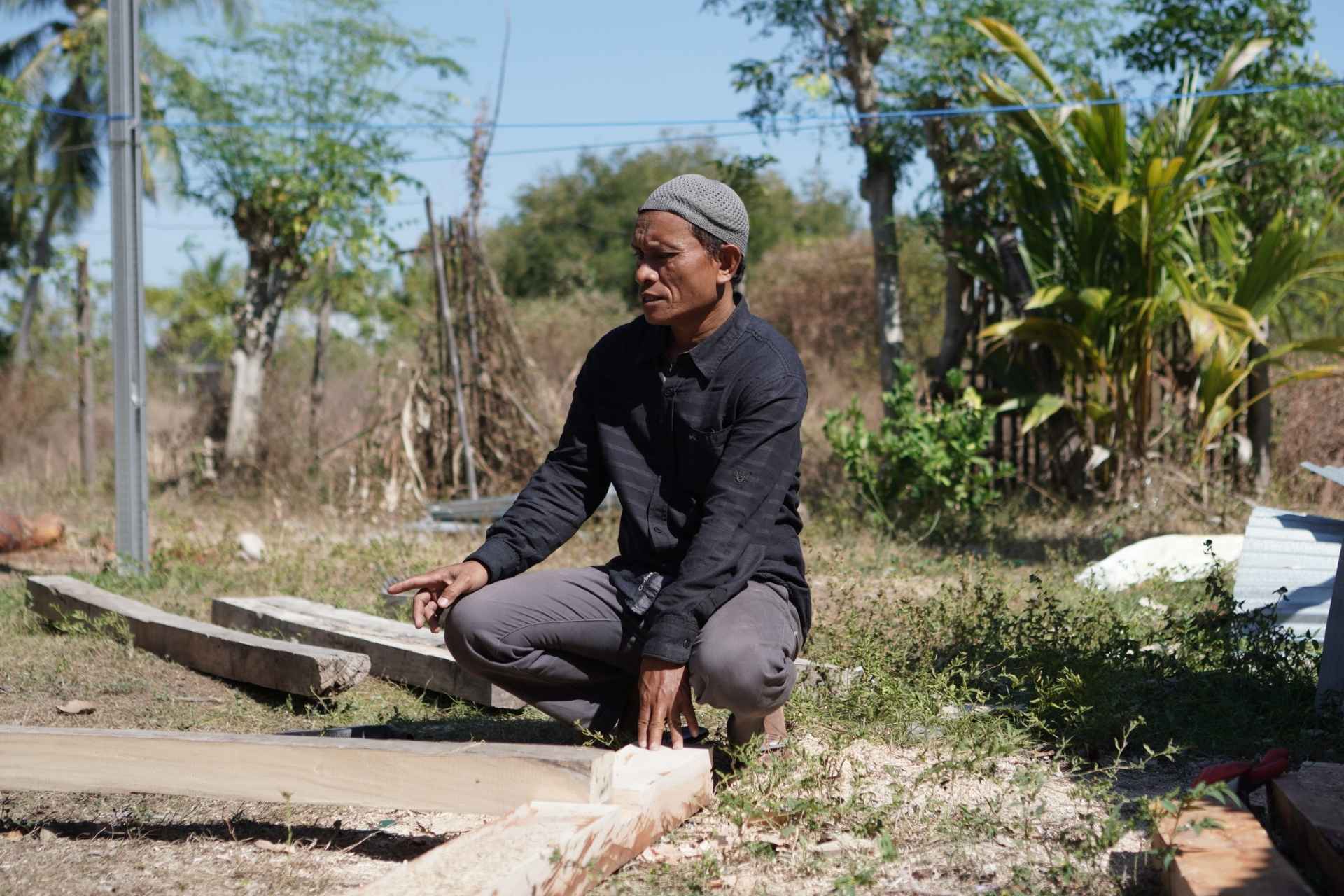
Abdul builds a gazebo beside his house to serve as temporary shelter following the Flores earthquake in East Manggarai Regency, East Nusa Tenggara, Indonesia. Photo: HFHI/Kevin Herbian
For Abdul, building this simple shelter was not merely about providing a place to sleep. It was also about nurturing hope within his family amid the difficult circumstances. “We cannot remain consumed by this disaster. As long as there is something we can do, we have to keep trying. I need to show my children and family that we can get through this, so they can also feel stronger and more at ease.”
That determination became Abdul’s way of facing a situation he had never imagined before. He realized that an earthquake was beyond his control, but how he responded afterward was still a choice.
In his view, a family needs someone who can remain strong when circumstances are uncertain. Not because the fear simply disappears, but because life must go on. “We have to accept that this is a disaster that happened beyond our control. But we also have to get back up and keep trying. Whatever we can still do, we should do it. I want my children and family to see that we still have hope.”
That hope became even more important because, for Abdul, home was never merely a building. Before the earthquake, it was where his family gathered, rested, talked, and lived their daily lives. After the earthquake, that meaning felt even deeper.
Home became the place they longed to return to, while at the same time, it was a place they temporarily had to stay away from because of fear. “For me, home is where the family gathers and protects one another. It is where we communicate, rest, and find shelter from the heat, rain, and unexpected circumstances,” he said.
That is why, for Abdul, having a safe home is about more than having a roof and walls. A home is an essential part of a family’s sense of security. When that place of shelter is disrupted, the family’s life is disrupted as well.
Today, although his house is still standing, Abdul has chosen not to simply wait for things to return to normal on their own. He cleans the house, builds a temporary shelter, and resumes daily activities as much as he can. Little by little, he is working to restore the sense of normalcy that was lost.
However, recovery after a disaster does not end when the earthquake subsides. For many families in Flores, regaining access to a safe and decent home remains an important part of their journey toward recovery.
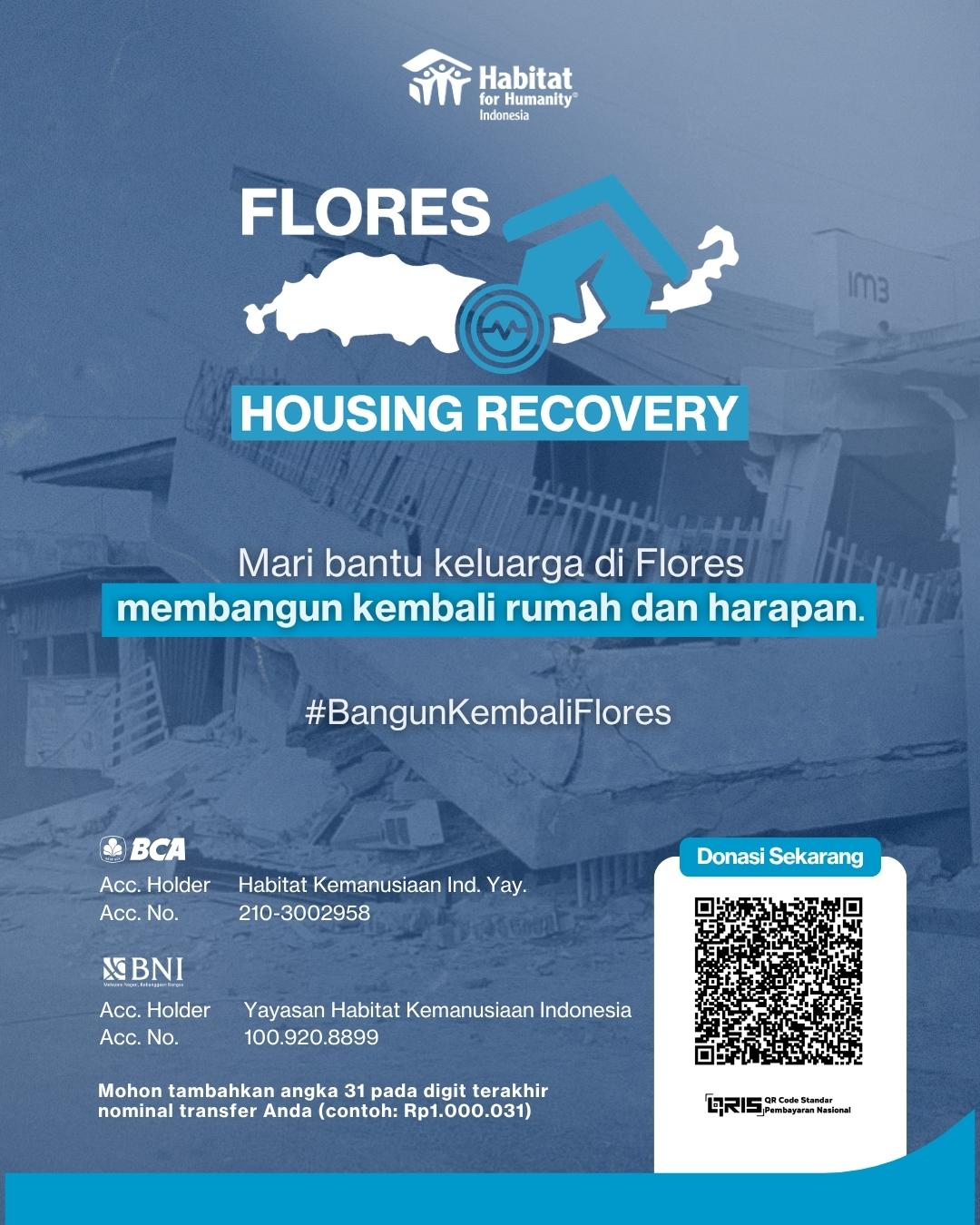
Let us come together to help families affected by the Flores earthquake regain safe and decent homes. Your support can be part of their journey to rise again and rebuild their lives after the disaster. Donations can be made through:
Writer: Kevin Herbian
Graphic: Tias Ester Widhari
(kh/av)