Category: Stories of Change

HFHI (3)
Stories of Change

From Worry to Gratitude: Pak Rigo’s Journey to Owning a Decent Home

Morning and night no longer feel the same for Rigo Suhendra. Behind his simple daily life, one question used to constantly linger in his mind: would his house still be standing when the next rain came?

Bogor, May 5, 2026 – Rigo, 47, is a day laborer who depends on any work he can find. Some days he works as a construction worker, on others he becomes a driver, or takes on whatever jobs come his way—without any certainty. His income is just as unpredictable. On some days, he brings home IDR 100,000, on others IDR 50,000, and sometimes nothing at all. Together with his wife, Laya (46), a homemaker, they strive to meet the needs of their two school-aged children.

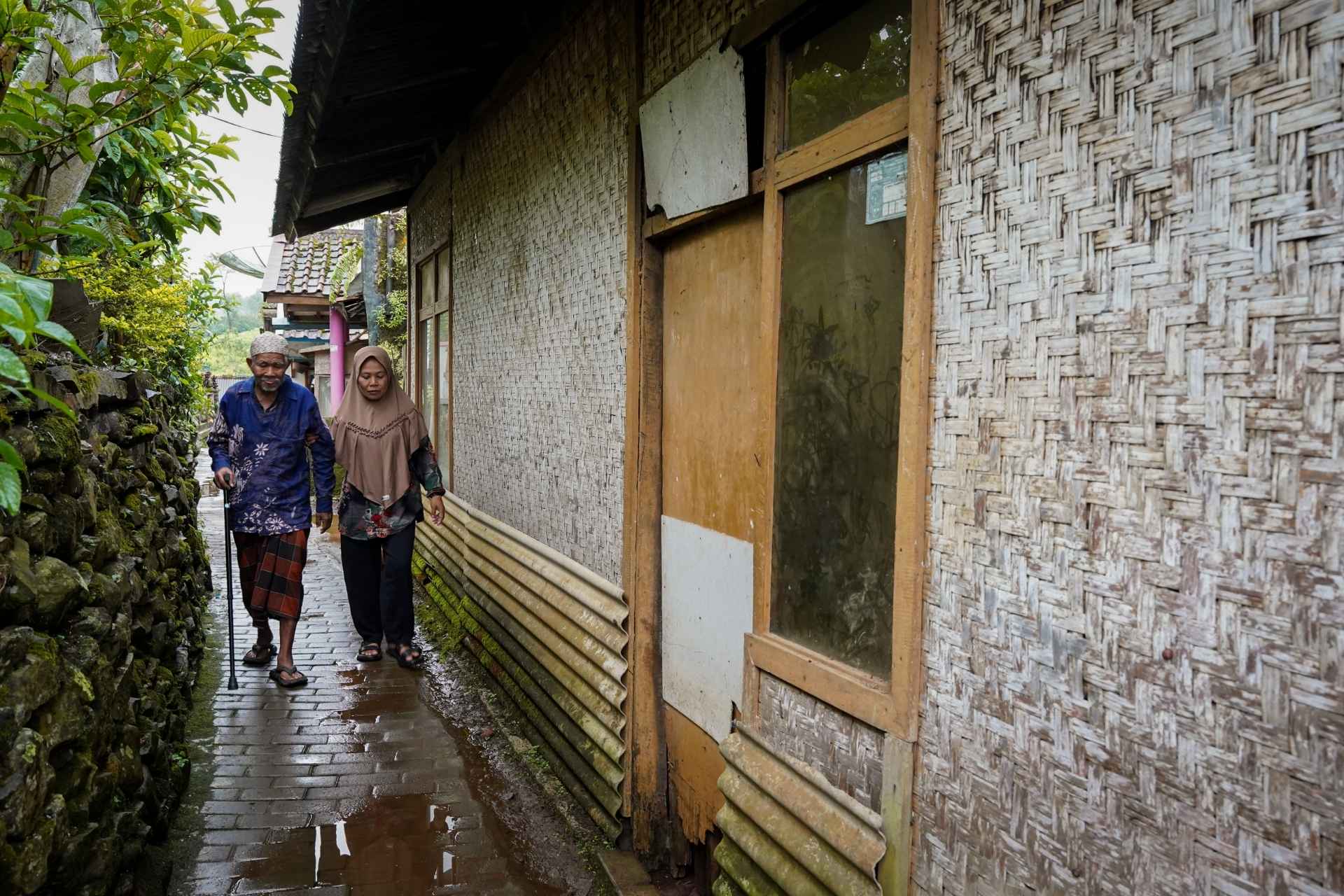
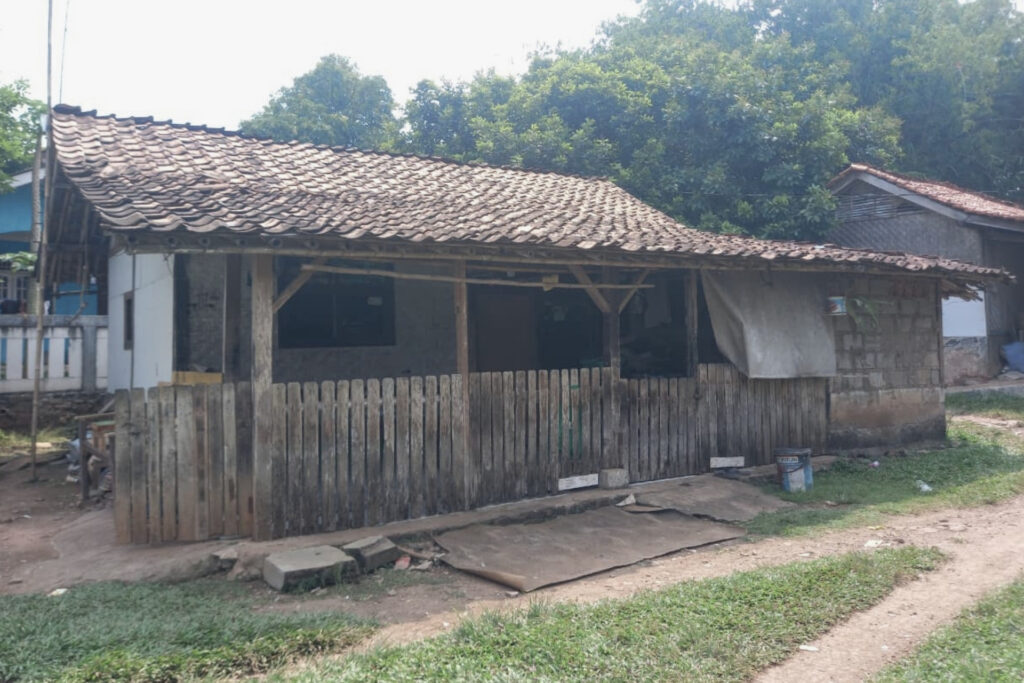
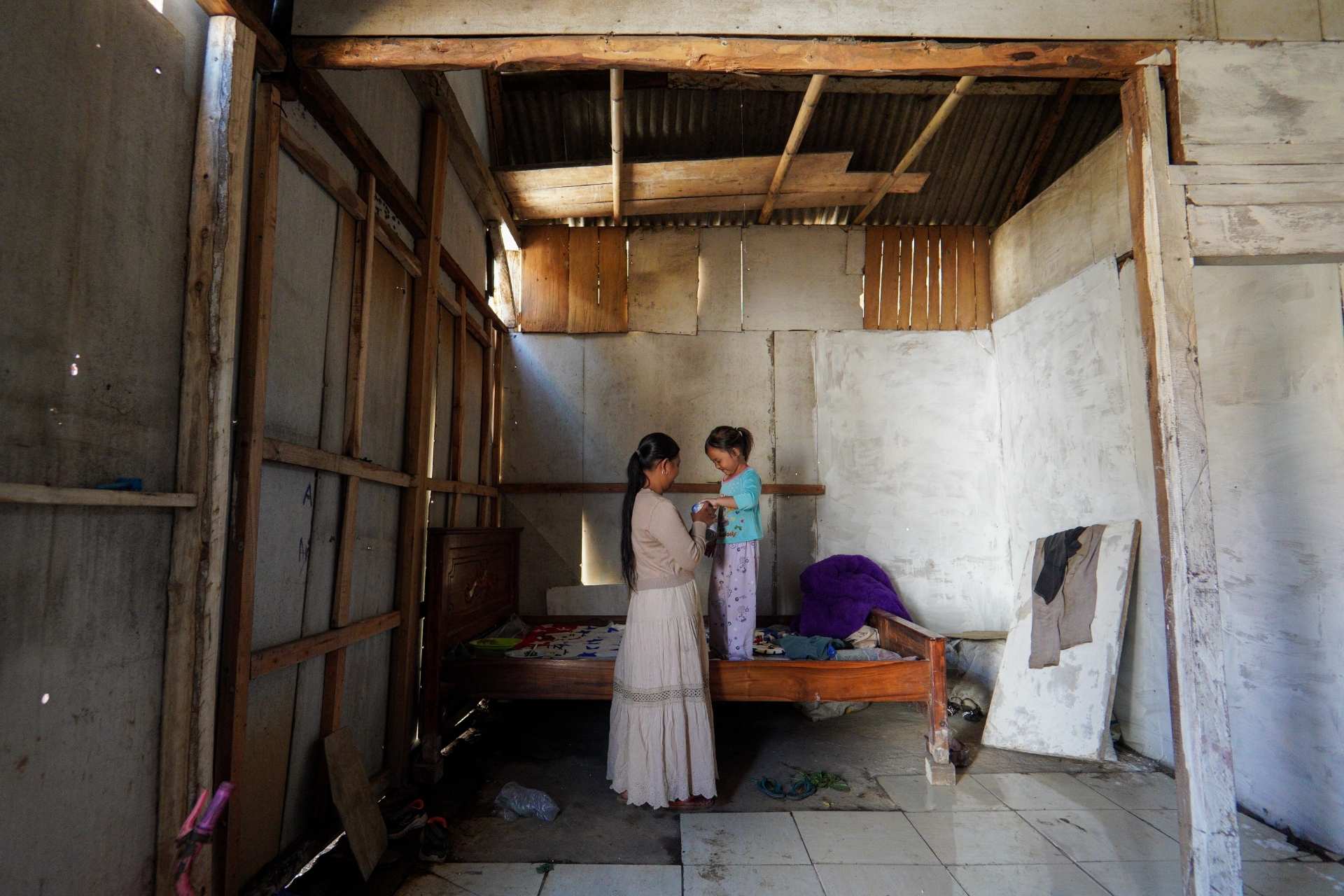
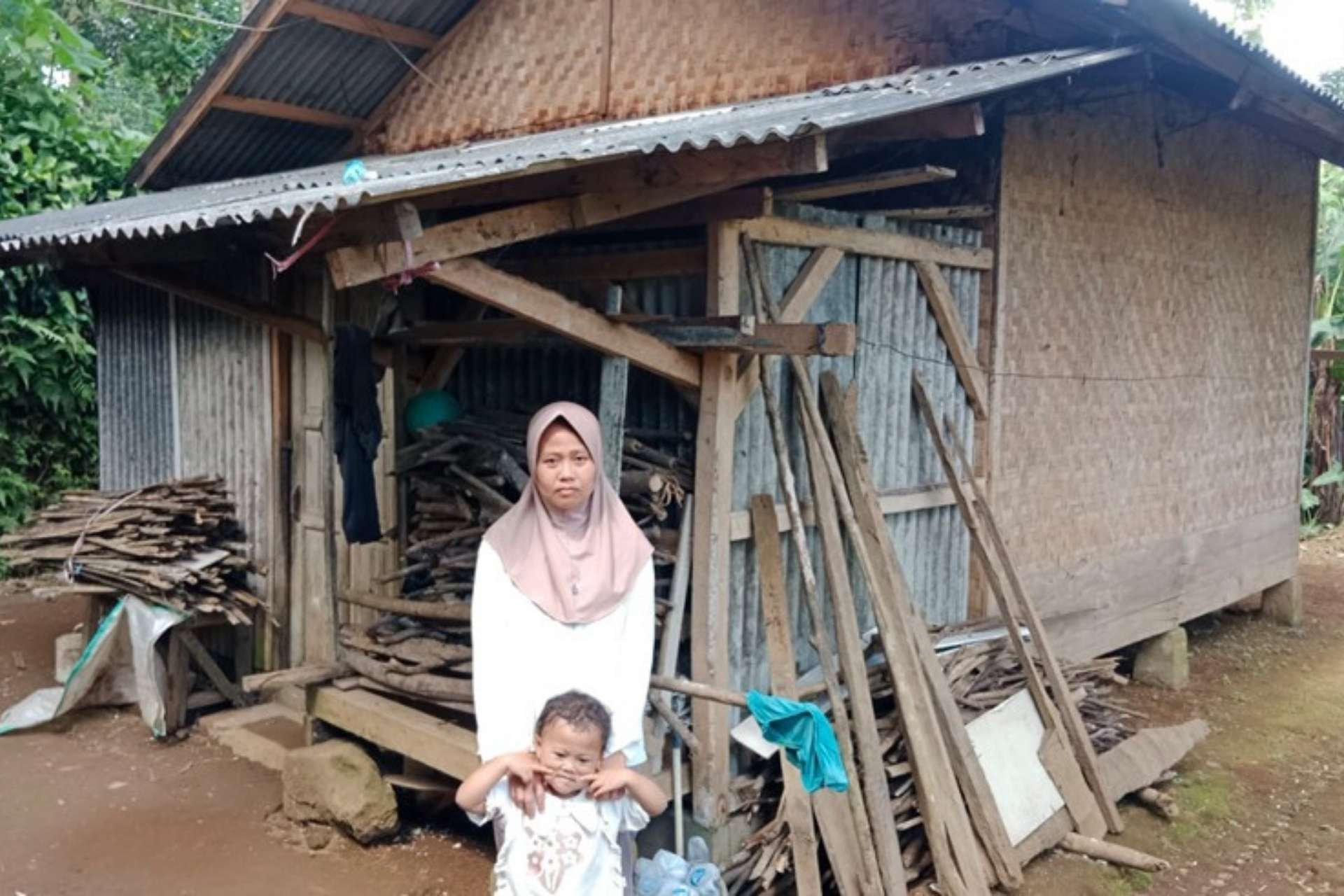
Amid these limitations, the small family had to live in a house inherited from Rigo’s parents. A house that should have been a place of shelter could not fully provide a sense of security. Its walls were made of weathered bamboo panels, patched with pieces of plywood and GRC boards. From the outside, the house looked fragile. From the inside, worry was always present.

For Rigo, comfort was no longer a matter of choice, but acceptance. He tried to make peace with his situation, convincing himself to live with what he had. Yet deep down, he held onto a simple wish that felt out of reach.

“Who wouldn’t want a good house? But this is all we can afford—what else can we do?” Rigo said.

Every time heavy rain fell, that fragile sense of calm would disappear instantly. Water seeped through the roof and cracked walls, soaking the floors and making it difficult for the family to rest properly. Many nights were spent in unease.

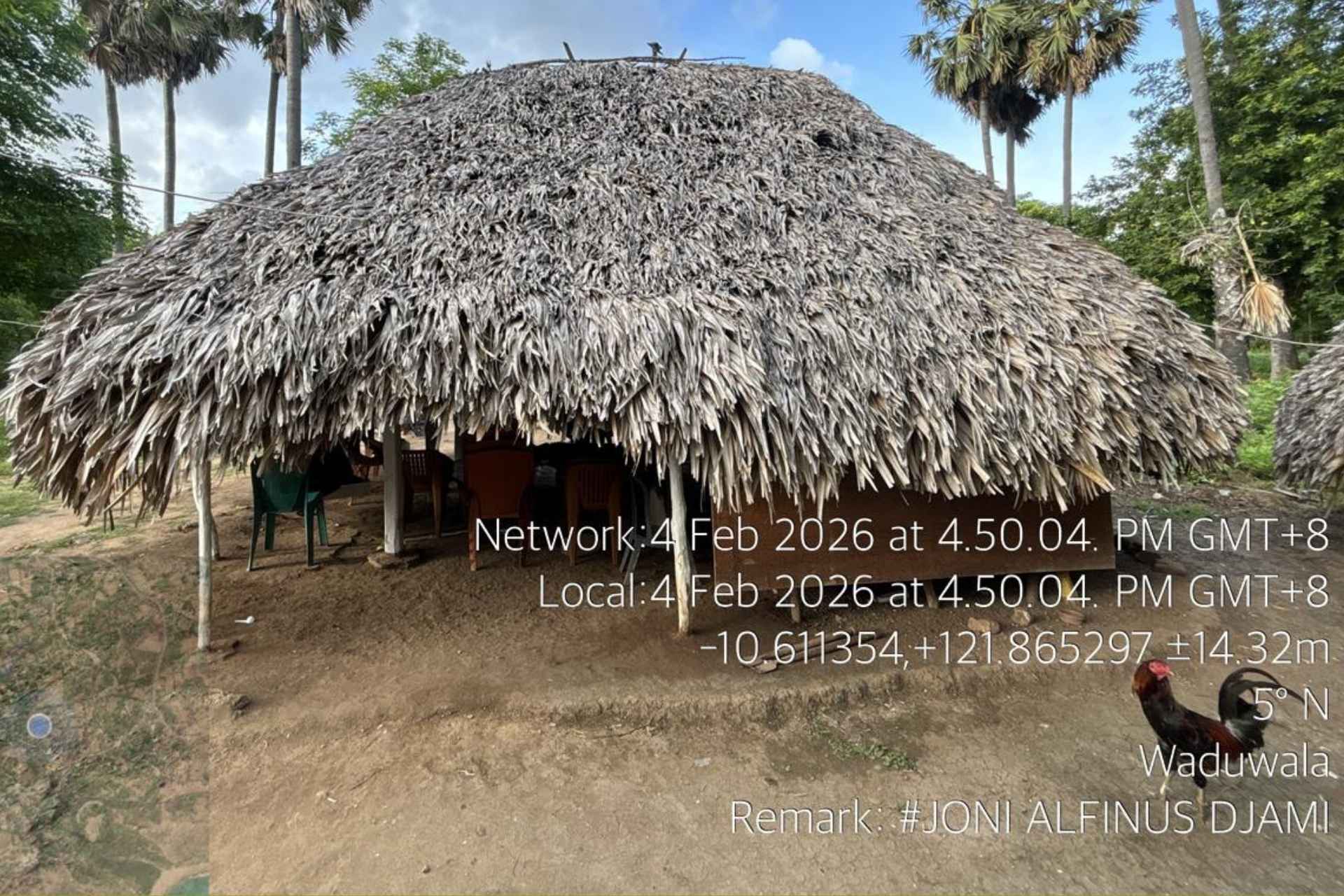
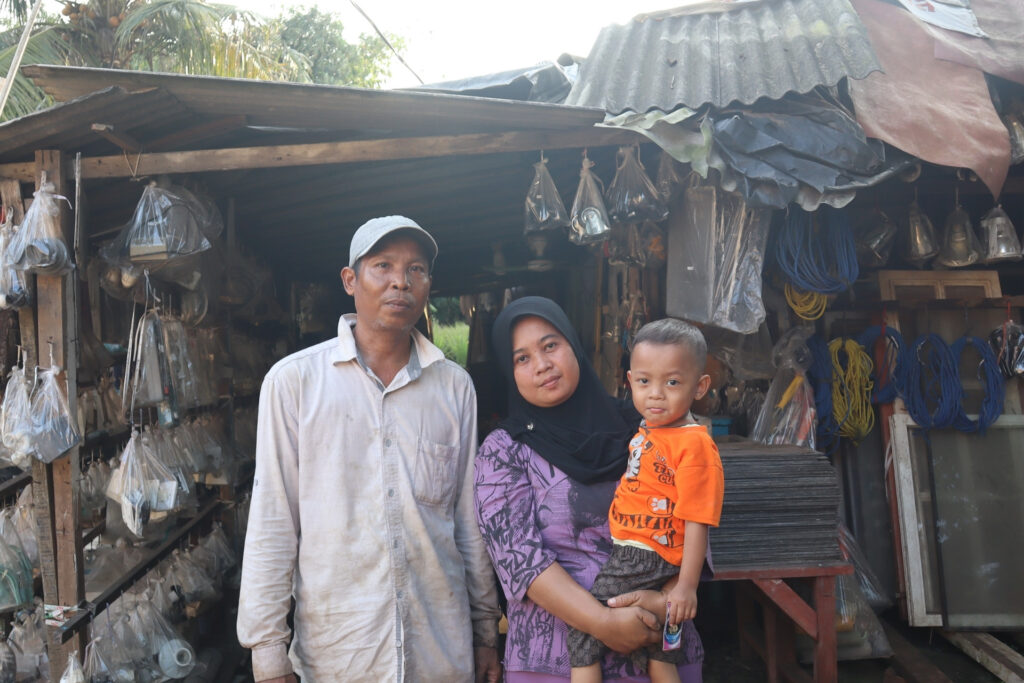
The condition of Rigo’s house before receiving support for the construction of a decent home from donors through Habitat for Humanity Indonesia in Bogor Regency, Indonesia. Photo: HFHI/Ari Darmawan

In moments like these, it was not just discomfort that arose, but fear. Rigo often worried that his house might collapse under strong winds. Thoughts about his family’s safety haunted him, while his ability to repair the house remained very limited. He could only set aside small portions of his daily income to patch damaged parts of the house, even though he knew it would never be enough.

Despite everything, he held onto a simple dream: to have a decent home for his family—a place that could truly protect them, not just barely shelter them. But for Rigo, that dream felt far beyond reach. With his limited financial situation, all he could do was try his best and hold on to hope.

The condition of the house also affected his children. Rigo realized that his son often felt embarrassed to invite friends over. A space that should have been a place to learn and grow together had instead become a source of insecurity.

Read also: From Running Out of the House to Feeling Safe Inside: Siti’s Story

Until one day, hope arrived in a way he had never imagined before. With support from generous donors, Habitat for Humanity Indonesia selected Rigo’s home in Wanaherang Village, Gunung Putri District, Bogor Regency, as one of the beneficiaries of a decent housing assistance program.

The news brought mixed emotions. On one hand, there was immense happiness and gratitude. On the other, a new concern arose—whether he would have to bear costs he could not afford. That concern was soon eased when he learned that the program required no financial contribution, but rather participation through sweat equity.

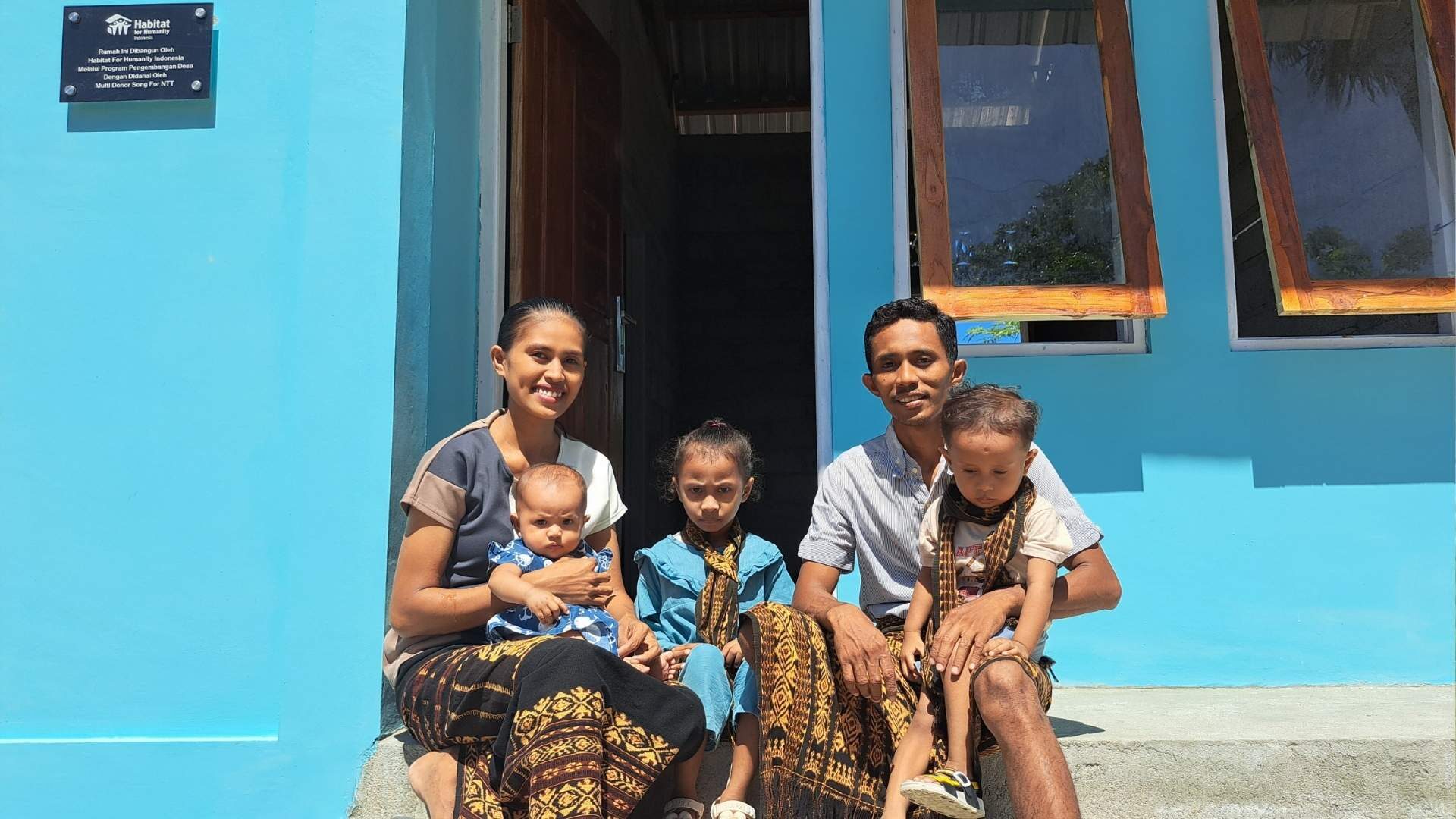
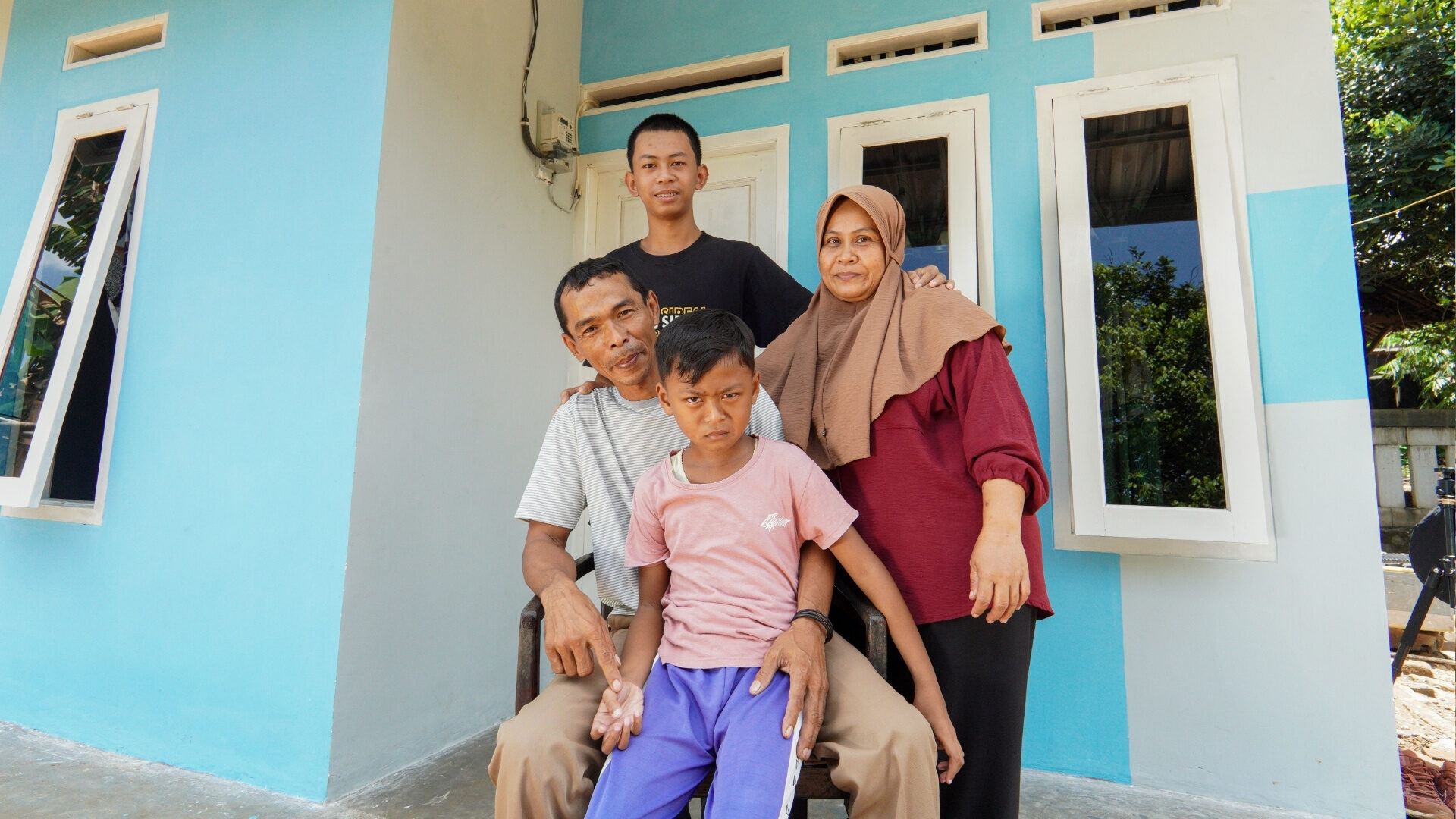
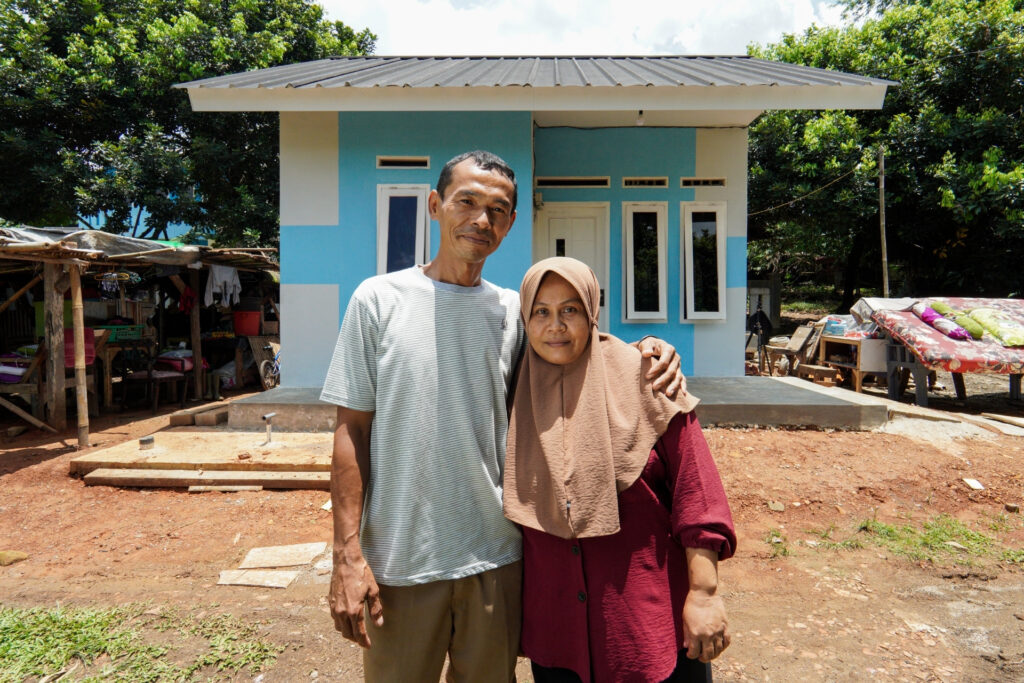
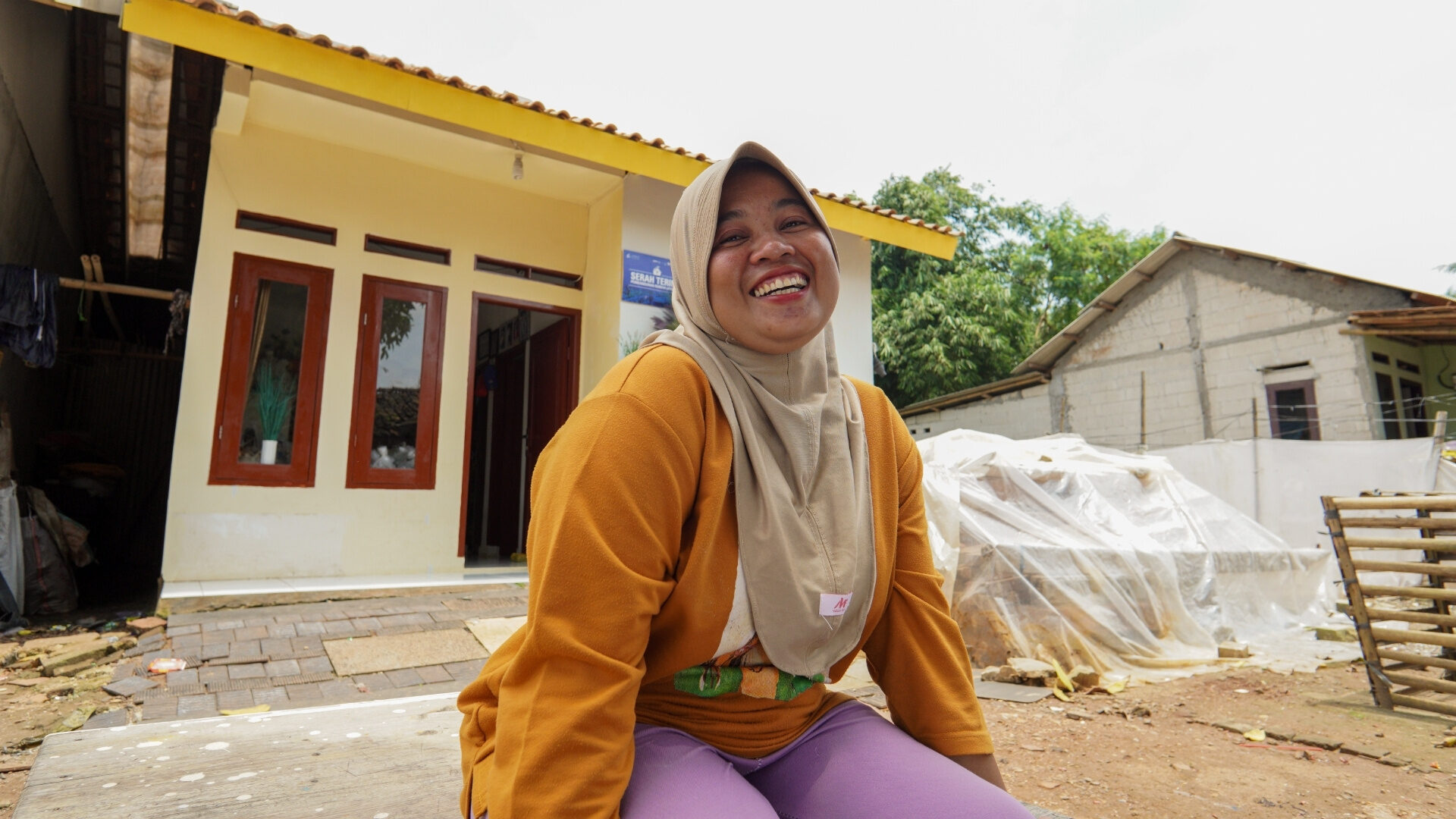
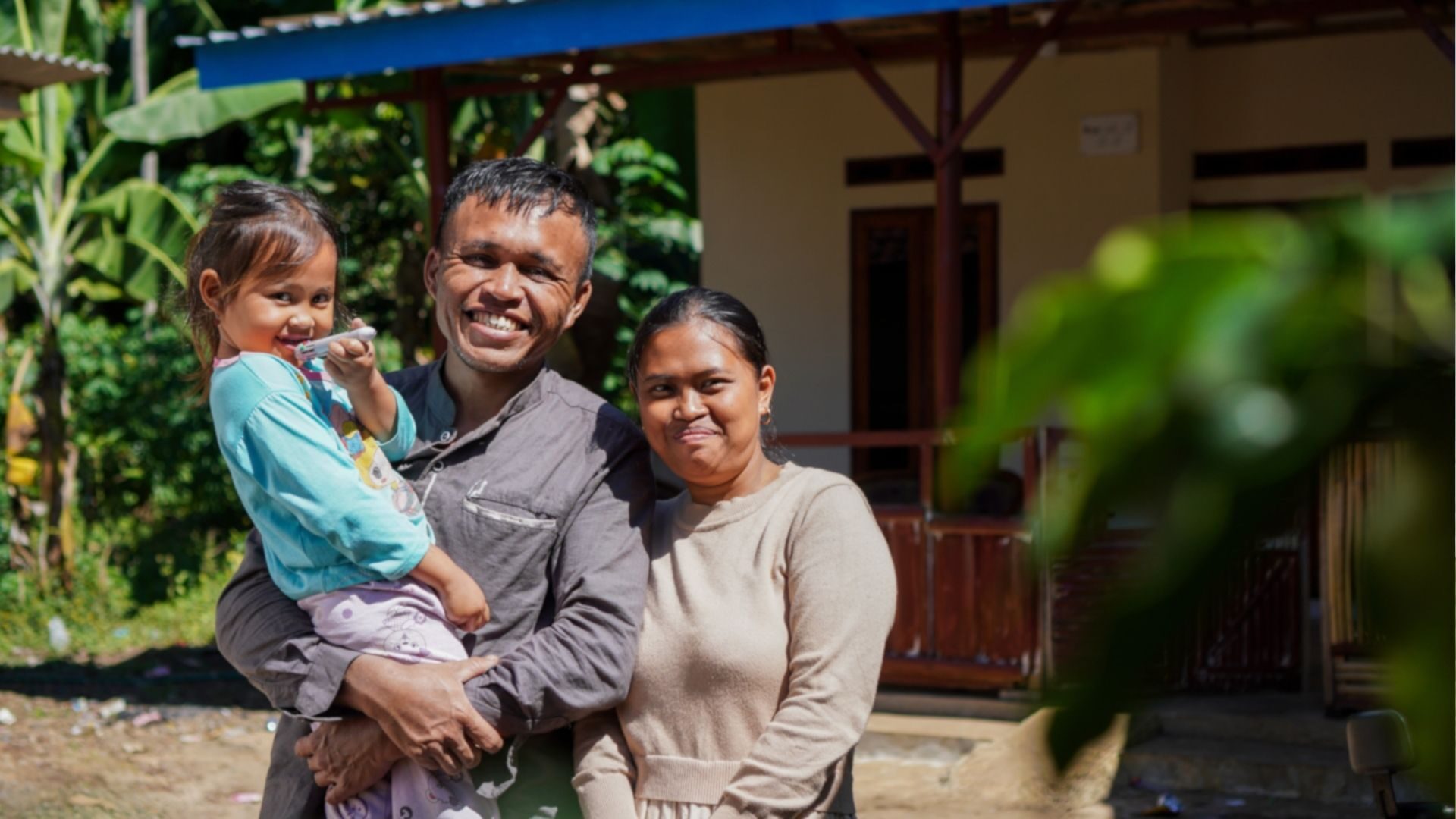
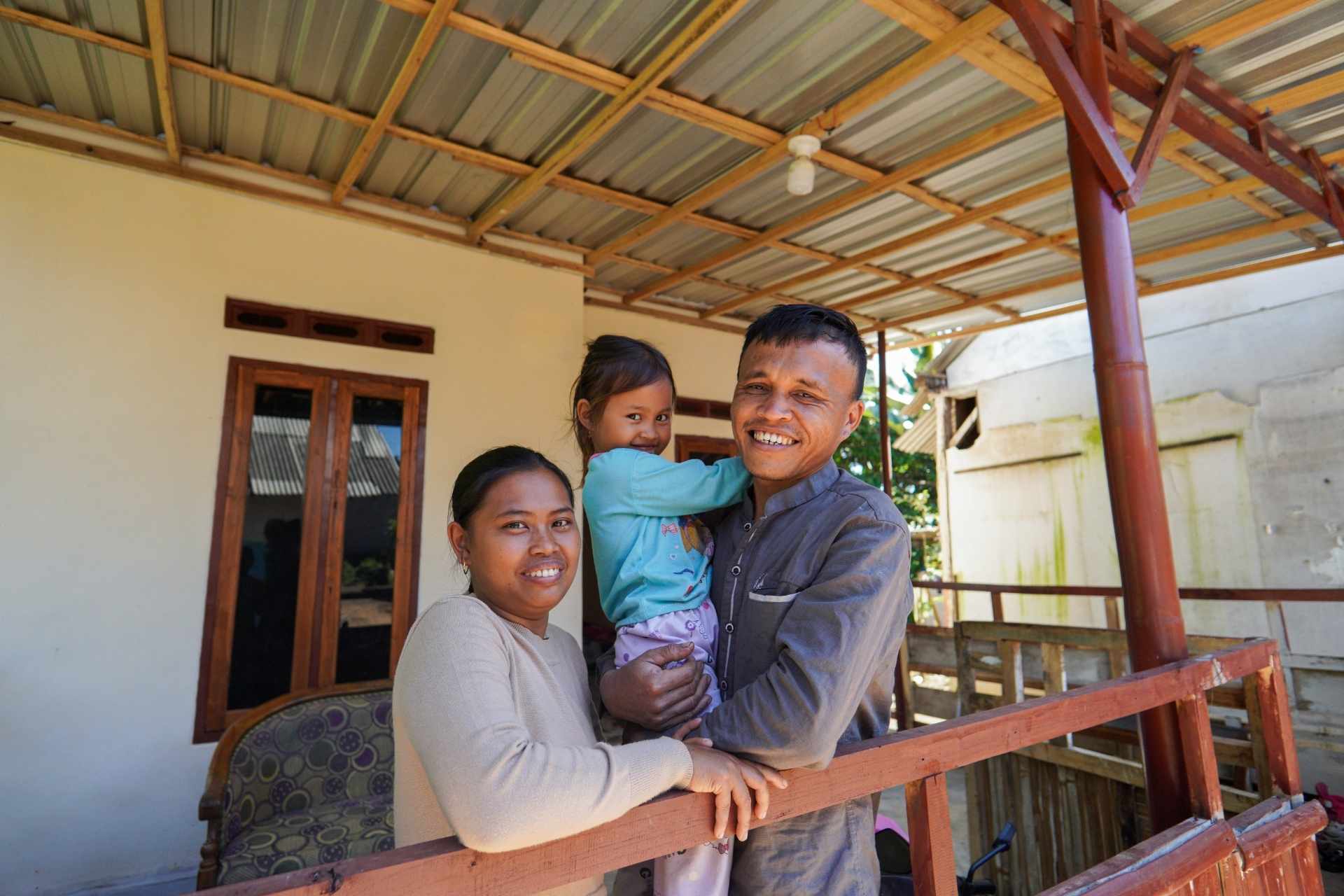
Over time, the once fragile house slowly transformed. The worn, damaged walls were replaced with a sturdy structure. In its place now stands a simple house with bright blue walls—modest, yet deeply meaningful. For Rigo, it is not just a new building, but an answer to the prayers he had long carried.

This change has brought a profound impact on Rigo’s family. A sense of security that once felt out of reach is now part of their everyday life. No more overwhelming worry when it rains, no more fear of the house collapsing.

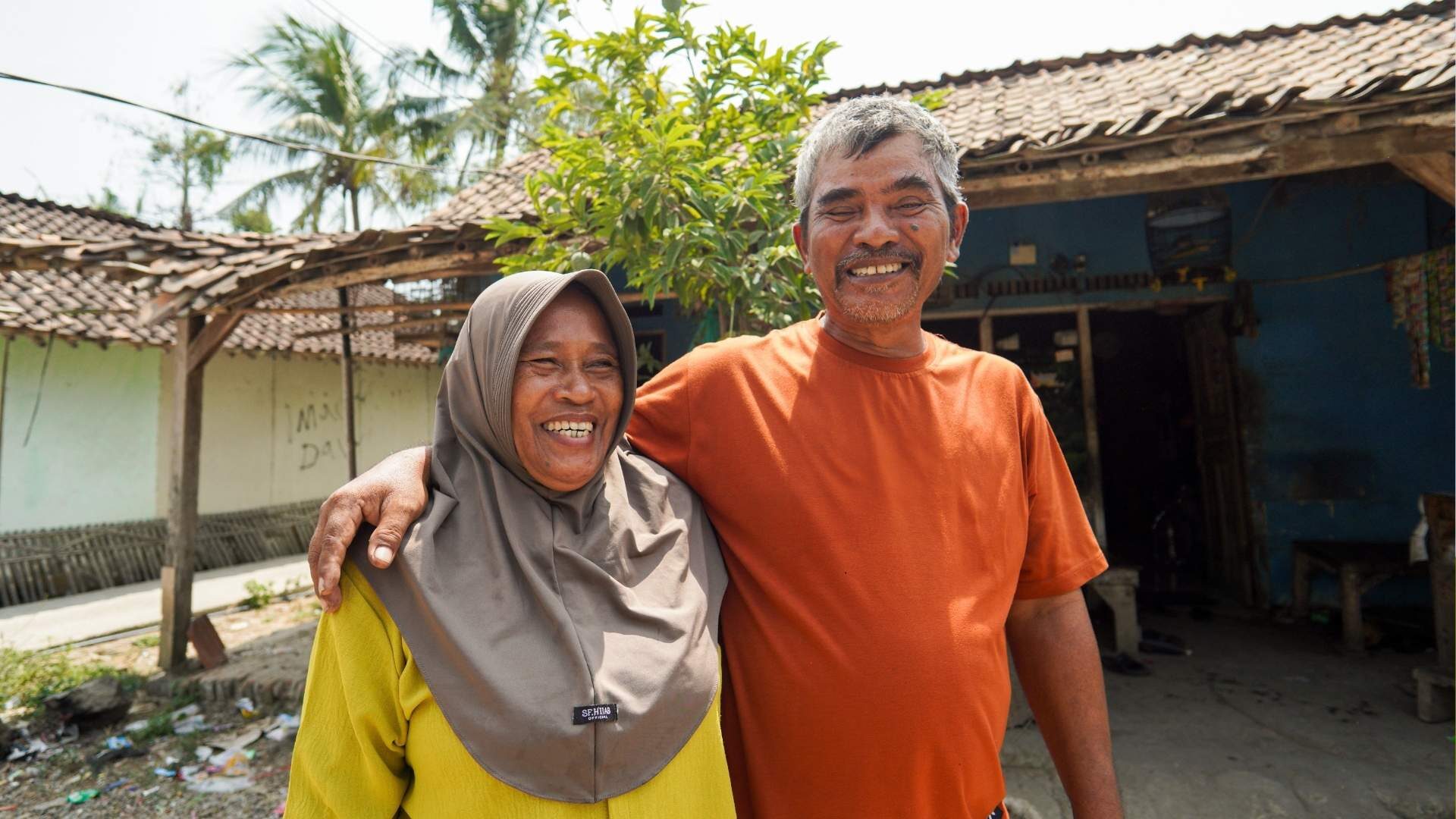
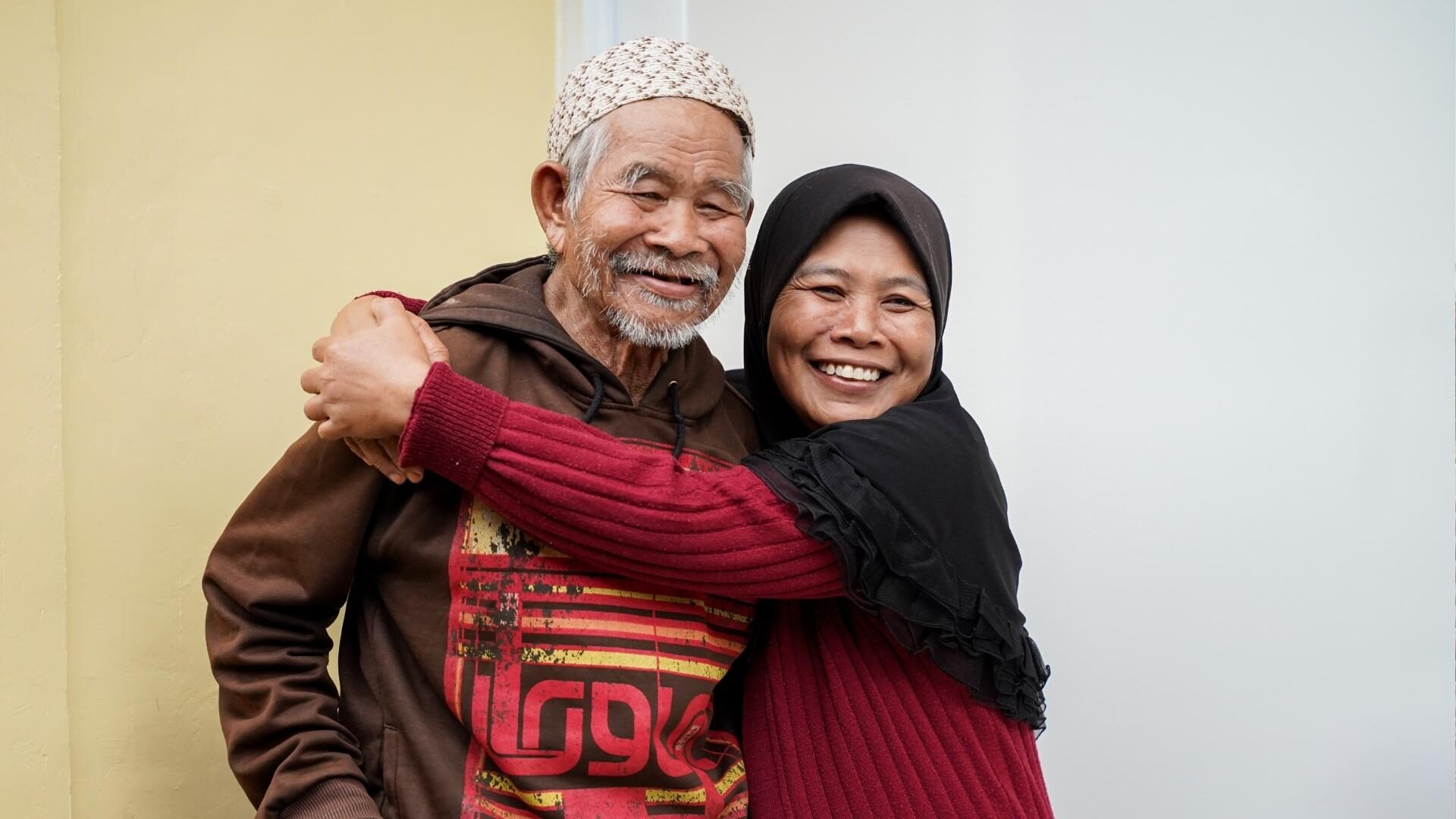
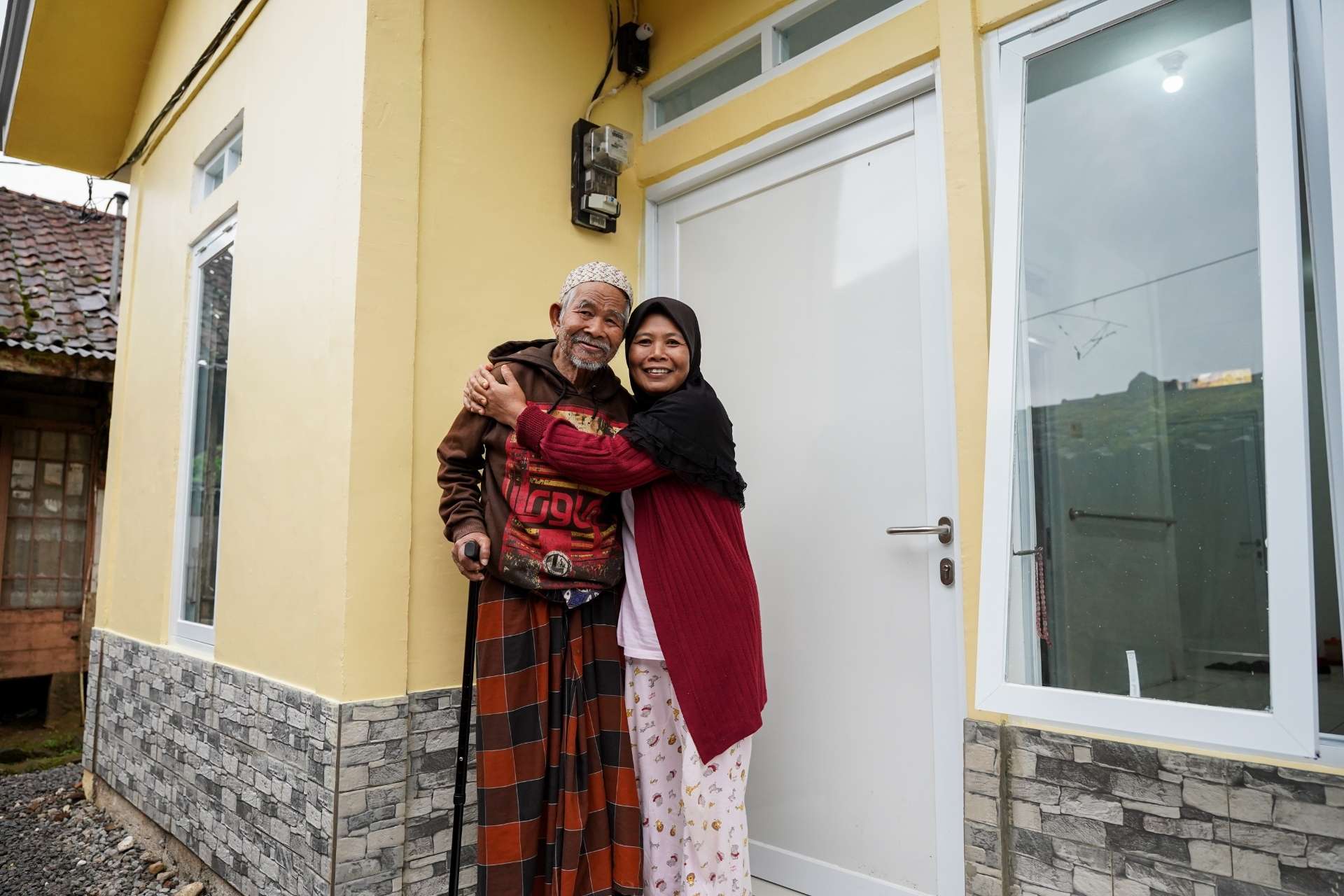
A portrait of Rigo and his wife in front of their now decent home, made possible by the support of donors through Habitat for Humanity Indonesia in Bogor Regency, Indonesia. Photo: HFHI/Kevin Herbian

The change is also felt by his children. Where they once held back out of embarrassment, that feeling has gradually faded. They have become more confident and now even invite their friends over to study together.

Rigo himself feels a significant change within. The burden he once carried has slowly lifted. He is no longer haunted by anxiety every time he leaves home for work. Instead, he moves forward with a calmer mind and renewed spirit.

“Alhamdulillah, now my house is truly livable. I can finally provide the best shelter for my family. It feels like a huge weight has been lifted off my shoulders,” Rigo said. “It feels like a dream… suddenly having a proper home like this,” he added.

For him, this house is more than just a place to live. It is a symbol of hope fulfilled—a reminder that even in the midst of limitations, a better life is always possible.

Now, every corner of the house holds a story of struggle and gratitude. And for Rigo, that simple happiness feels complete—because at last, he can provide a safe and decent home for the family he loves.

Writer: Kevin Herbian

(kh/av)
HFHI
Stories of Change

From Running Out of the House to Feeling Safe Inside: Siti’s Story

Tangerang, April 17, 2026 – There was a time when rain was not something to look forward to, but something to fear. For Siti, every strong wind and heavy downpour was a signal that she and her family had to prepare to leave their home—not to seek shelter, but to escape danger.

Siti, 40, is a homemaker living in Rajeg, Tangerang Regency, with her husband and three children. Her husband works as a scrap goods trader in Jakarta, with an unstable income. In a week, he can only bring home around IDR 200,000 to cover the family’s needs, from school expenses to daily meals.

The house they live in is far from decent. Its walls are made of layers of corrugated metal sheets, plywood, and tarpaulin supported by bamboo panels. Many of the roof tiles are broken, and the floor is still made of soil. The house does not even have its own bathroom or toilet.

“Our old house, if you say it was not livable, then yes—it really wasn’t,” Siti said. “When it rained, the whole family experienced leaks. When there were heavy winds, instead of taking shelter inside, we had to run outside because we were afraid the house would collapse.”

The lack of basic facilities made daily life full of limitations. For simple needs such as bathing, using the toilet, and cooking, Siti had to rely on her parents’ or relatives’ homes. “If I needed to use the toilet, I had to borrow one. If I wanted to bathe, I had to borrow one. Even for cooking, I had to ask for water,” she explained.

A portrait of Siti’s family in front of their inadequate home in Rajeg, Tangerang Regency, Indonesia. Photo: HFHI/Indah Mai

In such constrained conditions, Siti also had to face the harsh reality that her family’s food needs were not always met. There were days when they could eat in the morning but not in the evening, or vice versa. This situation inevitably affected her children’s growth, as they struggled to have a proper space to play and study.

“Our lives were very hand-to-mouth. We only had enough for daily meals. My husband’s work meant he sometimes came home once a week or every two weeks, depending on whether he had money to bring back,” Siti said.

Life became even more difficult when her husband fell ill. Without income, Siti had to face an uncertain situation while her children’s needs continued.

“Before this house was built, my husband once fell sick and couldn’t work, while the children still needed money for school. I was confused and cried, not knowing what to do. There was no income at all, and on top of that, the house was not livable,” she recalled.

In that situation, Siti could only rely on help from her parents and relatives. She often felt ashamed, and eventually decided to work as a domestic helper in her neighborhood to ensure her children could still eat.

Amid all these limitations, Siti could only endure and surrender. “Because of these limitations, I could only adapt to the condition of the house and put my trust in God,” she said.

Then, hope finally arrived. With the support of donors, Habitat for Humanity Indonesia rebuilt Siti’s house into a decent home. Today, her house has been completely transformed. Sturdy cream-colored walls now stand firmly, a strong roof protects against heat and rain, and proper bathroom and toilet facilities are now available inside the house.

“Alhamdulillah, my house is now livable. When it rains, I no longer experience leaks, and I don’t have to run out of the house to my relatives’ home anymore,” Siti said with gratitude.

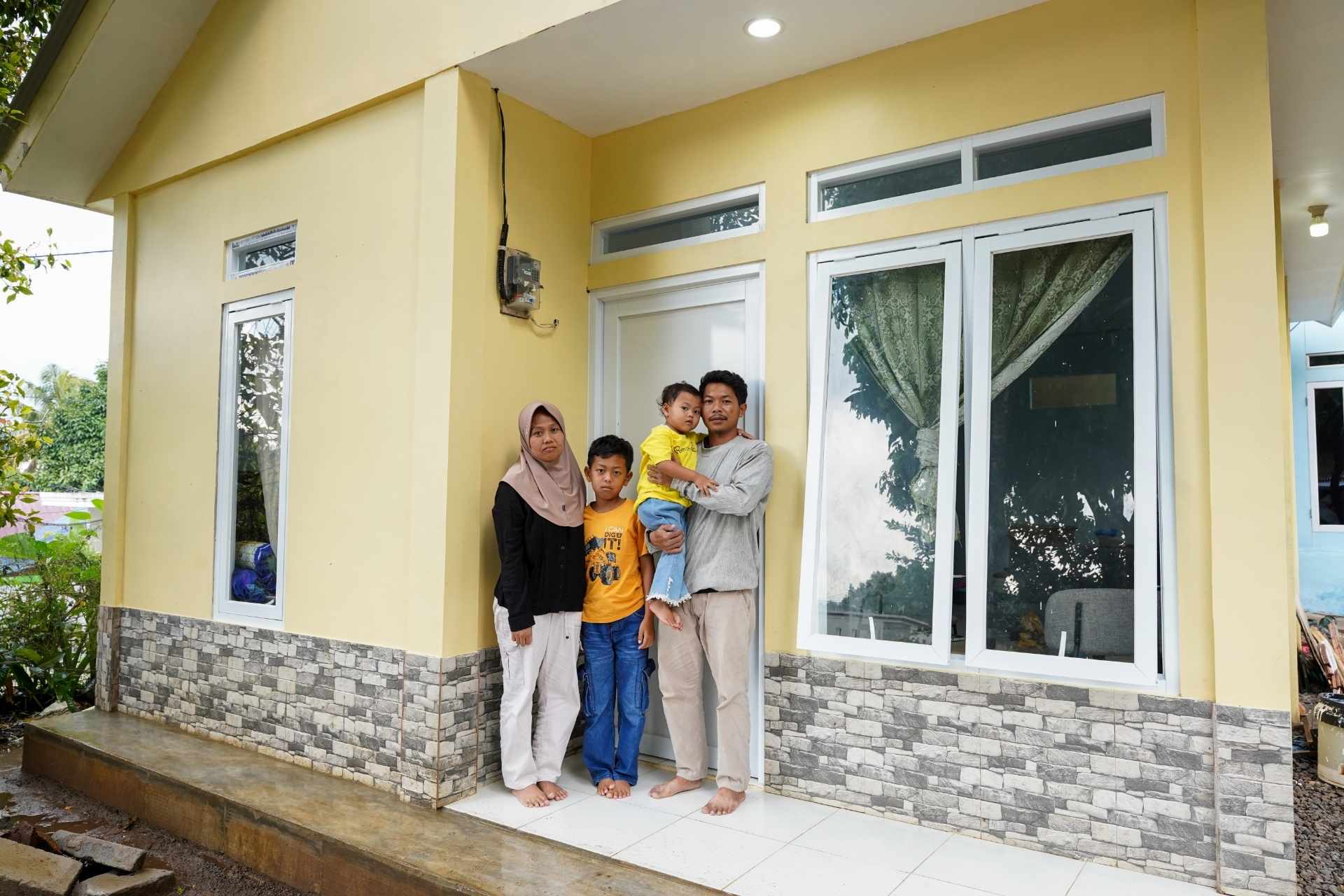
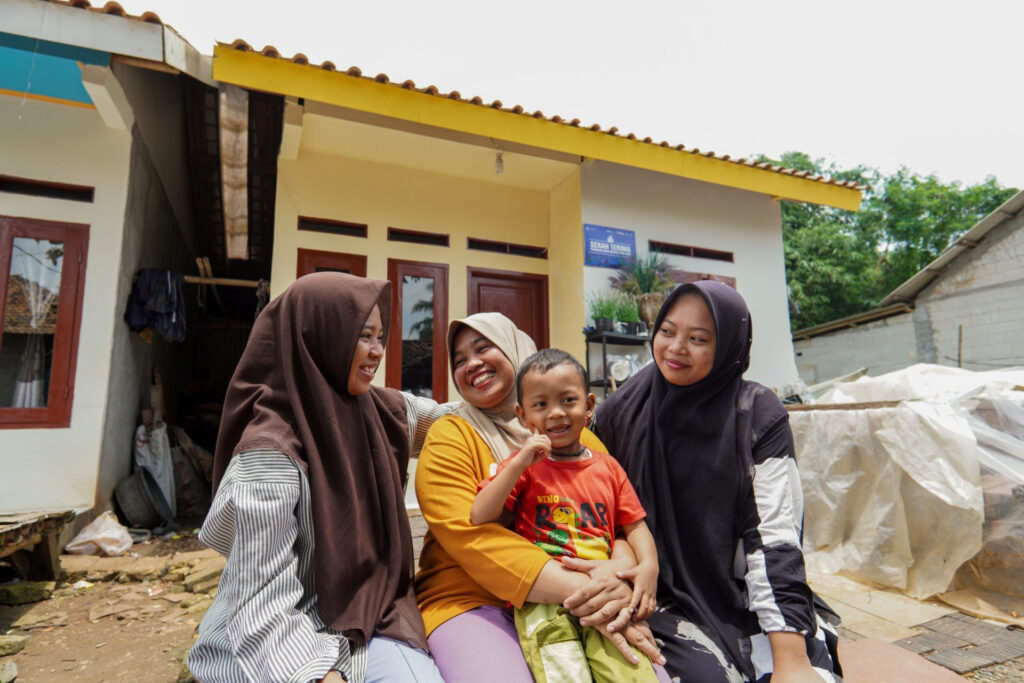
A portrait of Siti’s family in front of their now decent home, made possible by the support of donors through Habitat for Humanity Indonesia in Rajeg, Tangerang Regency, Indonesia. Photo: HFHI/Kevin Herbian

Read also: Women Behind the Construction of Decent Homes

This transformation has brought significant changes to her family’s life. Siti now feels more confident and no longer ashamed. “Now I am more grateful. I finally have a home like my neighbors. Especially now that I have my own bathroom and room, I no longer feel embarrassed about having to rely on other people’s houses,” she said.

Siti’s children now also have their own space to rest and study. Where they once had to sleep in the kitchen area, they now have bedrooms that provide comfort and privacy. “Now it’s different—my children have their own rooms to sleep in, no longer mixed together,” Siti explained.

In addition, the improved housing conditions also support the family’s health. A cleaner environment, proper sanitation, and a safer building structure provide a sense of security they had never experienced before.

With these changes, Siti looks toward the future with renewed hope. “I hope this new house can bring new fortune to my family, and that the difficult times we experienced before will not happen again,” she said.

Siti is one of millions of families in Indonesia who have moved beyond the hardship of inadequate housing. Behind every home that stands, there is a story of resilience, hope, and dreams gradually coming true. “A home means everything to me,” she concluded.

Let’s work together to help more families like Siti’s have safe and decent homes. Visit the following link and be part of real change for those in need.

Writer: Kevin Herbian

(kh/av)
HFHI – Medco
Stories of Change

For a Beloved Wife Who Has Passed Away, This Home Has Finally Come True

Tangerang, April 7, 2026 – There are wounds that are not always visible, yet they are felt every time the rain falls. For Banhawi, every drop of water that once fell from his roof was not just a leak—it was a reminder of a life filled with hardship.

At 53 years old, Banhawi spends his days working as a scrap collector in Rajeg, Tangerang Regency. His income is uncertain, ranging from IDR 150,000 to IDR 200,000 per day, depending on how much scrap he manages to gather. From this modest income, he had to meet daily needs while facing a difficult trial when his wife fell ill with a tumor.

For four years, Banhawi devoted himself to caring for his wife. The cost of medication—IDR 100,000, which only lasted for three days—became a heavy burden amid his limited earnings. At the same time, the house they lived in was far from livable.

Banhawi collects scrap materials as his main source of income to support his family and cover the medical treatment of his late wife, who suffered from a tumor, in Tangerang, Banten, Indonesia. Photo: HFHI/Kevin Herbian

The walls were made of fragile bamboo panels, riddled with holes and infested with termites. Parts of the structure had begun to tilt, with broken roof supports barely holding up. When it rained, the house could no longer provide protection.

“When I talk about my old house, I feel sad. When it rained, I couldn’t sleep—I had to catch the leaks with buckets,” Banhawi recalled.

Even covering the roof with plastic could not withstand the heavy rain. Long nights were filled with anxiety and discomfort. He often felt ashamed when neighbors wanted to visit.

“Seeing other people’s houses already in good condition while mine was just the way it was made me very sad. When neighbors wanted to come over, I felt embarrassed,” he said.

A portrait of Banhawi standing in front of his uninhabitable house before it was rebuilt by Habitat for Humanity Indonesia in partnership with MedcoEnergi and Medco Foundation in Tangerang, Banten, Indonesia. Photo: HFHI/Indah Mai

Behind all these hardships, Banhawi held onto one simple wish: to make his wife happy by providing a decent home. He continued to repair the house as best as he could, while still prioritizing her medical needs.

“I still remember my wife telling me, ‘Please keep fixing this house, as long as nothing breaks or collapses.’ So I kept repairing it little by little while continuing to buy her medicine,” he shared.

But fate had other plans. His wife eventually passed away, leaving Banhawi with memories, unfulfilled hopes, and a home that was still far from safe.

Then came a turning point. With support from MedcoEnergi and Medco Foundation, Habitat for Humanity Indonesia rebuilt Banhawi’s house into a decent home. He became one of 14 families in Rajeg who benefited from the housing program, part of a total of 45 homes built across Tangerang, Palembang, and Situbondo.

Volunteers from MedcoEnergi and Medco Foundation take part in the construction of decent homes for Mr. Banhawi and 14 other families in Tangerang, Banten, Indonesia. Photo: HFHI/Kevin Herbian

Read also: New Hope in Their Later Years for Karju and Jumiyati

Today, Banhawi’s house stands strong, with white walls and a sturdy light steel roof. It features two bedrooms, a living room, and a proper bathroom and toilet—providing safety while also supporting better health through improved sanitation.

This transformation has brought him a sense of peace he had never felt before. “Alhamdulillah, I feel much calmer now. I’m incredibly happy—it’s completely different from before. Now I don’t worry anymore when I leave the house to collect scrap,” he said.

More than just a place to live, the house has given him renewed motivation. Banhawi now works even harder, and his income has increased to around IDR 300,000 to IDR 400,000 per day. He has started planning for the future—something that once felt out of reach.

Looking ahead, he hopes to renovate the kitchen and add a canopy to the front of his house, saving little by little from his earnings to make it happen.

A portrait of Banhawi in front of his now decent home after it was built by Habitat for Humanity Indonesia in partnership with MedcoEnergi and Medco Foundation in Tangerang, Banten, Indonesia. Photo: HFHI/Kevin Herbian

Behind his smile and renewed spirit lies a quiet hope that could not be fulfilled with his wife. “If my wife were still here today, I believe she would be incredibly happy. This was her dream—to have a good house like this,” he said softly.

Now, the house that was once filled with worry has transformed into a space of safety, comfort, and new hope. For Banhawi, this home is not just a shelter—it is proof that real change is possible, that even in the midst of hardship, there is always a chance for a better life.

Let’s explore more inspiring stories and see how your support can bring new hope to families in need here.

Writer: Kevin Herbian

(kh/av)
HFHI – EME
Stories of Change

New Hope in Their Later Years for Karju and Jumiyati

Gunungkidul, March 16, 2026 – A deep sense of emotion fills Karju whenever he reflects on his life journey. At 75 years old, he never imagined that in his later years he and his wife would finally be able to enjoy a more decent kitchen and toilet in their modest home in Nglipar District, Gunungkidul Regency, Yogyakarta.

Karju and his wife, Jumiyati, who is 64, are simple farmers. In their daily lives, they rely on the harvest from their rice fields to make ends meet. Some of the rice they grow is consumed by the family, while the rest is sold to buy basic household necessities. When the harvest is not plentiful, they make use of whatever is available around their garden.

“It’s not just rice. Whatever we have in the garden—bananas, chickens, anything—we sell it. The important thing is that we can eat every day,” said Karju.

However, their simple life has also been accompanied by many limitations. Their kitchen was only surrounded by old bamboo walls that had become fragile and full of holes due to age. This condition often made it difficult for Jumiyati when preparing meals for her husband, especially when heavy rain or strong winds came.

Animals would often enter through the gaps in the bamboo walls, making the kitchen dirty and causing unpleasant odors. For this elderly couple, such conditions not only disrupted their comfort but also threatened their health.

A portrait of Jumiyati standing in front of her inadequate kitchen before Habitat for Humanity Indonesia renovated the structure in Gunungkidul, Indonesia. Photo: HFHI Team

Another difficulty they had faced for decades was the lack of proper sanitation facilities at home. Every time they needed to use the toilet, they had to go outside and walk several meters from the house.

“I always prayed that someday we would be blessed with the means to have a proper kitchen and toilet,” Karju said.

He also often felt worried whenever earthquakes or strong winds occurred—something that is not uncommon in the Gunungkidul area. “When there’s an earthquake, we can really feel it here. Or when strong winds come, we’re afraid the kitchen or toilet might collapse, especially since they were only made of bamboo,” he explained.

Read also: Hope Rising from Ibu Sri’s Small Kitchen

The prayers they had long offered finally found their way. Through the Water, Sanitation, and Hygiene (WASH) access improvement program, Habitat for Humanity Indonesia, together with generous donors, helped rebuild the kitchen and toilet in Karju and Jumiyati’s home to make them safer and more suitable to use. This program not only supported their family but also helped 24 other families in Gunungkidul Regency, Yogyakarta.

Now, a new kitchen and toilet stand firmly in their home. The change is felt not only physically but also deep in the hearts of this elderly couple. The worries that once lingered have gradually been replaced with a sense of peace.

“We feel calm and relieved now. There’s no more worry or fear. The new kitchen and toilet are much better and stronger,” Karju said.

The new kitchen has now become the space they use most often. During the holy month of Ramadan in particular, the room has become a witness to their simple moments of happiness. “Now we have our pre-dawn meal and break our fast here in this kitchen. It feels joyful and heartwarming,” Karju said with a smile.

Karju and Jumiyati enjoy a meal in their now livable kitchen built by Habitat for Humanity Indonesia in Gunungkidul, Indonesia. Photo: HFHI/Kevin Herbian

Having a toilet inside the house also brings greater comfort, especially for them at their age. “Now we’re no longer worried about going to the toilet at night or when it rains because it’s already inside the house. It helps us so much,” he added.

For Karju and Jumiyati, the new kitchen and toilet are not merely structures. They symbolize hope, peace of mind, and a restored sense of dignity in their later years. At an age when their strength is no longer what it once was, having a safe and decent home is a truly meaningful blessing.

Small changes like this prove that support and compassion can create a significant impact on the lives of families in need. A home is not only a place for shelter, but also a space where people can live their days with safety, comfort, and hope.

Let’s explore more inspiring stories about how Habitat for Humanity Indonesia’s programs are bringing real change to families across various regions. Each story is proof that together, we can build not only homes, but also hope.

Writer: Kevin Herbian

(kh/av)
HFHI – EME Wash
Stories of Change

Hope Rising from Ibu Sri’s Small Kitchen

Yogyakarta, March 3, 2026 – Every day, while most people are still asleep, the small kitchen is already alive. Thin wisps of smoke rise into the air, skilled hands shape dough into bakso cilok, and hope begins to simmer again at three o’clock in the morning.

In Pilangrejo Village, Nglipar District, Gunung Kidul Regency, 45-year-old Ibu Sri Lestari spends almost her entire day in the kitchen. Together with her husband, 49-year-old Bapak Sumarno, they rely on selling bakso cilok and soy milk to make a living. From dawn until late at night, Ibu Sri prepares the food, which her husband then carries as he travels from one village to another to sell.

Yet the kitchen where hope is prepared was far from adequate. Its walls were made of old bamboo panels with poor ventilation. Sunlight barely entered the space, so even during the day, the lights had to remain on for her to see the dough she was preparing. When heavy rain fell, water seeped in through gaps in the walls and the leaking roof.

“In the past, when it rained heavily, water would come into the kitchen. I had to stop cooking the meatballs here, and as a result, my husband couldn’t go out to sell,” Ibu Sri recalled.

The condition of Ms. Sri Lestari’s kitchen before being renovated by Habitat for Humanity Indonesia in Gunungkidul, Indonesia. Photo: HFHI Team

The kitchen was not the only challenge. Their toilet was located outside, separate from the main house. To use it, the family had to walk across a dark and slippery yard, especially during rain or at night. The fear of slipping was constant. At the same time, there was also a sense of embarrassment about not having proper sanitation facilities.

“When it rains heavily, we’re afraid it will be slippery and that we might fall. At night it’s also very dark. We also feel embarrassed about having the toilet outside,” she said softly.

Read also: The Struggle of a Mother Head of Household to Achieve a Decent Home

Through the Clean Water Access and Proper Sanitation Program, Habitat for Humanity Indonesia, with support from donors, rebuilt Ibu Sri’s kitchen and toilet. A new kitchen now stands firmly with permanent green-painted walls, complete with ventilation and windows that allow light and fresh air to flow freely. The toilet has also been rebuilt more safely and integrated into the house, providing comfort and privacy for the entire family.

The change was felt from the very first day.

Now, from a distance, the delicious aroma of meatballs can once again be smelled every morning. Smoke rises steadily from a kitchen that is far brighter and healthier than before. Ibu Sri no longer worries when it rains. She can continue cooking whenever needed.

“Now, even when the door is closed, it’s still bright. Light comes in from outside. There’s also plenty of ventilation, so the air feels fresh,” she said with a smile.

Sri Lestari prepares cilok meatball dough in her kitchen, which has been renovated by Habitat for Humanity Indonesia in Gunungkidul (Feb. 15). Photo: HFHI/Kevin Herbian

With a safer and more comfortable kitchen, her daily production has increased from 5 kilograms to 7 kilograms per day. She has even started adding a new variation of meatball soup to her menu. The family’s income has grown by approximately Rp150,000 to Rp200,000 per day compared to before. When Bapak Sumarno sells out, Ibu Sri can now quickly bring additional supplies without any obstacles.

“Now, when my husband runs out of goods to sell, I can immediately go and bring more meatballs,” she said enthusiastically.

For Ibu Sri and her husband, this change is not only about physical improvements. It is about renewed spirit. It is about believing that their hard work can build a better future for their two children who are still in school.

“With this new kitchen and toilet, it gives my husband and me more motivation to keep selling and provide for our two children,” she said emotionally.

Looking ahead, Ibu Sri dreams of buying a new refrigerator or freezer so that production can increase even further. She wants her business to continue growing, step by step.

Ibu Sri’s story is proof that access to adequate housing and sanitation is not merely about comfort, but about opening economic opportunities, protecting family health, and restoring dignity.

A portrait of Sri Lestari during an interview and monitoring visit by the Habitat for Humanity Indonesia team at her home in Gunungkidul (Feb. 15). Photo: HFHI/Kevin Herbian

The support of donors has helped bring real change to families like Ibu Sri’s. Every contribution helps transform a once-dark kitchen into a space filled with light and hope.

Let’s read more inspiring stories and see how your support can bring real change to more families here.

Writer: Kevin Herbian

(kh/av)
HFHI – Astra
Stories of Change

The Struggle of a Mother Head of Household to Achieve a Decent Home

Bogor, February 2, 2026 – In a quiet corner of Bogor Regency, Ibu Kokom (55) often sits in silence in front of her home as the late afternoon sun begins to set. She is a widow, a housewife, and the head of household for her five children. In those quiet moments, she often gazes at the home that has long been the only shelter for her family—a house filled with stories of loss, struggle, and hopes that nearly faded away.

Since 2012, Ibu Kokom’s life has changed completely. The passing of her husband left a deep sorrow and a heavy burden she had to bear alone. From that day, she became the backbone of her family, raising her five children with very limited means. Year after year, she struggled forward, striving to remain patient even when reality often felt overwhelming.

Yet the burden did not stop there. The home that should have been the safest place slowly lost its function. The house had partially collapsed before and was repaired only minimally. Its walls were made of bamboo partitions without a sturdy structure, held up by simple wooden beams. The aged zinc roof offered little protection. From a distance, the house looked tilted, as if it could collapse again at any moment.

For years, Ibu Kokom and her children lived without a bathroom or toilet. They relied on a small stream nearby for their basic needs. Close to the stream, there was a small spring often used for bathing and cleaning themselves.

“When it was really urgent, I sometimes had to use a neighbor’s bathroom,” Ibu Kokom said quietly. “But not often, because it’s embarrassing. It really doesn’t feel right to intrude.”

Mrs. Kokom carries a bucket and a dipper as she walks toward a small stream to bathe in Bogor Regency. Photo: HFHI/Kevin Herbian

Ibu Kokom’s house is located far from her relatives’ homes. Since her husband passed away, she could only rely on neighbors. But receiving help was not always easy. There was a sense of hesitation, a feeling of discomfort—especially when kindness was not always available.

“I once had to deal with the neighbor locking their toilet door because I used it too often. They said I couldn’t use it anymore,” she recalled.

Those experiences left small scars on Ibu Kokom’s heart—not from anger, but from feeling powerless. She knew not everyone could keep sharing, and she was exhausted from always having to ask for help.

Amid these limitations, Ibu Kokom held onto a simple dream: to have a decent home. Not a luxurious one, not a large house. She only wanted a home that could protect her family, ease the burdens of life, and give her children a sense of safety. She never stopped praying, every time she worshiped, every time exhaustion set in. And one day, her prayers found a way.

Read also: The House That Became a Witness to Durahman’s Family Happiness

Habitat for Humanity Indonesia, in collaboration with Astra, visited Ibu Kokom and helped renovate her home into a decent and safe dwelling. The news came as a ray of light amid the long years of hardship she had endured.

“Alhamdulillah, my children and I are so happy,” she said, tears welling in her eyes.

The house construction became an unforgettable moment. Many hands were involved, and acts of kindness flowed abundantly. Neighbors and residents volunteered, carrying materials, dismantling the old house, and digging into the septic tank. The once fragile home slowly transformed into a sturdy and safe building.

Now, the weight that had long pressed on her shoulders feels lifted. Her home is no longer a source of worry.

“Now I don’t have to think about all the problems with the house anymore,” she said. “The house is strong, it’s good, and we finally have our own bathroom and toilet. No more going to the stream.”

More than just a physical building, this decent home has restored the dignity of Ibu Kokom’s family. They now enjoy private space, better sanitation, and growing self-confidence. The children no longer feel inferior, and Ibu Kokom no longer feels ashamed.

Mrs. Kokom cleans the bathroom floor in her now decent and livable home, built by Habitat for Humanity Indonesia in partnership with Astra in Bogor Regency. Photo: HFHI/Kevin Herbian

For Ibu Kokom, this home is more than a place to live. It is a shelter from the harshness of life, a place where hope is sown again, and a space where her children’s future can be planned with greater peace.

“A home is where we return every day,” she said. “And this house will be everything for my children’s future.”

There are still many families like Ibu Kokom who hold similar simple dreams: the hope for a better, safer life despite limitations. Every home that is built does not just change a building—it changes the direction of a family’s life.

The right helping hand can answer prayers that have long been offered. If you want to be part of this change, your kindness can be contributed through: habitatindonesia.org/donate

Writer: Kevin Herbian

(kh/av)
HFHI – MPM
Stories of Change

A Home That Strengthens the Steps of an Office Boy

Bogor, January 21, 2026 – That morning, Muhamad Qosim stood for a moment at the threshold of his home, which is now painted a bright blue. The small house that once felt cramped and filled with worry now looks spacious and calming. Something he once found nearly impossible to imagine has now become his everyday view.

Qosim, 47, is a familiar face at the Sentul Village Office in Babakan Madang, Bogor Regency. Since 2020, he has worked as an office boy there. For over five years, he has dedicated himself to cleaning rooms, preparing office supplies, and ensuring that public service activities run smoothly. The wages he receives do not exceed one million rupiah per month—an amount he must manage with extreme frugality to support his 41-year-old wife, Ella, and their three children: two who are in high school and elementary school, and a two-year-old.

Before becoming an office boy, Qosim worked as a local motorcycle driver. Moving from one job to another has long been a part of his life. Yet, one thing never changed: his responsibility as the head of the family and his desire to provide a sense of security for the people he loves.

The house they occupy is not new. Twenty years ago, Qosim bought it from his grandmother, with a land area of only 21 square meters. When it was just him and his wife, the house felt sufficient. However, as the children grew, the cramped space began to feel stifling.

“Since I’ve owned this house, it has never been rebuilt or expanded. It just stayed like this. At most, I’d fix it little by little if there was a leak or if the walls started peeling,” Qosim recalled.

Qosim points to a leak in his house during the demolition process ahead of its reconstruction into a decent home in Bogor Regency, Indonesia. Photo: HFHI/Kevin Herbian

The roof was made of asbestos, a material he knew posed health risks to his family. However, replacing it with tiles was no easy feat due to financial constraints. “I couldn’t afford to switch to a tiled roof. The cost is high, while my income is only enough for food and the children’s schooling,” he said softly.

Whenever he found holes in the walls or parts of the house starting to rot, Qosim always tried to repair them. The fear that the house might endanger his family at any moment was his driving force, even though his financial situation was often inadequate. Consequently, any money he had was always spent on patching up damages. They lived hand-to-mouth, with almost no room to save. Their income was only enough for daily meals and children’s education.

Read also: A Mother’s Story: Almost Leaving for the Future of Her Family

Change began when Habitat for Humanity Indonesia, together with PT Mitra Pinasthika Mustika, arrived in Sentul Village. Through an assessment process, Qosim’s home was deemed in need of an upgrade to become a decent place to live. The damaged condition of the house, his status in the lowest economic group, and the overcrowding of family members relative to the house’s size were the key considerations for building him a decent home.

The construction process was a moment filled with hope. Slowly, the fragile old house was replaced by a more spacious and sturdy dwelling. Now, Qosim’s house stands at 28 square meters, painted a bright blue that radiates a completely different atmosphere than before.

“Alhamdulillah, I am so grateful for this house. The whole family is beyond happy. Even my youngest child immediately pointed out where their room should be,” he said with a small laugh.

With a larger house, Qosim no longer has to share a mattress with the entire family. He, his wife, and their youngest child now have their own bedroom, while the other two children also have their own sleeping spaces.

Qosim and his wife, Ella, play with their youngest son in the living room of their decent home in Bogor Regency, Indonesia. Photo: HFHI/Kevin Herbian

“I also feel more confident. I’m no longer ashamed to welcome guests. I used to direct them to my parents’ house because my own was too cramped and inadequate,” he said.

The blessing of a decent home did not stop at physical changes. A few weeks after the house was completed, Qosim was offered a new role as a service staff member at the village office—an opportunity he had never imagined before, marking a new chapter in his life.

For Qosim, a decent home was not the direct cause of his change in status. However, the house became a foundation that provided security, peace of mind, and the confidence to take further steps. With more stable living conditions, he was able to demonstrate his full capacity and dedication at work.

“Now I have a new spirit. I want to work harder and save up slowly. In the future, I want to add one more bedroom,” he said hopefully.

Qosim’s story proves that a house is more than just a building. A house is the foundation of life that opens doors for change. When a family has a safe and decent place to live, hope finds a place to grow.

For Qosim, this decent home has led him not only to a better place to stay but to a life of greater dignity and hope.

Writer: Kevin Herbian

(kh/av)
HFHI – MedcoEnergi
Stories of Change

The House That Became a Witness to Durahman’s Family Happiness

Tangerang, January 13, 2026 – That afternoon, Durahman (55) and his wife, Rohayati (48), gathered in the living room of their new home, watching their children and grandchildren play with joyful laughter—without the disruptions of leaks or the stifling air they once endured.

Every corner of this new home holds happiness that once seemed unimaginable. For more than thirty years, Durahman and his family lived in a fragile, cramped house filled with limitations. Today, everything has changed. Their home is now safe, comfortable, and warm—a gift born of relentless hard work and unwavering prayers.

Before having a decent home, Durahman’s life was full of uncertainty. He worked as a day laborer, willing to do any job—from digging to construction—earning only fifty thousand rupiahs per day if there was work available. Two years earlier, when his body was still strong, he walked tens of kilometers to collect and sell scrap materials. Age and health, however, eventually made such heavy labor impossible.

Meanwhile, Rohayati devoted herself to managing the household. They were blessed with four daughters, two of whom are married and live next door. The third child had to drop out of school due to financial constraints, while the youngest continued attending elementary school. This lack often left Durahman and his wife feeling they had failed to provide a proper life for their children.

Their old house only added to the struggle. Some walls were brick, others bamboo, lacking proper structural support. The aging roof was riddled with leaks during the rainy season.

“That house leaked all the time. I felt sorry for my children; it disturbed their studying. I tried to patch it up, but it still leaked,” Durahman recalled.

The condition of Durahman’s house before it was rebuilt by Habitat for Humanity Indonesia and MedcoEnergi in Tangerang Regency, Banten. Photo: HFHI/Indah Mai

Even the ceramic floor was a product of his labor from collecting scrap. “That’s why my floor looks patchy and uneven,” he said with a small laugh.

Sanitation was another major challenge. The family had only a simple bathroom, while for defecation, they had to rely on relatives’ houses or a pond. Yet Durahman remained grateful that the family could at least gather under one roof, despite its limitations.

“I really wanted to give my family a proper home. But sometimes we barely had enough to eat. My youngest once said he wanted a two-story house. I could only tell him, ‘Just pray, my child,’” he said.

Read also: A Mother’s Story: Almost Leaving for the Future of Her Family

That hope eventually found a way through the Decent Home Program run by Habitat for Humanity Indonesia in collaboration with MedcoEnergi and Medco Foundation. Durahman’s home, along with 14 other families in Rajeg, Tangerang Regency, was rebuilt as part of a total of 45 decent homes constructed across Tangerang, Palembang, and Situbondo.

“I never imagined my house could be transformed and look this good,” Durahman said, unable to hide his emotion.

The change is evident in every corner: a new, tight roof, sturdy cream-colored walls, uniform ceramic floors, and proper sanitation facilities.

The first night in his new home, Durahman found it hard to sleep. Memories of the old leaky, fragile house lingered. But the next morning, the laughter of children studying and playing in the living room made him realize—they finally had a safe and comfortable home. No more rodents, clean air filled every room, and having their own toilet brought dignity and hygiene beyond measure.

With this new home, Durahman began thinking about the next steps to improve his family’s life and fulfill his children’s dreams. “Slowly, while I save some extra money, I want to resume selling scrap in the city. But for now, I want to focus on getting my third child back to school; he wants to attend a pesantren like his older sibling,” he shared.

He also emphasized that this house is not just for him, but for his youngest child—a legacy of comfort, safety, and opportunity.

Portrait of Durahman’s family in front of their decent and livable home in Tangerang Regency, Banten. Photo: HFHI/Kevin Herbian

Durahman’s family life is now filled with simple yet priceless joy. He can sit with his children and grandchildren in the living room, watching them study, play, and laugh—a reality that once felt impossible.

Every brick laid, every tile shielding them from rain, is not just a physical structure but a silent witness to prayers, hopes, and love embedded in the walls. Durahman’s house is now a foundation for the future, a place where the next generation can grow safely, healthily, and confidently.

Like sunlight streaming through the windows of their new home, this house illuminates new hope for Durahman’s family. And with every support given, more families like theirs can experience the warmth of fulfilled prayers, the fruits of perseverance, and a life that is truly worthy.

Writer: Kevin Herbian

(kh/av)
HFHI – Kamila
Stories of Change

A Mother’s Story: Almost Leaving for the Future of Her Family

Tangerang, January 8, 2026 – In a quiet corner of a village in Tangerang Regency, Kamila sits on the porch of her new, sturdy home, cradling her youngest baby. From time to time, she glances at the clean walls, the tight roof, and the dry floors. Her other child runs around the living room, laughing—a sound that was once drowned out by the heavy rain leaking through the roof of their old house.

It has been three weeks since Kamila moved into this decent home, yet her gratitude seems endless. Each morning, when she opens her eyes, she often pauses in awe. “Oh God… my house really looks like this,” she whispers, as if she still cannot fully believe that a dream that once felt so far away has now come true.

Before the New House

A few months ago, Kamila’s life was far from the sense of security she feels today. She and her small family lived in a house on the verge of collapse, with fragile bamboo walls, muddy dirt floors, and a roof that could no longer keep out the rain.

“When it rained, we had to lift the mattresses. We used pots to catch the leaks,” she recalled. During heavy downpours, water seeped not only from above but also from below. The dirt floor turned into mud, wet everywhere. Many nights, the family stayed awake—not because of the baby crying, but because they feared the roof might collapse.

During her pregnancy, the fear grew even stronger. “At that time, I was carrying this little one… I often felt so sad. I kept thinking, what if I give birth while still living in a house like this? I was afraid it might collapse… afraid something would happen to my baby.”

Economic limitations left the family with few options. Her husband, Samsul, 35, worked as a daily laborer in rice fields or construction sites, earning only IDR 50,000 per day—their sole source of income.

With a child in kindergarten and a baby, their daily needs were often unmet. “Sometimes we even had to borrow rice from the neighbors,” Kamila said. For her older child’s school fees, which amounted to nearly one million rupiah, Samsul often had to pay in installments or borrow from here and there. “It was really tough,” Kamila admitted.

In such desperate circumstances, Kamila even planned to work abroad as a migrant worker. She prepared documents, filled out forms, and even lost her diploma amid the long administrative process. But in the end, she canceled her plan because Samsul did not allow it.

“My husband said, ‘Be patient, Mah. Our sustenance is already arranged. Stay here, don’t go abroad. Let’s take care of our family and children.’”

When Kamila repeated her husband’s words, tears welled up in her eyes—not just out of love, but because she knew her decision to stay was solely for the family, even if it meant continuing to live in a house barely fit to be called home.

“There’s nothing we can do… our means are limited. Every extra rupiah goes straight to paying off debts,” she revealed.

A portrait of Kamila’s family in front of their decent home in Tangerang Regency, Banten, Indonesia. Photo: HFHI/Kevin Herbian

Read also: Closing the Journey of 2025: Thank You for Building Hope Together

Hope Knocks on the Door

That hope arrived on a day she never expected. “I still remember… when the Habitat team came for the first survey. I felt so relieved. Even then, I had a little hope. But when we were actually chosen for assistance… Alhamdulillah, I am so grateful.”

Habitat for Humanity Indonesia, together with donors, rebuilt Kamila’s house from the ground up—giving it a strong structure, solid walls, a leak-free roof, and spaces where her family could breathe easy. Before moving in, Kamila even contributed her small efforts to help build the kitchen and organize parts of the house—a small gesture from a big heart.

When she saw the house completed, Kamila could only bow her head and cry. “Oh God… is this the answer to my husband’s words telling me not to go abroad? Maybe if I had gone, I wouldn’t have gotten all of this.”

Three weeks in the new home have drastically changed their lives. “No more leaks, no more moving mattresses around,” she said with a wide smile. “It feels safe, comfortable… even sleeping is better.”

But the biggest change is not in the house itself—it is in her mind. Kamila can now focus on caring for her children without fearing the house might collapse or worrying about repair costs. She can think about her children’s future, not just surviving day to day. And without urgent repair expenses, the family can begin slowly paying off their debts.

“This house… is a blessing I never imagined before,” she said softly but firmly.

Kamila knows that her good fortune is not shared by all. “Millions of families out there also dream of a house like this. But their means… maybe are just like ours before. Very limited.”

Kamila’s story is a reminder that a house is not just a building—it is the foundation for a family to live with dignity, raise children safely, and dream bigger. And for families like hers, the caring hands of others are the bridge between hope and reality.

Help create more decent homes for families in Indonesia: habitatindonesia.org/donate

Writer: Kevin Herbian

(kh/av)
HFHI – HDRR
Stories of Change

15 Years of Transformation in Jogoyudan Village After the Merapi Eruption

Yogyakarta, December 3, 2025 – Every corner of Jogoyudan Village, in Gowongan Subdistrict, Jetis District, Yogyakarta, now appears alive again. But more than a decade ago, this area was on the brink of losing hope.

For Rodi Firdaus, the head of RW 10, memories of the 2010 Mount Merapi eruption are still vivid. At that time, heavy rains poured down and cold lava rushed into the settlement, carrying sand and rocks as large as cars. Nearly 200 homes were submerged, the protective embankments could not withstand the torrent, and many residents were forced to evacuate as their houses were buried under mud.

“The water back then surged up to four meters high. Everything was swept away — sand, rocks… everything went into the residents’ houses,” recalled Rodi. Siti Fathonah, a resident of RW 10, remembers the panic vividly. “That afternoon, I was attending a social gathering at the Community Hall. Suddenly, the floodwater entered the yard. Everyone panicked and ran to save themselves,” she said. “Three floods came one after the other. It felt almost hopeless,” she added.

The disaster destroyed not only physical structures but also the spirit of the residents. Houses that once stood strong were now severely damaged, some buried under mud, others losing roofs and walls. “It felt impossible to rebuild life here,” Rodi recalled.

Amid these challenges, external aid was almost invisible, as the village was not prioritized during the initial emergency response. Residents felt isolated and hopeless.

Hope began to emerge in early 2011. Habitat for Humanity Indonesia arrived in Jogoyudan, conducting surveys and data collection as part of the initial post-Merapi response. The first intervention was the construction of seven communal toilets, an initial step to restore basic needs. “We held discussions with community leaders and listened to residents’ needs. From that, a plan to rebuild decent houses emerged,” said Wahyu Kustanta, Community Organizer at Habitat Indonesia.

Construction began in RW 10 with seven houses. Gradually, it expanded to RW 8, 11, 12, and 13, until more than 160 decent houses stood firm. These homes were built with principles of safety, durable materials, and designs tailored to residents’ needs. “Alhamdulillah, my house was rebuilt. Because I run a small shop at home, the house was also designed to accommodate my business. It’s been very helpful,” said Siti Fathonah.

Aerial view of Kampung Jogoyudan in Gowongan Subdistrict, Jetis District, Yogyakarta (October 9). Photo: HFHI/Kevin Herbian

Beyond housing, Habitat Indonesia developed clean water facilities at several points in the village. This water system not only served affected families but also other residents, ensuring equitable access to clean water. Residents were actively involved in the construction, contributing materials, labor, and ideas. Three stormwater channels were also built using the Participatory Approach for Safe Shelter Awareness (PASSA), which engaged the community in planning and implementation.

“Residents were very actively involved. They were not just recipients of aid but part of the building process,” Wahyu said. “This gotong royong (mutual cooperation) made them feel ownership over their homes and community. They felt reborn,” he added.

The transformation housing concept applied in Jogoyudan went beyond rebuilding physical houses. It also strengthened community capacity, revitalized the local economy, and fostered awareness of collective responsibility.

Siti described the impact on her life: “Having this decent house has brought a huge change. I’ve been able to reorganize my small shop, gradually. Now my shop is thriving, stocked with goods, and my family feels safe.” The transformation touched not only the physical homes but also household economics and residents’ self-confidence.

By the end of 2025, all the facilities built during the post-disaster recovery were still in use and maintained by the community. “We even expand and improve them further,” said Rodi. For example, the clean water facilities are used for laundry services and other economic activities. The water system managed by the PASSA group is also reinvested into community welfare through savings and loan programs.

This program shows that disaster is not the end, but the beginning of real change. Residents who once lost hope are now rebuilding their lives on the same land. Decent housing, clean water facilities, and stormwater channels are not just physical assets but symbols of resilience and the community’s ability to recover.

Furthermore, the program emphasizes disaster risk reduction (DRR) through transformation housing. This concept combines safe physical housing construction, community participation, and preparedness for future disasters. Residents who were once victims now understand how to arrange homes and their surroundings to withstand risks, strengthen collective awareness, and build a stronger community.

Residents of Kampung Jogoyudan taking part in community activities to care for their environment in Gowongan Subdistrict, Jetis District, Yogyakarta (October 9). Photo: HFHI/Kevin Herbian

Fifteen years after the disaster, Jogoyudan Village has not only recovered but stands as a living example that community-based interventions can change lives. Strong homes, accessible clean water, and functional stormwater systems are proof of sustainable transformation. Residents are no longer merely waiting for aid but have become agents of change in their own community.

Rodi concluded with confidence: “If Habitat had not come, we probably couldn’t live here again. Now, we not only have houses but also a sense of security, improved livelihoods, and a strong community.”

Disasters may leave scars, but these scars have been transformed into a new foundation for a better life. Jogoyudan Village proves that post-disaster recovery is not just about rebuilding—it’s about creating a resilient community capable of organizing life independently and sustainably.

Watch the video below to gain a deeper understanding of Housing Disaster Resilience and Recovery (HDRR)!

Video: HFHI/Budi Ariyanto

Writer: Kevin Herbian

(kh/av)