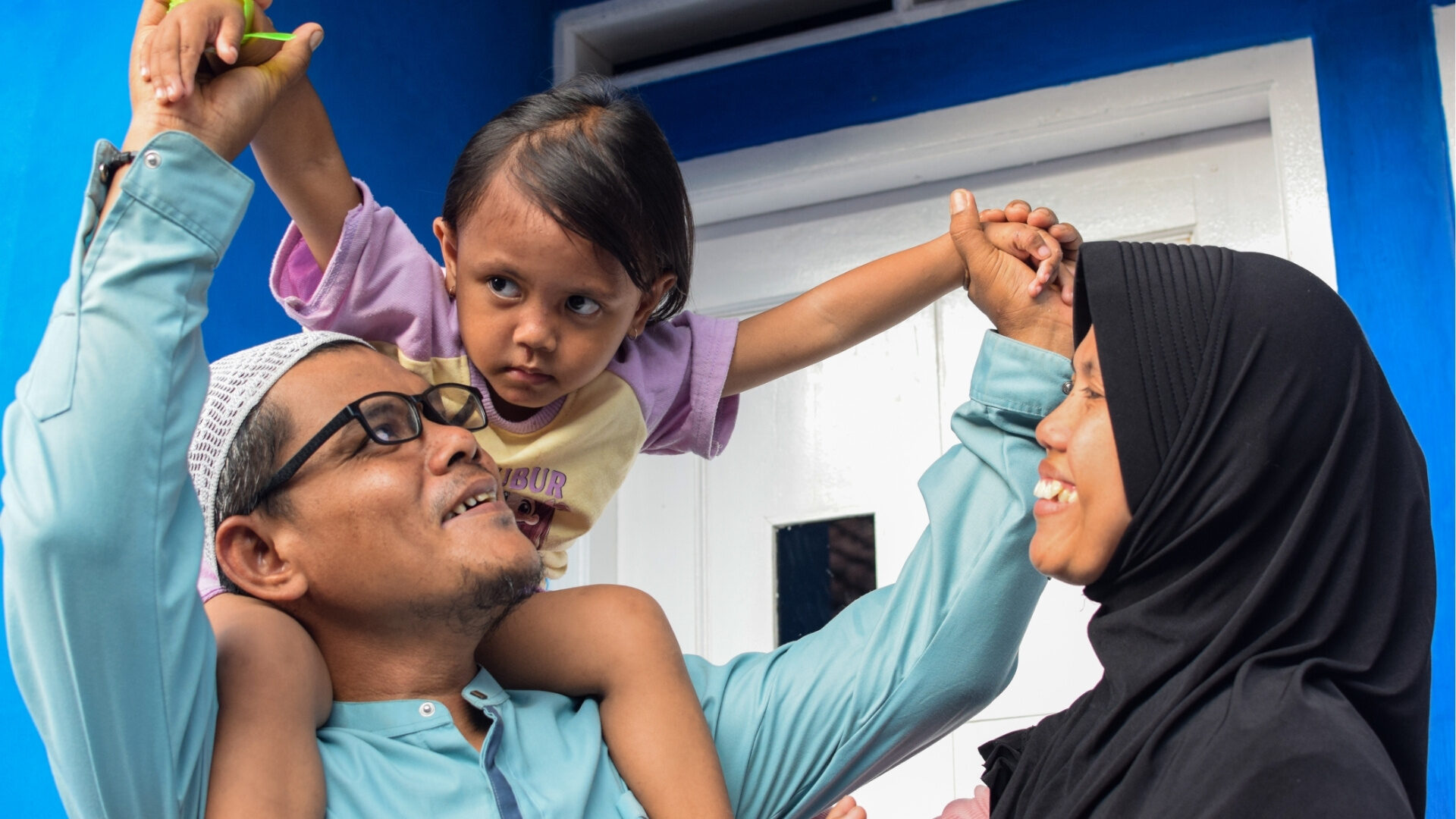
That afternoon, precisely at four o’clock, sunlight softly filtered through the leaves and fell on the blue walls of Iqballudin’s new house. The walls stood firm, as if bearing witness to the significant changes in the life of this small family in Babakan Madang, Bogor Regency. The Habitat for Humanity Indonesia team visited Iqballudin’s home once again, now fully habitable. There was a sense of pride in seeing how the family cared for their new house. Just one day after construction was completed, Iqballudin had already built a simple kitchen on his own, a clear sign of his determination to provide a better life for his wife and children.
Before this new house arrived, the Iqballudin family’s life was full of limitations. Iqballudin, a 41-year-old day laborer, relied on a daily wage of only IDR 50,000 to meet the family’s basic needs. Together with his wife, Siti Romyanah (36), a homemaker, they raised three school-aged children. Yet their old house made everything much more difficult.
Their previous home had no foundation, consisting merely of a simple structure made of GRC panels and woven bamboo. Without a kitchen or toilet, the family had to depend on relatives’ homes for cooking and bathing. To make matters worse, termites began to infest the walls and pillars, further weakening the structure.
With tears in her eyes, Siti recalled the constant fear that haunted her. “The termites had reached the top. I felt like the house was going to collapse. I was very worried about the children. If there was a leak, I was afraid the kids would get sick, especially the little one,” she said, her voice trembling.
Those memories became part of a long journey, living in a home that never provided a sense of safety. Nights were often shadowed by anxiety, especially when heavy rains fell.
However, all of that changed through the CEO Build 2025 event. Thanks to the support of Mr. Edwin Soeryadjaya in collaboration with Habitat for Humanity Indonesia, a new house for the Iqballudin family finally stood tall. The house is sturdy, safe, and vastly different from the fragile structure they had before.
Iqballudin could not hide his emotion as he expressed his gratitude. “Alhamdulillah, I feel very happy and grateful. My house is now very solid, unlike before when it was fragile and almost collapsing,” he said with a sense of relief.
Siti added with a calmer smile, “There are so many changes. At least now we can sleep peacefully every night without worry. The children are happy, and we are all happy.”
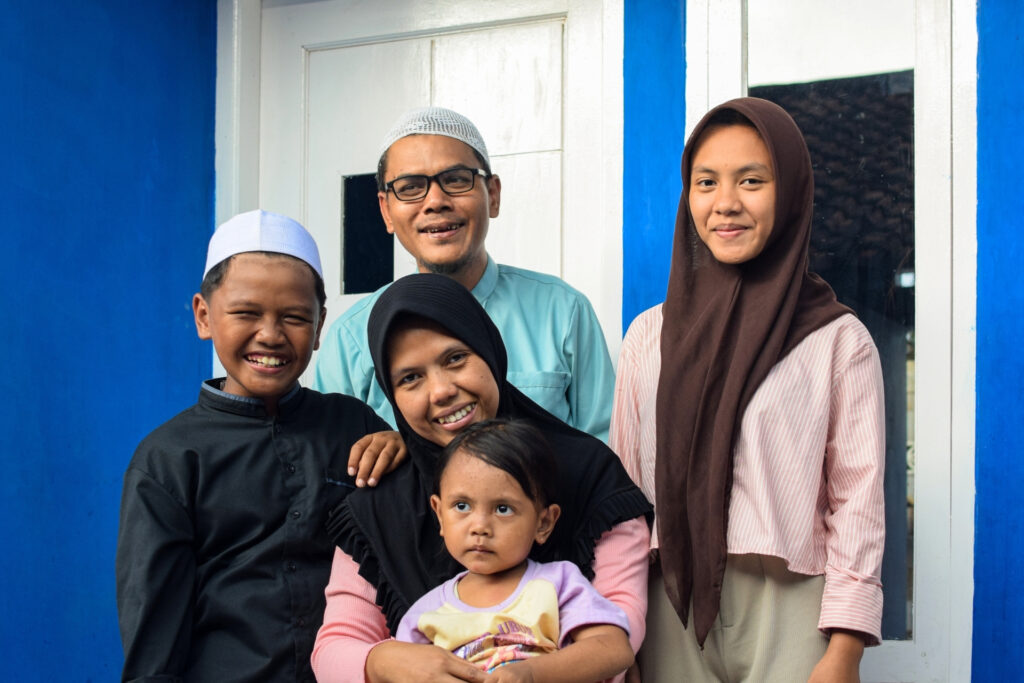
A portrait of the Iqballudin family in front of their newly habitable home, made possible with the support of Edwin Soeryadjaya and Habitat for Humanity Indonesia in Babakan Madang, Bogor (10/7). Photo: HFHI/Kevin Herbian
This transformation is not just about the physical building. Its impact is deeply felt in daily life. Their children are now healthier, no longer exposed to leaks, dampness, and termites. They no longer have to go back and forth to grandparents’ houses just to bathe or use a toilet. Their privacy is better protected, hygiene is improved, and the children’s overall health has increased.
The effect on the children’s education is also significant. A safe and comfortable home allows them to study without worrying about a leaking roof. A healthier home environment gives them the opportunity to focus on school. Iqballudin believes that this house will be the foundation for his children’s future. “At least now the children can study calmly. I want them to get the highest education possible so that their future will be better than mine,” he said with hope.
Furthermore, the new house has boosted the family’s confidence. There is no longer any shame when neighbors or relatives visit. They now have a proper space to welcome guests—a place they can truly call home.
With heartfelt gratitude, Iqballudin once again expressed his thanks. “I am truly grateful to Mr. Edwin and Habitat for this new house. This support means so much to me and my family. May Allah bless this kindness many times over,” he said sincerely.
From a simple home that now stands strong, new hope grows for this small family. A house not only protects from rain and heat but also becomes a place where children’s dreams, health, and future can grow strong. Behind every standing wall lies the story that change is always possible when care is turned into concrete action.
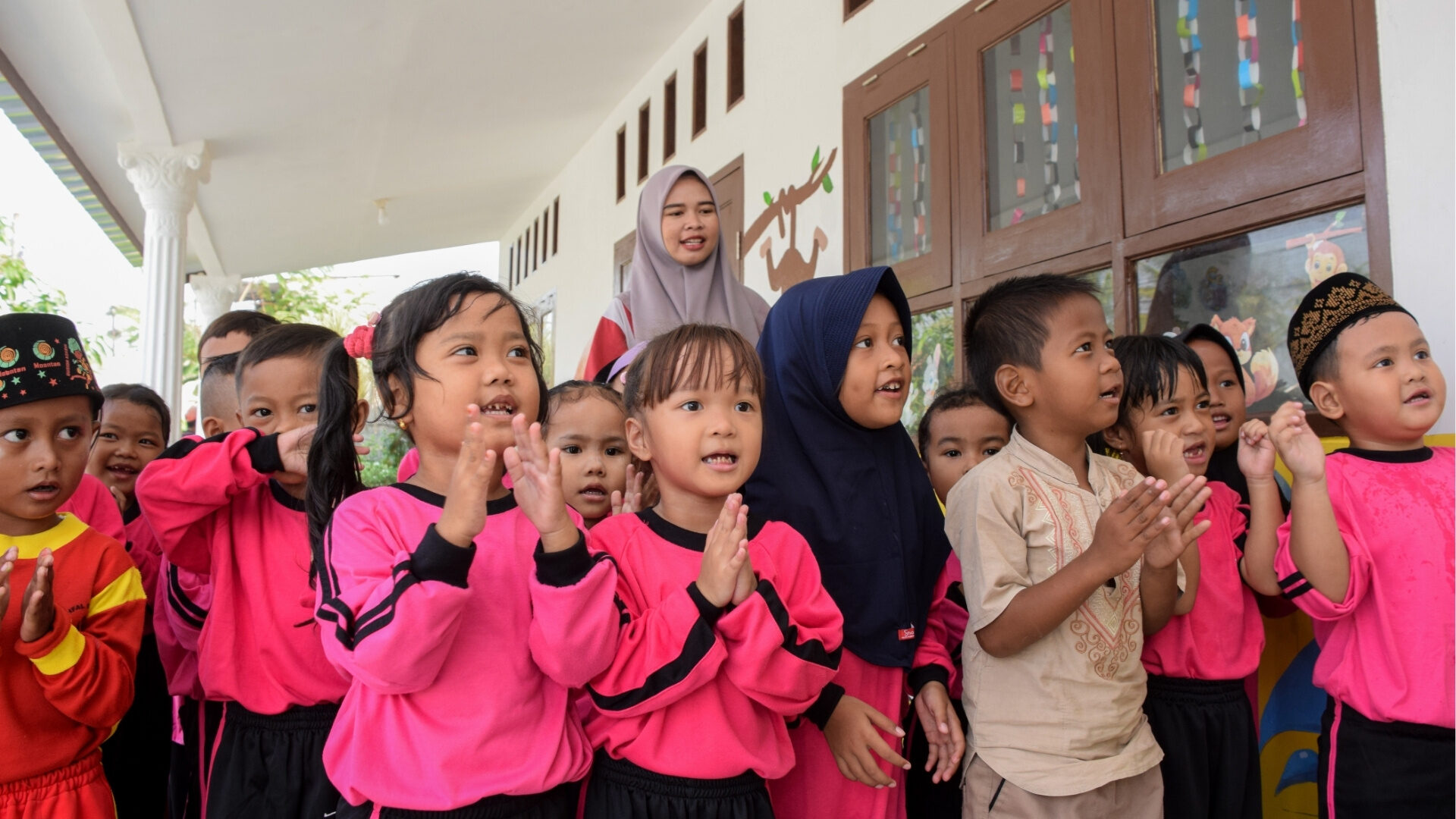
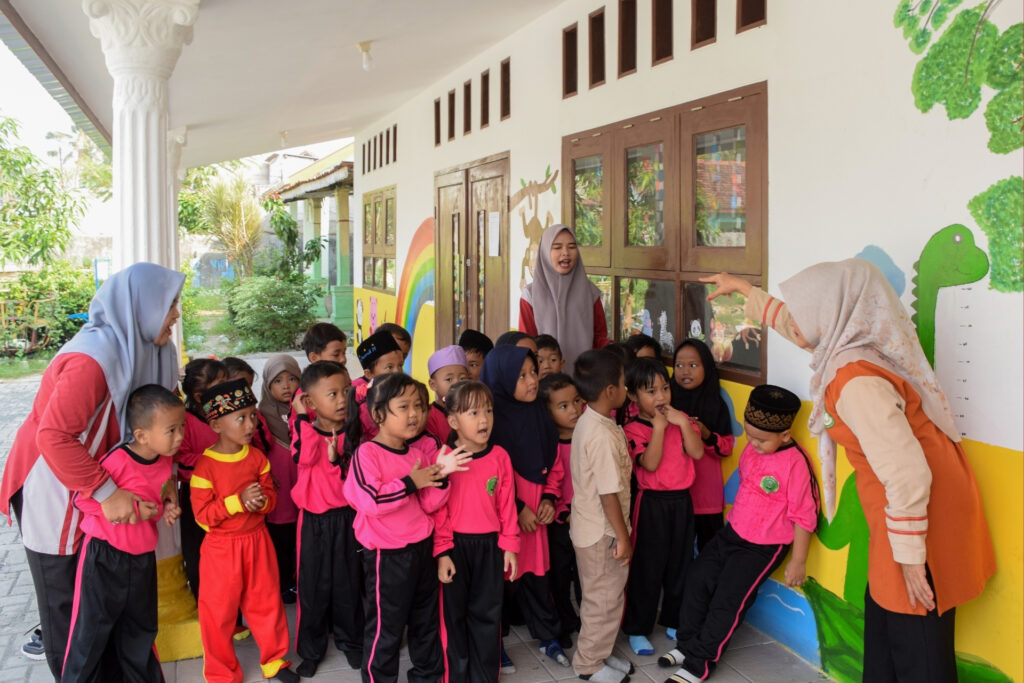
Students of RA Dwi Tunas Bangsa enthusiastically welcomed their new classroom renovated by Habitat for Humanity Indonesia in Tangerang Regency (24/7). Photo: HFHI/Kevin Herbian
A lively morning greeted the faces of young children as they stepped into the schoolyard. Their cheerful laughter echoed as they ran, carrying their small backpacks. In the hallway, their singing harmonized, creating a simple melody that brought the atmosphere to life. This day wasn’t just the first day back after a long holiday; it was a vibrant new beginning for RA Dwi Tunas Bangsa, a school in Tangerang Regency that now seemed to have been reborn.
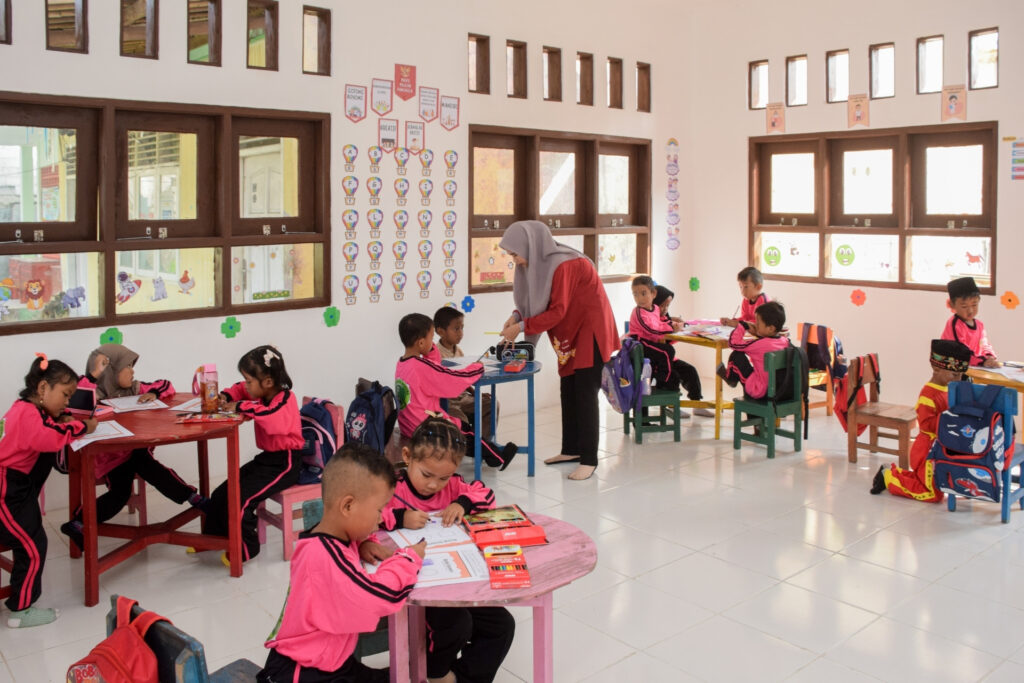
The school building, once fragile, now stands strong. The structure has been reinforced, the leaky roof has been replaced, and every corner of the rooms has been renovated to be safer. The bright yellow walls make the school feel warm and welcoming. The two classrooms are now spacious and comfortable, the teacher’s room has become a proper place for discussions, and most importantly, a new, hygienic, and safe toilet has been built for the children. All of this makes RA Dwi Tunas Bangsa feel like a second home, fit for a young generation full of dreams.
However, the current condition is vastly different from the school’s past. For over a decade, the building had slowly deteriorated. The paint faded, some walls were cracked, the roof leaked when it rained, and the classrooms felt stuffy without proper ventilation. The school’s toilet had long been out of order, forcing children to use a neighbor’s house whenever they needed to go. This situation not only made them uncomfortable but also risked their health and lowered their self-confidence.
Due to the limited facilities, the number of students dropped dramatically. Only about 15 students remained. Many parents were hesitant to enroll their children at RA Dwi Tunas Bangsa, not because of the quality of teaching, but because the building was considered unfit. For Agustini, the headmistress, this was a heavy burden. She wanted the children in her community to receive a proper early education, but the lack of facilities made the struggle difficult.
The atmosphere of RA Dwi Tunas Bangsa’s classroom after being renovated by Habitat for Humanity Indonesia in Tangerang Regency (24/7). Photo: HFHI/Kevin Herbian
Good news finally arrived when Habitat for Humanity saw the situation and decided to step in. This collaboration didn’t just fix a building; it revived hope. A comprehensive renovation was carried out. The building structure was reinforced, the roof was repaired, classrooms were updated, the teacher’s room was reorganized, and a new, proper, and hygienic toilet was built.
“The help to build these school facilities has truly helped us. Now we can accept more students. From just 15, the number of students has doubled. Now more than 30 children are studying here,” said Agustini with a relieved smile.
For Agustini, it’s not just the number of students that has increased. More than that, the learning environment has become much more pleasant. “The most important thing is the safe new classrooms, the roof that doesn’t leak, and the proper toilet facilities. The children feel at home, and the teachers are more motivated. A comfortable learning environment truly makes a big difference,” she added.
This change is tangible for both students and teachers. The children can now learn peacefully without feeling hot. The teachers can focus on teaching without worrying about facility limitations. The school is no longer just a makeshift place, but a space truly worthy of nurturing dreams.
Education is the foundation of the future. A decent school building isn’t just about walls and a roof; it’s a place that instills values, character, and hope. Every bright color on the walls of RA Dwi Tunas Bangsa symbolizes a new spirit. Every child’s laughter is proof that adequate access to education truly paves the way for a brighter future.
“I hope this school becomes a support for children in achieving their future. We want them to grow up confident, healthy, and daring to dream,” Agustini concluded with great hope.
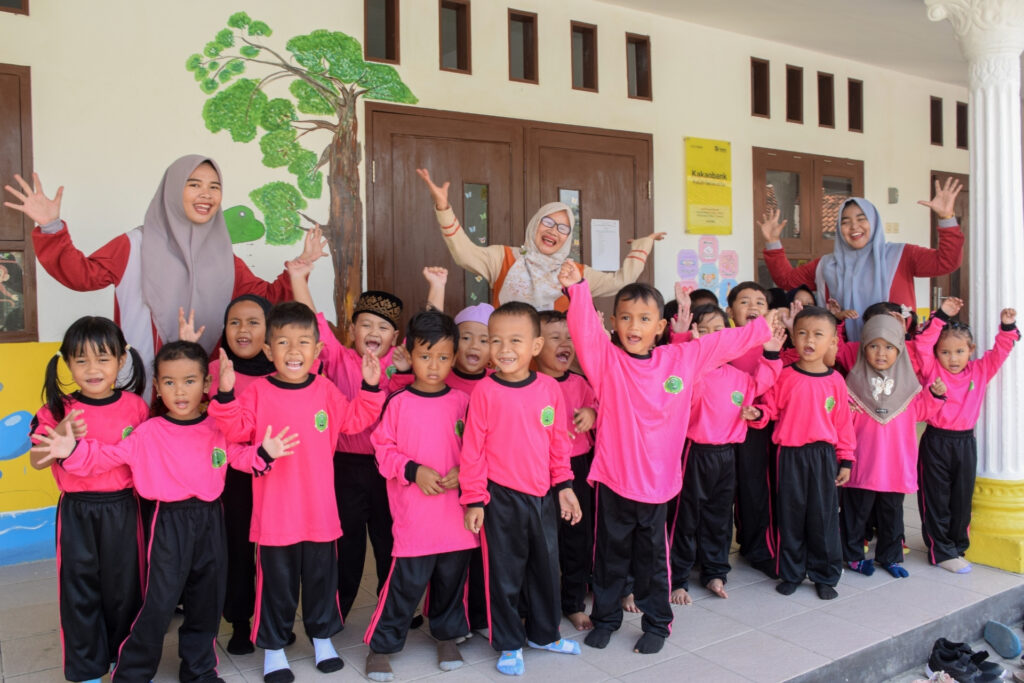
A portrait of RA Dwi Tunas Bangsa students in front of their new classroom renovated by Habitat for Humanity Indonesia in Tangerang Regency (24/7). Photo: HFHI/Kevin Herbian
From this simple hallway in Tangerang Regency, we learn that the future of children should not be limited by the condition of a fragile building. With collaboration and care, a strong and comfortable school can become the starting point for the next generation to go further.
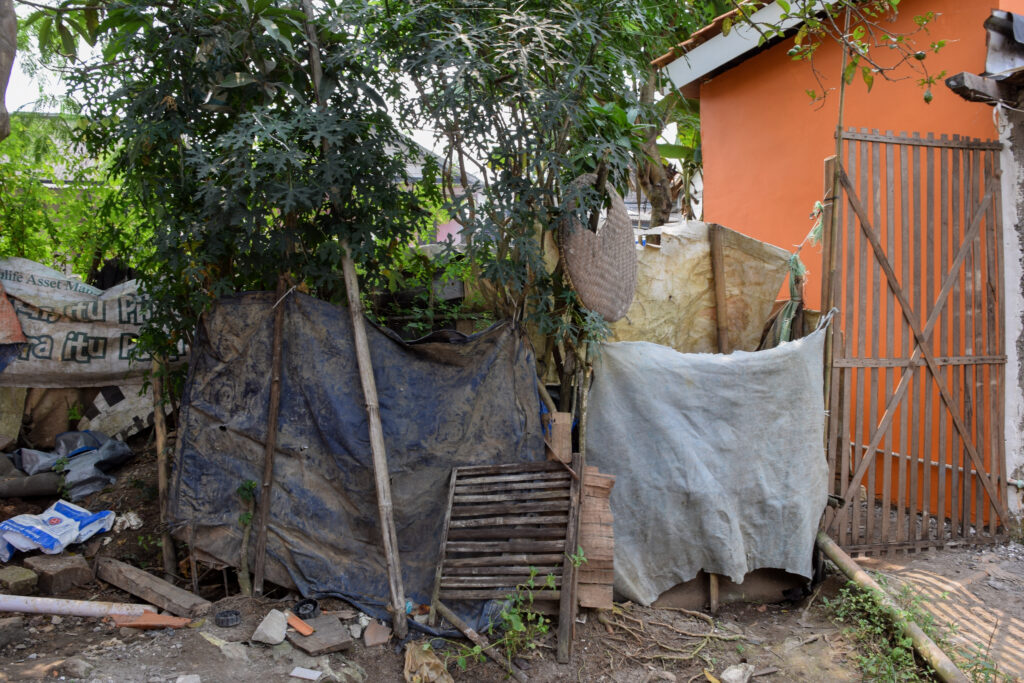
That day, Ibu Uri (54) couldn’t hide her gratitude. After more than thirty years of waiting, she finally had access to proper sanitation—just like many other families. Her eyes welled with tears as she stood in front of the small orange-colored structure that now stood firmly inside her home. “I never imagined this would happen. This toilet is the first real help my family has ever received,” she whispered, still in disbelief.
For more than three decades, Uri lived with her only daughter, Ella (30), under poor sanitation conditions. For bathing, they used a makeshift space with just a cement plaster floor. For defecation, they shared a simple wooden and plastic tarp latrine without a roof with four other families. “It was never easy back then,” she recalled. “We were scared to use the toilet at night. The kids always asked to be accompanied.”
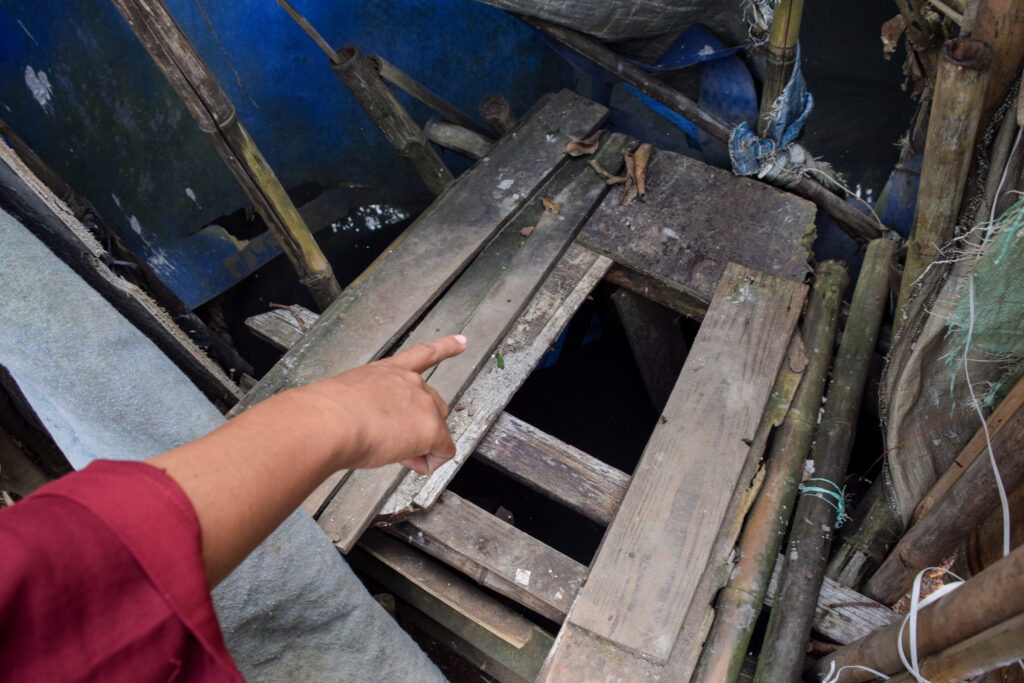
This bitter memory also lingers in Ella’s mind, who now has two children aged nine and five. She vividly remembers the time she was pregnant with her second child. “One time I slipped because the floor was so slippery. My foot fell into the latrine hole, and the wooden boards collapsed. I was terrified and cried uncontrollably,” she recounted.
The condition of Mrs. Uri’s family toilet before it was rebuilt by Habitat for Humanity Indonesia in Rajeg, Tangerang Regency (July 24). Photo: HFHI/Kevin Herbian
The rainy season made things worse. Overflowing latrine pits would contaminate the yard, creating a strong stench and deep embarrassment. “It often smelled terrible, especially when it rained. Sometimes it would flood the yard. When guests came, it was so embarrassing. One even asked, ‘Why is the toilet like a fishpond?’ My mom and I were mortified,” Ella added.
Sanitation issues like those faced by Uri and Ella are not isolated cases. According to 2024 BPS data, 89.38% of families in Tangerang Regency have access to proper toilets. That still leaves around 10.62% of families without adequate sanitation facilities.
Economic hardship is the main barrier. Uri, who once worked as a waste collector, can no longer work due to a respiratory illness. The family’s only income comes from Ella, who works as a daily laborer at a plastic container factory, earning around Rp67,000 (about USD 4) per day. This barely covers essentials like rice and the children’s school money. Uri’s husband, Acin, passed away when Ella was only eight years old.
“There’s no way we could afford to build a toilet,” Uri said quietly. “Sometimes it’s even hard to buy food.” She added with hope in her voice, “I just wanted a proper toilet like other people, so we wouldn’t have to feel ashamed anymore.”
Ella, daughter of Mrs. Uri, points to the spot where she once fell while using the latrine behind her house in Rajeg, Tangerang Regency (July 24). Photo: HFHI/Kevin Herbian
But life holds surprises. Good news finally came to Uri’s doorstep. Habitat for Humanity Indonesia, in partnership with PT Mitra Pinasthika Mustika Tbk (MPM), built toilets for Uri’s family and five other families facing similar conditions in Rajeg District, Tangerang Regency.
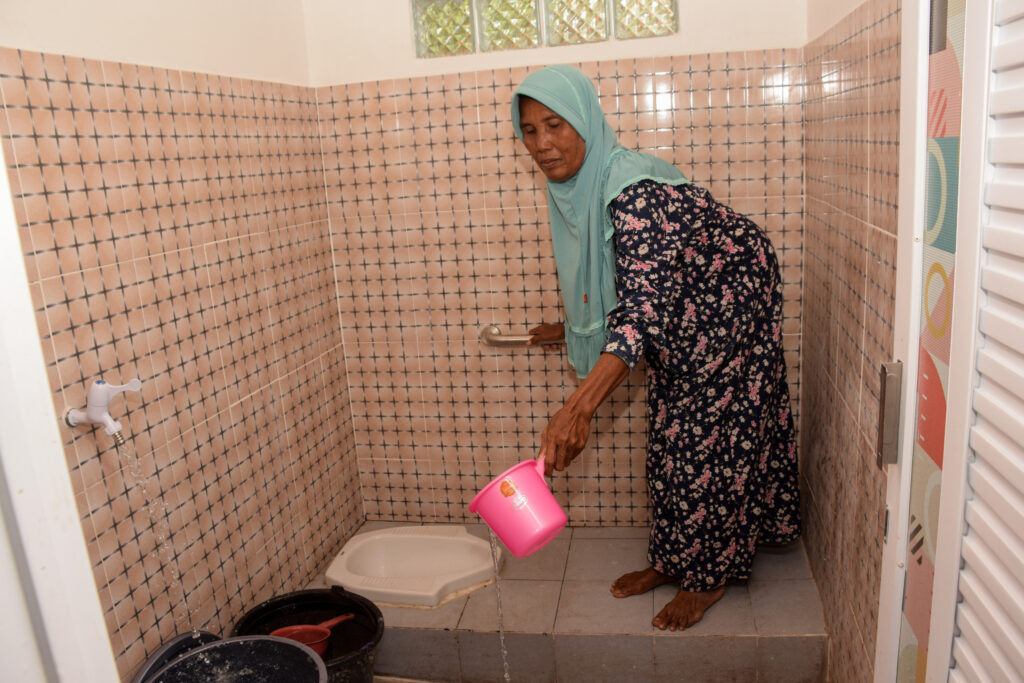
Uri recalls the moment construction materials arrived at her house. “I was so thankful. I really didn’t believe it at first—when the materials actually showed up, I thought it was a joke,” she said, smiling as she pointed to the bright orange walls of her new toilet.
Mrs. Uri cleans the floor of her toilet after Habitat for Humanity Indonesia and PT Mitra Pinasthika Mustika Tbk renovated the facility to make it decent in Rajeg, Tangerang Regency (July 24). Photo: HFHI/Kevin Herbian
The toilet is more than just a structure. It transformed habits, improved hygiene, and brought peace of mind. “It’s changed everything—from our daily routines to how much cleaner and healthier our lives are now,” Ella shared with enthusiasm.
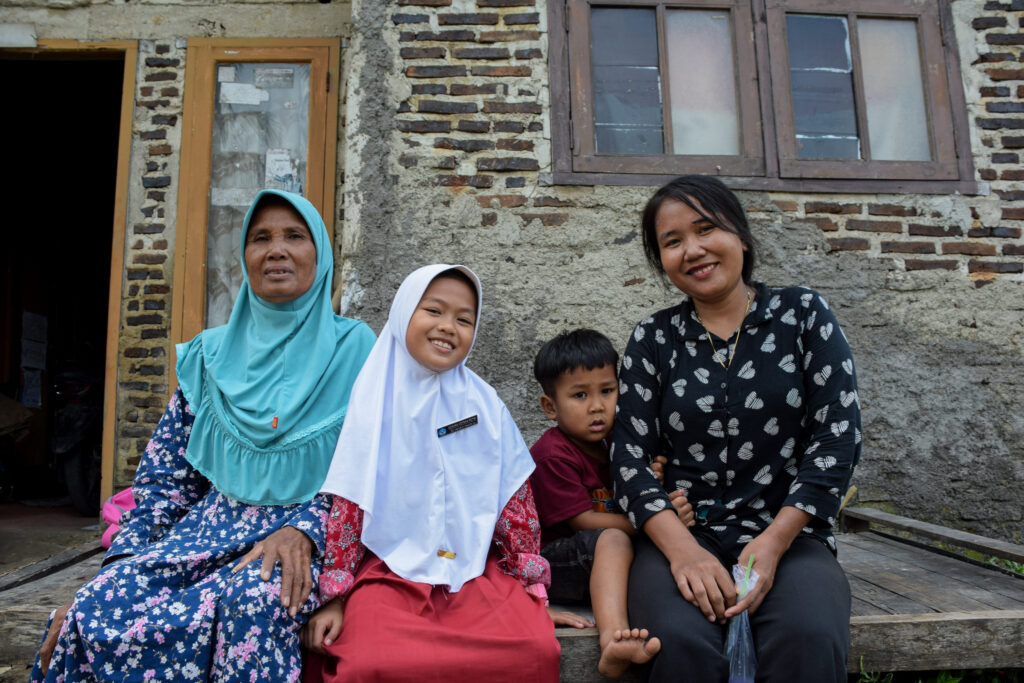
There are no more scary trips to the latrine at night, no more overflowing pits, and most importantly, no more shame. “The kids are much cleaner now, they bathe more often. Thank God they no longer complain about bad smells or itchy skin like before,” Ella added, her face glowing with joy.
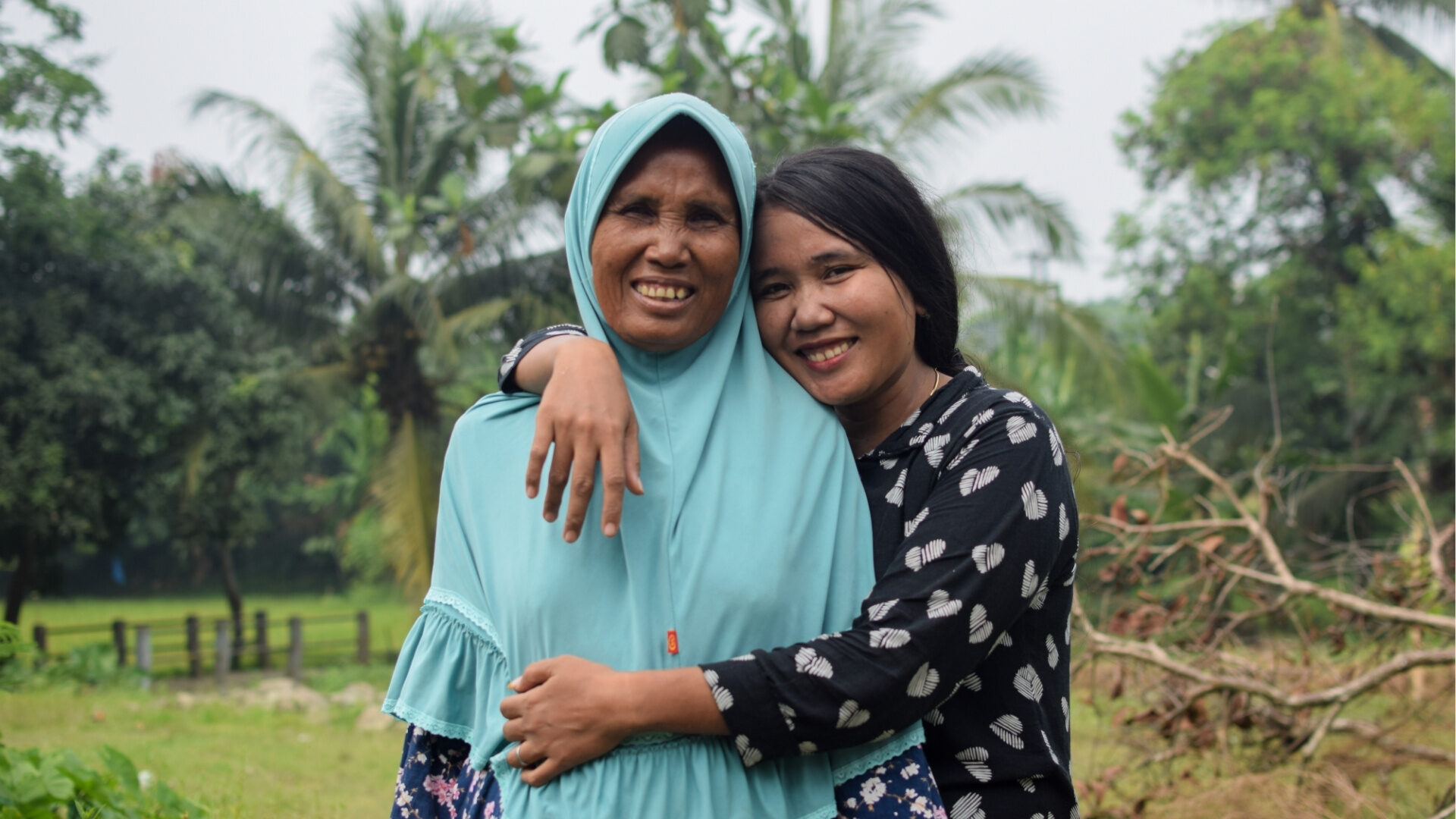
A portrait of Mrs. Uri’s family’s happiness after Habitat for Humanity Indonesia and PT Mitra Pinasthika Mustika Tbk built a proper toilet at their residence in Rajeg, Tangerang Regency (July 24). Photo: HFHI/Kevin Herbian
Behind the modest walls of that toilet, a new hope has emerged. Uri now dreams of gradually improving the rest of her home. “Now that the toilet is nice, I want to start fixing up the house bit by bit,” she said, looking around the small home that shelters her family.
To some, a toilet may seem like a small thing. But for families like Uri and Ella’s, having access to safe sanitation is a dream come true. That toilet represents dignity, comfort, and health.
From this small family’s story, we’re reminded that real change often begins with the most basic human need: access to proper sanitation. Support more families like Ibu Uri’s through: habitatindonesia.org/donate
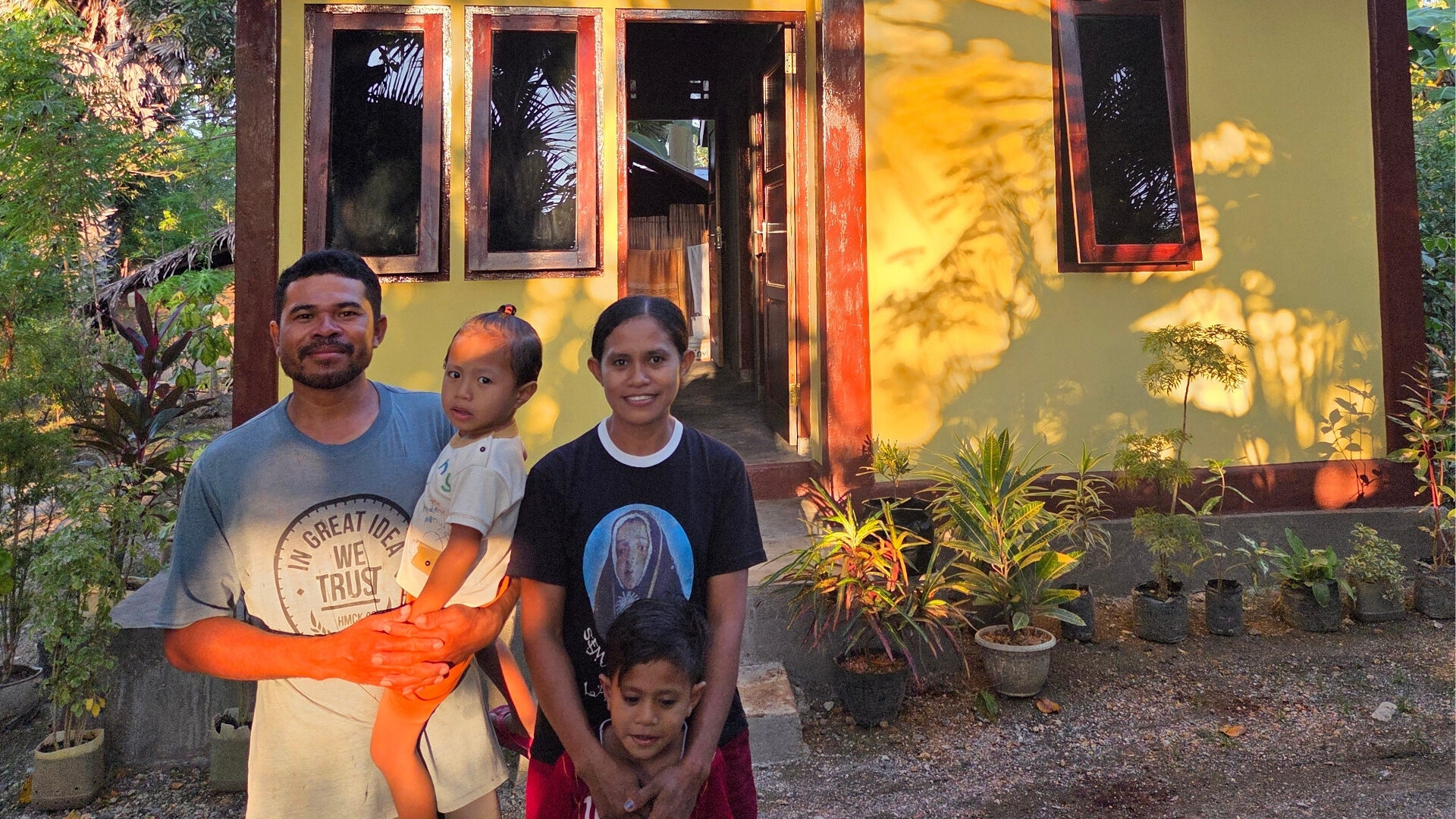
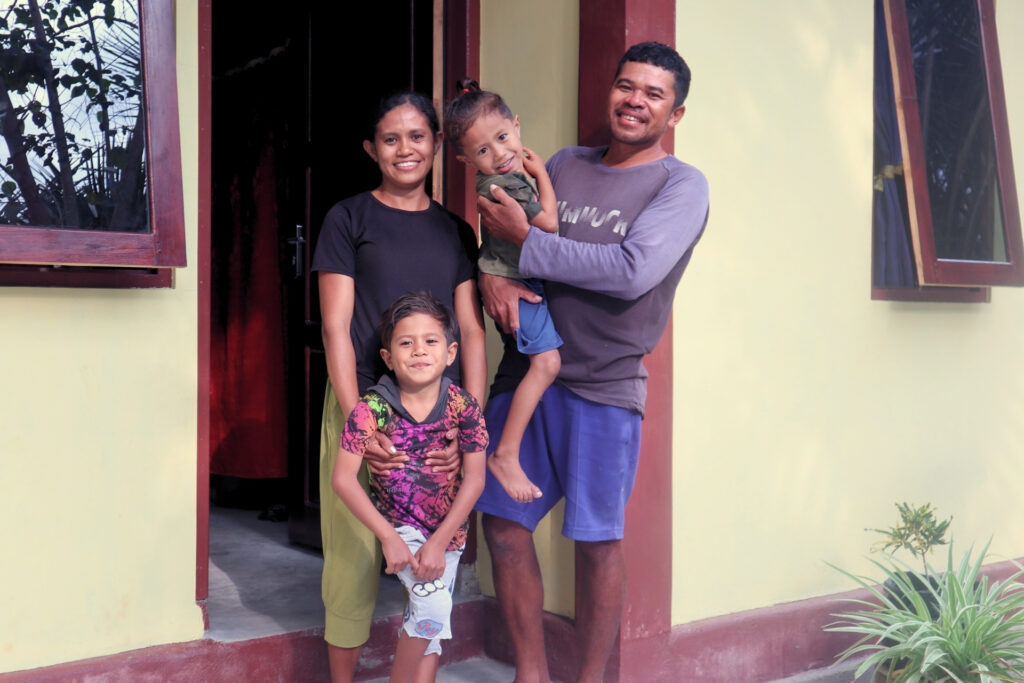
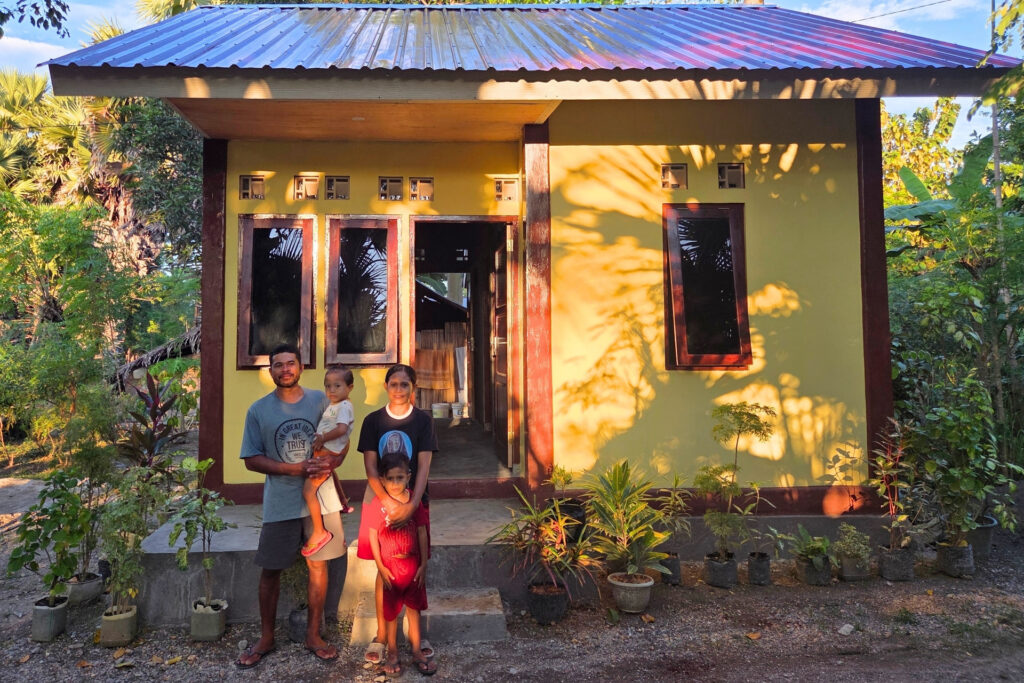
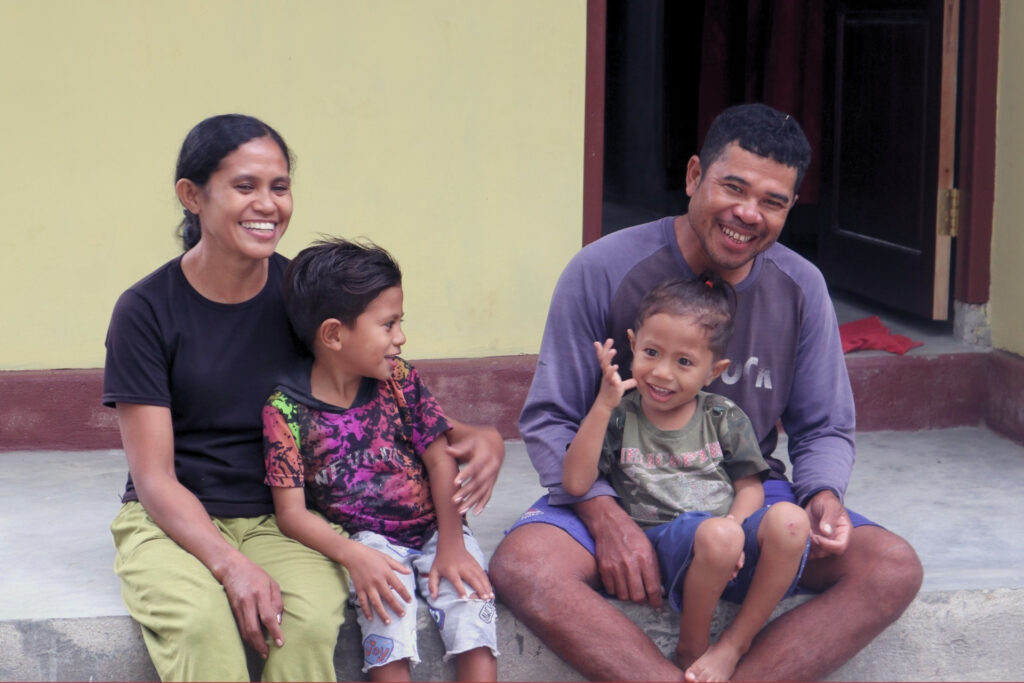
A portrait of the Dewy Loek family in front of their decent home, built in collaboration between Habitat for Humanity Indonesia and PT Arthawenasakti Gemilang in East Kupang, East Nusa Tenggara. Photo: HFHI/Kupang Site Project
“It’s completely different now… I no longer have to bow my head when entering the house because of how small it used to be. This home is more than decent—it’s truly beautiful. It’s an incredible blessing for my family.”
That’s what Mr. Dewy Loek shared with eyes full of gratitude when the Habitat for Humanity Indonesia team visited his new, sturdy home in East Kupang, East Nusa Tenggara. His words came from a heart long filled with silent hope. That evening, the Habitat team wasn’t just talking about construction—they were listening to a life slowly changing.
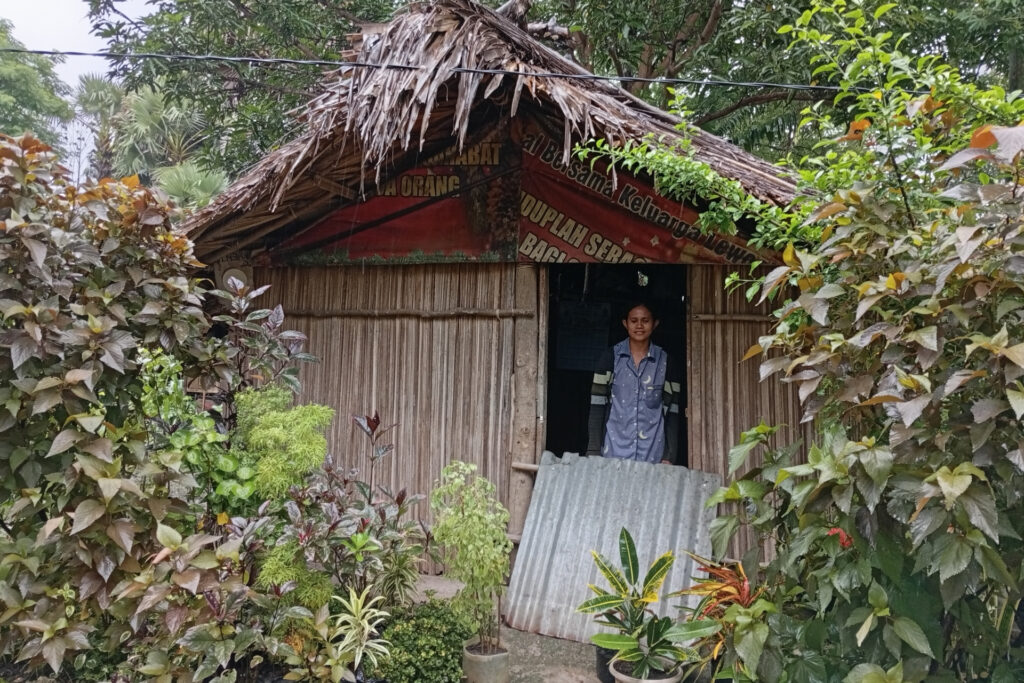
For Mr. Dewy, this house is the answer to years of heartfelt prayers. Before, he lived with his wife and two children in a simple square-shaped structure with a dirt floor, lontar-leaf walls, and a thatched roof. There were no partitions, no ventilation, and no bathroom. Everything happened in one cramped space they all had to share.
During the dry season, the air inside became stifling and unbearably hot. With no windows for airflow, his children often woke up in the middle of the night drenched in sweat. But in the rainy season, conditions were even worse—leaking roofs let rainwater pour in, turning the floor into mud. Many nights, they had to move the children off their soaked mattresses.
That worry was a daily companion. Mr. Dewy knew this wasn’t a safe place to raise his children. But as a farm laborer and fisherman, he had few options. The little savings he managed to gather would always be spent on temporary repairs. In the midst of such limitations, all he could do was keep praying—day after day.
Yesi Saketu, wife of Mr. Dewy Loek, stands at the front door of her substandard home before receiving support from Habitat for Humanity Indonesia’s decent housing program in East Kupang, East Nusa Tenggara. Photo: HFHI/Kupang Site Project
A portrait of the Dewy Loek family in front of their decent home, built in collaboration between Habitat for Humanity Indonesia and PT Arthawenasakti Gemilang in East Kupang, East Nusa Tenggara. Photo: HFHI/Kupang Site Project
Then, finally, a helping hand reached out. With support from Habitat for Humanity Indonesia and PT Arthawenasakti Gemilang, a new home was built—a home with two bedrooms, a proper toilet, and a strong structure. Bright yellow walls now replaced the old palm leaves and thatch that once served as their only shelter.
“I still can’t believe it,” Mr. Dewy said. “This house is so comfortable. The children are happy—they each have their own room now. No more stories of wet beds or sweating through the night.”
During the building process, Mr. Dewy was far from idle. He helped the builders, carried materials, and prepared meals as best he could. He did it all with full spirit, even though the family’s economic situation remained tight. For him, this house was a gift he wanted to help build with his own hands—for his wife and children.
Now, the home stands firm, bringing about many changes. The children can play and study without fear. His wife, Nuh Loek, feels much more at peace. They now have a clean indoor toilet—a huge leap from the past, when they had to relieve themselves outdoors with no privacy. The house has brought them health, comfort, and a sense of security they had never known.
More than that, for the first time, Mr. Dewy is able to save money. What was once spent on constant repairs can now go toward his children’s education. He looks to the future with new confidence and a heart no longer weighed down by anxiety.
The Dewy Loek family shares a lighthearted moment in the yard of their decent home, built in collaboration with Habitat for Humanity Indonesia and PT Arthawenasakti Gemilang in East Kupang, East Nusa Tenggara. Photo: HFHI/Kupang Site Project
For the Dewy family, this house is more than just a building. It’s the beginning of a better life—a place where children can grow, learn, and dream. A place where a husband and wife can rest without fearing a collapsing roof or a flooded floor.
And to this day, Mr. Dewy continues to pray. But now, those prayers are no longer just for himself. He prays for his brothers and sisters who still live under fragile roofs and behind cracked walls. He prays that they too may be blessed with a decent home—a place where hope can safely anchor, just like the one he now has.
Mr. Dewy’s story is just one among many unheard voices from families living in substandard housing. Voices that begin to be heard when someone cares—when someone chooses to act. Many more families are still waiting for that same hope: a safe, healthy, and decent home to grow with their loved ones.
If this story touches you, you too can be part of this journey of change. Learn how at habitatindonesia.org/donate, because a decent home should not be a dream—it should be a reality for every family.
Habitat for Humanity Indonesia, in partnership with PT Bumi Resources Tbk, has brought clean water access to 200 families and eight public facilities to promote healthier and more dignified living.
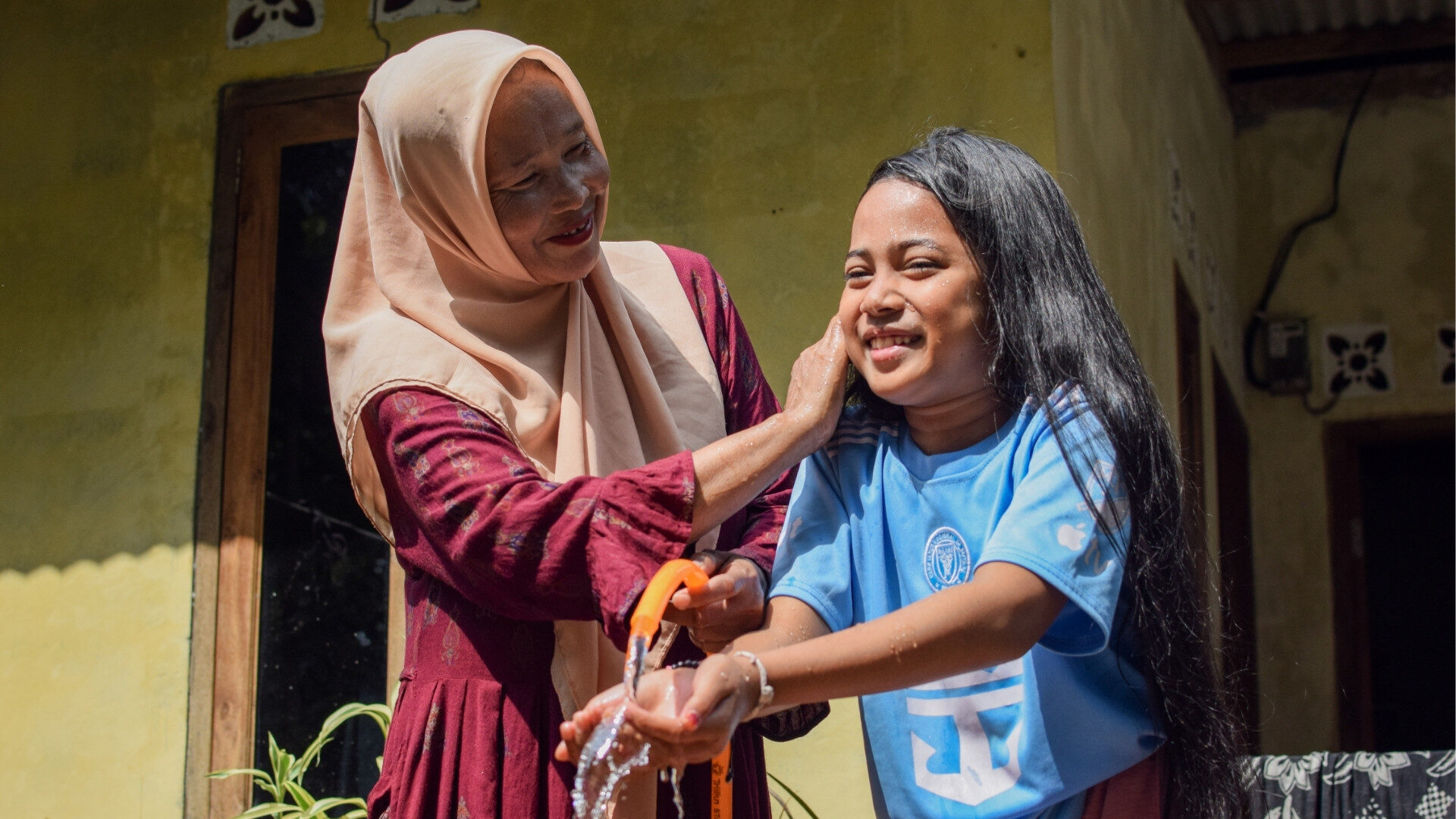
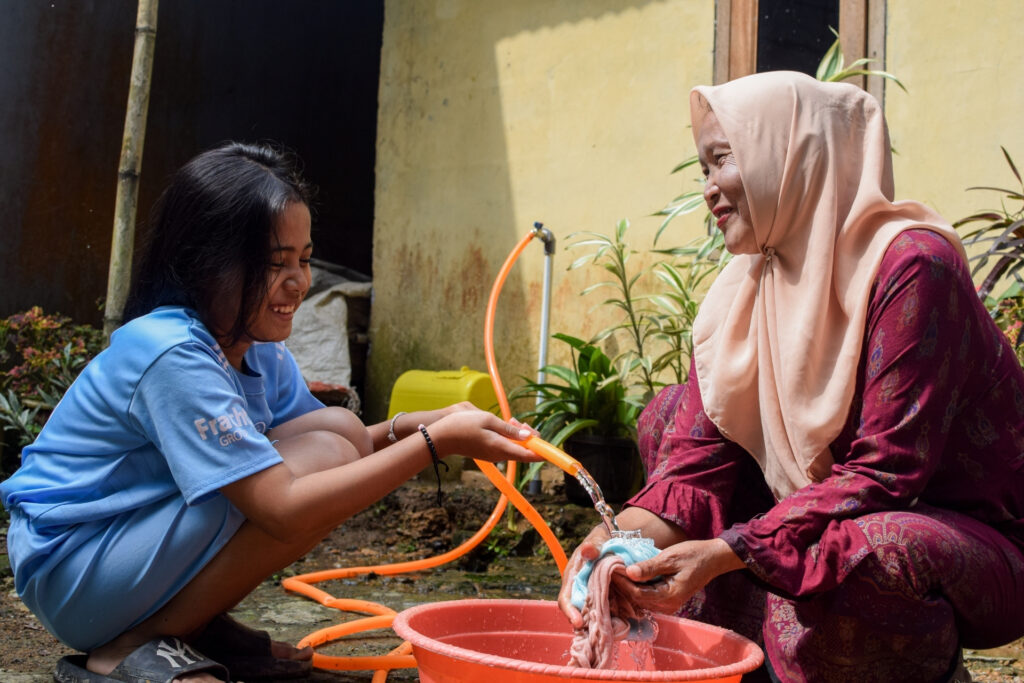
Iah Muliati and her daughter wash clothes using the clean water facilities built by Habitat for Humanity Indonesia and PT Bumi Resources Tbk in Kampung Wangun 2, Bogor (July 9). Photo: HFHI/Kevin Herbian
The morning sun warmly embraced Kampung Wangun 2, a small settlement in Karang Tengah Village, Babakan Madang Subdistrict, Bogor Regency. Gentle rays filtered through the trees, dancing across the rooftops before finally settling on the face of a mother bending down to wash clothes alongside her daughter.
Her name is Muliati. Beneath the splash of water flowing from her home’s faucet, a broad smile spread across her face. That day felt different. There was a calm she couldn’t hide, and behind her sparkling eyes grew the belief that her children’s future would be far better.
Muliati had long dreamed of a moment like this. For years, clean water had been a luxury beyond reach in her village. Despite living in what looked like a lush, green area surrounded by hills that should be sources of life, clean water remained elusive. Residents had to wrestle with an unreliable and inadequate water distribution system.
“I’m grateful to finally have clean water flowing straight from the tap,” Muliati shared with a smile. “The water is strong, clear—not murky like before.”
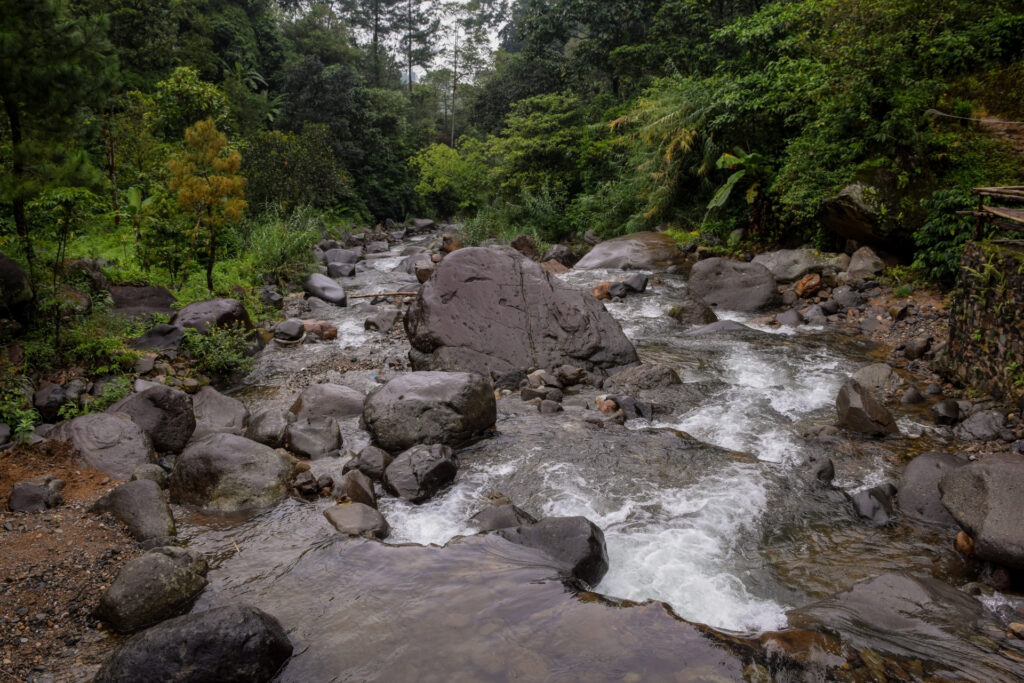
Her story is just one among many in Kampung Wangun 2, where access to clean water has long been a fundamental challenge. The local spring was managed independently, using makeshift plastic pipes installed without proper planning. The system was disorganized, and access unequal. Some residents received an overflow of water, while others had to wait their turn—or worse, received none at all.
A small river that serves as the water source for residents of Kampung Wangun 2, Bogor (January 9). This water source is managed independently without proper planning, using plastic pipes, resulting in uneven water distribution among residents. Photo: HFHI/Kevin Herbian
“Getting water here is very hard, especially during the dry season,” Muliati recalled. “Water distribution was uneven. Some households didn’t get any, and others received just a trickle.”
She will never forget the time her family went without water for four days. In a quiet voice, she said, “We had no choice but to buy water—two gallons at IDR 5,000 each. That IDR 10,000 should’ve gone to buy rice, but we had to divert it because we had no water.”
For families like Muliati’s, that situation severely impacted household finances. Water became an expensive need—ironically difficult to access, even though nature was right next door. They had to save water when it was available and stretch its use for everything from drinking to cooking and washing.
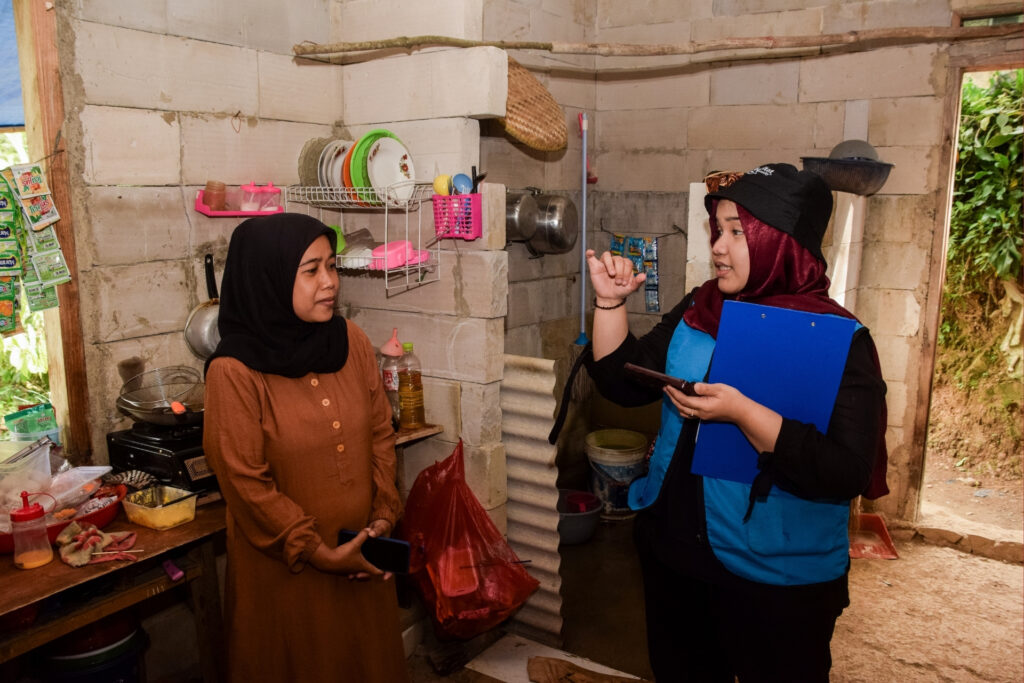
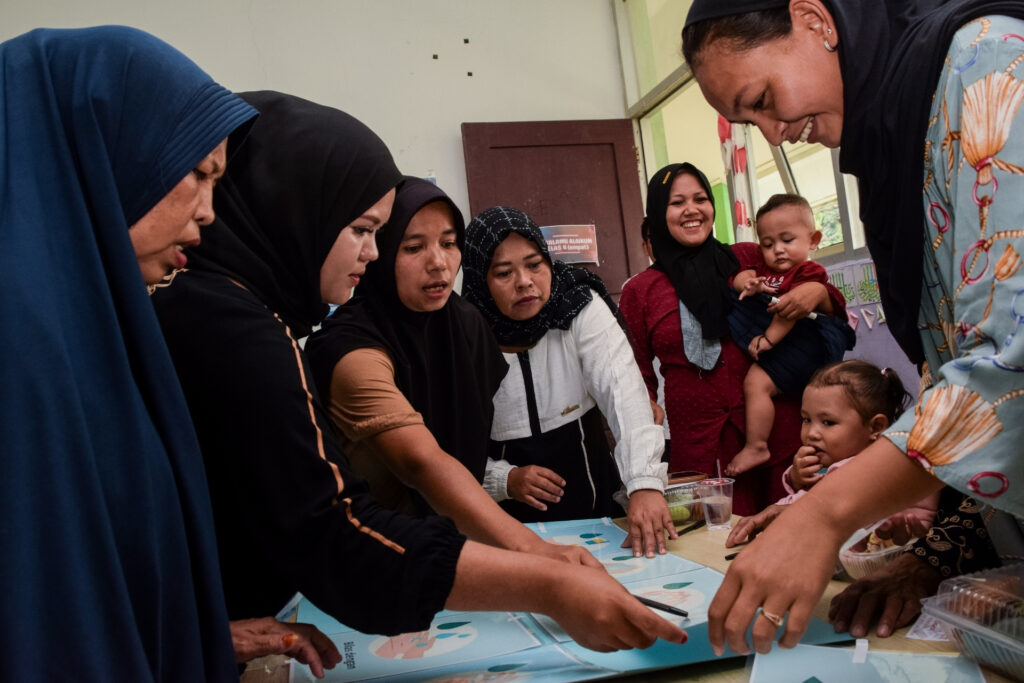
The Habitat for Humanity Indonesia team conducts data collection and listens to the aspirations of Kampung Wangun 2 residents in Bogor regarding limited access to clean water (April 17). Photo: HFHI/Kevin Herbian
In early 2025, winds of change began blowing through Kampung Wangun 2. Habitat for Humanity Indonesia partnered with PT Bumi Resources Tbk to launch a clean water access initiative.
But this wasn’t a one-way charity effort. Hundreds of residents were actively involved—from surveys and needs assessments to the construction of water infrastructure.
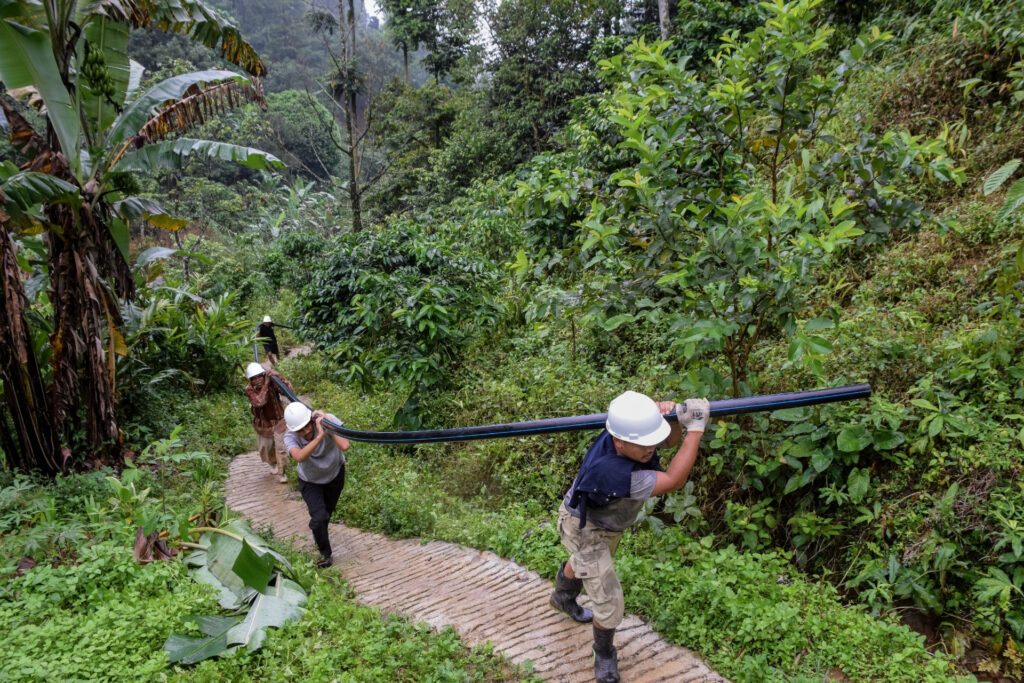
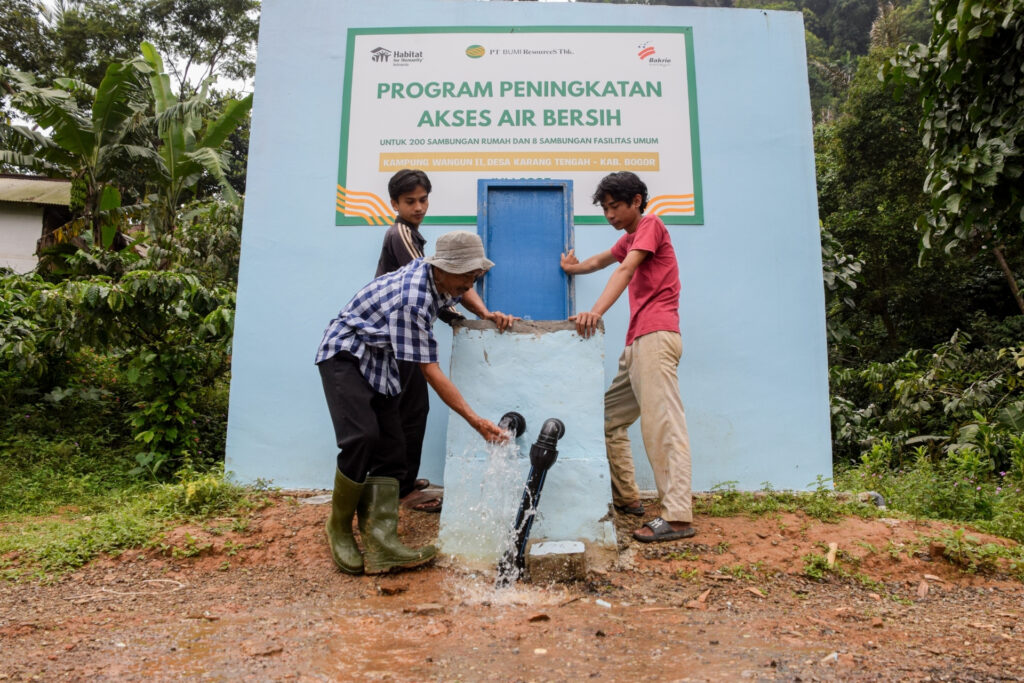
Community spirit and mutual cooperation became the driving force. Together, residents built four main water tanks: an intake tank, a treatment tank, a pressure break tank, and a reservoir tank. They also connected a High-Density Polyethylene (HDPE) pipe network—measuring two inches, one inch, and half an inch wide—spanning more than eight kilometers from the spring to households across four neighborhood units (RT).
Residents of Kampung Wangun 2 in Bogor work together to connect HDPE pipes as part of efforts to provide access to clean water (May 2). Photo: HFHI/Kevin Herbian
Today, clean water flows to over 200 household connections and eight public facilities, including four prayer rooms (mushola), two religious halls (majelis), one mosque, and a school serving hundreds of students daily. Each drop of water flowing from the bright yellow meters stands as proof of the community’s hard work and solidarity.
For PT Bumi Resources Tbk, this achievement is not just about numbers or completed connections. It is a real demonstration of the company’s commitment to supporting dignified and sustainable lives for the community.
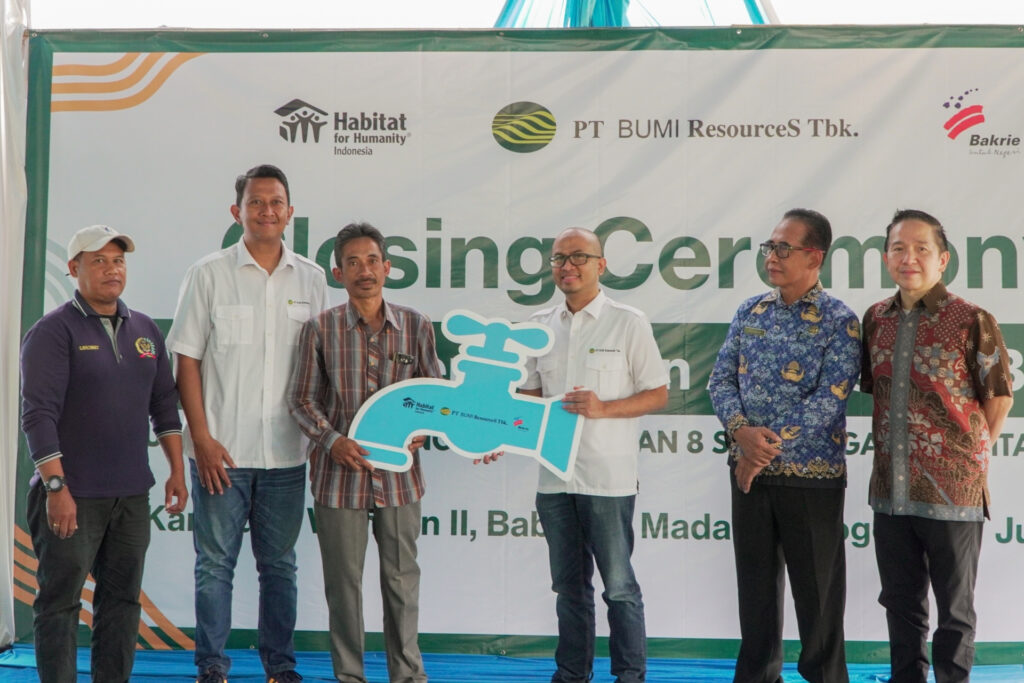
“We believe access to clean water is a basic human right. Through this collaboration, we aim to ensure that our contribution brings real, direct impact to communities—especially those in rural areas that previously faced water access difficulties,” said Tofan Wibisono, Senior Manager of Sustainability and CSR at PT Bumi Resources Tbk, during the closing ceremony of the Water Access Program in Kampung Wangun 2, Bogor on Thursday, July 17, 2025.
He added that this type of collaboration is not just about providing aid, but about building trust and independence. “We greatly appreciate the spirit of community shown by the residents of Kampung Wangun 2. It shows that when people are involved from the start, the results can be far more sustainable and empowering,” he said.
Symbolic handover of clean water access facilities by PT Bumi Resources Tbk to the Sejahtera Bersama Water Committee in Kampung Wangun 2, Bogor (July 17). Photo: HFHI/Edwyn Tarore
Haifa Nadira, Project Coordinator at Habitat Indonesia, emphasized that the program focused not just on physical infrastructure. “Most of the infrastructure was built by the residents themselves. We wanted to ensure they were not just beneficiaries but the main stewards of this water system’s sustainability.”
To support this, a water committee called Komite Air Sejahtera Bersama was formed, consisting of thirteen selected residents. Working voluntarily and without pay, they manage the system, set fair tariffs, and ensure smooth daily distribution.
Eman, the committee’s chairperson, explained, “Having the facilities is not the end—it’s the beginning. The important thing is how we maintain them. We regularly check the pipes, prevent leaks, and remind residents to use water wisely. We hope this facility lasts for decades as long as we care for it together.”
The Komite Air Sejahtera Bersama team conducts a routine inspection of the clean water access facilities built by Habitat for Humanity Indonesia and PT Bumi Resources Tbk in Kampung Wangun 2, Bogor (July 9). Photo: HFHI/Kevin Herbian
The program also included education and behavioral change initiatives. Habitat Indonesia provided hygiene training for 200 families, teaching handwashing techniques, sanitation practices, and even holding myth-busting games on cleanliness through interactive quizzes and themed board games.
Tami, a participant, shared her experience: “Now I understand more about household hygiene. Even small things I used to overlook matter a lot. Like how to properly wash hands or how to store drinking water hygienically. I’ll be more careful now to keep my home clean so my kids stay healthy.”
The program also encouraged environmental conservation. A total of 70 trees were planted around the spring, storage tanks, and residential areas—an ecological responsibility to preserve the spring, prevent erosion, and reduce drought risks in the future.
To ensure targeted and lasting impact, Habitat Indonesia also deployed enumerators to conduct social and technical surveys, ensuring every intervention directly addressed community needs.
The residents of Kampung Wangun 2, Bogor, enthusiastically participate in a Clean and Healthy Living Behavior (PHBS) training session (May 2). Photo: HFHI/Kevin Herbian.
What happened in Kampung Wangun 2 builds upon the success of a previous program in Kampung Wangun Cileungsi, where 152 homes and 7 public facilities already had clean water access.
Suhandi Widipranata, Head of Karang Tengah Village, expressed his gratitude for the continued effort. “This is the second time Habitat and Bumi Resources have stepped in to address our clean water challenges. I’m truly grateful, as this program has brought real transformation to our village. I hope the facilities we now have will be maintained so that even our grandchildren can benefit.”
A Future Begins
For Muliati, today’s change is deeply felt. “It’s such a relief having water like this. I use it for washing, bathing, even boiling—it’s safe to drink too. The head of our neighborhood said it’s been lab-tested,” she shared with enthusiasm. “Now I don’t have to spend extra money on water. I can use that money for other needs—or even save a little.”
Her eyes gazed into the distance, imagining a lighter future—one where her children and grandchildren would never have to struggle just to access clean water. “I believe this water is a blessing. For my children’s future too.”
What Habitat for Humanity Indonesia and PT Bumi Resources Tbk have done in Karang Tengah Village is more than infrastructure development—it’s a long-term investment in life. Every drop now flowing from the taps addresses physical needs, but also nourishes hope, fosters health, and strengthens solidarity as a cornerstone of community resilience.
From the foothills of Kampung Wangun 2, we are reminded of one simple yet profound truth: that big change can start with something as basic as clean water. And from that clear water, a healthier, more just, and more humane future begins to flow.