
Stories of Change
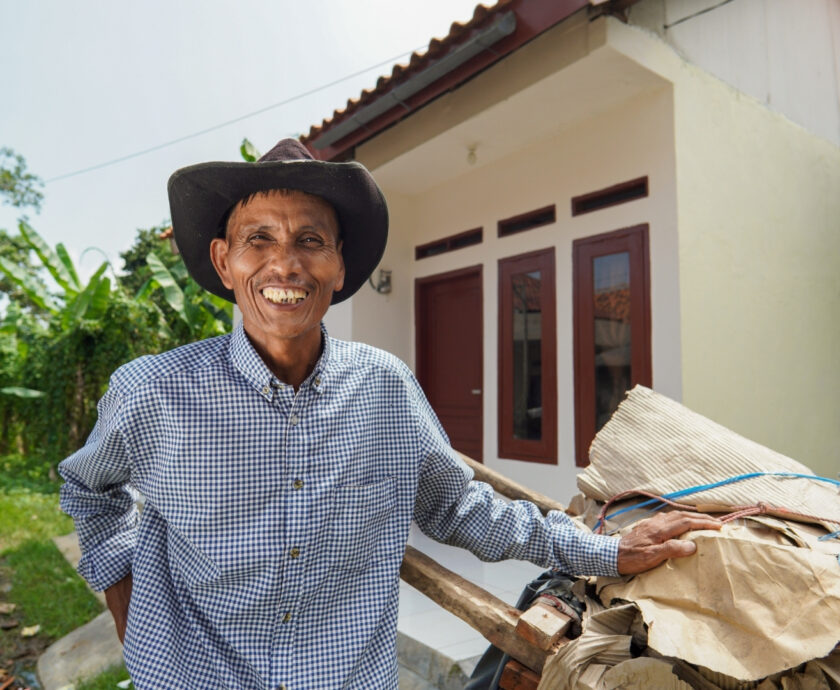
Morning and night no longer feel the same for Rigo Suhendra. Behind his simple daily life, one question used to constantly linger in his mind: would his house still be standing when the next rain came?
Bogor, May 5, 2026 – Rigo, 47, is a day laborer who depends on any work he can find. Some days he works as a construction worker, on others he becomes a driver, or takes on whatever jobs come his way—without any certainty. His income is just as unpredictable. On some days, he brings home IDR 100,000, on others IDR 50,000, and sometimes nothing at all. Together with his wife, Laya (46), a homemaker, they strive to meet the needs of their two school-aged children.
Amid these limitations, the small family had to live in a house inherited from Rigo’s parents. A house that should have been a place of shelter could not fully provide a sense of security. Its walls were made of weathered bamboo panels, patched with pieces of plywood and GRC boards. From the outside, the house looked fragile. From the inside, worry was always present.
For Rigo, comfort was no longer a matter of choice, but acceptance. He tried to make peace with his situation, convincing himself to live with what he had. Yet deep down, he held onto a simple wish that felt out of reach.
“Who wouldn’t want a good house? But this is all we can afford—what else can we do?” Rigo said.
Every time heavy rain fell, that fragile sense of calm would disappear instantly. Water seeped through the roof and cracked walls, soaking the floors and making it difficult for the family to rest properly. Many nights were spent in unease.
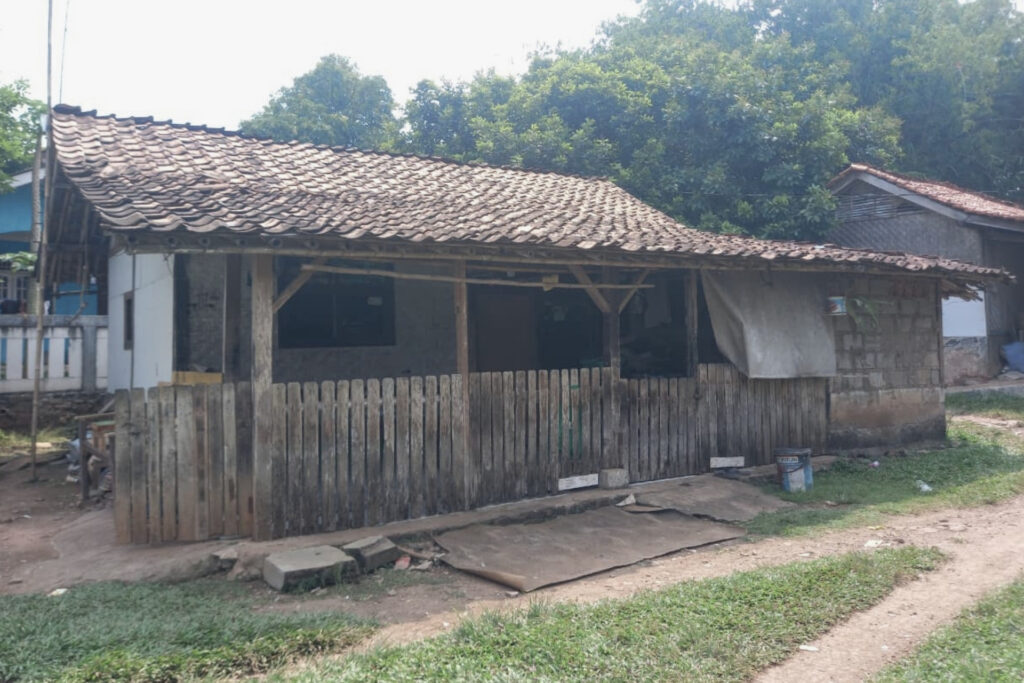
In moments like these, it was not just discomfort that arose, but fear. Rigo often worried that his house might collapse under strong winds. Thoughts about his family’s safety haunted him, while his ability to repair the house remained very limited. He could only set aside small portions of his daily income to patch damaged parts of the house, even though he knew it would never be enough.
Despite everything, he held onto a simple dream: to have a decent home for his family—a place that could truly protect them, not just barely shelter them. But for Rigo, that dream felt far beyond reach. With his limited financial situation, all he could do was try his best and hold on to hope.
The condition of the house also affected his children. Rigo realized that his son often felt embarrassed to invite friends over. A space that should have been a place to learn and grow together had instead become a source of insecurity.
Read also: From Running Out of the House to Feeling Safe Inside: Siti’s Story
Until one day, hope arrived in a way he had never imagined before. With support from generous donors, Habitat for Humanity Indonesia selected Rigo’s home in Wanaherang Village, Gunung Putri District, Bogor Regency, as one of the beneficiaries of a decent housing assistance program.
The news brought mixed emotions. On one hand, there was immense happiness and gratitude. On the other, a new concern arose—whether he would have to bear costs he could not afford. That concern was soon eased when he learned that the program required no financial contribution, but rather participation through sweat equity.
Over time, the once fragile house slowly transformed. The worn, damaged walls were replaced with a sturdy structure. In its place now stands a simple house with bright blue walls—modest, yet deeply meaningful. For Rigo, it is not just a new building, but an answer to the prayers he had long carried.
This change has brought a profound impact on Rigo’s family. A sense of security that once felt out of reach is now part of their everyday life. No more overwhelming worry when it rains, no more fear of the house collapsing.
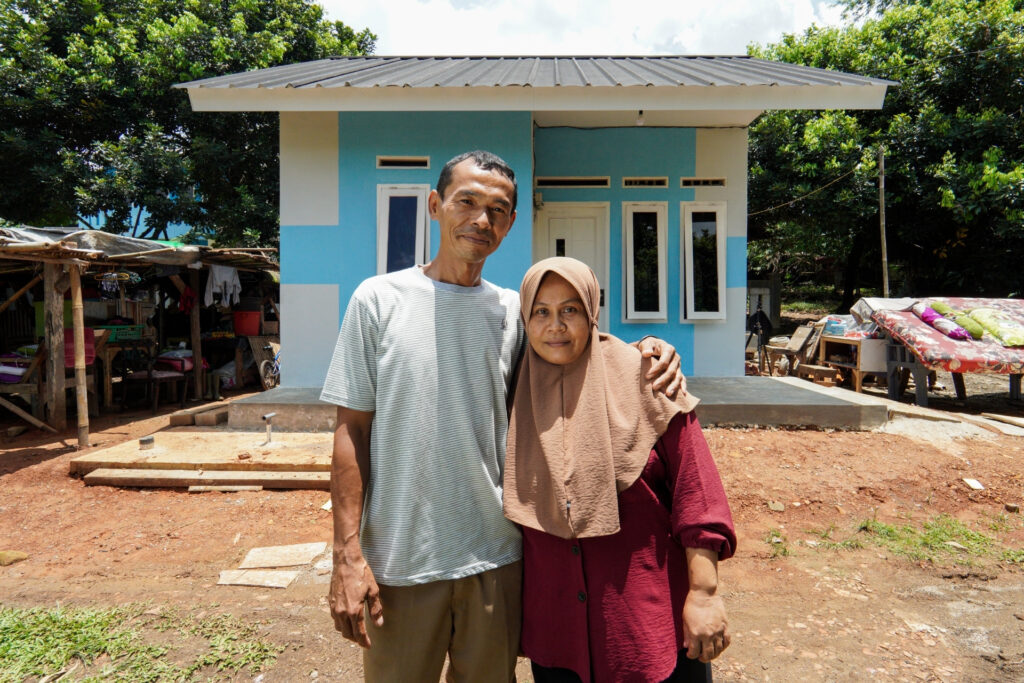
The change is also felt by his children. Where they once held back out of embarrassment, that feeling has gradually faded. They have become more confident and now even invite their friends over to study together.
Rigo himself feels a significant change within. The burden he once carried has slowly lifted. He is no longer haunted by anxiety every time he leaves home for work. Instead, he moves forward with a calmer mind and renewed spirit.
“Alhamdulillah, now my house is truly livable. I can finally provide the best shelter for my family. It feels like a huge weight has been lifted off my shoulders,” Rigo said. “It feels like a dream… suddenly having a proper home like this,” he added.
For him, this house is more than just a place to live. It is a symbol of hope fulfilled—a reminder that even in the midst of limitations, a better life is always possible.
Now, every corner of the house holds a story of struggle and gratitude. And for Rigo, that simple happiness feels complete—because at last, he can provide a safe and decent home for the family he loves.
Writer: Kevin Herbian
(kh/av)