
Stories of Change
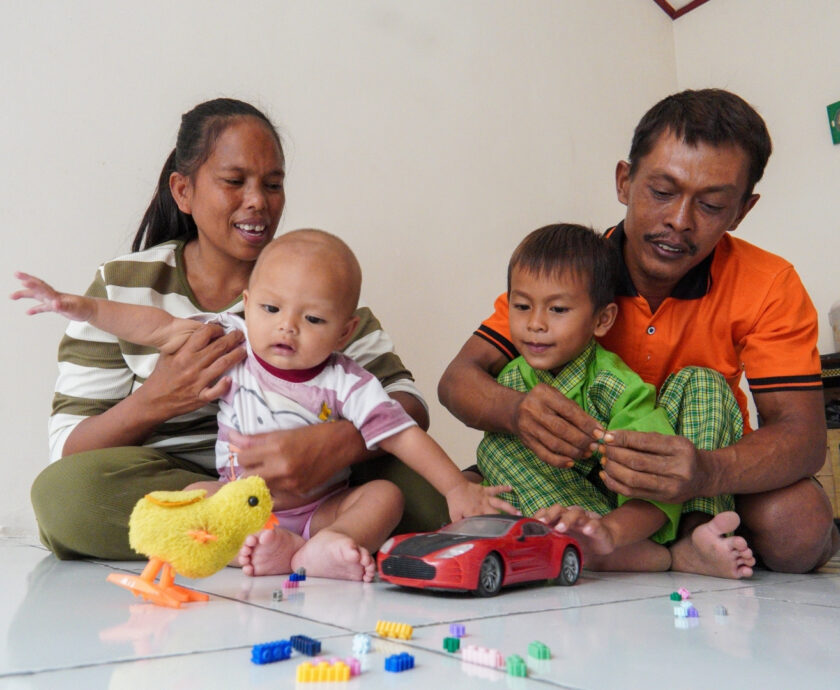
Nagekeo, September 7, 2026 – For Kristina Wae, a modest home in Marapokot Village, Aesesa District, Nagekeo Regency, East Nusa Tenggara, was more than just a place to live. It was where she and her family shared meals, exchanged stories, and spent their days together in happiness. But the Flores earthquake changed everything in a matter of minutes.
When the earthquake struck, Kristin, 39, her husband, Fransiskus Lita, 40, and their three children tried to escape as their house began to collapse. The front section of the house was damaged, while the kitchen at the back was also buried under the rubble. The usual exit they relied on was no longer safe.
“When the earthquake happened, we immediately became worried and started crying. We wanted to get out through the front, but the terrace had already started collapsing. We tried to go through the back, but the kitchen had also collapsed. Thankfully, there was a side door. My husband broke the door open, and we all managed to get out through there,” Kristin recalled.
They did not have time to take anything with them. At that moment, their safety was the only thing that mattered to Kristin and her family.
Losing a Home, But Not Losing Hope
Before the earthquake, Kristin was a homemaker while her husband worked as a farmer. The family also raised livestock to support their daily needs. Their income depended on farming and livestock sales, which were unpredictable and amounted to no more than IDR 2 million per month.
Their three children were also a reason for Kristin and her husband to keep going. The family’s needs, including their children’s school expenses, still had to be met even though their home was no longer habitable.
“That house meant everything to my family. It was the most comfortable place for my little family. Although it was a simple house, it was where we shared so much happiness,” Kristin said.
After the earthquake, Kristin’s family evacuated to Bukit Danga, quite far from their home. For about two weeks, they stayed in an evacuation tent and relied on food and basic necessities provided by the government.
However, Kristin realized that she could not stay at the evacuation site forever. There were still livestock at home that could help support the family’s livelihood. Her children also needed to return to their daily lives.
After spending about two weeks in Bukit Danga, Kristin and her family therefore decided to return to Marapokot. They set up a tent beside their damaged home and stayed there temporarily.
“If we continued staying up there, what would happen to our income? We have children who are still in school. We still have livestock that may help us make a living every day. So, we chose to get back on our feet,” she said.
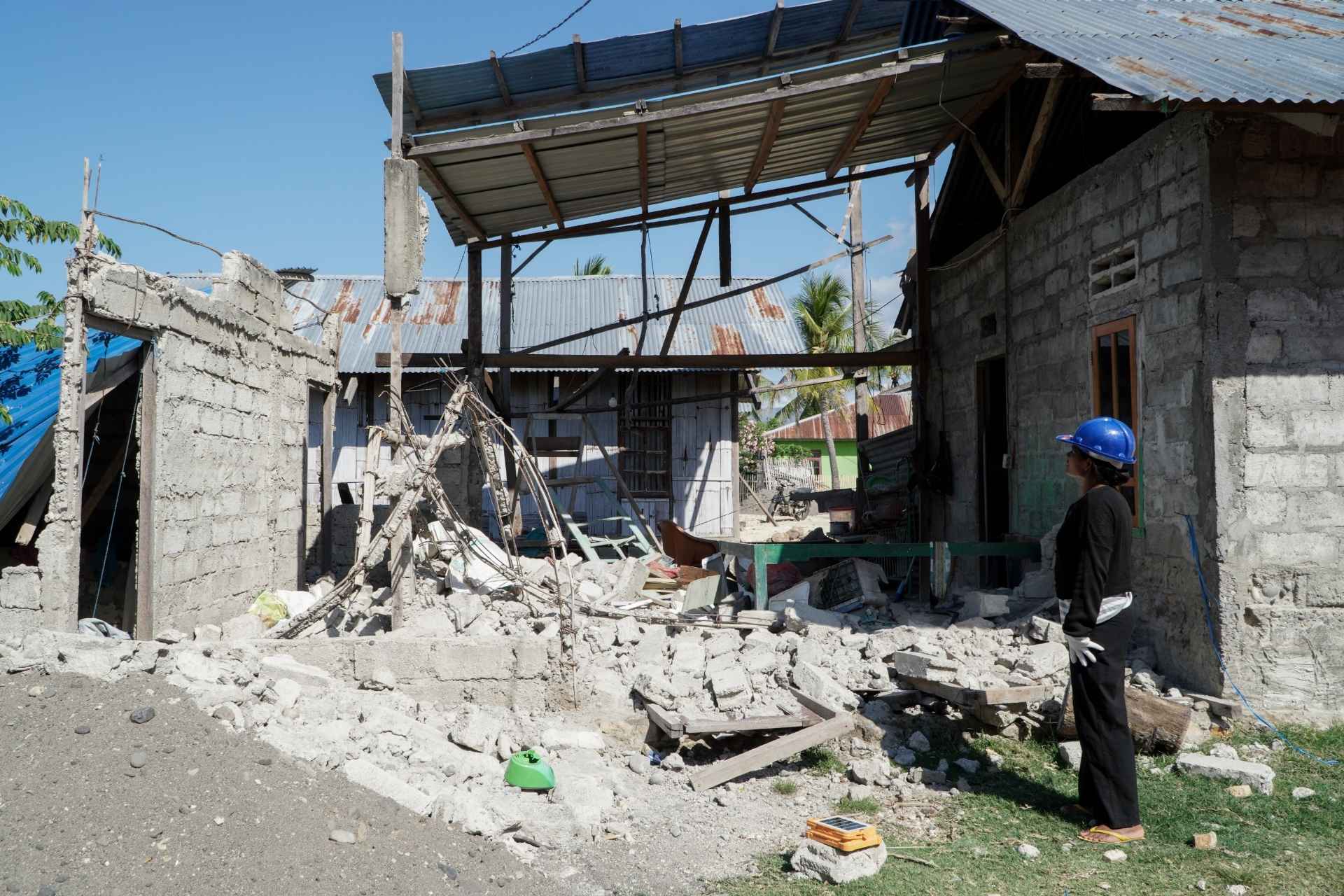
Kristina Wae points to a collapsed section of her home damaged by the earthquake in Nagekeo Regency, East Nusa Tenggara. Photo: HFHI/Kevin Herbian
A Kit That Became a First Step Toward Recovery
A few days after returning home, Kristin was informed by village officials that she should come to the village office. She did not know that the visit was related to assistance she was about to receive.
Her motorcycle was still trapped beneath the rubble of the house, so she had to take a neighbor’s motorcycle taxi to get to the village office.
When she arrived, Kristin was unsure and did not know what she was going to receive. She eventually learned that her family would receive a set of tools to help clean up their earthquake-damaged home.
The assistance was an Emergency Shelter Kit (ESK) distributed by Habitat for Humanity Indonesia with support from donors. A total of 100 ESK packages were provided to 100 earthquake-affected families across five villages in Aesesa District, Nagekeo Regency, East Nusa Tenggara, as part of the Flores Housing Recovery program.
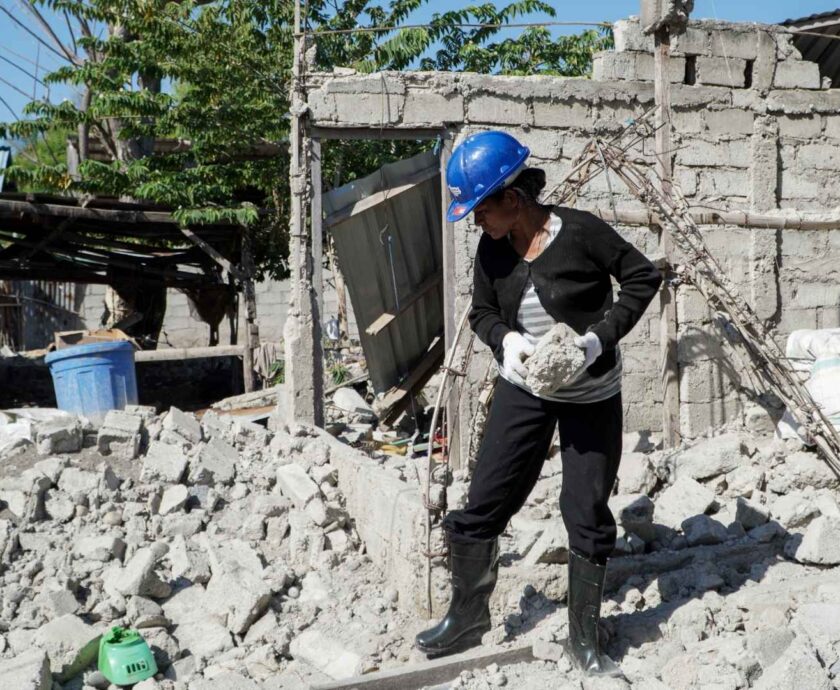
Unlike assistance intended for daily necessities, the ESK contains various tools that families can use to clear earthquake debris and carry out initial repairs on homes that have sustained light to moderate damage.
For Kristin, the kit came at just the right time. “I am very grateful and thankful. No matter how small the assistance may seem, I can make use of it,” Kristin said.
More than just a set of tools, the ESK gave Kristin the encouragement to start doing something. Her house could not be rebuilt immediately, and she did not yet have the funds to repair it. But she now had the tools to begin with the simplest task: cleaning her home little by little.
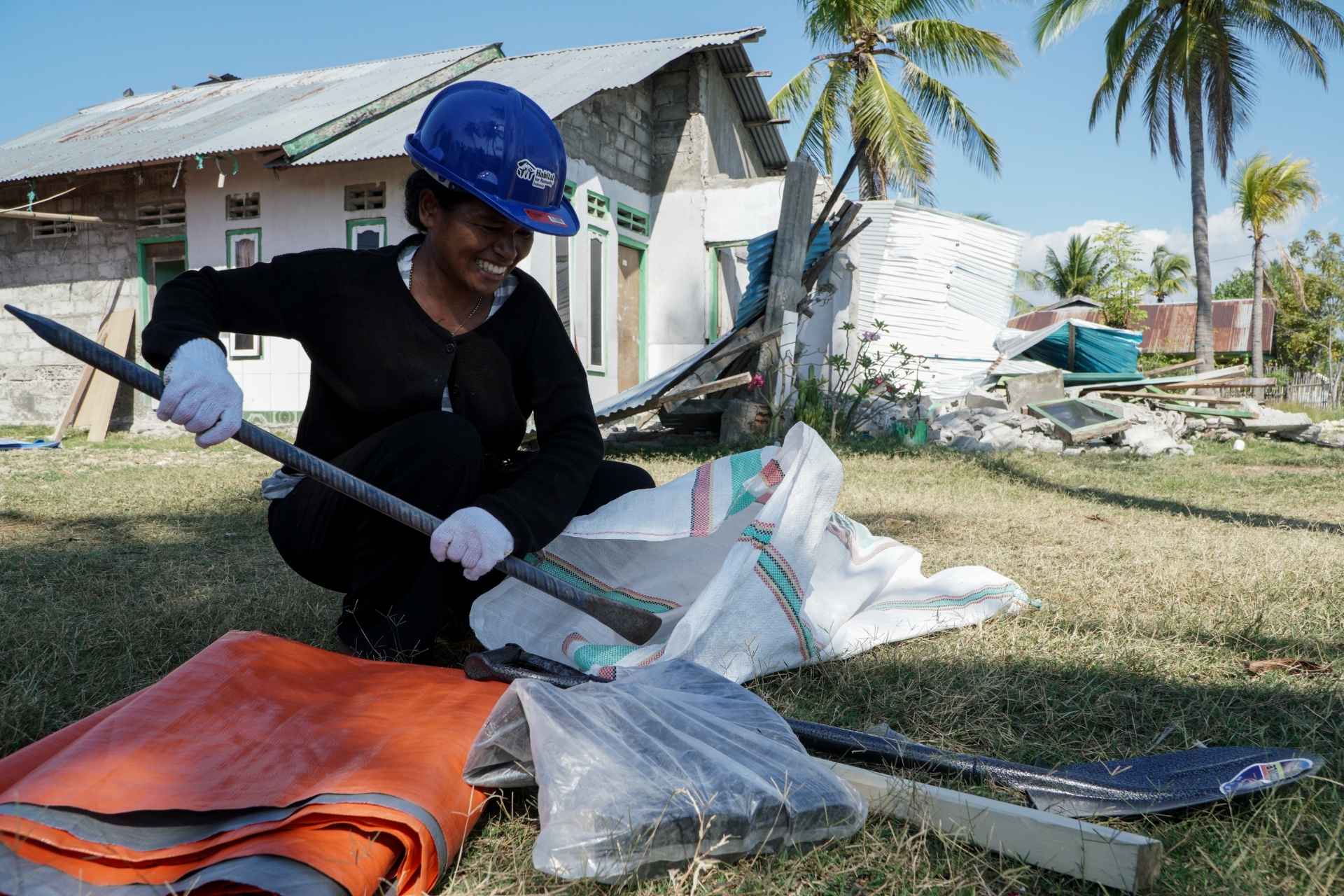
Kristina Wae opens an Emergency Shelter Kit (ESK) provided by Habitat for Humanity Indonesia in Nagekeo Regency, East Nusa Tenggara. Photo: HFHI/Kevin Herbian
Read also: After the Earthquake, Abdul Rajak Chooses to Rise and Hold on to Hope for His Family
Cleaning the Kitchen, Preparing for the Next Step
Kristin plans to start with the kitchen. The area was one of the parts of the house that sustained damage, and she hopes to clean it so that it can be used for cooking again.
“At the very least, we will clean the kitchen first so that we can use it for cooking. We will do it little by little with these tools,” she said.
The desire to repair the house had actually been there even before the earthquake. Kristin recalled that her family had bought a truckload of sand to repair the kitchen floor. They planned to buy cement the following day to continue the work. But the earthquake struck before they could carry out the plan.
The sand they had purchased had not yet been used when the family had to leave their home to save themselves. Their simple plan to make their home better had to be put on hold.
Now, Kristin is trying to start again from the beginning. “Help like this makes me feel that I need to be stronger and gives me the motivation to keep going. I want to rebuild my house, even though for now I still have to wait until I have the funds or the means to do so. For now, we are cleaning it little by little. If we are blessed with the resources later, we want to build a better home,” she said.
For Habitat for Humanity Indonesia, small steps such as cleaning a damaged home are an important part of the recovery process. That is why the ESK assistance is not only intended to help families clear earthquake debris, but also to provide a starting point for families to regain control over the recovery of their homes.
The distribution of ESK packages also marks the beginning of the housing recovery plan in Aesesa, Nagekeo. Moving forward, Habitat Indonesia will support the repair and strengthening of homes through a retrofitting approach for 200 families, so that the repaired homes will not only be more livable but also safer and more resilient to future disasters.
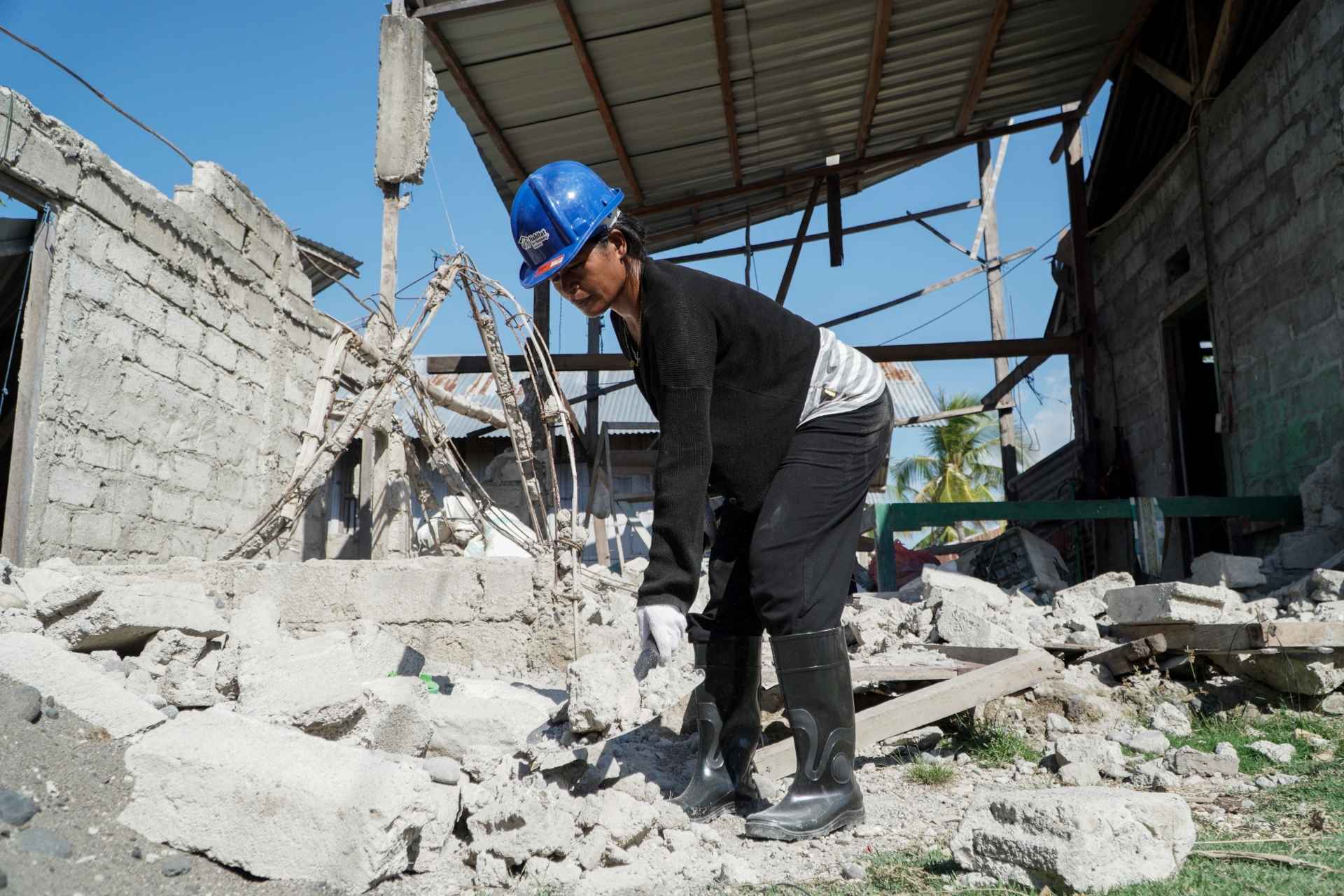
Kristina Wae uses a tool from Habitat for Humanity Indonesia’s Emergency Shelter Kit to clear earthquake debris at her home in Nagekeo Regency, East Nusa Tenggara. Photo: HFHI/Kevin Herbian
From the Ruins of a Home, Hope Grows Again
Life is still far from easy for Kristin and her family. They continue to live in a tent beside their home. Most of the building remains uninhabitable due to damage and cracks.
Yet, despite these limitations, Kristin has chosen not to stop. She is slowly cleaning her home while waiting for an opportunity and the resources needed to rebuild it. For her, the process is not only about repairing a building, but also about restoring the place that has long been at the heart of her family’s life.
The modest home that once stood as a witness to her family’s many happy moments has now become a place where Kristin holds on to hope for a new beginning. “Home is everything to my family,” she said.
For Kristin and other families affected by the earthquake, recovery may not happen in a single day. But from a tent, a few simple tools, and the determination to start cleaning again, the first step has already begun.
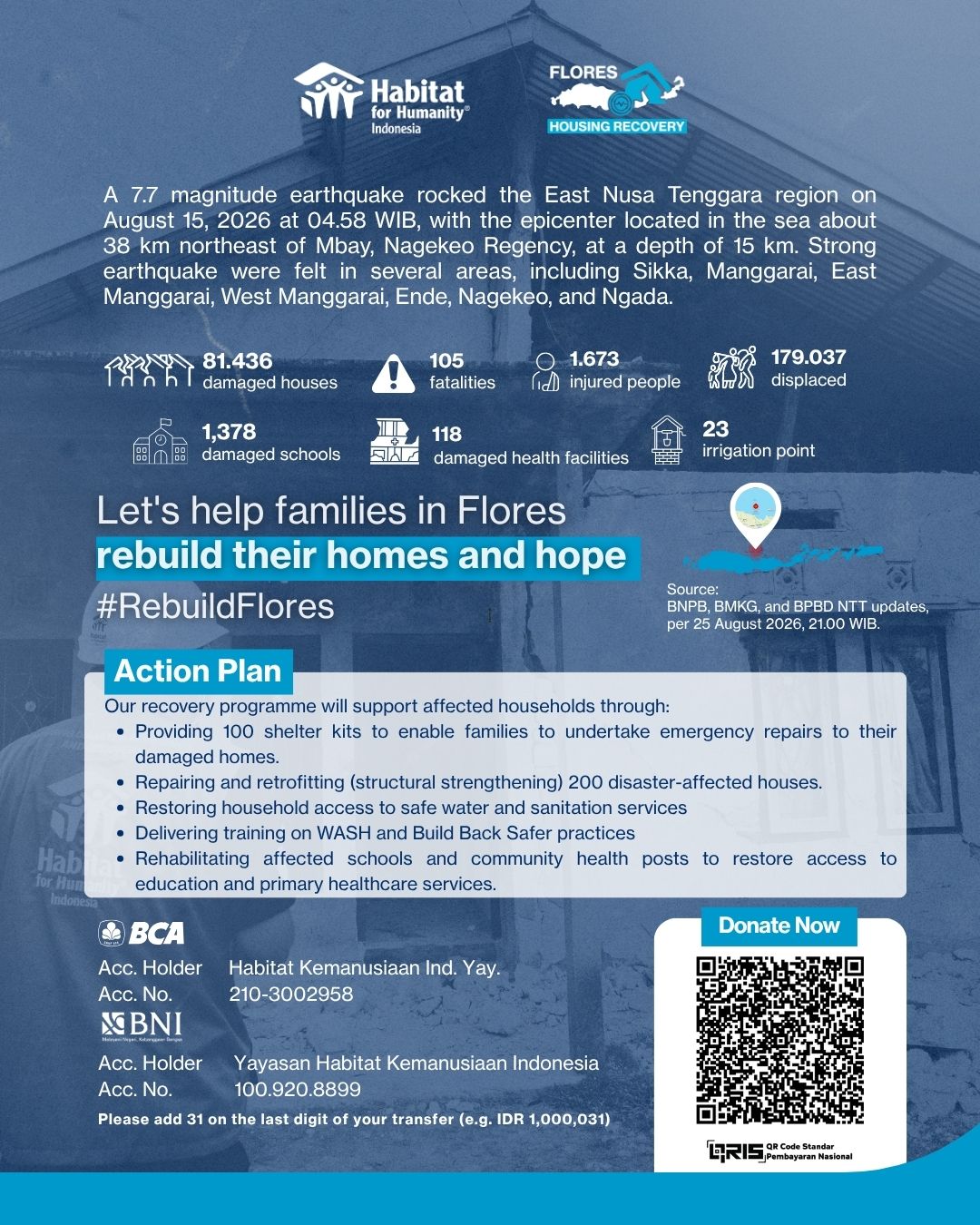
Your support as a Habitat Friend can help families affected by the Flores earthquake rebuild safer and more decent homes. Together, we can support housing recovery for families in Nagekeo through the Flores Housing Recovery program.
Make a donation through the information provided on the campaign flyer below.
Writer: Kevin Herbian
Graphic: Tias Ester Widhari
(kh/av)