
Habitat Updates
Karawang, September 10, 2026 – The cheerful voices of students echo through the school grounds as the bell rings, marking the beginning of another school day at SDN Wanakerta 1 in Teluk Jambe Barat District, Karawang Regency. Every day, 184 students attend classes at the school. However, the learning process has faced challenges since one of the classrooms sustained significant damage.
The roof of the classroom had deteriorated over time and eventually collapsed, making the room unusable for teaching and learning activities. The ceiling was also damaged. As a result, students have had to take turns using other classrooms, preventing learning activities from taking place optimally.
“The roof was leaking, and eventually the ceiling collapsed because the roof structure had become too weak. Fortunately, there were no students in the classroom when it happened. We hope the damage can be repaired soon so that teaching and learning activities can run more effectively and the students no longer have to share or take turns using classrooms,” said Drs. Jasa Rohdiat, Principal of SDN Wanakerta 1.
The school’s sanitation facilities also face limitations. Two of the available toilets are damaged and cannot be used. As a result, the number of functioning toilets is limited, forcing students to queue when they need to use them.
The condition of educational facilities at schools such as SDN Wanakerta 1 remains a challenge in many parts of Indonesia. Around 30 percent of elementary schools in rural areas still require major renovations, while approximately 20 percent do not yet have adequate sanitation facilities. Inadequate school buildings and facilities can affect students’ comfort and safety during the learning process.
Similar challenges can also be found around the Karawang International Industrial City (KIIC) in Karawang Regency and the Greenland International Industrial Center (GIIC) in Bekasi Regency. Within four villages located within a 5–7-kilometer radius of these two industrial areas, there are 41 schools ranging from early childhood education to senior high school. An estimated 21 schools continue to face various challenges, including overcrowded classrooms, damaged buildings, inadequate sanitation facilities, and limited learning-support infrastructure.
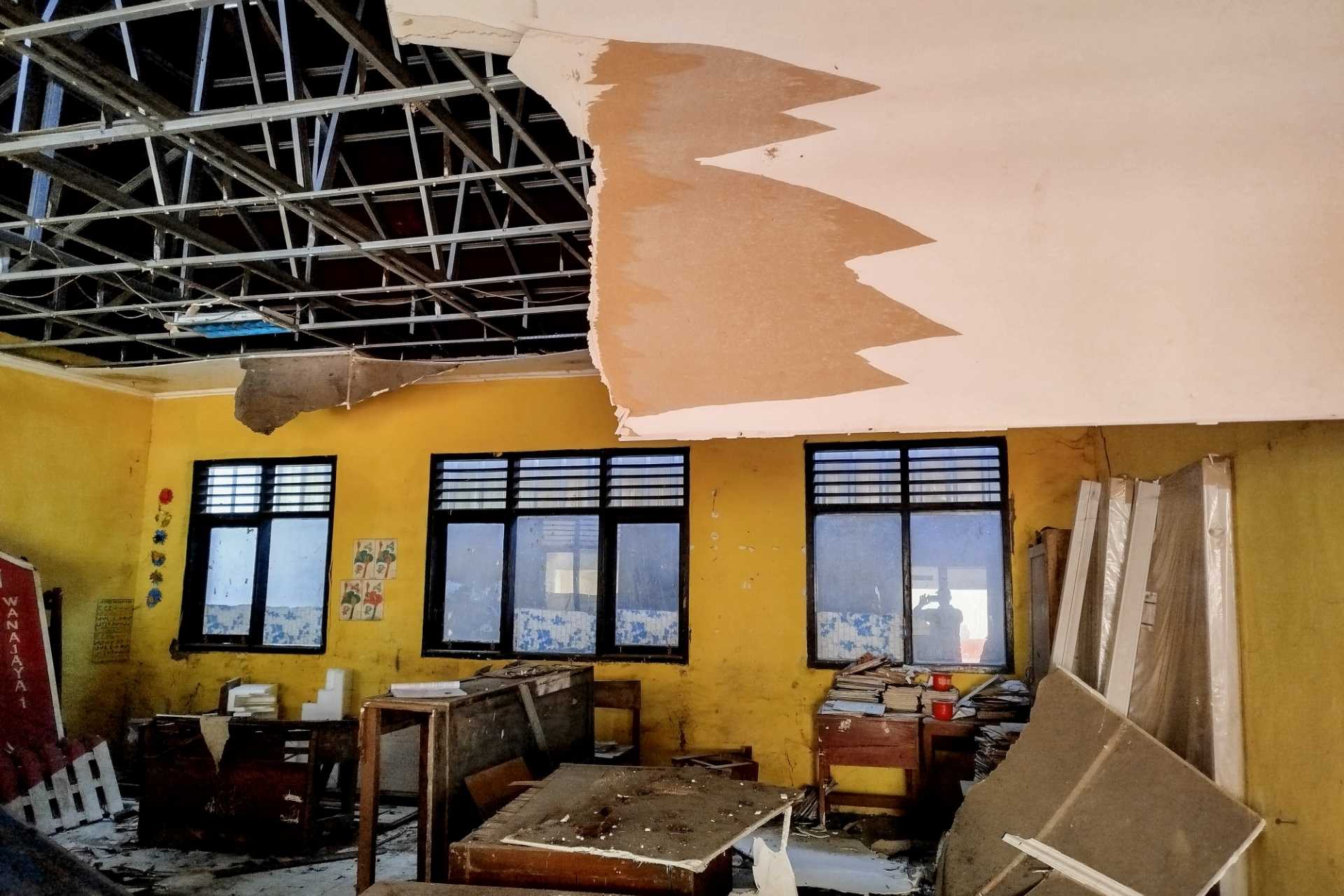
A view of a dilapidated classroom at SDN Wanakerta 1 in Karawang Regency, West Java. Photo: HFHI Team
In response to these needs, Habitat for Humanity Indonesia has partnered with Microsoft to improve educational facilities around the KIIC and GIIC areas. This initiative is part of Habitat Indonesia’s education program, which recognizes the close relationship between adequate housing, supportive learning environments, and the quality of life of low-income families.
Habitat Indonesia believes that adequate housing and a quality learning environment are closely interconnected. Children need a safe place to live where they can rest and study, as well as a comfortable school environment where they can learn and develop to their full potential. Therefore, improving educational facilities is part of Habitat’s broader efforts to improve the quality of life of low-income families.
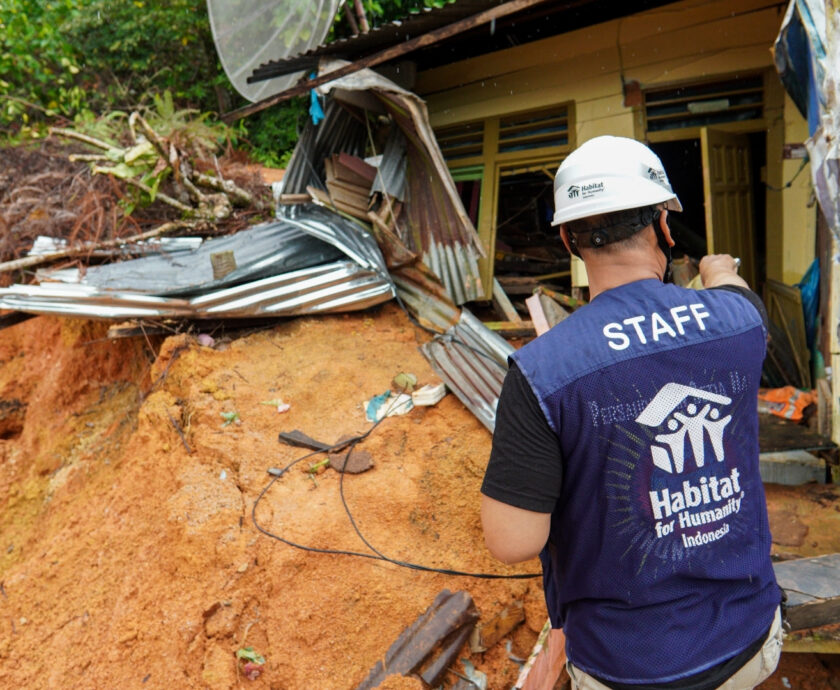
Currently, the Habitat Indonesia team is conducting an in-depth assessment of schools across four target areas: Wanakerta, Wanasari, Sukamahi, and Pasiranji villages. The assessment aims to gain a comprehensive understanding of the condition of each school’s facilities, identify priority needs, and ensure that the planned renovations are tailored to the specific conditions of each school.
Based on the assessment results, 15 schools will be selected to receive renovation support. Each school will develop a proposal based on its priority needs, ensuring that the interventions are not one-size-fits-all but are instead tailored to the specific conditions and requirements of each school.
Renovation support may include various non-structural improvements, such as repairing ceilings, floors, and walls, repainting, improving sanitation facilities, and enhancing access to clean water. The scope of work will be determined based on the assessment findings and proposals submitted by each school.
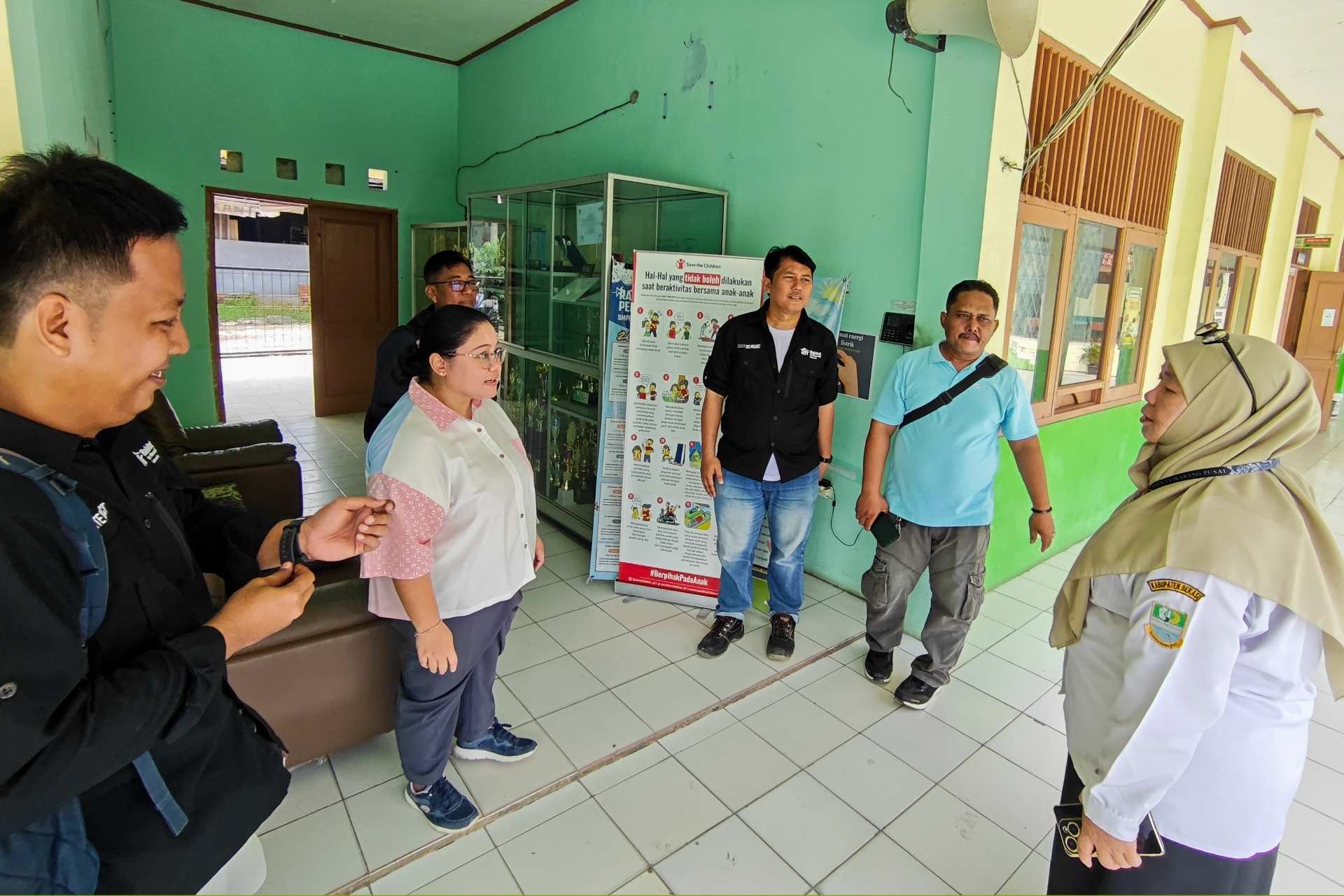
The Habitat for Humanity Indonesia team and Microsoft representatives conduct an in-depth assessment of 15 schools in Karawang and Bekasi Regencies, West Java. Photo: HFHI Team
In addition to improving physical facilities, the program will also promote more inclusive renovation approaches. Schools will be encouraged to adopt facilities and designs that are more responsive to the needs of women and people with disabilities, ensuring that learning environments can be accessed and used safely and comfortably by all students.
Environmental sustainability will also be incorporated into the planning process. The use of durable local materials, natural lighting and ventilation, and efficient use of water and energy will be considered during renovations. Depending on the conditions of each school, climate-resilient approaches, such as improving drainage, strengthening flood protection, and utilizing rainwater, may also be implemented.
The program will not stop at the construction or improvement of facilities. Schools will also be encouraged to develop a sense of ownership of the renovated facilities. Involving school representatives in determining renovation priorities is an important step toward ensuring that the improved facilities are properly maintained and utilized over the long term.
Through its collaboration with Microsoft, Habitat for Humanity Indonesia hopes that support for 15 schools around the KIIC and GIIC areas will create learning spaces that are safer, healthier, more comfortable, and more inclusive. When children have appropriate spaces to learn, they gain more than a better place to pursue their education—they gain an environment that supports them in growing, developing, and preparing for a better future.
Writer: Kevin Herbian
(kh/av)