
Habitat Updates
East Nusa Tenggara, August 22, 2026 – That morning, Yofita Damul (37) was preparing breakfast for her children. The rice was already cooked, the vegetables were being reheated, and soon her family would begin their usual daily activities. But the peaceful morning changed in an instant when the ground began to shake.
“My children immediately screamed, ‘Mom, what’s happening?’ I panicked too. I immediately told them, ‘Let’s get outside, let’s get outside, kids!’” Yofita recalled.
The magnitude 7.7 earthquake that struck Flores on August 15, 2026, left Yofita’s home in West Kuwus Subdistrict, West Manggarai Regency, East Nusa Tenggara, no longer safe to live in as it had been before. When the earthquake struck, her thoughts were focused solely on the safety of her children and her mother, who was ill and had difficulty standing.
Amid the panic, Yofita and her family tried to get out of the house. Her mother was then evacuated to a safer place. The house that had sheltered her family for years could only be watched from outside as it shook violently.
“At that moment, we immediately carried Mom outside. We weren’t thinking about anything else anymore. The most important thing was that everyone could get out safely. After that, we could only watch the house shake right before our eyes,” she said.
Amid the fear, there was one thing Yofita remained grateful for. None of her family members were injured or killed in the disaster. “Everything was chaotic. But I am grateful to God that we are all safe. No one was hurt. The house was damaged, and whether we like it or not, we have to accept that reality. What matters is that our family is safe,” Yofita said.
However, surviving the earthquake did not mean that their ordeal was over. Once their home was no longer safe to live in, Yofita and her family had to find a temporary place to shelter.
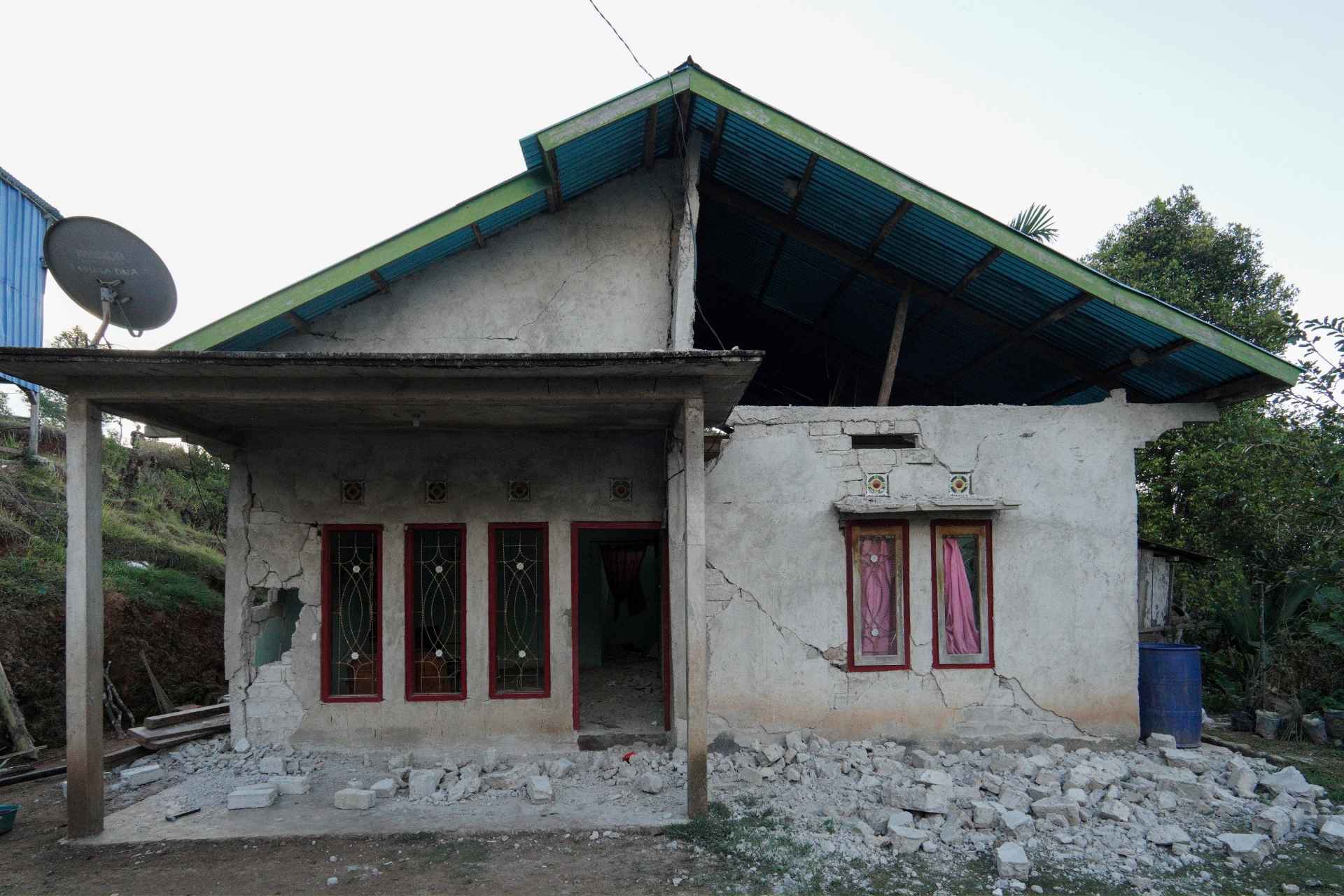
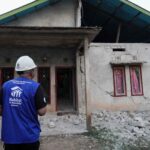
Damage to Yovita’s house following the Flores earthquake in West Kuwus District, West Manggarai Regency, East Nusa Tenggara, Indonesia (Aug. 18). Photo: HFHI/Kevin Herbian
A tent has now been set up in the yard of their neighbor’s house. In the limited space, three families have to share the same tent to rest and carry out their daily activities. Yofita’s family consists of nine people, including her children, her sick mother, and a child who has been entrusted to her care because the child’s parents are currently in Kalimantan.
“We are now staying in a tent in front of our neighbor’s house. We have been there for several days since the earthquake. Three families are staying in this one tent. My own family has nine members,” Yofita said.
For a relatively large family, living in a tent is not easy, especially for an extended period of time. Yofita also has to make sure that her children’s needs are met while continuing to care for her sick mother.
That is why, when asked what her family needs most at the moment, Yofita did not hesitate to answer. “The most important thing is a place to live. We cannot stay in a tent for too long, especially because we have children. We also need basic daily necessities,” she said.
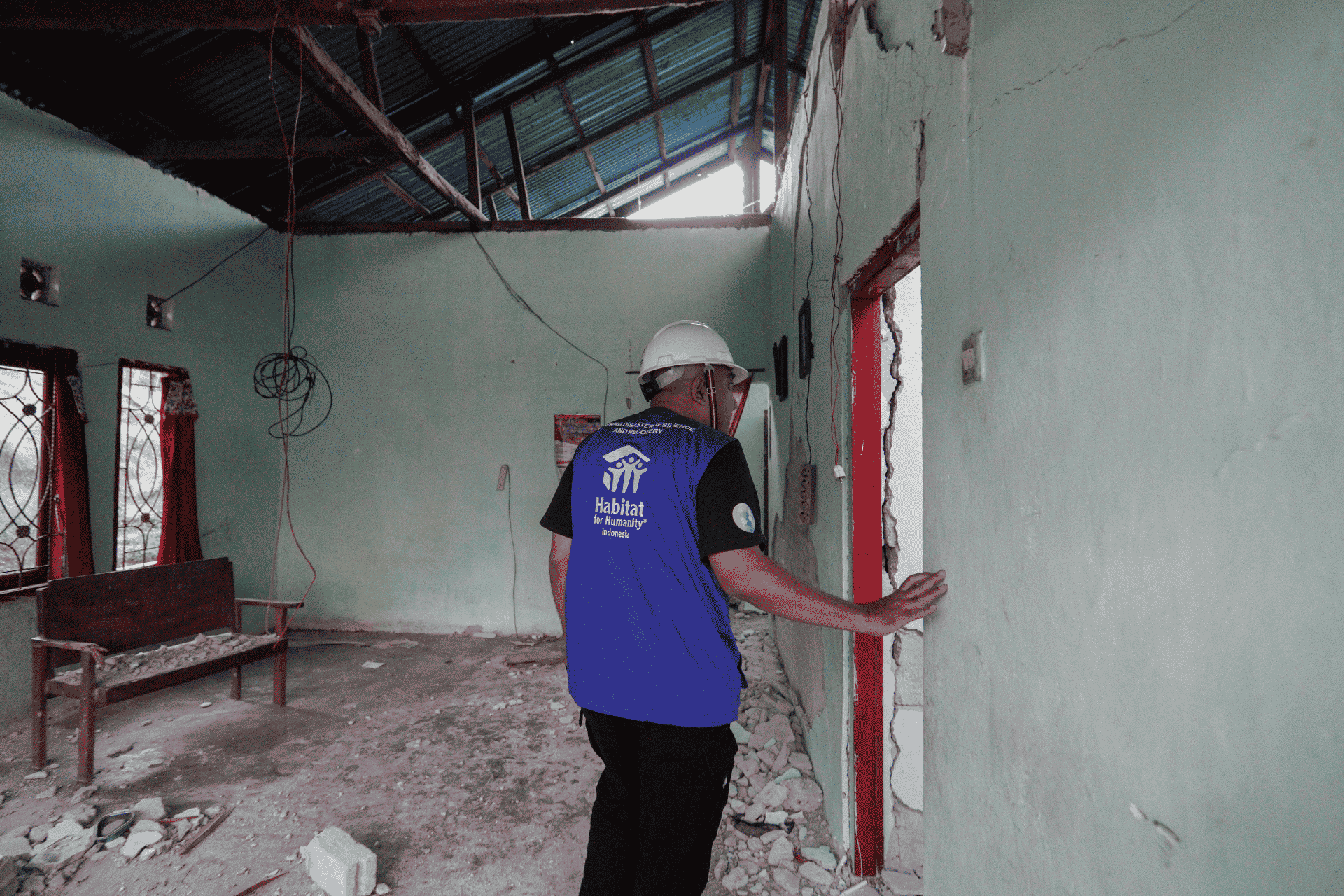
The Habitat for Humanity Indonesia team assesses Yovita’s house, which was affected by the Flores earthquake, in West Kuwus District, West Manggarai Regency, East Nusa Tenggara, Indonesia (Aug. 18). Photo: HFHI/Kevin Herbian
The hope of having a safe home is not new to Yofita. Before the earthquake damaged her home, the house was the result of years of hard work and struggle by her family.
In 2019, Yofita moved to Kalimantan for almost five years to work and earn money. With the income she saved from her hard work, construction of the house began in March 2019. After some time, she and her family returned to their hometown in January 2021 and lived in the house until the earthquake struck.
The house was more than just a building to Yofita. It represented her family’s long journey toward having a home of their own. However, the earthquake left the home they had built through years of hard work unable to provide the same sense of safety as before.
Now, Yofita once again finds herself in a situation where housing has become an urgent need. For her, recovery is not only about repairing a damaged building, but also about restoring a safe space where her family can live together.
Yofita’s experience shows how disasters can have impacts that extend far beyond physical damage. When a home is affected, daily activities, childcare, family health, and a sense of security can all be disrupted.
Amid these circumstances, support for housing recovery is essential to help affected families regain access to safe and adequate homes. Habitat for Humanity is responding to the housing needs of families affected by the Flores earthquake through efforts to support the recovery of homes and communities.
For Yofita, her hope is simple: that her family can soon have a place to return to—not just a temporary tent, but a home that can provide a sense of safety for her children and family. “My hope now is that we can soon have a decent place to live. We want to live peacefully with our family again. That is what we need most,” she said.
Yofita’s journey after the earthquake is far from over. The home she built through years of hard work now needs to be rebuilt and restored. Yet, amid loss and uncertainty, she chooses to remain grateful for the one thing that matters most: her family is safe.
For families like Yofita’s, supporting housing recovery means more than simply rebuilding a structure. It is about restoring a sense of safety, keeping families together, and helping them gradually rebuild their lives after a disaster.
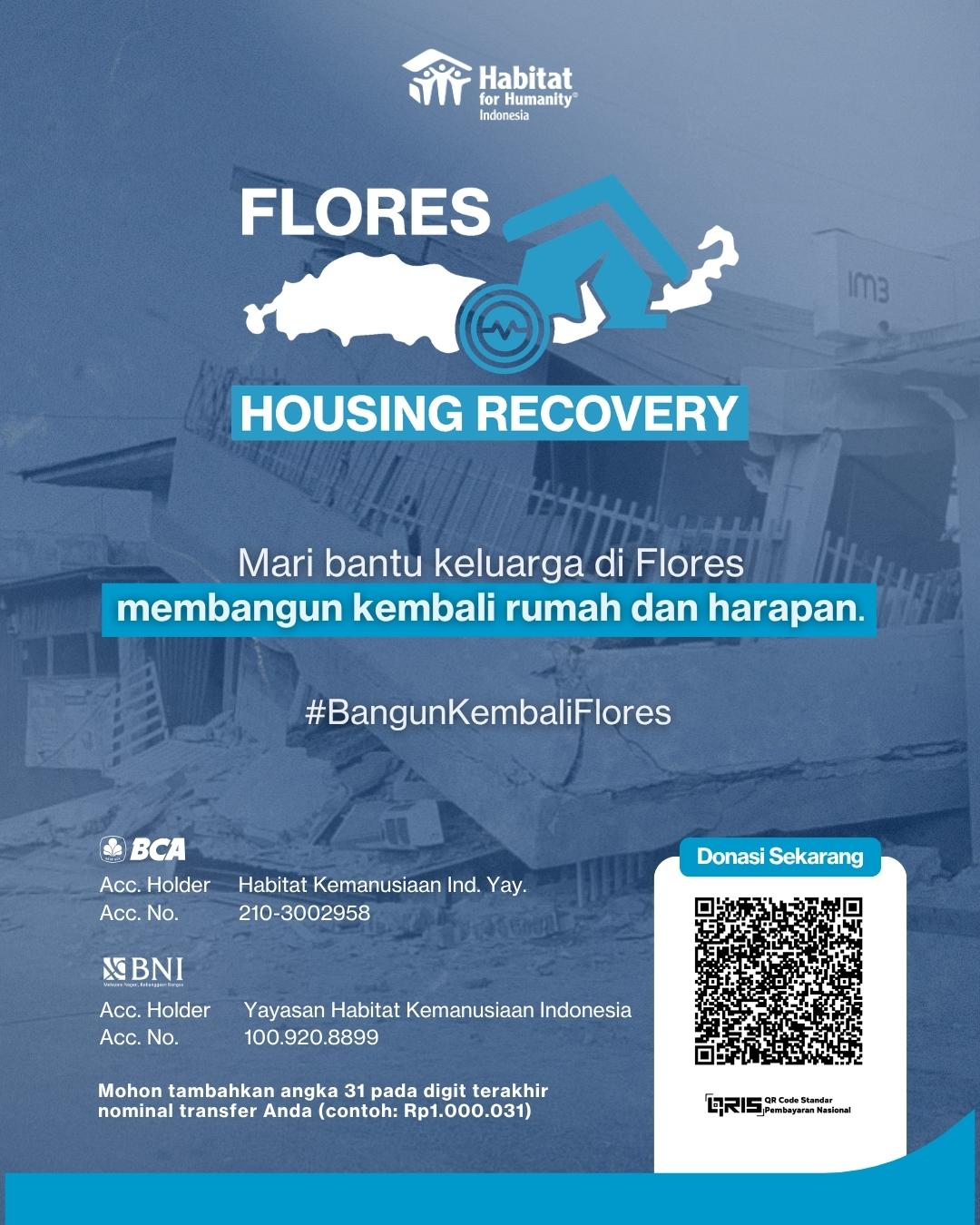
Let us come together to help thousands of families like Yofita’s regain access to safe and adequate homes. Donations can be made through:
Writer: Kevin Herbian
Graphic: Tias Ester Widhari
(kh/av)