
Habitat Updates
Yogyakarta, July 30, 2026 – For most people, home is a place to rest, spend time with family, and feel safe and comfortable. However, for many people with disabilities in Indonesia, home still presents significant challenges in carrying out daily activities. Stairs without ramps, narrow bathrooms, uneven floors, and inaccessible layouts mean that many homes are not yet safe, comfortable, or accessible for everyone.
These challenges remain an important issue that deserves greater attention. Data show that approximately 9.9 million families in Indonesia still face a housing backlog, while 26.9 million families live in homes that do not meet minimum standards for adequate housing. The situation becomes even more complex for families with members living with disabilities. Indonesia is estimated to have around 23 million people with disabilities, yet only a small proportion of homes are equipped with basic accessibility features such as ramps, handrails, and disability-friendly sanitation facilities.
Beyond inadequate infrastructure, other factors—including financial constraints, limited awareness of the importance of inclusive housing, and persistent stigma toward people with disabilities—continue to hinder the development of homes that are both adequate and accessible. As a result, simple daily activities such as going to the bathroom, leaving the house, or moving from one room to another often still depend on assistance from family members.
The Partnership Between Asuransi MAG and Habitat Indonesia
In response to these challenges, PT Asuransi Multi Artha Guna Tbk (Asuransi MAG) and Habitat for Humanity Indonesia partnered to build 10 inclusive, decent homes for families with members living with disabilities in Sentolo District, Kulon Progo Regency, Special Region of Yogyakarta.
Each home was designed with the residents’ needs, safety, and comfort in mind. Accessibility features—including safer bathrooms, handrails, accessible pathways, and layouts that support mobility—were incorporated to create more inclusive living spaces. Through these improvements, the homes are intended not only to provide physical shelter but also to promote safety, greater independence, and a more dignified quality of life for people with disabilities.
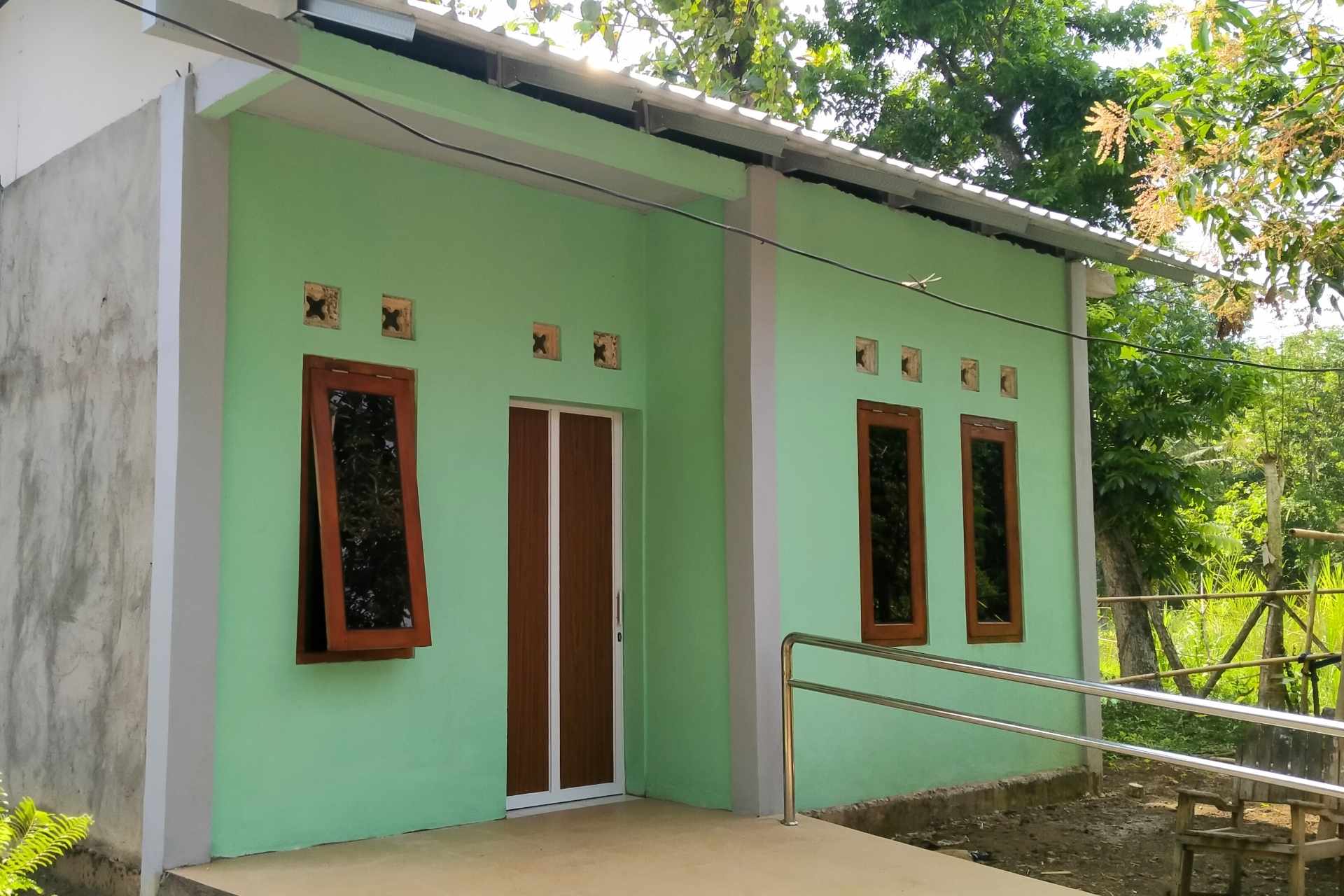
One of the inclusive homes built by Asuransi MAG in partnership with Habitat Indonesia in Sentolo District, Kulon Progo Regency, Special Region of Yogyakarta, Indonesia. Photo: HFHI Team
In addition to housing construction, the program also provided inclusive housing training for 20 participants, including people with disabilities, family members, and local stakeholders. The training aimed to increase awareness that decent housing is not only about structural strength and safety, but also about ensuring accessibility, security, and equal opportunities for every resident.
One of the beneficiary families is Legimin (65) from Bulak Hamlet, Tuksono Village. For many years, Legimin and his family lived under difficult financial circumstances. Today, his mobility has become increasingly limited due to illness. Despite these challenges, his second child, who has a psychosocial disability, continues to strive for independence. He is able to communicate well and works as a day laborer to help support the family’s daily needs.
Before receiving assistance, their home was far from adequate. The walls were made of concrete blocks without proper structural reinforcement, parts of the floor were still dirt and unfinished cement, the roof was deteriorating, and the bathroom did not meet basic standards. These conditions not only affected the family’s comfort but also significantly limited the mobility and independence of both Legimin and his son.
“Having two family members with disabilities while facing financial hardship, owning a decent home has always been our dream. Now this house makes our daily activities much easier because it was designed to suit our needs, allowing us to live more independently,” said Legimin.
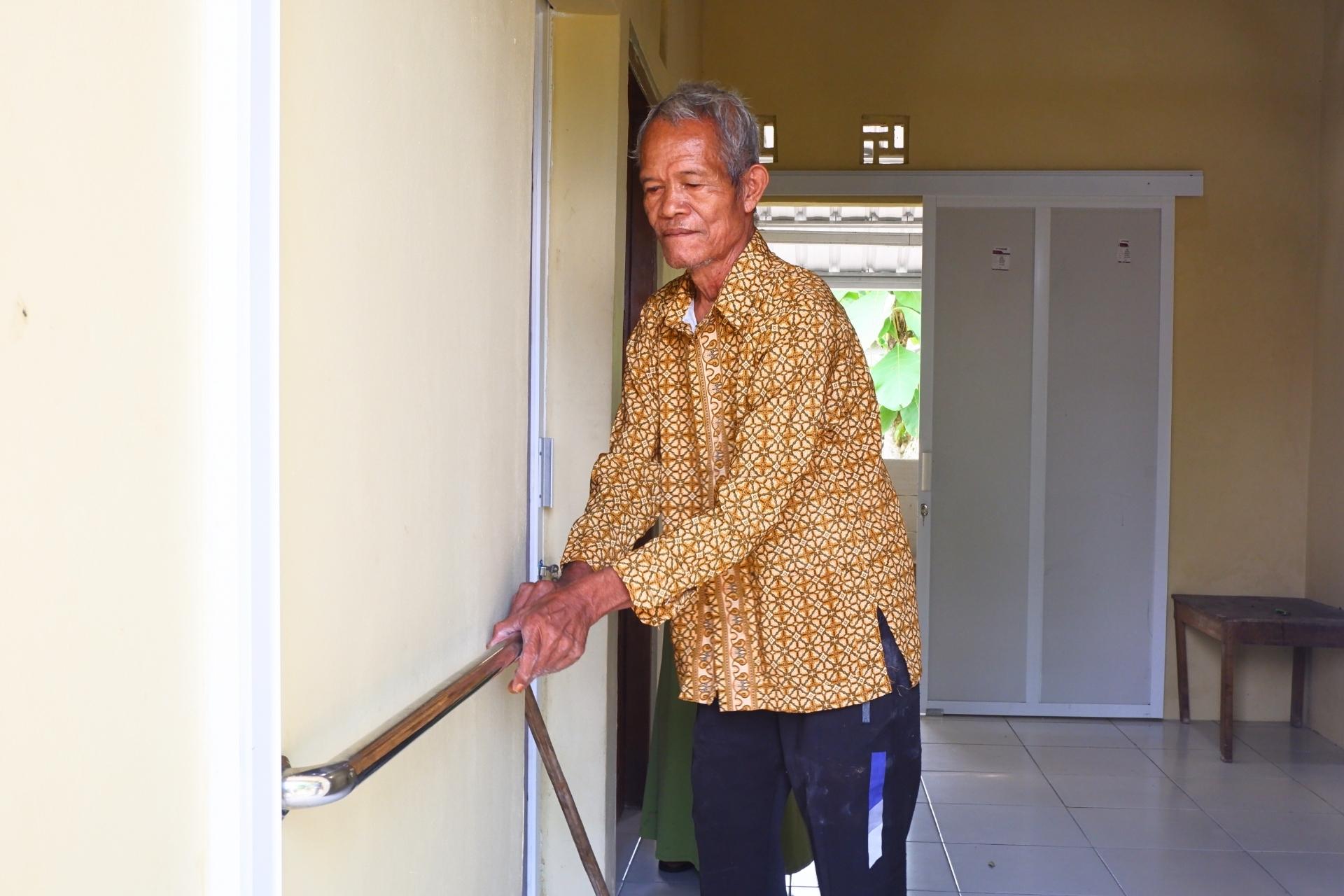
Legimin (65) uses a handrail inside his now decent and inclusive home, built by PT Asuransi Multi Artha Guna Tbk (Asuransi MAG) in partnership with Habitat for Humanity Indonesia in Sentolo District, Kulon Progo Regency, Special Region of Yogyakarta, Indonesia. Photo: HFHI Team
A similar transformation has been experienced by Rahmad (27) and his family in Demangan Hamlet. Since birth, Rahmad has lived with a mobility impairment, making him dependent on his parents and siblings for daily activities, including bathing and using the toilet. Before receiving assistance, he slept on the floor of a back room next to the kitchen and bathroom. Whenever he needed to bathe, family members had to carry him because the bathroom doorway was too narrow for a wheelchair to pass through.
Today, that situation has changed. The new home, designed with accessibility in mind, provides Rahmad with a safer and more comfortable living environment. With disability-friendly features, he has become more independent in his daily activities, including being able to access the bathroom without always relying on assistance from family members.
“We used to face so many challenges. Thank God, our new home was designed to meet our son’s accessibility needs. Daily life has become much easier, and now he can even go to the bathroom by himself,” said Rahmad’s parents.
The positive changes experienced by these families demonstrate that a decent home is measured not only by the strength of its structure, but also by its ability to provide a safe, comfortable, and accessible living environment for everyone. When physical barriers within the home are removed, people with disabilities have greater opportunities to live independently, carry out daily activities safely, and participate more actively in family and community life.
Through the collaboration between Asuransi MAG and Habitat for Humanity Indonesia, this inclusive housing initiative aims not only to provide better homes for 10 beneficiary families, but also to encourage greater public awareness that every home should be designed to meet the needs of all its residents. Ultimately, a truly decent home is more than just a place to live—it is a space that provides safety, equal opportunity, and dignity for everyone who calls it home.
(kh/av)