Habitat Perspectives
Nagekeo, September 24, 2026 – Entering 40 days after the magnitude 7.7 earthquake hit several areas in Flores, East Nusa Tenggara (NTT), the shadows of grief and struggle for survivors are far from over. Based on data from the National Disaster Management Authority (BNPB) as of September 21, 2026, more than 29,980 people are still staying in evacuation camps. The majority of them, around 26,089 families, lost their homes due to severe damage.
In Nagekeo Regency, a focus area for Habitat for Humanity Indonesia’s emergency response and recovery program ‘Flores Housing Recovery,’ at least 6,930 people are still forced to make emergency tents their temporary “home.” Although this number is slowly decreasing as residents whose houses are safe or suffered only minor damage begin to return, thousands of others remain trapped in uncertainty.
However, behind the tarpaulin sheets protecting them from scorching heat and rain, a real threat quietly lurks. BNPB recorded that at least 94 earthquake victims passed away while staying in evacuation centers. Most of them breathed their last due to deteriorating health conditions, old age, and worsening comorbidities aggravated by inadequate living conditions in the camps.
Emergency Tents: Not Meant for Long-Term Living
Evacuation tents are essentially designed as short-term emergency shelters, intended for a few days to a few weeks at most. When survivors are forced to stay in tents for months, the risks to their physical health, mental well-being, and social safety increase drastically.
Citing various health and disaster reference sources, here are the main dangers of staying too long in emergency tents:
1. Threats to Physical Health and Potential Disease Outbreaks
Overcrowded, unsanitary evacuation environments, combined with continuous exposure to extreme weather shifts, can significantly weaken immune systems. Some disease threats prone to outbreaks include:
- ARI (Acute Respiratory Infections) and Pneumonia: Cold night air, dust, and poor ventilation in overcrowded tents are the main triggers. Pneumonia presents the most fatal threat, particularly for infants and toddlers.
- Waterborne and Sanitation-Related Diseases (Diarrhea & Typhoid): Limited access to clean water and inadequate sanitation facilities trigger the spread of Salmonella typhi bacteria and germs causing acute diarrhea.
- Vector-Borne Diseases (Malaria & Dengue Fever): Open tent structures allow easy entry for mosquitoes, especially in endemic areas.
- Worsening Non-Communicable Diseases (NCDs): The elderly are the most vulnerable group. A lack of routine medication supplies and limited nutrition frequently trigger spikes in blood pressure (hypertension), chronic muscle pain (myalgia), and diabetes complications. (Sources: Ministry of Health of the Republic of Indonesia and Tirto.id)
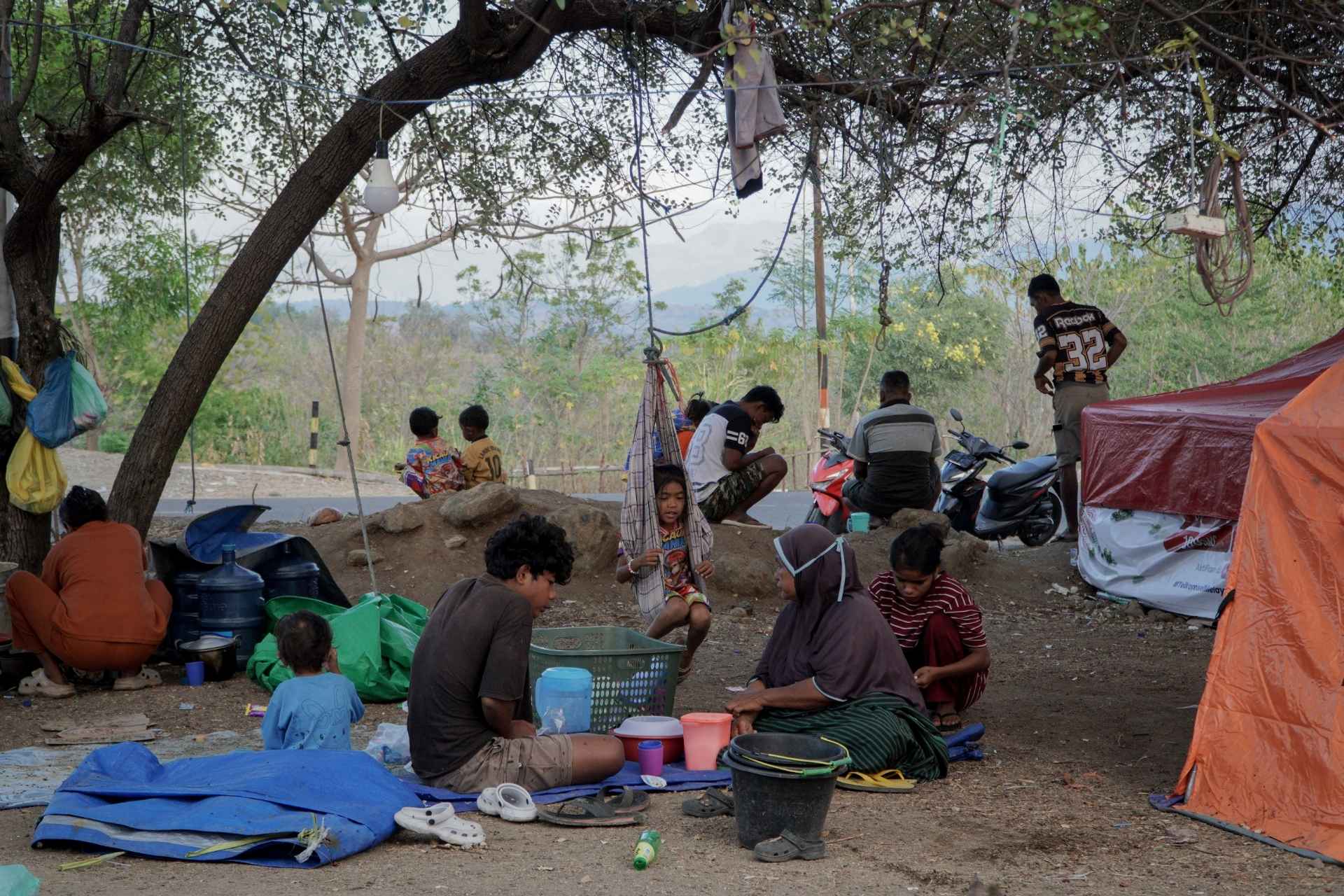
The condition of an evacuation tent in Aesesa District, Nagekeo Regency, following the Flores earthquake. Photo: HFHI/Kevin Herbian
2. Mental Health Crisis and Chronic Psychological Disorders
Losing homes, belongings, and livelihoods, combined with future uncertainty, causes immense psychological strain:
- Acute Insomnia: Loud, uncomfortable tent environments and anxiety over aftershocks make it difficult for evacuees to get restful sleep, ultimately compromising their physical immunity.
- Depression and Frustration: Feelings of helplessness due to interrupted education for children and loss of employment can develop into severe depression.
- PTSD (Post-Traumatic Stress Disorder): Without ongoing psychosocial support (trauma healing), deep-seated trauma from the earthquake can persist and become a long-term post-traumatic stress disorder. (Source: IDN Times)
3. Social Vulnerability and Safety Issues
Communal tents without private partitions create vulnerable spaces, especially for at-risk groups such as women and children:
- Risk of Sexual Violence: Non-private bathing and toilet facilities, along with poor lighting in evacuation areas, heighten the risk of sexual crimes. Many victims hesitate or fear reporting due to the confusing emergency situation.
- Social Friction: Unequal distribution of relief supplies can sometimes trigger tension and conflict among evacuees.
Restoring Hope, Restoring Their Homes
Confronted with this reality, Habitat for Humanity Indonesia pays deep attention to the post-disaster recovery process in Flores. Our main focus is ensuring that survivor families can soon have safe, decent, and healthy homes so they can rebuild their lives with dignity.
Tarpaulin tents should not be a long-term environment where children grow up or where the elderly spend their later years. They need resilient homes to start rebuilding their hopes.
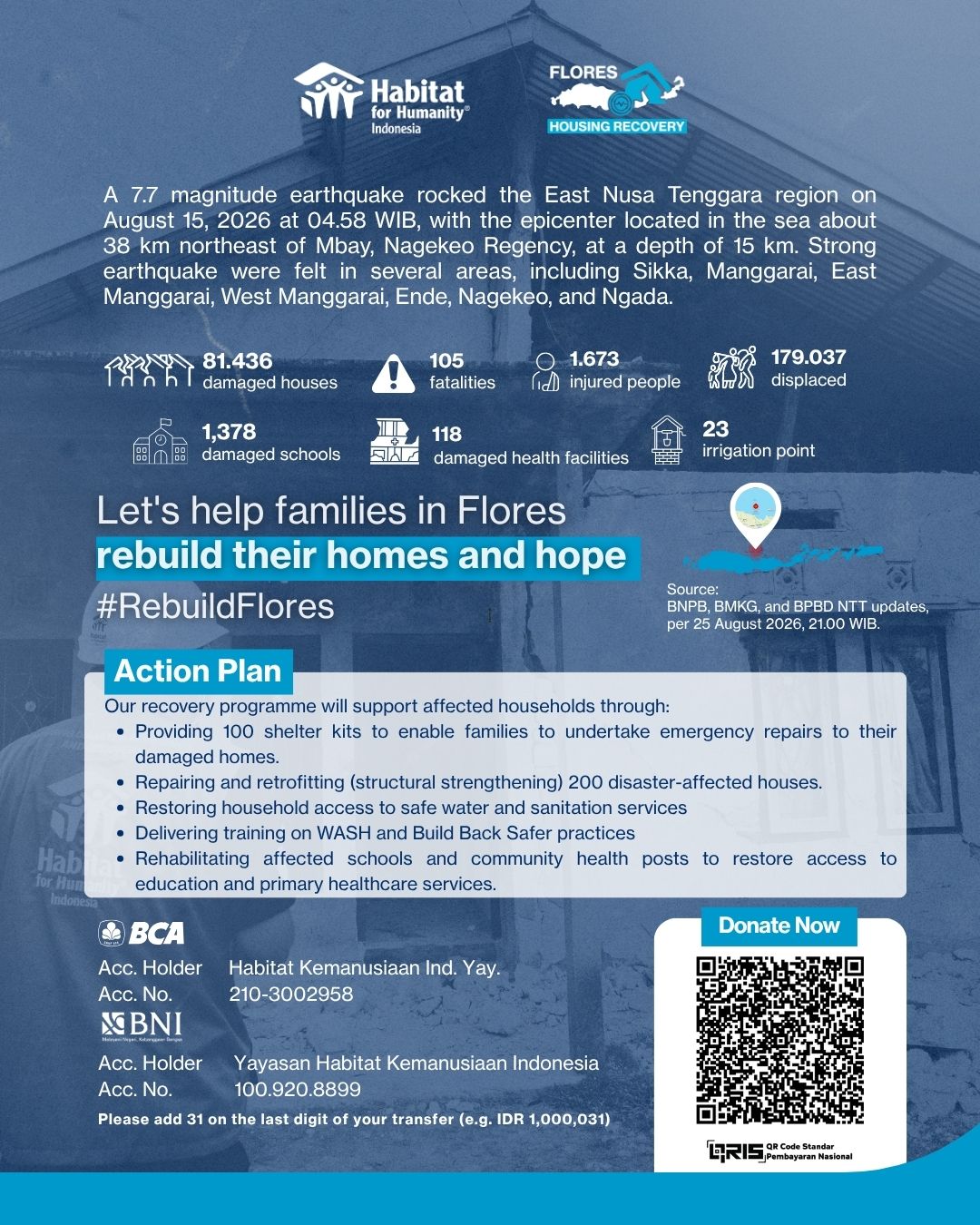
Help Flores earthquake survivor families secure safe and decent housing soon. Share your support through the donation details on the flyer below:
Writer: Kevin Herbian
Graphic: Tias Ester Widhari
(kh/av)