Habitat Updates
Sragen, April 14, 2026 – Since the inauguration of Prabowo Subianto as the 8th President of the Republic of Indonesia on October 20, 2024, the national housing development program has once again become a priority. One of the key initiatives being actively promoted is the 3 Million Houses Program, which aims to reduce the gap in access to adequate housing across Indonesia.
The urgency of this program stems from the persistently high and multidimensional housing deficit. Based on data from the 2024 National Socioeconomic Survey (Susenas), it is estimated that more than 9.9 million families are affected by the housing backlog—a condition in which families do not have access to adequate housing and are often forced to live in overcrowded conditions, sometimes with multiple generations under one roof.
On the other hand, around 26.9 million households live in housing that is unsafe, unhealthy, or built with poor-quality materials. The most affected groups are low-income families in the bottom income deciles (deciles 1 and 2). It is recorded that approximately 2.59 million families in this group fall into the housing backlog category, while around 9 million others live in severely inadequate housing.
Persistent Inequality
Vulnerability is also more pronounced among female-headed households. Of the total families affected by the housing backlog, around 340,000 households, or 22%, are led by women. In addition, approximately 2.986 million female-headed households live in substandard housing, highlighting a dimension of inequality that requires more inclusive solutions.
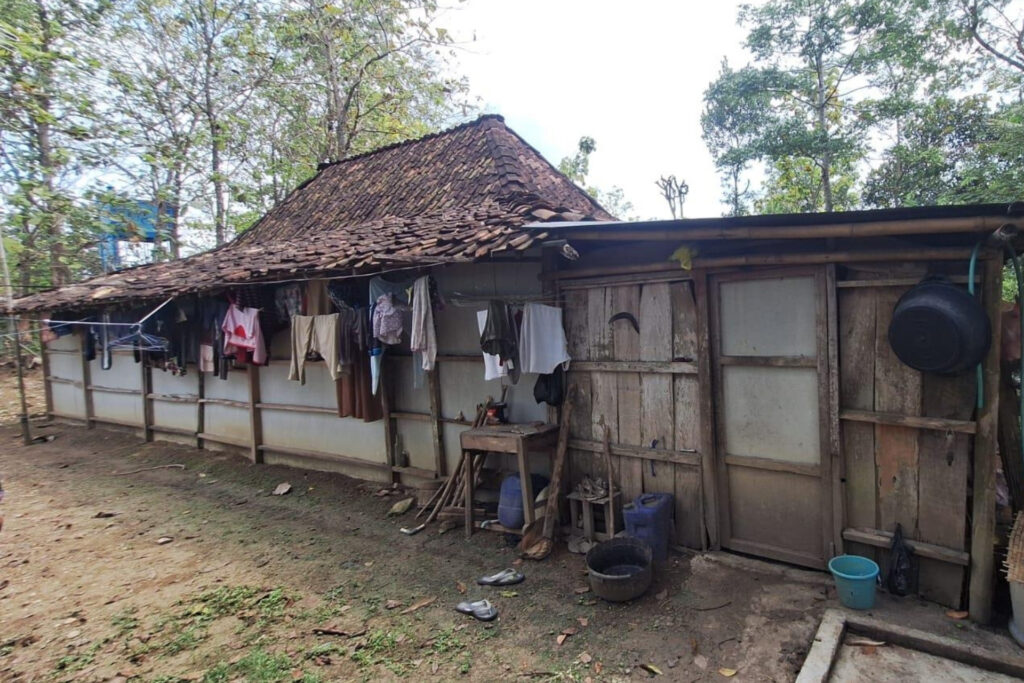
This condition is clearly reflected in Sragen Regency, one of the areas with the highest poverty rates in the Solo Raya region and among the eight poorest regions in Central Java. Out of a total population of 1,021,435 people, around 110,650 individuals—or approximately 12.41%—live below the poverty line.
Housing issues in Sragen reflect similar challenges. Data from the Sragen Regency Government shows that 13,945 families in the lowest income deciles (1 and 2) live in inadequate housing. This includes 3,229 female-headed households and 1,912 families with members with disabilities. In addition, 2,151 families from this group fall into the housing backlog category.
Limitations of Existing Schemes
In response to these conditions, the Sragen local government has initiated the “Desa Tuntas RTLH (Substandard Housing Alleviation)” program as part of efforts to accelerate the improvement of inadequate housing. This program relies on two main approaches.
First, through the involvement of housing developers to build new homes. However, this approach tends to target households with formal employment and more stable financial capacity, meaning it has not fully reached families in the lowest income deciles who primarily work in the informal sector.
Second, through government support under the Self-Help Housing Stimulant Assistance Program (BSPS). Under this scheme, each household receives IDR 20 million, consisting of IDR 17.5 million for materials and IDR 2.5 million for labor. However, due to limited income, beneficiary families still struggle to cover the remaining construction costs.
Read also: Housing Backlog in Indonesia: A Major Challenge and Collaborative Efforts to Achieve Decent Housing
Collaboration to Bridge the Gap
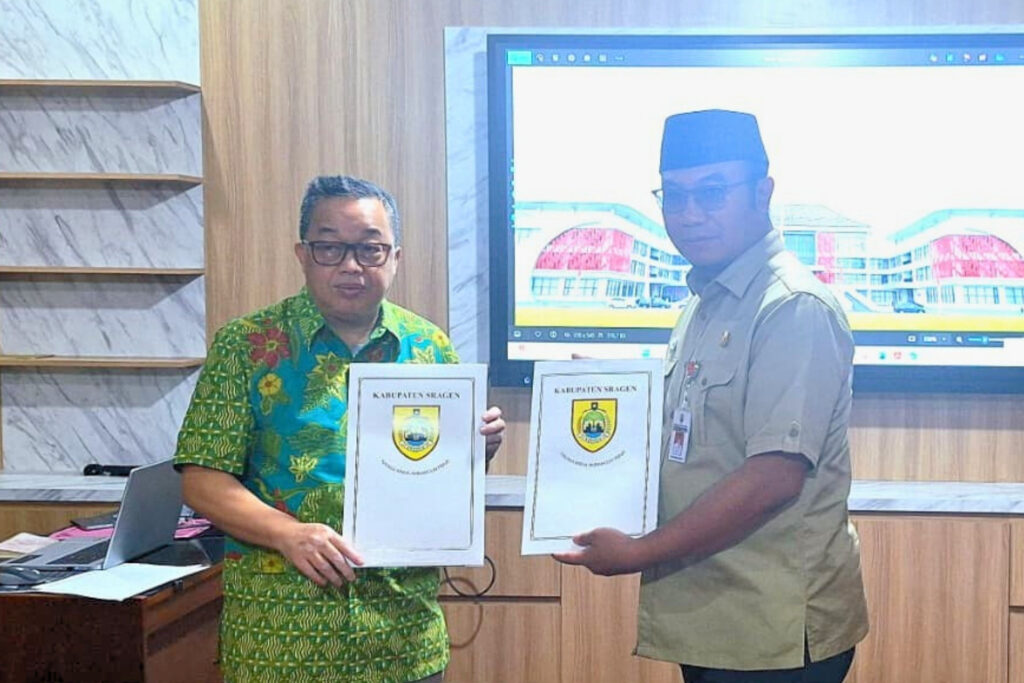
To address this gap, Habitat for Humanity Indonesia has partnered with the Sragen Regency Government through a match-funding scheme. This program is designed to complement the BSPS subsidy with additional funding support from donors, enabling it to reach the most vulnerable families.
Through this scheme, the government subsidy of IDR 20 million is matched with an additional IDR 20 million from Habitat Indonesia. As a result, beneficiary families are not burdened with financial contributions, but instead participate through labor contributions or sweat equity in the construction of their homes.
A key strength of this program lies in the active participation of beneficiary families. They are directly involved in the home planning process with guidance from Habitat Indonesia’s construction supervisors and local government facilitators. Families also play a role in managing materials, supervising labor, and ensuring that the construction meets their specific needs—including accessibility for persons with disabilities and safety considerations for female-headed households.
Beyond physical construction, the program also includes Building Back Safer (BBS) training, equipping families with knowledge and skills in disaster-resilient construction. These efforts are further strengthened through advocacy activities such as workshops, campaigns, and other initiatives aimed at raising public awareness about housing poverty and the importance of inclusive and sustainable development.
The program, which is planned to run for eight months, targets 101 families as primary beneficiaries through this collaborative funding scheme. In addition, 130 individuals representing beneficiary families will participate in BBS training. Overall, the program is expected to directly benefit 1,084 individuals and reach 3,145 indirect beneficiaries.
Through collaboration between the government and the community, this program is expected to serve as a concrete step in reducing the housing backlog while ensuring that the most vulnerable families are not left behind in accessing decent housing.
We kindly ask for the support and prayers of #SahabatHabitat so that the implementation of this program can run smoothly and deliver meaningful impact for families in need.
Writer: Kevin Herbian
(kh/av)