
Stories of Change
Tangerang, December 1, 2025 – Asnah, 38, starts her day before dawn. By five in the morning, she is already preparing to work at a neighbor’s house, helping out at their vegetable stall. Her work continues until evening, earning no more than sixty thousand rupiahs per day. Sometimes, when needed, Asnah is also asked to help with household chores—washing clothes, ironing, or cleaning the house. She willingly works late into the night for the extra income. This additional money is invaluable, sometimes reaching one hundred thousand rupiahs, and often comes with staples like rice, noodles, or eggs.
Before becoming a vegetable stall attendant, Asnah’s main profession was as a domestic helper. From this work, she learned perseverance, saved bit by bit, and tried to meet her family’s needs, despite their very modest life. Her husband, Niin, 49, works as a laborer in a rice mill, earning fifty thousand rupiahs per day. Together, they live in Rajeg, Tangerang Regency, with one married daughter who still resides with them.
Life, however, was full of challenges. Their house, more than thirty years old, was a simple bamboo structure without solid support, with an earthen floor that became muddy during the rainy season. Leaky roof tiles and rotting bamboo walls let water seep in.
“When it rained heavily, we all had to leave the house and take shelter at relatives’ homes next door,” Asnah recalled.
The most heartbreaking issue was the lack of a toilet. “I had to rely on neighbors’ bathrooms. Because we used them so often, some neighbors even locked their toilets so my family couldn’t use them,” she said. When it became urgent, they were forced to relieve themselves in an outdoor latrine, sometimes at night in complete darkness.
Their crisis did not end there. There was no access to clean water at home either. “When I was still working as a helper, I had to borrow money from here and there just to drill for water and install a pump,” Asnah said. As for electricity, it could only be installed after making payments in installments.
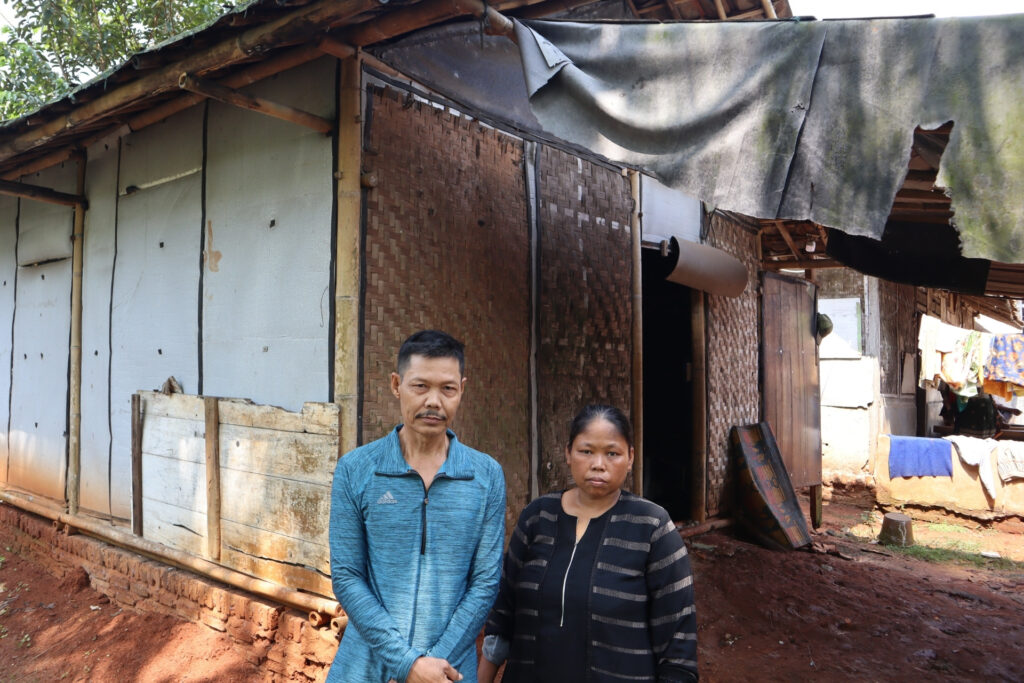
Once water and electricity were available, Asnah realized another vital need: her house had to be repaired to become livable. But fate had not yet favored her. “After paying off all the debts for water and electricity, a few months later my house collapsed. I came home from work to find it flattened. I cried so hard. Eventually, I borrowed money from my employer until he personally came to see my house,” she recalled.
With her employer’s help, Asnah received a four-million-rupiah loan to rebuild her home. “We built it as best as we could, with help from relatives. The house had bamboo walls and an earthen floor,” she said. Although simple, the house provided shelter. They salvaged usable remnants from the ruins to rebuild their home.
Despite everything, Asnah and Niin never lost hope. They continued to pray and save, aiming to renovate the house in 2026 to make it sturdier and more livable. But daily life often forced them to postpone their dream. The money they saved was always spent on family needs, requiring Asnah to work harder, leaving less time with her family.
Finally, their dream came true sooner than expected. Habitat for Humanity Indonesia, in collaboration with PT Caterpillar Indonesia and PT Caterpillar Finance Indonesia, selected Asnah as a recipient of the Decent Home Program.
“When I heard from the neighborhood head that my house would be rebuilt properly, I was extremely grateful. I was so moved, I couldn’t even find words,” Asnah said, her eyes welling with tears.
Read also: A Decent Home Becomes the Pillar of Life for Ibu Imas and Her Family
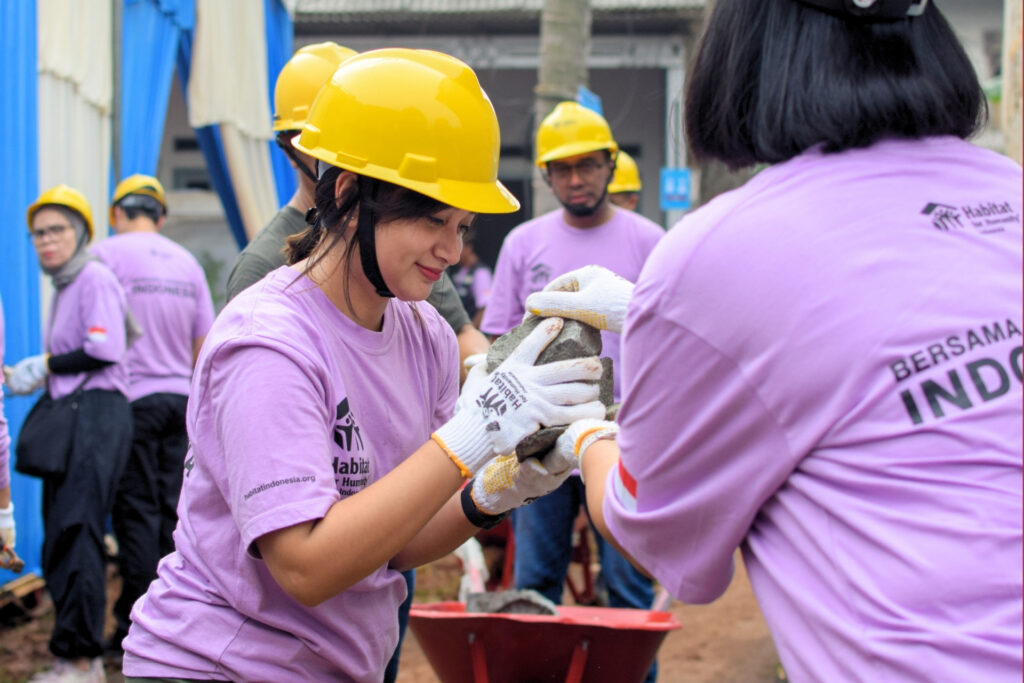
In early August 2025, 69 volunteers from Caterpillar began laying the foundation for Asnah’s house along with two other families. Years of Asnah’s struggle finally bore fruit: a decent home that provides protection and dignity for her family.
“My hard work over the years to support my family has finally led to a good house. Life used to be so hard that even buying gas for cooking meant borrowing. Now I have a decent home with a toilet and bathroom; I no longer have to rely on neighbors. I’m not ashamed anymore,” she said with joy.
This support also felt like an answered prayer. “I had planned to renovate the house next year. Alhamdulillah, it’s answered now. I can use my savings to pay off all debts. It feels like starting life from scratch, but much more peaceful,” Asnah added.
During nearly two months of construction, Asnah and Niin actively contributed. They woke early, moved materials, and even prepared meals for the construction workers, despite their own limitations.
“My husband always helps the builders. I work at the neighbor’s house to earn extra income. My employer often gave more than my wages to help with the house construction. Thank God, the ceiling of my house was finally completed without any debt,” Asnah explained.
Now, Asnah’s new home has brought significant changes to their lives. The air is cleaner, free from rats, and their grandchild no longer struggles at night from the heat.
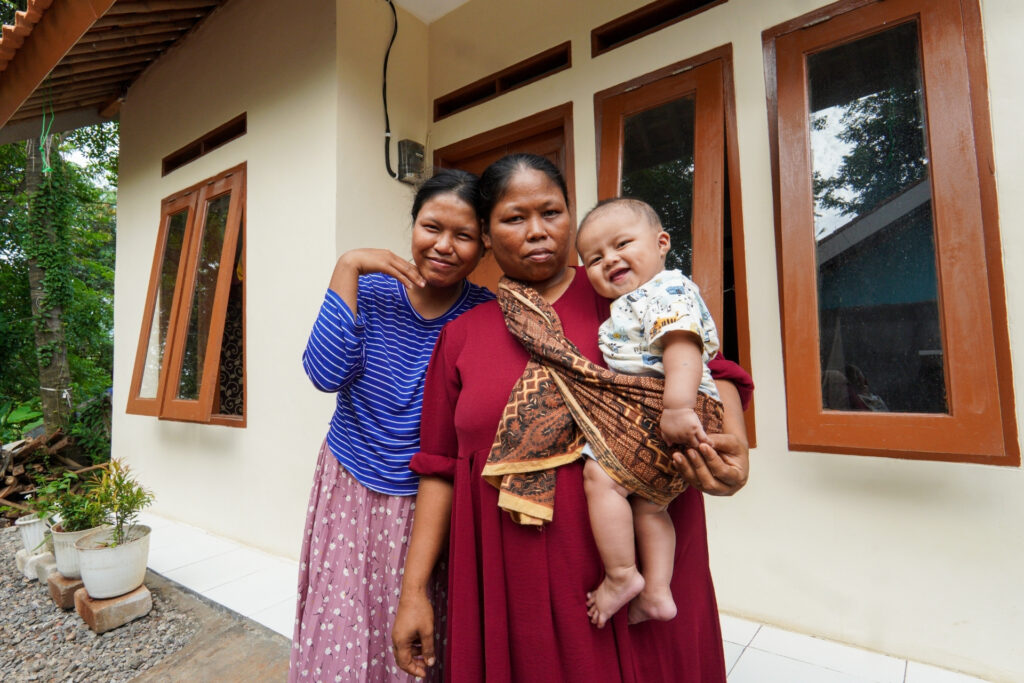
She continues to work as an attendant at her neighbor’s vegetable stall, a job she took up after her home became livable, while still earning extra income as a domestic helper in her spare time. This change is not just about work; it is about dignity, health, and family economic stability.
“This house is where I will take shelter for the rest of my life. My family will always come back here,” Asnah concluded, smiling with heartfelt certainty.
Every brick laid, every floor arranged neatly, is not just a building—it is a silent witness to struggle, hope, and prayers that never extinguished. With your support, more families like Asnah’s can light up their homes, rebuild their lives from scratch, and face the future with confidence.
Let’s be part of this story together, planting kindness that will continue to grow in every home we help. Visit: habitatindonesia.org/donate
Writer: Kevin Herbian
(av/kh)