
Stories of Change
Yogyakarta, December 3, 2025 – Every corner of Jogoyudan Village, in Gowongan Subdistrict, Jetis District, Yogyakarta, now appears alive again. But more than a decade ago, this area was on the brink of losing hope.
For Rodi Firdaus, the head of RW 10, memories of the 2010 Mount Merapi eruption are still vivid. At that time, heavy rains poured down and cold lava rushed into the settlement, carrying sand and rocks as large as cars. Nearly 200 homes were submerged, the protective embankments could not withstand the torrent, and many residents were forced to evacuate as their houses were buried under mud.
“The water back then surged up to four meters high. Everything was swept away — sand, rocks… everything went into the residents’ houses,” recalled Rodi. Siti Fathonah, a resident of RW 10, remembers the panic vividly. “That afternoon, I was attending a social gathering at the Community Hall. Suddenly, the floodwater entered the yard. Everyone panicked and ran to save themselves,” she said. “Three floods came one after the other. It felt almost hopeless,” she added.
The disaster destroyed not only physical structures but also the spirit of the residents. Houses that once stood strong were now severely damaged, some buried under mud, others losing roofs and walls. “It felt impossible to rebuild life here,” Rodi recalled.
Amid these challenges, external aid was almost invisible, as the village was not prioritized during the initial emergency response. Residents felt isolated and hopeless.
Hope began to emerge in early 2011. Habitat for Humanity Indonesia arrived in Jogoyudan, conducting surveys and data collection as part of the initial post-Merapi response. The first intervention was the construction of seven communal toilets, an initial step to restore basic needs. “We held discussions with community leaders and listened to residents’ needs. From that, a plan to rebuild decent houses emerged,” said Wahyu Kustanta, Community Organizer at Habitat Indonesia.
Construction began in RW 10 with seven houses. Gradually, it expanded to RW 8, 11, 12, and 13, until more than 160 decent houses stood firm. These homes were built with principles of safety, durable materials, and designs tailored to residents’ needs. “Alhamdulillah, my house was rebuilt. Because I run a small shop at home, the house was also designed to accommodate my business. It’s been very helpful,” said Siti Fathonah.
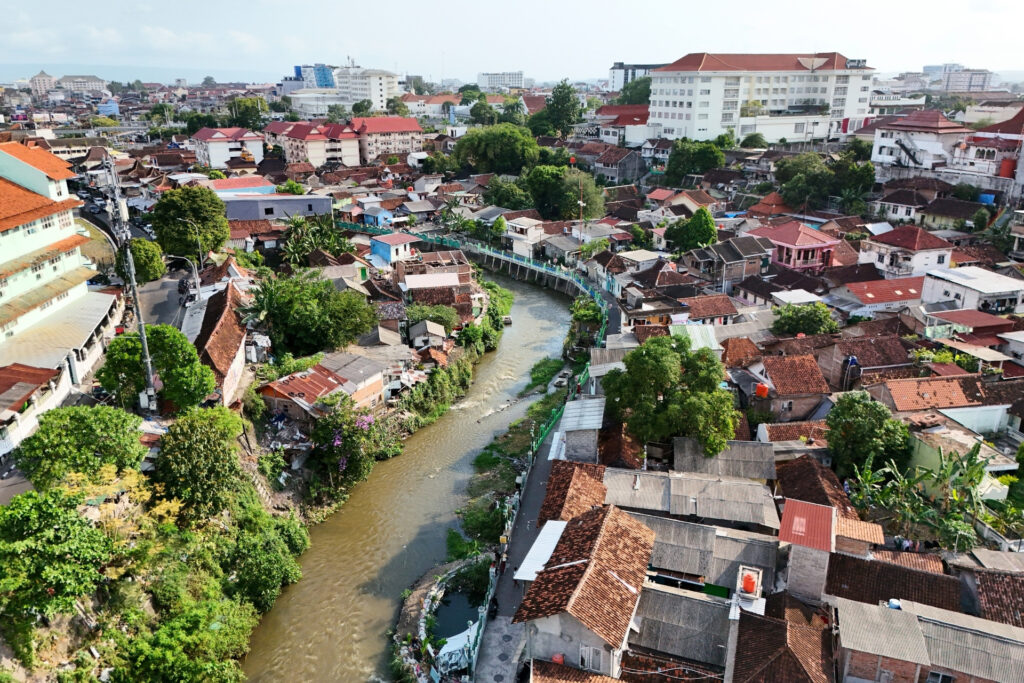
Beyond housing, Habitat Indonesia developed clean water facilities at several points in the village. This water system not only served affected families but also other residents, ensuring equitable access to clean water. Residents were actively involved in the construction, contributing materials, labor, and ideas. Three stormwater channels were also built using the Participatory Approach for Safe Shelter Awareness (PASSA), which engaged the community in planning and implementation.
“Residents were very actively involved. They were not just recipients of aid but part of the building process,” Wahyu said. “This gotong royong (mutual cooperation) made them feel ownership over their homes and community. They felt reborn,” he added.
The transformation housing concept applied in Jogoyudan went beyond rebuilding physical houses. It also strengthened community capacity, revitalized the local economy, and fostered awareness of collective responsibility.
Siti described the impact on her life: “Having this decent house has brought a huge change. I’ve been able to reorganize my small shop, gradually. Now my shop is thriving, stocked with goods, and my family feels safe.” The transformation touched not only the physical homes but also household economics and residents’ self-confidence.
By the end of 2025, all the facilities built during the post-disaster recovery were still in use and maintained by the community. “We even expand and improve them further,” said Rodi. For example, the clean water facilities are used for laundry services and other economic activities. The water system managed by the PASSA group is also reinvested into community welfare through savings and loan programs.
This program shows that disaster is not the end, but the beginning of real change. Residents who once lost hope are now rebuilding their lives on the same land. Decent housing, clean water facilities, and stormwater channels are not just physical assets but symbols of resilience and the community’s ability to recover.
Furthermore, the program emphasizes disaster risk reduction (DRR) through transformation housing. This concept combines safe physical housing construction, community participation, and preparedness for future disasters. Residents who were once victims now understand how to arrange homes and their surroundings to withstand risks, strengthen collective awareness, and build a stronger community.
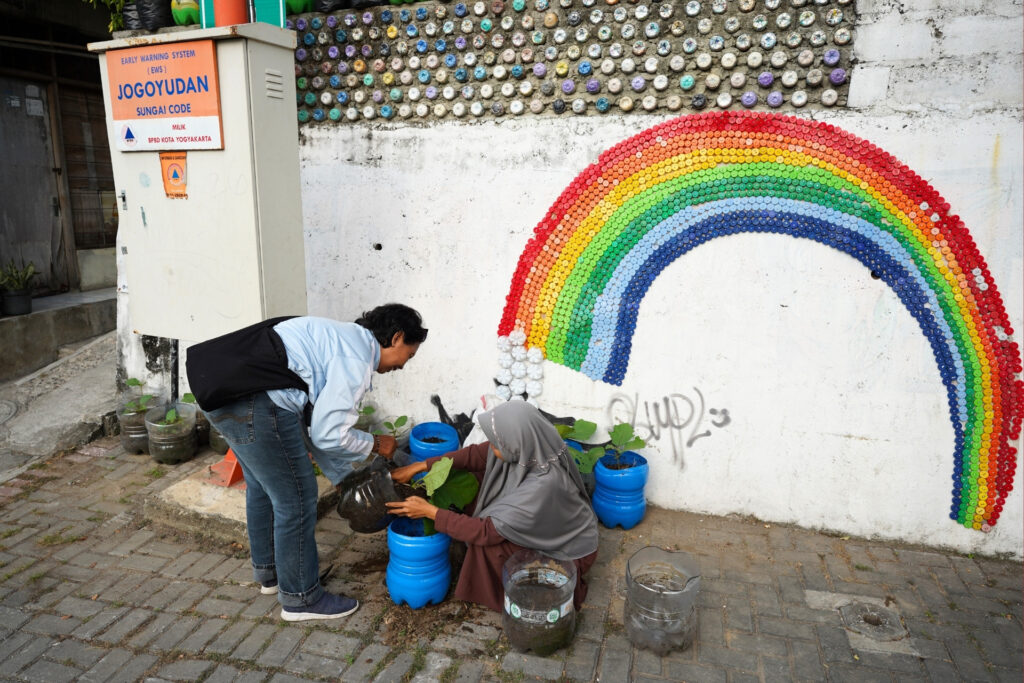
Fifteen years after the disaster, Jogoyudan Village has not only recovered but stands as a living example that community-based interventions can change lives. Strong homes, accessible clean water, and functional stormwater systems are proof of sustainable transformation. Residents are no longer merely waiting for aid but have become agents of change in their own community.
Rodi concluded with confidence: “If Habitat had not come, we probably couldn’t live here again. Now, we not only have houses but also a sense of security, improved livelihoods, and a strong community.”
Disasters may leave scars, but these scars have been transformed into a new foundation for a better life. Jogoyudan Village proves that post-disaster recovery is not just about rebuilding—it’s about creating a resilient community capable of organizing life independently and sustainably.
Watch the video below to gain a deeper understanding of Housing Disaster Resilience and Recovery (HDRR)!
Video: HFHI/Budi Ariyanto
Writer: Kevin Herbian
(kh/av)