
Habitat Updates
Sabu Raijua, June 17, 2026 – East Nusa Tenggara (NTT) is known for its scenic savanna landscapes. Yet behind this beauty lies a significant challenge: an extreme dry season that lasts up to eight consecutive months each year. In Sabu Raijua Regency, this challenge triggers a daily crisis. Data from BPS NTT 2023 shows that only 46.65% of the population has access to clean drinking water, far below the national average of over 91%.
For Mrs. Libertina Ludji (73), these statistics represent a harsh reality. For decades in Sabu Liae District, this resilient woman has had to walk 500 meters across hilly terrain, carrying jerry cans of water from a communal well that often runs dry during the dry season.
Buying water from tankers at IDR 250,000 for 4,000–5,000 liters becomes a last resort. This cost is extremely burdensome for residents of Sabu Raijua, where the average per capita income (2025) is only IDR 1.56 million per month—just a quarter of the national average. Here, clean water has long been a luxury that undermines community well-being.
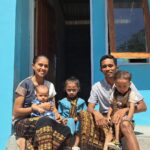
Seeing this situation, Habitat for Humanity Indonesia stepped in to build a communal well prioritized for eight of the most vulnerable families. “We are very happy with this new well. For decades I had to carry water. Now we just turn on the tap, and water flows,” said Mrs. Libertina gratefully.
For Habitat Indonesia, a decent home is not only defined by strong roofs and walls, but also by a healthy supporting ecosystem. Access to clean water brings a domino effect that transforms the long-term future of the Sabu Raijua community. In terms of health, clean water immediately reduces the risk of waterborne diseases such as diarrhea and typhoid, which have long contributed to stunting and child mortality in remote areas.
Beyond that, this intervention fosters sustainable economic independence. The time and energy previously spent queuing for and carrying water can now be redirected toward far more productive activities. Stable access to water opens new opportunities that were previously impossible, such as home gardening, better livestock farming, and even small business initiatives to increase household income.
After experiencing both health and economic benefits, the eight beneficiary families have now taken the initiative to independently plan the construction of a communal water reservoir. They want to ensure that this blessing of clean water does not stop with them, but can also flow to neighboring households.
It is this spirit of community solidarity in Sabu Raijua that brings to life Habitat Indonesia’s vision over its 29 years of work: to create a world where everyone has a decent place to live. Through integrated access to clean water, we remain committed to building homes, communities, and hope—ensuring that every family has an equal opportunity to grow healthier, more independent, and with dignity.
Writer: Astridinar Vania
(av/kh)